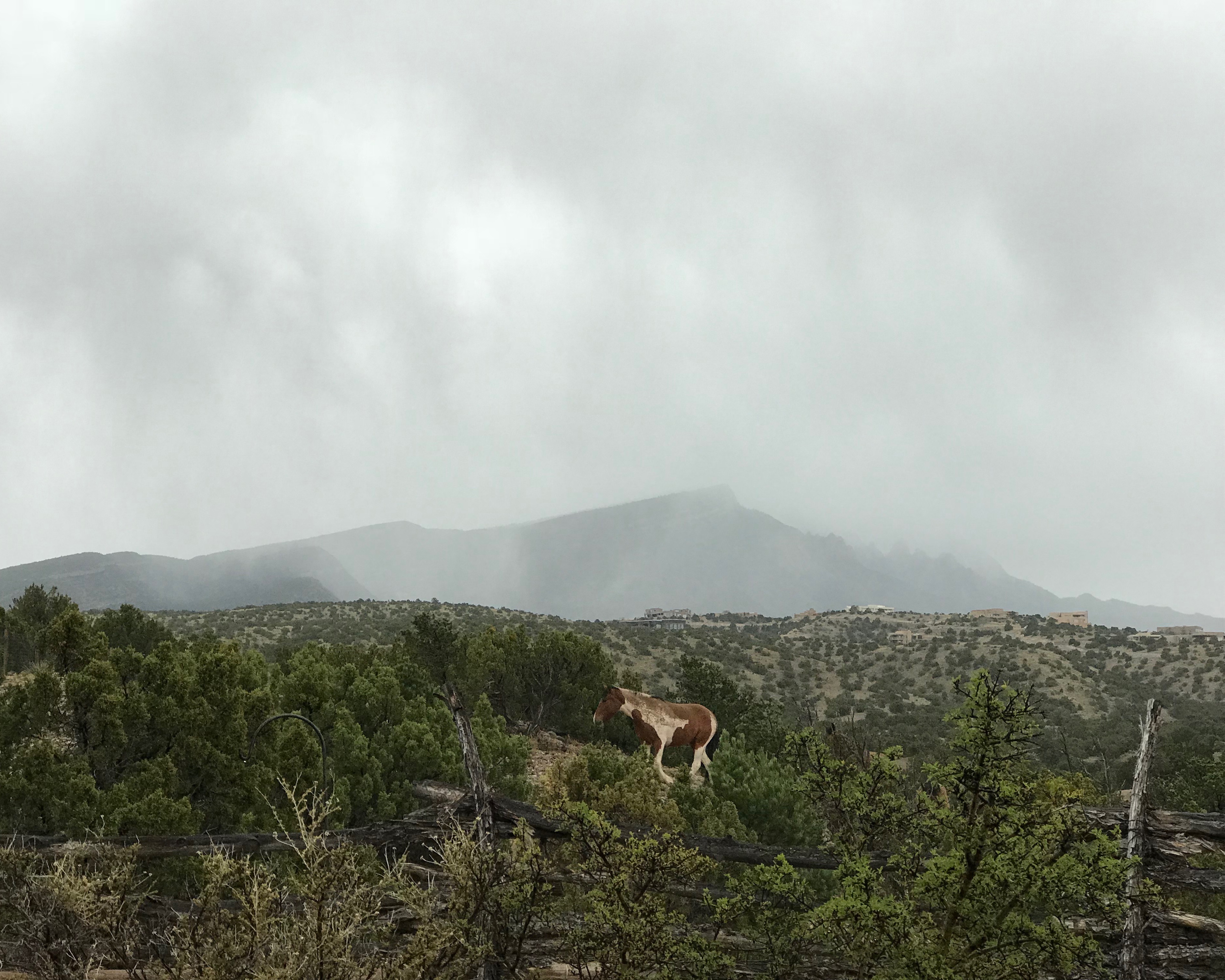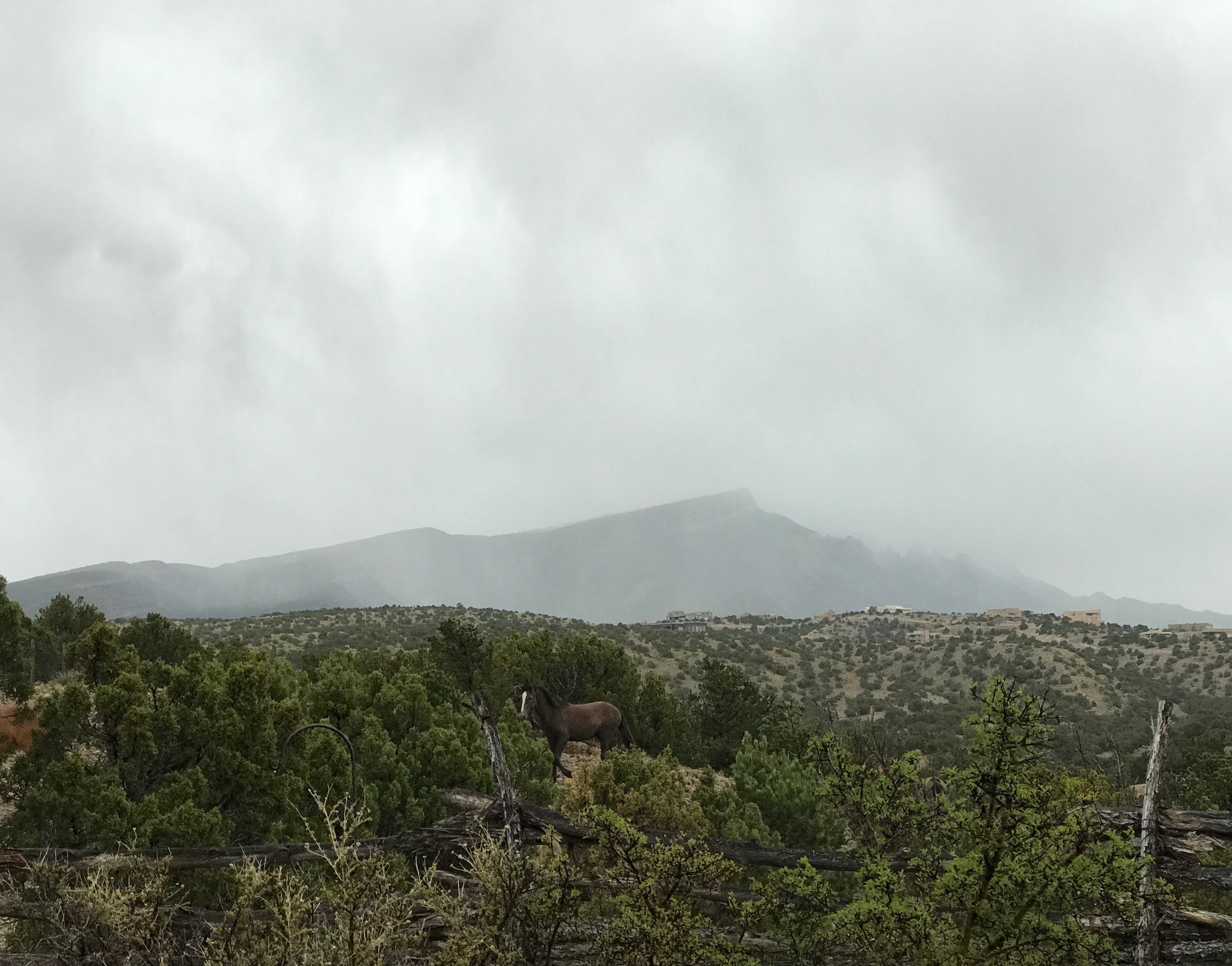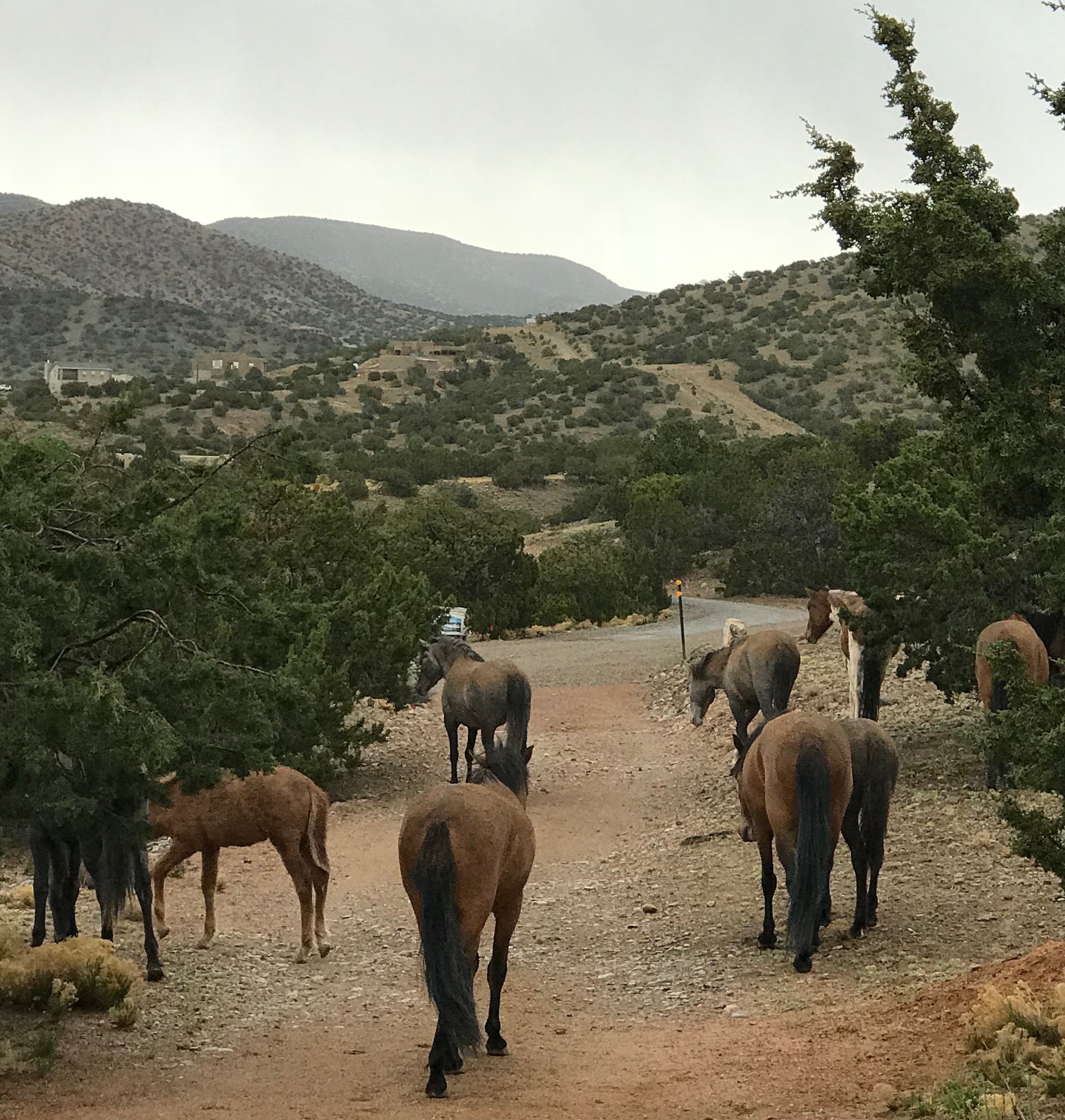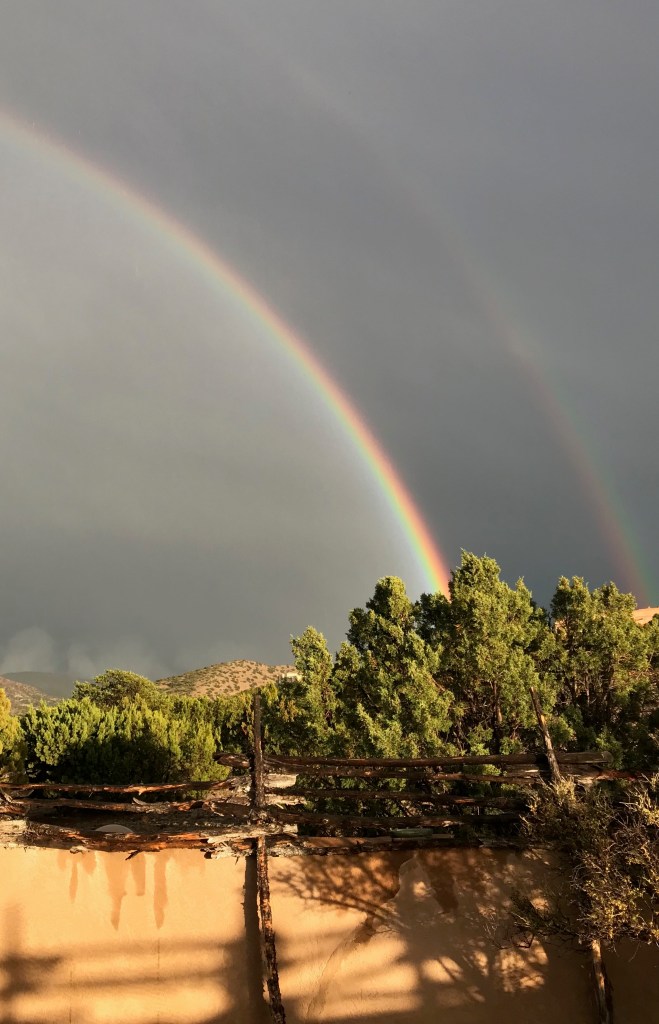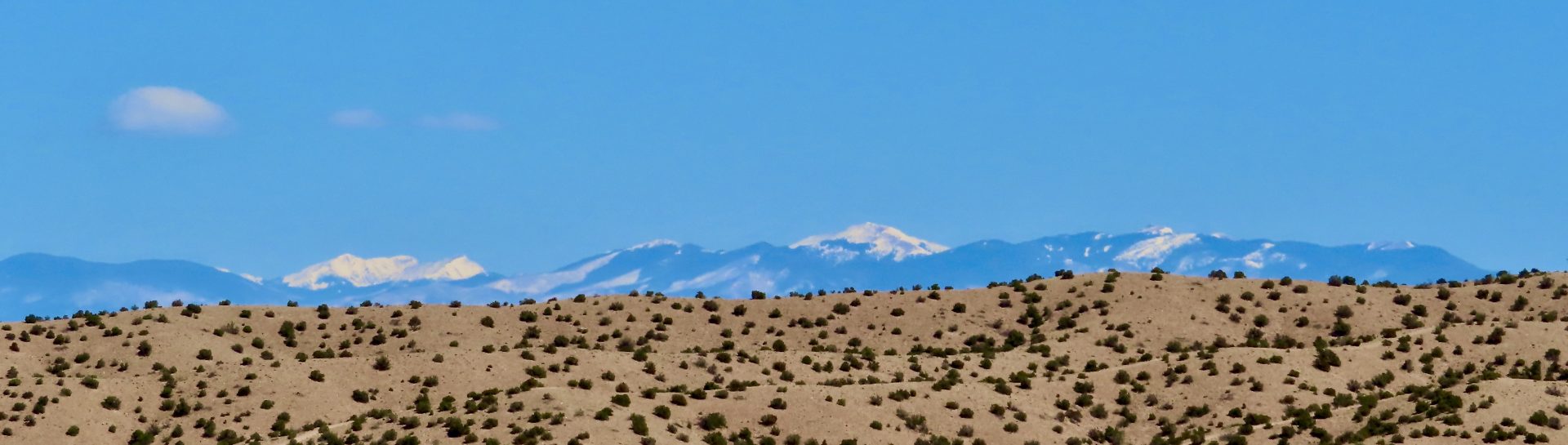
I used to look at satellite maps of the U.S. at night to remind me of where I want to live. I looked for the darkest, emptiest spaces in the West — in daylight, places where you can see mountains and sky. Now, I look at maps full of wildfire smoke and wonder what’s next.
IMG_0880

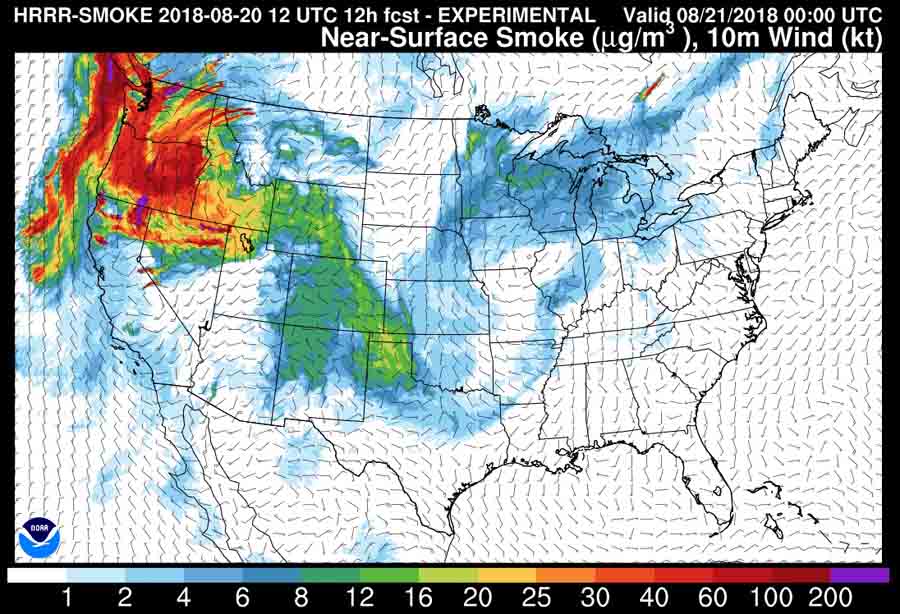
The NOAA smoke map I saw this morning showed wildfire smoke stretching clockwise from California, Washington and British Columbia over the northern Rockies, Nevada and Utah and, in the forecast version, dropping into Oregon, Arizona and New Mexico.
Wildfire-Smoke-2018-08-20

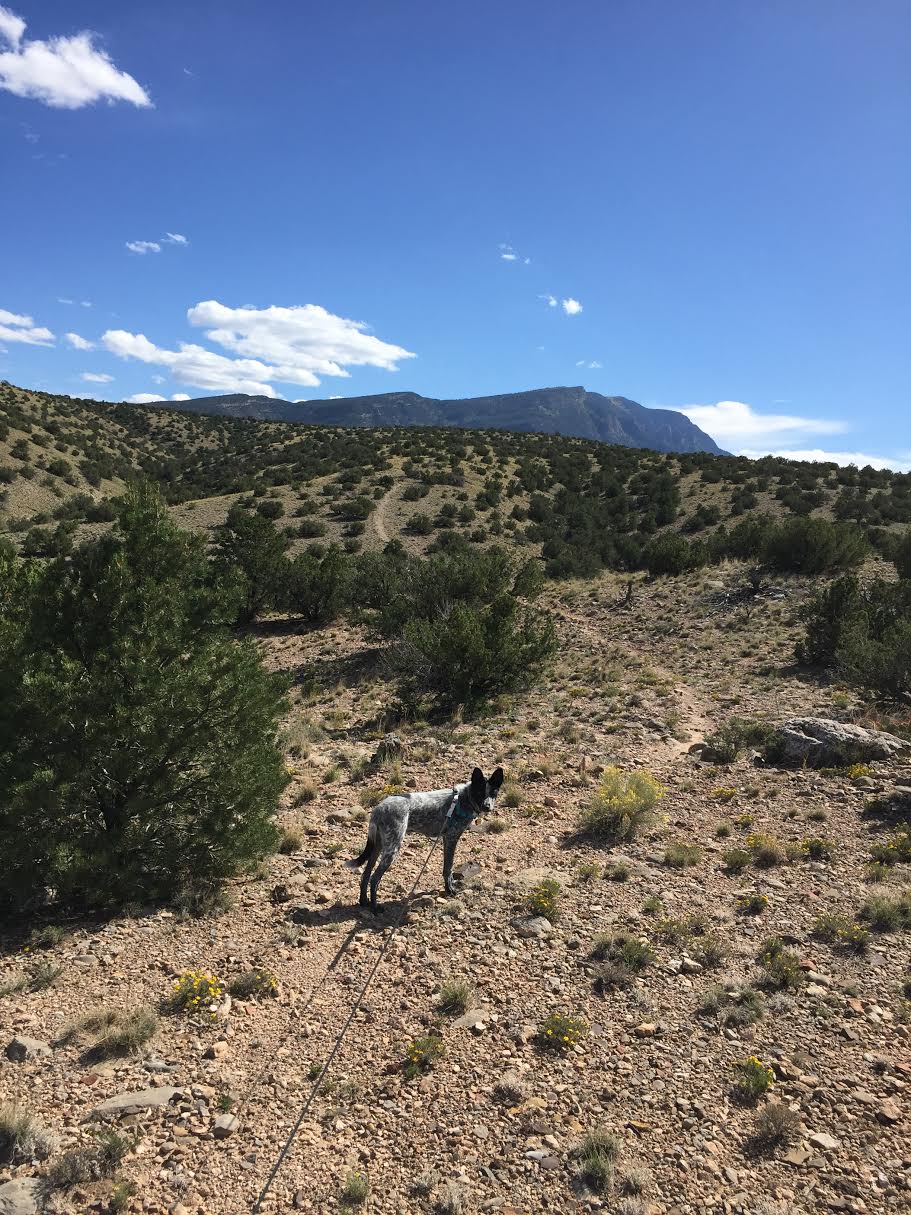
Cowboy and I hurried out for our morning walk, seeing it coming. I wanted to make our rounds while I could still see mountains and breathe decent air.

I have had smoke reports in recent days from sisters living in beautiful country in Washington, Utah and Montana.

“Hot, windy and smoky,” sister Hope wrote from Big Sky country the other night.

The smoke here today — or haze, as some weather people are ineffectively calling it — is dense enough that my friend Liz Staley posted this on Facebook on Sunday afternoon: “The Corrales Fire Department is asking residents to stop calling 911 to report the smoke from Oregon, Washington and California. ”

From Corrales, Liz said she could not always see the giant Sandia mountain looming across the river.

Cowboy and I are stuck inside now with these views from the home office. They include my longtime email handle, jemezview, now obliterated, to the northwest.

We’ve gotten used to seeing wildfires in nearly 30 years in Placitas homes: We are in the flight path for slurry bombers flying to the eastern side of the Santa Fe National Forest; the Jemez Mountains, just across the Rio Grande, are close enough that we readily see smoke, especially since fires have gotten more extreme, like Las Conchas in 2011.
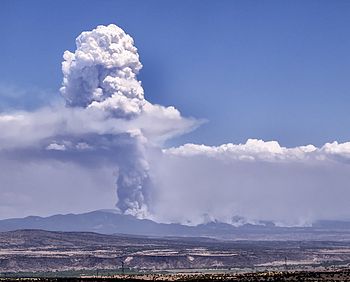
350px-Las_Conchas_Fire

Las Conchas fire on Wikipedia, seen from Placitas.

We have gotten a lot of Arizona smoke in past years, but I don’t remember so often being enveloped in smoke from fires two or three states away.

My closets are full of cold-weather clothing I no longer need to wear in climate-warming New Mexico. I know my smoke complaints pale in comparison to the destruction and costs of fires in progress in other parts of the West. I surely am writing about smoke instead of actual fire because we’ve been lucky this year in my neck of the woods. The 416 fire burned for weeks just north of Durango, Colorado, where I used to seek the refuge of greener and wetter country. The Ute fire in northeast New Mexico nearly burned into Cimarron. My two sides of the upper Rio Grande have been mostly spared, except for some lightning-burns that got some rain in the nick of time.

The last official update on the Venado fire in the Jemez carried a now familiar note on smoke:

“Smoke/Air Quality: Smoke may be visible from Highways 4 and 550 as interior pockets of unburned fuel are consumed by the fire. Smoke-sensitive individuals and people with respiratory or heart disease should be prepared to exercise precautionary measures. Information on air quality and protecting your health using the 5-3-1 visibility method can be found at the New Mexico Department of Health’s website https://nmtracking.org/fire or by calling 1-888-878-8992. For information on the HEPA filter loan program: https://www.santafefireshed.org/hepa-filter-loan-program/”

Nearly 50 years ago, I worked wildfires for a couple of seasons in California. Those fires, whether in eastern Sierra timber or southern California brush, almost seem petty compared to what’s going on now. If I were a reporter again, this new era of fires is the assignment I would want. Things are happening that I don’t think we yet fully grasp.
IMG_0930

Nothing like: a “you’re stable” report from the good people at Presbyterian oncology, three years out from treatment; a celebratory shredded beef burrito with green chile at the Range afterward; returning home to Cowboy and my books with a view up the camino of thunderheads rising to the north.

IMG_5223

I will savor those parts of the afternoon even though doused with sour news as soon as I get back to the hills. But it’s a challenge.

I learn that the reason for the police roadblock and detour on my way to Kaseman Hospital was a fatal traffic accident near Academy and Wyoming. Three people died. For some reason, Melanie Trump has worn a jacket saying “I really don’t care, do u?” on her way to visit migrant children in Texas shelters. It was hard to tell in the cacophony of 5 p.m. tweets how much progress, if any, there had been on reunification of 2,300 migrant kids separated from their parents.

I am a grown up and I will face CNN before I burrow back into my books. I am a believer in universal human decency, and I’m not sure I believe recent surveys on support for the “very stable genius” Donald J. Trump.  At least I hope decency will prevail. And I hope that a friend’s cancer tests have gone as well as mine.

Best wishes, all, on this longest day of the year.

IMG_5249

.

“… It seems likely that Custer lived long enough to try to repeat his success at the Washita by capturing the village’s women and children.” Nathaniel Philbrick, “The Last Stand.”

“If he could cross the river to the north and secure hostages, he’d have the key to victory.” Nathaniel Philbrick, “The Last Stand.”

The Custer strategy of hostage-taking in U.S. effort to round up or exterminate northern Plains Indians in the 19th century sounds to me a lot like the Trump administration policy of separating children from parents to combat illegal immigration 142 years later.

Hostage-taking has sometimes been defended as a relatively benign measure to achieve peaceful ends, but then as now it involves brutality against non-combatants. In the Custer case, reunification of families presumably would have happened faster than in the Trump era, as long as killing wasn’t involved.  But all this is especially painful to me when it includes young children — even a 1-year-old, as recently reported by Astrid Galvan of The Associated Press, although she did not call it hostage-taking.

I am emerging from a month of re-reading a bunch of Custer stuff with a couple of renewed thoughts.

One is about the inglorious strategy of capturing children as hostages. In Custer’s case, with both women and children, it is a theme repeatedly noted by Philbrick.

The other is that, as a country, we have been late to accept what really was afoot in July 2, 1874, when Custer set out to invade the Black Hills, and on June 25, 1876, when 8,000 pissed off Native Americans (National Park Service estimate) were camped in the valley of the Little Bighorn.

Custer Black Hills expedition 1874

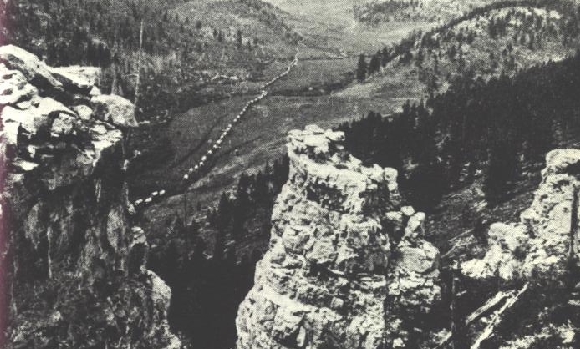
Custer entering the Black Hills in 1874 with 1,000 to 1,200 men and 110 wagons. Photo by William H. Illingworth.

A lot of history has missed the real story, focusing on Custer and the details of his demise instead of why in the first place such a big population of Native Americans had gathered in that southeastern corner of Montana territory.

Custer battlefied- BeckerMap

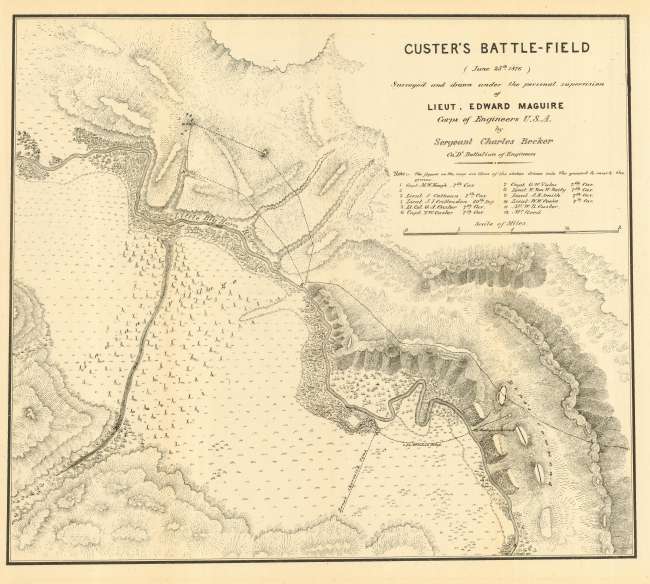
Map of Custer battlefield and huge Native American encampments by Sergeant Charles Becker  for July 10, 1876, report by Lieutenant Edward Maguire of the U.S. Army Corps of Engineers

The Native Americans were fearful, rejecting the tyranny and corruption of reservation life, seeking buffalo and antelope for food. And bullies will never learn: It should come as no surprise why Natives unleashed their fury on Crook at the Battle of the Rosebud and then Custer in the subsequent Battle of Little Bighorn. Step aside for a moment from reports of Indian atrocities on white people and consider the Treaty of Fort Laramie of 1868, abrogated by Custer in 1874 as a pawn of U.S. policy, paving the way for 15,000 gold-crazed American miners to flood into territory undeniably ceded to Native peoples.

“… By the time Custer was upon them they had nothing to lose from an all-out fight,” Larry McMurtry wrote of the Battle of the Little Bighorn in his 2012 book, “Custer.”

Dee Brown pointed us in the right direction of understanding with his “Bury My Heart at Wounded Knee” in 1970. Helen Hunt Jackson was on the case with her “A Century of Dishonor” in 1881, five years after the Battle of the Little Bighorn. Maybe there were others; my reading is not complete. But it’s amazing that the Native American view of events of the late 1800s did not seem to broaden in the popular American consciousness until Brown’s book in the late 1900s.

My favorite Custer book is the amazingly researched and entertainingly written “Son of the Morning Star” by Evan S. Connell. I don’t necessarily agree with Connell’s ultimate assessment of Custer but Connell was a scholar in this case and he probably was more objective than I. Hampton Sides’s historical review of Kit Carson and the Navajo campaign in Blood and Thunder seems similar to Connell’s defense of Custer in Son of the Morning Star. Both writers, thoughtful historians, strove to be fair and accurate and provide the proper perspective.

Connell said this about Custer in a 1985 interview with Nancy Faber of People magazine:

“I think the revisionists are unfair in regarding Custer as a villain today. He was a professional soldier within the social structure of that era. They claim he treated Indians brutally, and he did lead the expedition in 1874 that discovered gold in the sacred Black Hills of the Sioux. That probably was the chief factor contributing to the confrontation at Little Bighorn. If the Indians weren’t being forced off their land, they wouldn’t want have been so hostile. But the Black Hills expedition wasn’t Custer’s idea.”

But that again is about Custer, not the larger historical question about why the Native Americans were camped in that southern Montana river valley on on June 25, 1876, not wanting him or the columns of Crook, Terry and Gibbon to come but sensing the end of their culture was near.

I have lost interest in whether a case of hardtack dropped from a pack mule’s back — whether Custer was unwise, Reno drunk or Benteen hostile — was the most fateful factor leading to the death of Custer and 267 men under his command.

I am more interested these days in the U.S. policy, which in the 1800s was to displace Native Americans and take control of the West, by whatever means necessary.

As a side note on human greed and corruption, I am also considering why the Native Americans had so many repeating rifles, which history reminds us the 7th Cavalry did not. But maybe that’s just another American business story. Maybe I can return to it if I ever get to the bottom of why Congress can’t or won’t pass real immigration reform legislation. 

Jeff Sessions pushed me over the edge. Jeff Sessions 3

I had been watching U.S. immigration developments with my eyes toward elections, legislation and court decisions for the righting of wrongs. I got more worried when Sessions and the Trump administration said they would separate children from their parents at the border to help enforce U.S. policy.  Then Sessions, the head of the United States Department of Justice, waved his Bible.

“I would cite you to the Apostle Paul and his clear and wise command in Romans 13, to obey the laws of the government because God has ordained the government for his purposes,” Sessions said in Fort Wayne, Indiana, on Friday.

This triggered two reactions in me, as fast as flash floods.

The first, as always with theocratic and authoritarian smugness, was simple rebellion.

The second, in an ironic way that I am still trying to understand, was recognition that my objection to Sessions’ emphasis on removing children from parents to discourage illegal border crossings is moral, not just political. And this is to say little for the moment about the fact that most of these parents probably are refugees.

I admit my positions about accepting some laws and rejecting others, accepting one kind of conduct and not another, are not consistent. But, when push comes to shove, views come that I can’t escape. Yes, my favorite president, Barack Obama, can sing to the nation “Amazing Grace,” but I object to Jeff Sessions citing scripture for what I consider unjust practice. How do you decide one is right and the other wrong? As a citizen, how do you elevate what you think is a moral obligation over a “legal” one?

Martin Luther King Jr. wrote about similar questions in 1963 while jailed in Birmingham, Alabama, for violating a civil rights demonstration ban.  In his “Letter from a Birmingham Jail,” King wrote:

One may well ask: ‘How can you advocate breaking some laws and obeying others?” The answer lies in the fact that there are two types of laws: just and unjust. I would be the first to advocate obeying just laws. One has not only a legal but a moral responsibility to obey just laws. Conversely, one has a moral responsibility to disobey unjust laws. I would agree with St. Augustine that “an unjust law is no law at all.

Now, what is the difference between the two? How does one determine whether a law is just or unjust? A just law is a man made code that squares with the moral law or the law of God. An unjust law is a code that is out of harmony with the moral law.

As as many times as I have dealt with the question since high school and college in the 1960s, and as much as I admire King, no one yet has been able to completely unravel the conundrum for me.

Meanwhile, I thought the opinion writer Daniel José Camacho did a good job with Sessions’s smugness in a June 15 piece in The Guardian:

Sessions cracked a smile when he said, “I would cite you to the Apostle Paul and his clear and wise command in Romans 13 to obey the laws of the government because God has ordained them for the purpose of order.” The former Alabama senator knows what he’s doing. Surely, he’s familiar with King’s Letter from Birmingham Jail. In contempt for a rich tradition of Christian resistance to injustice, he is cherry-picking the bible to serve a despotic white nationalist agenda. Racism under the guise of “law and order” redux.

And I thought Camacho did a good job of helping to explain King:

There is no divine mandate requiring us to accept an unjust policy or law. But, some might ask, how do we differentiate a just law from an unjust law? Who decides? That was a question King addressed with the following principle, “a just law is a code that a majority compels a minority to follow and that it is willing to follow itself.” It’s the golden rule writ large.

Maybe Camacho nailed it when he noted that Sessions is simply “cherry-picking the Bible.” Maybe he nailed it when he called the movers racist. I just know I oppose Sessions and the Trump administration’s removal of children from parents at the U.S.-Mexico border.

Whatever else it is, the Trump-Sessions practice is essentially taking children hostage. Surely, there are other answers, although I don’t think they should include refusing refugees.

Regardless of whether Session’s use of the Bible citation falls into the ambiguous territory of separating church and state, I’m just saying it smacks to me of a distorted view of our government and its principles. I’m just saying it reflects to me an unseeing and ultimately cruel disposition toward human suffering.

Sure, the aches and pains mount as I near 69, but the more immediate perils might simply be dumb moves at home. IMG_4086

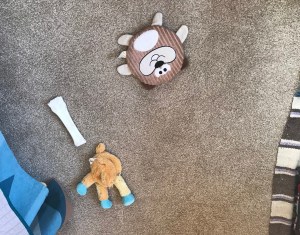
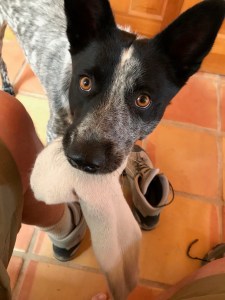
Today, I subjected Cowboy to near-heatstroke by walking on our exposed mesa top way too late in the afternoon; lost my cellphone, loaded against better advice with personal information; and, in the pre-dawn hours, leapt like an alarmed ophidiophobiac when I once again stepped on that low-lying, whoopee-cushion of a toy given to Cowboy by our well-meaning, 15-year-old friend, Sophia.

IMG_4411-1Cowboy seems to deploy the toy at night in high traffic areas, like the path to the bathroom. It squawks loudly when stepped on. I’m sure that none of this occurred to Sophia when she chose the gift, but Cowboy seems to know that hiking poles, handholds and scorpion-avoidance shoes all are useless defenses against sudden late night launches of his startled master by this round, buck-toothed, corduroy-covered dog thing. I once saw Cowboy himself step on it unawares and bolt. Every time I do, I imagine a circle of canine cronies applauding and doubling up with “Arf, arf, arfs,” rating my leap like judges scoring an ice skating move. I have put flashlights within reach in all rooms of the house and, if you happened to notice flashlight beams darting about our place in the middle of the night, I’m afraid you would know that dreamrancher, who would have curtains only if he could swoop around on them like Errol Flynn, was on his way to the indoor plumbing. Conversely, I don’t want to bother any neighbors with glaring indoor lights, at least after a reasonable hour.
Recently, I nicked myself with my new lightweight, battery-powered chainsaw, which I purchased to spare myself the back pain inflicted by my old, gas-powered behemoth. The new thing is so light, I dangled it like a school girl’s purse as I pranced proudly between junipers the other day, gashing myself in the lower leg with the braked but razor-sharp chain because, silly me, I was wearing shorts for the occasion and left my chainsaw chaps gathering dust in the garage with the rest of my real, pre-septuanegerian tools and sporting goods.

As for Cowboy and canine pals in general, I have come to understand at age 68 my deep-seated Scan 48fear of lost dogs. I know now that the pain is the same I felt — and never recovered from — when my father left home when I was 10. Our first dog, Ralph, supposedly ran away in Clayton when I was about 8 because he had been lying on the hot floorboards of the Jeep or Plymouth, or whatever cramped jalopy it was, as we left Las Vegas, New Mexico, for tamer environs of the Midwest. Later, back in New Mexico with another version of the family, minus my father, I had to say goodbye to another Ralph — a big, goofy malamute-shepherd mix — when we had to suddenly leave a phony, debt-riddled ranch outside of Santa Fe. So, I am IMG_4252sorry about the hot afternoon walk, Cowboy. I remember having to carry, after an overly hot walk, one of your predecessors, poor Molly, who was so sweet, by the way, I said she was made entirely of brown sugar. That walk in August nearly did us both in, and I was in much better shape than I am now. You are hard to turn down, Cowboy, but I should know better.
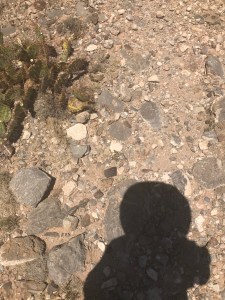
All this is occurring to me, by the way, while I’m also thinking myself pretty smart for again wearing hiking boots for my walks in the rocky Placitas foothills instead of the low-cut hiking shoes that really haven’t protected me from desert gravel, excessive supination and cactus spines.IMG_4393

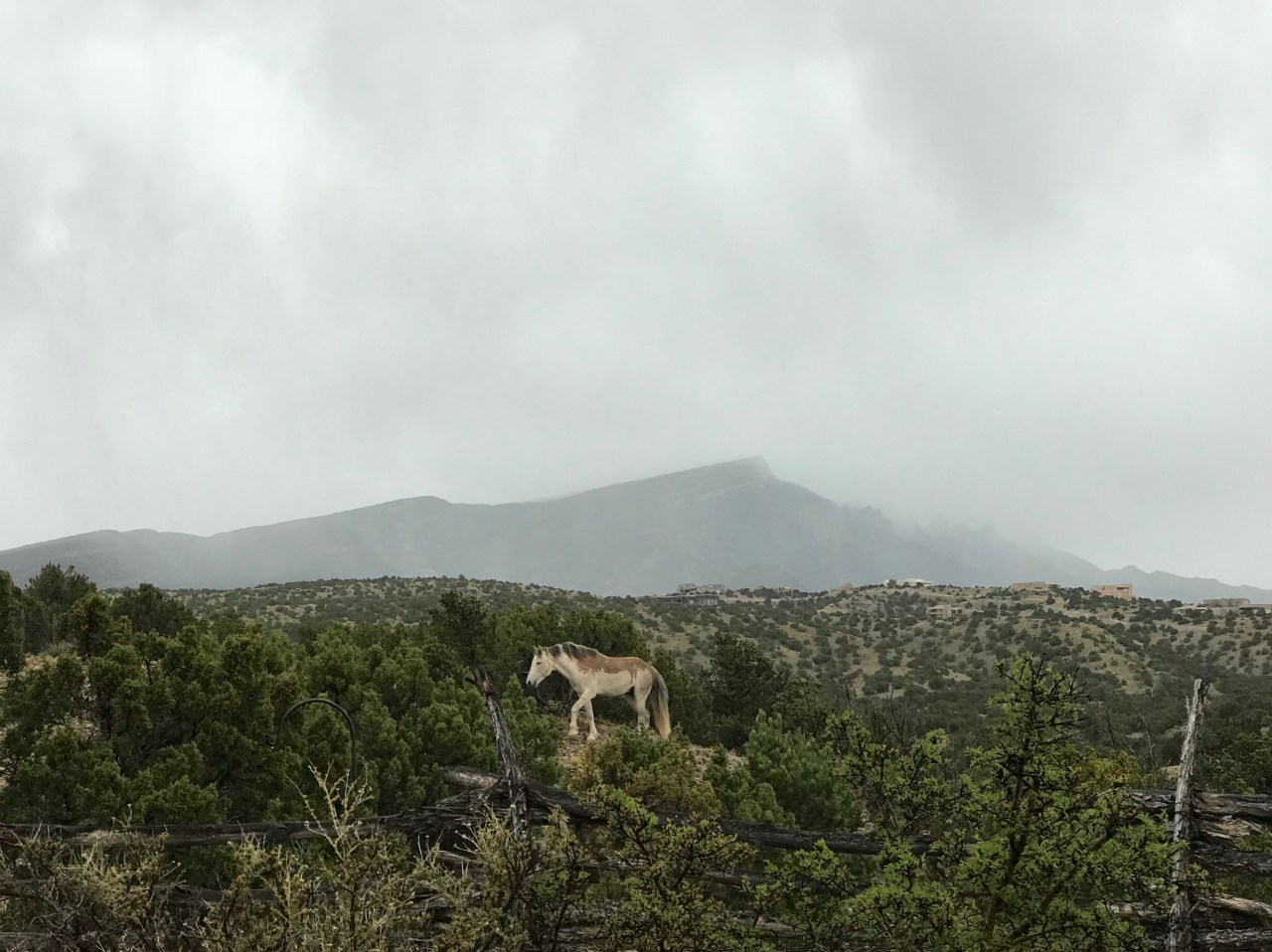
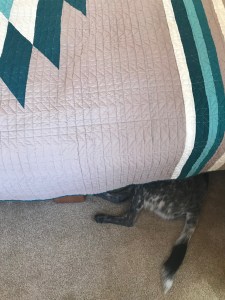
Fortunately, I am lucky. Cowboy cooled down quickly under the bed today, near the air conditioning vent, tented in like a desert sheik, once we got home. And, in the eclectic world of upper Placitas, an outfitter who lives nearby happened to be out exercising a handsome white gelding, while riding an equally good-looking buckskin, and spotted my phone lying in the duff under a juniper where I always stop to give Cowboy a drink. IMG_4408 2

I’m here to say I have been learning or re-learning most of these lessons. We are so fond of Sophia, however, that I can’t bear to get rid of the squeaky toy, and it does remind you, after all, to keep your eyes peeled indoors as well as out. My brother, Pat, used to keep a very realistic-looking coiled, rubber rattlesnake in the middle of his front room. I asked why.

“Keeps you on your toes,” he said.

The chainsaw cut on my leg has healed nicely, thank you. And I promise to wear my chaps next time. Meanwhile, I am saying nothing about the hiking boots to women friends — Lori and Susan — who easily out-walk me, without injury, wearing river rafting sandals.

Despite taking all these lessons seriously, I just hope I haven’t found out my true calling is writing for the AARP newsletter. And Jim Belshaw, no, you cannot have my truck when my luck runs out.

~~~~~~~~~~~~~~~~ 30 ~~~~~~~~~~~~~~~~~~

Note: For more Belshaw and the best truck-friendship line of the burgeoning summer season, see https://dreamranch.wordpress.com/2018/06/01/june-wildfires-swampcoolers-and-beans/

I almost forgot June was upon us until wildfires started breaking out like popcorn and a friend had to pass on coming out to Placitas for a bowl of beans.

IMG_3810

These would seem to be predictable misadventures in what is often New Mexico’s most troublesome month.

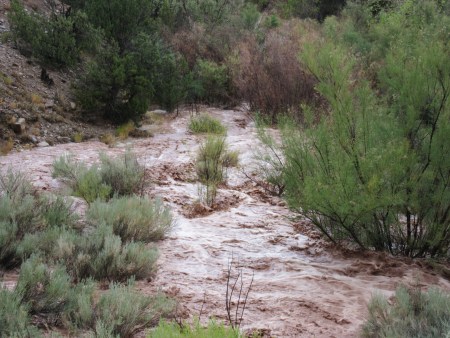
When my weather app reported an 80 percent chance of rain for Sunday, I thought we might get a break in the usual June pattern of little precipitation, high heat, rampaging fires, smokey skies, snake encounters and general social and environmental malaise brought on by brain-addling high-pressure systems.

I got excited and invited a friend out to have a meal and watch the rain. After the lightning subsides, I thought, we could walk the ridge and watch the arroyos run. I’m afraid I also might have indicated I would prepare a pot of pinto beans. She accepted at first but soon followed up with a polite note about a prior engagement involving a piano duet.

flashflood

In other June 1 news, a wildfire raced toward Cimarron, forcing its evacuation, and another forced evacuations north of Durango. The two-week-old Buzzard Fire in the Gila Wilderness was only 34 percent contained. I am saying nothing for now about the triple murder in Dixon or the latest cases of New Mexico child abuse.

On a brighter note, I was treated to one of my old Albuquerque Journal friends, Tom Harmon, desperately seeking home maintenance advice from Dr. Swamp Cooler, aka former Journal metro columnist Jim Belshaw.

Fritz Thompson, another friend and legendary Journal writer, also famous for swamp cooler mishaps, got dragged into the exchange.

It seems a stray feline had been pissing on the swamp cooler on Harmon’s South Valley roof, infusing the interior of the house with eau-de-tomcat. Dr. Swamp Cooler, although a premier authority on the subject of swamp cooler perils, is retired. I suspect he also is weary of discussing the Rube Goldberg-like devices that Albuquerqueans were long ago suckered into thinking could actually cool their homes.

swampcoolere

But, as a friend, and without any hint of cottonwood-shaded Corrales smugness, Dr. Swamp Cooler patiently conveyed to Harmon the proper courses of action. The instructions began with — and I paraphrase to protect patented advice — “Do not under any circumstances attempt to climb a ladder or go up on a roof.”

Given the the usual downward spiral of swamp cooler repair attempts, and despite being an animal lover, the good doctor, an Air Force veteran, cited the sure-fire gambit of calling in artillery, either to remove the cat or the swamp cooler, or both.

And being thorough, he rounded out the range of options with a last resort: Call a professional such as — yuk, yuk — the ranch-raised Fritz Thompson, a Wagon Mound native whose best idea for cooling off might be a more fool-proof but less socially acceptable form of evaportative cooling such as skinny-dipping in a stock tank.

IMG_4075

It again seemed to be Dr. Swamp Cooler’s intimacy with the normal course of events that inspired him to conclude with this eminently practical question to Harmon, and here I quote:

“When you fall off the roof, can I have your truck?”

I’m glad my neighborhood isn’t on fire and that the kids down the road have good parents. But my friend-and-beans story out here in Placitas seems a little bit like knowing better but still climbing the ladder to fall off the roof, even though I wised up and decommissioned my own swamp cooler years ago.

I don’t doubt my friend about the piano duet. I am charmed, in fact, that she plays. And I do have air conditioning these days — kind of expensive but more neighbor-friendly than a stock tank — but who in their right mind invites someone to drive 35 miles for flash floods and beans?

It must be June.

IMG_3981

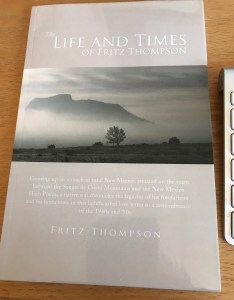
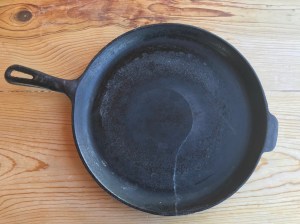
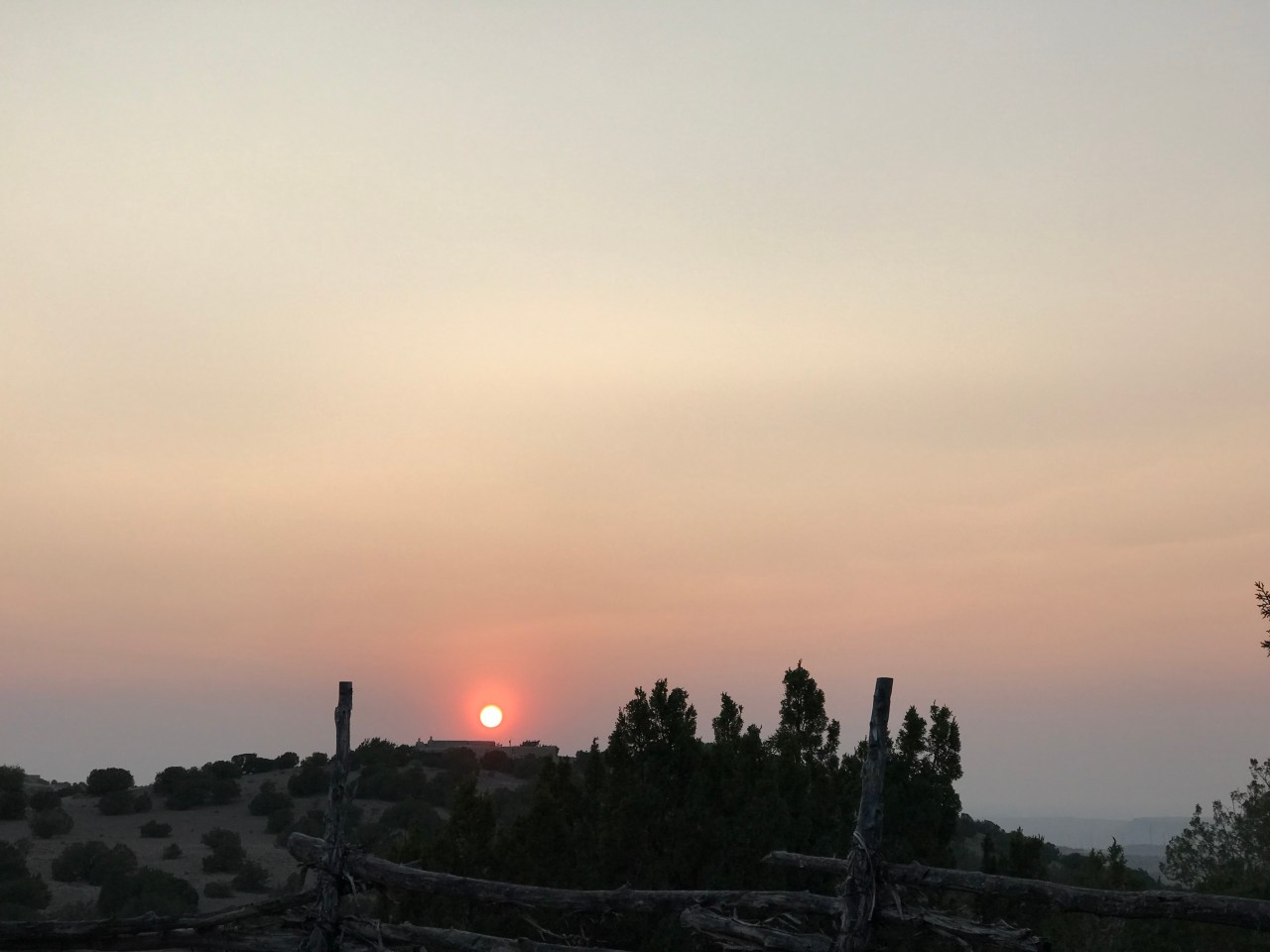
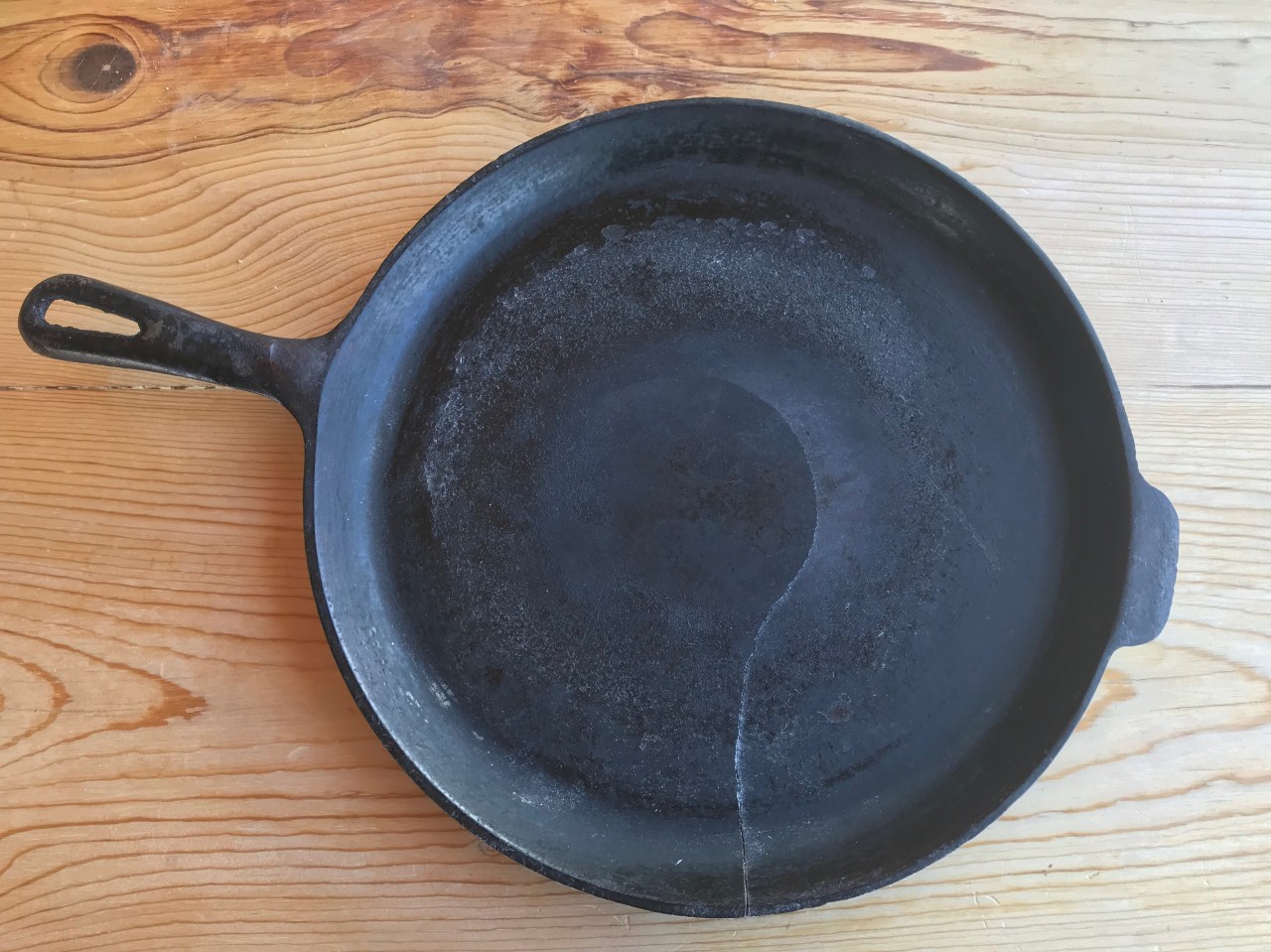
Note on photos: The photos of a Placitas flash flood below my home, a big wildfire in the Jemez Mountains and a smokey Rio Puerco sunset all are from previous Junes and taken with my iPhone. The kitchen, with beans and chile bubbling away, is mine. The book, “The Life and Times of Fritz Thompson,” is by Fritz Thompson. And while some people see signs on tortillas and mud-plastered walls, I have my 40-year-old cast-iron griddle, which recently developed a crack in the shape of a question mark.

IMG_0841

I study this photo when I have trouble squaring things away. Actually, I have a similar view walking home every night with Cowboy, Placitas dog pal No. 4, but these clouds brought more game than usual.

I guess it was the death of a friend in Santa Fe — Tom Day — that threw me out of whack last week. I thought a lot of him as a person and newspaperman and, even though I hadn’t seen him in years, I was stunned by his passing. And it sent me into one of those selfish mortality scares. He was in his late 70s and I am 10 years younger, but I tend to think of myself and my friends as rowdy, sure-of-ourselves 20 or 30 somethings, laughing, frozen in time. He was senior to most of us in the New Mexican newsroom in the mid-1970s and we looked up to him. You never are prepared for people like that to die.

My mother was in her first year of college when this picture was taken in 1948. She was 19 a year later, when I was born. I see innocence in her eyes. Her smile is happy and fearless. She lived only until she was 49, although she bore seven children and, I’m sure, learned a lot about life in her relatively short time. I’m also sure she loved her last place in Montana, with her three young girls.  Scan 13

It’s hard to know when things will end. My Santa Fe bicyclist friend was riding when he took his last fall. I’m glad my young heeler pal tolerates my slowing pace. Purely as a practical matter, I carry contact numbers for his care, should I drop.

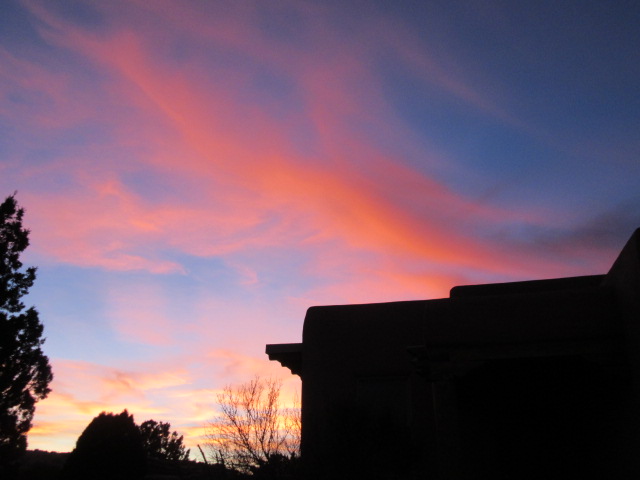
Sometimes I wonder whether those ethereal pink clouds over my house are portents or good vibes. I end up thinking I am lucky to call this home and to see that sky. More and more, I see the connections to mother and friends. She brought me here and they helped me along.


Previously on Dream Ranch: Canyon Road, 1960. https://dreamranch.wordpress.com/2015/03/12/canyon-road-1961-dreams-and-troubles/