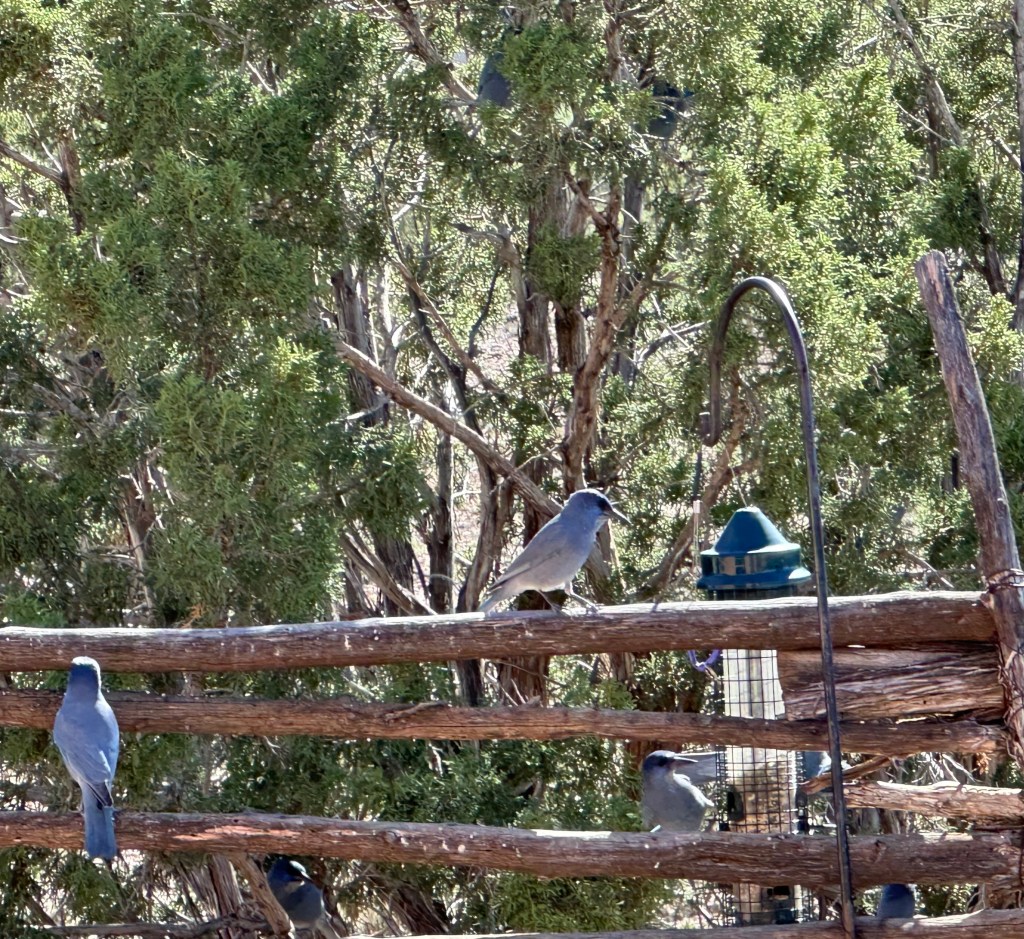
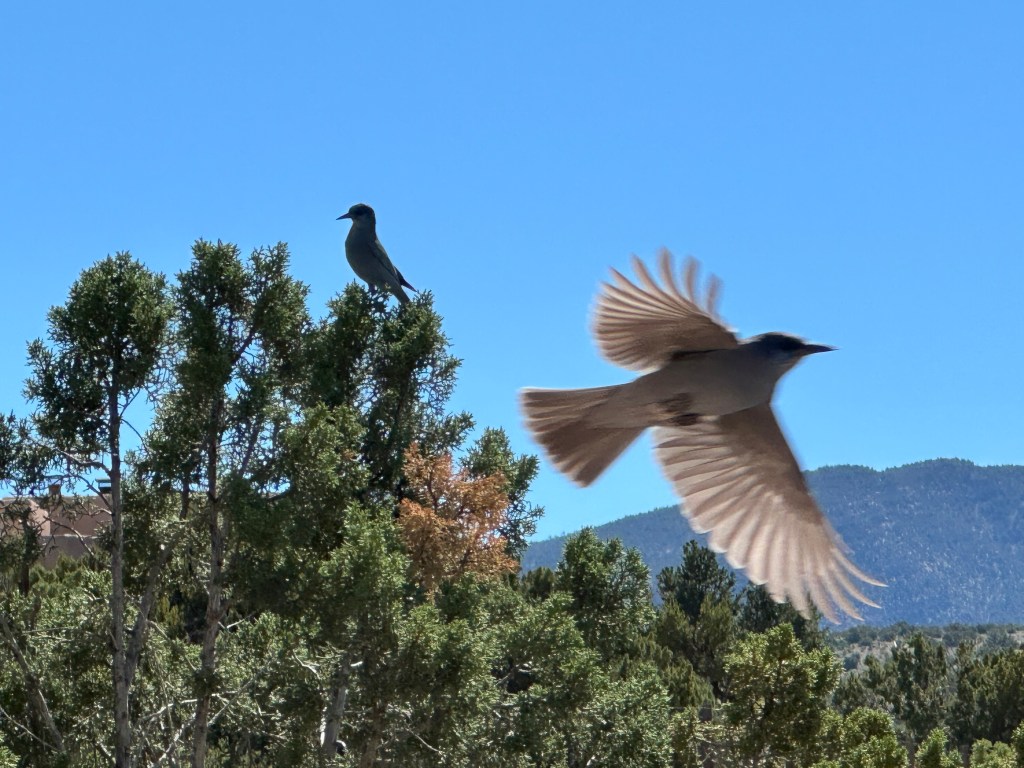
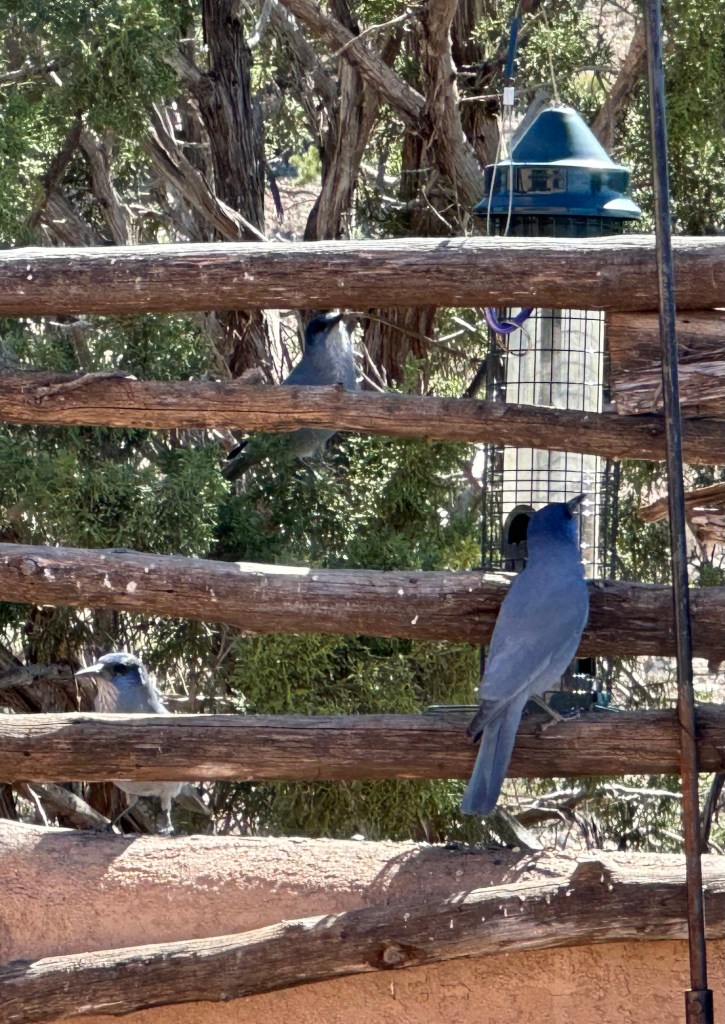
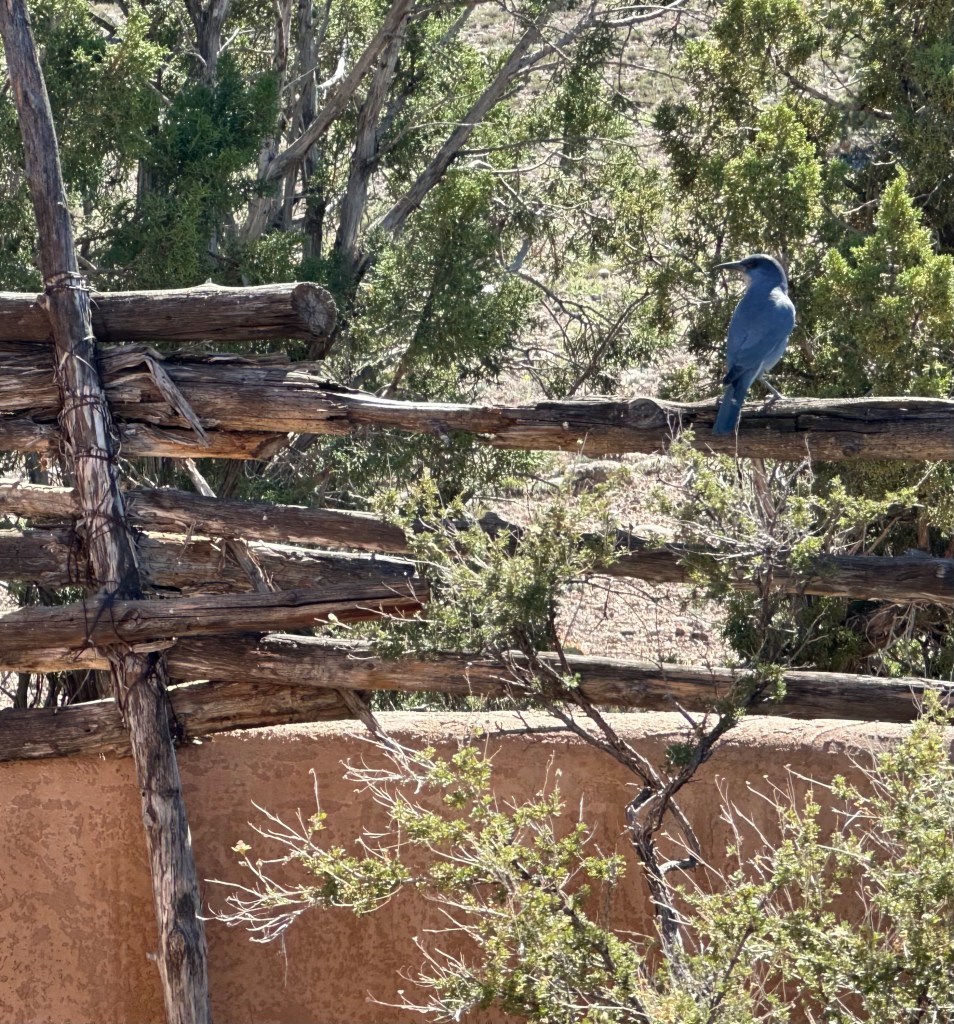
Investigating me at the bird feeder this morning …
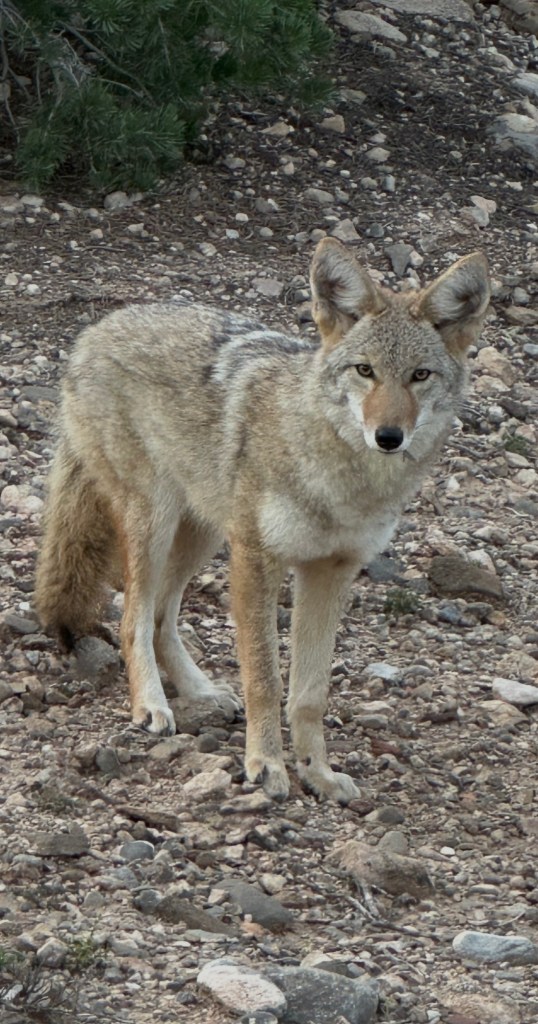
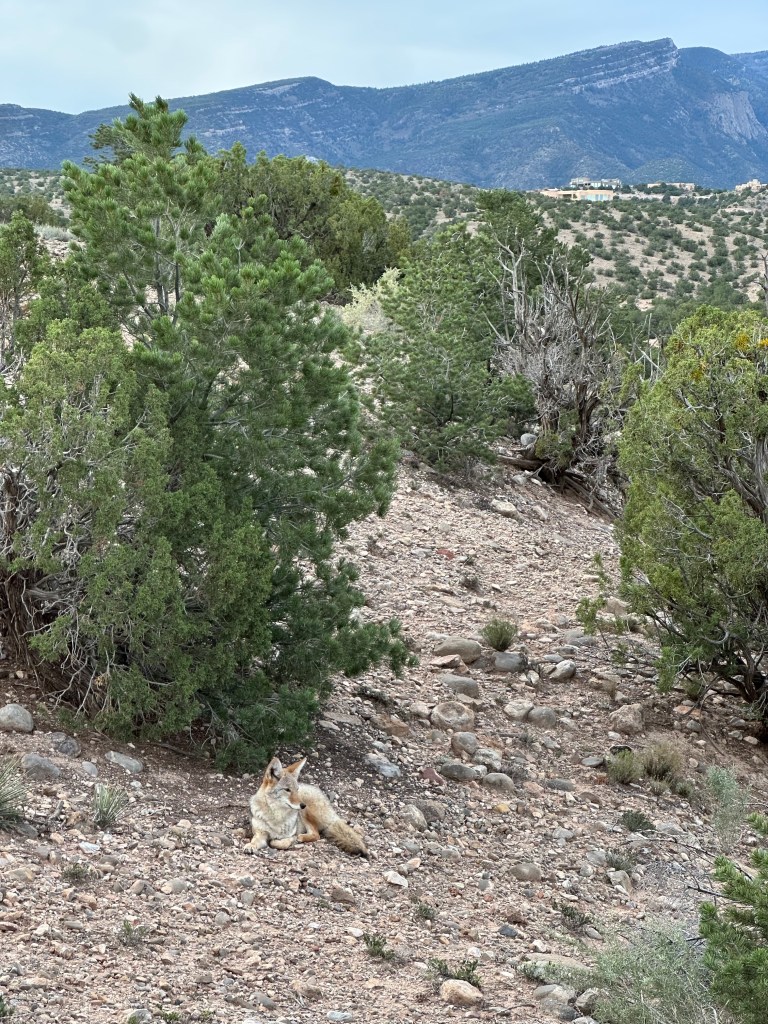
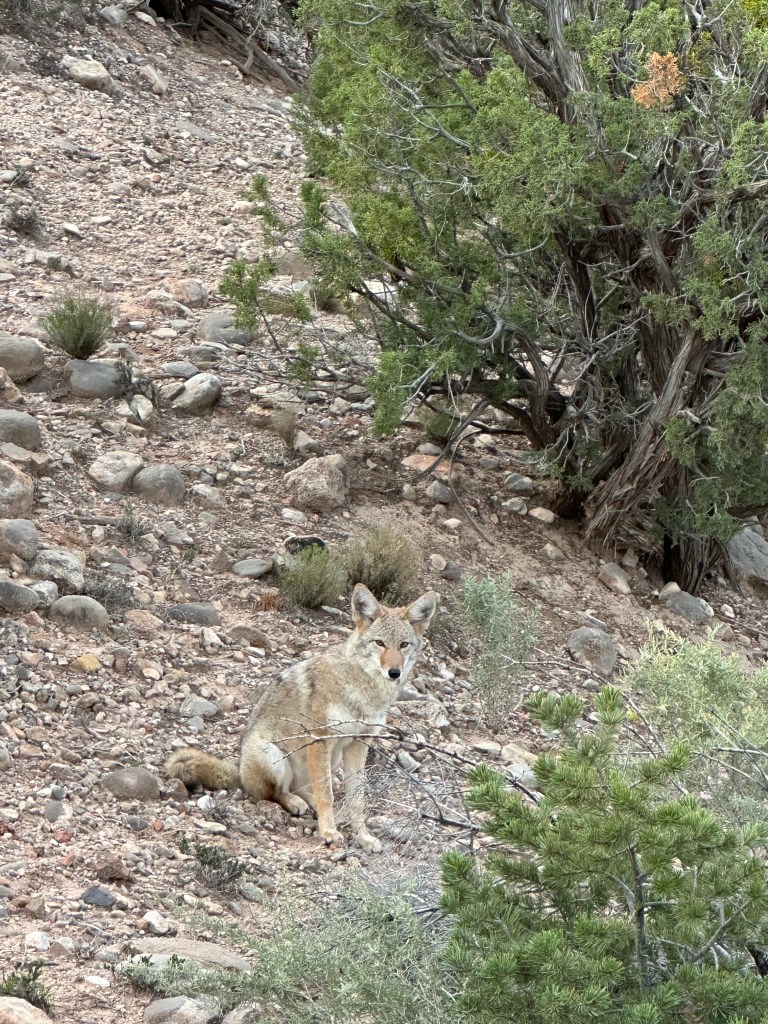
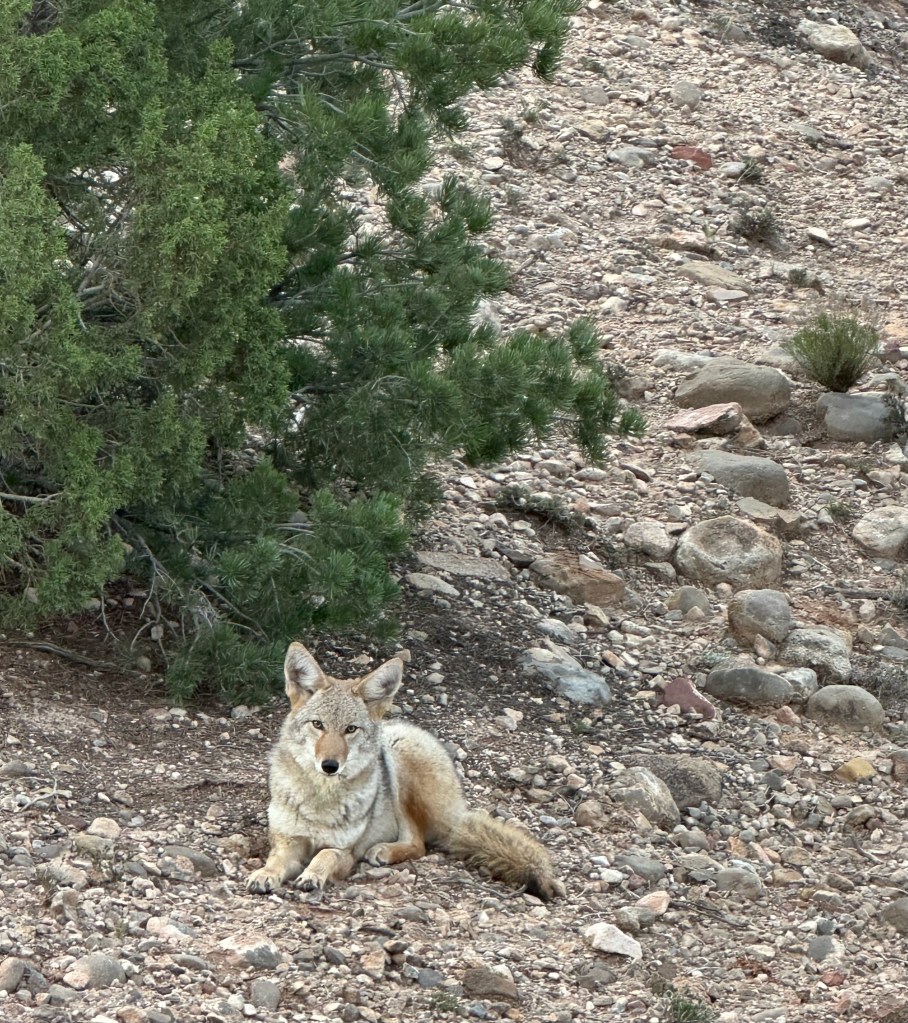
Investigating me at the bird feeder this morning …
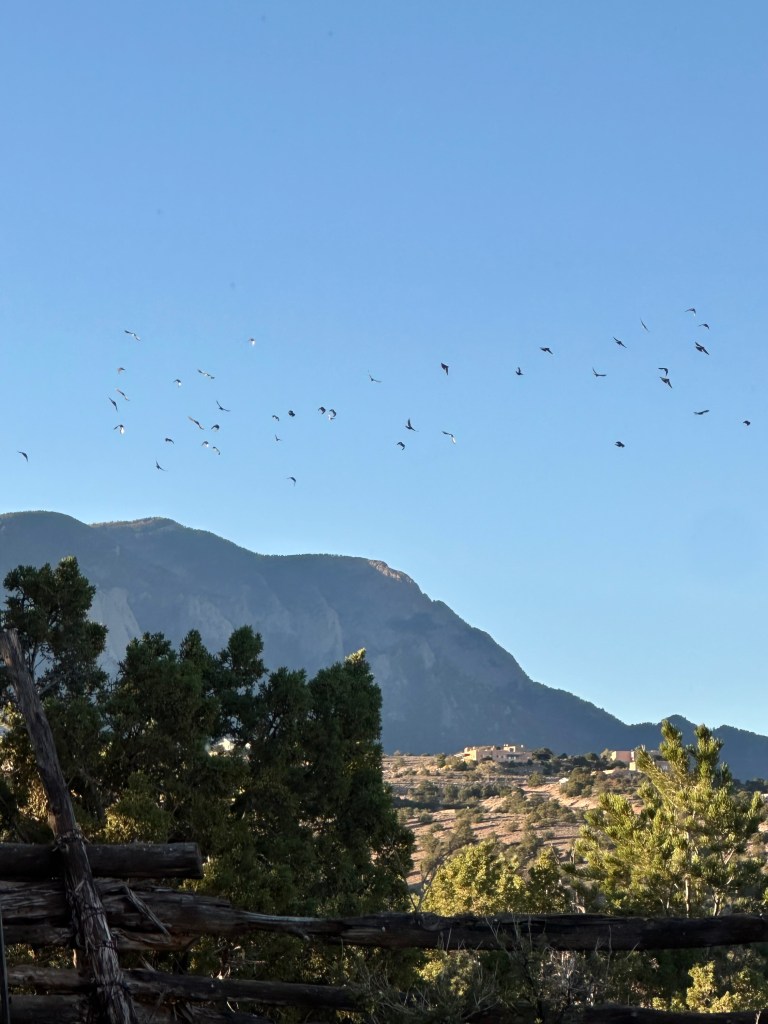
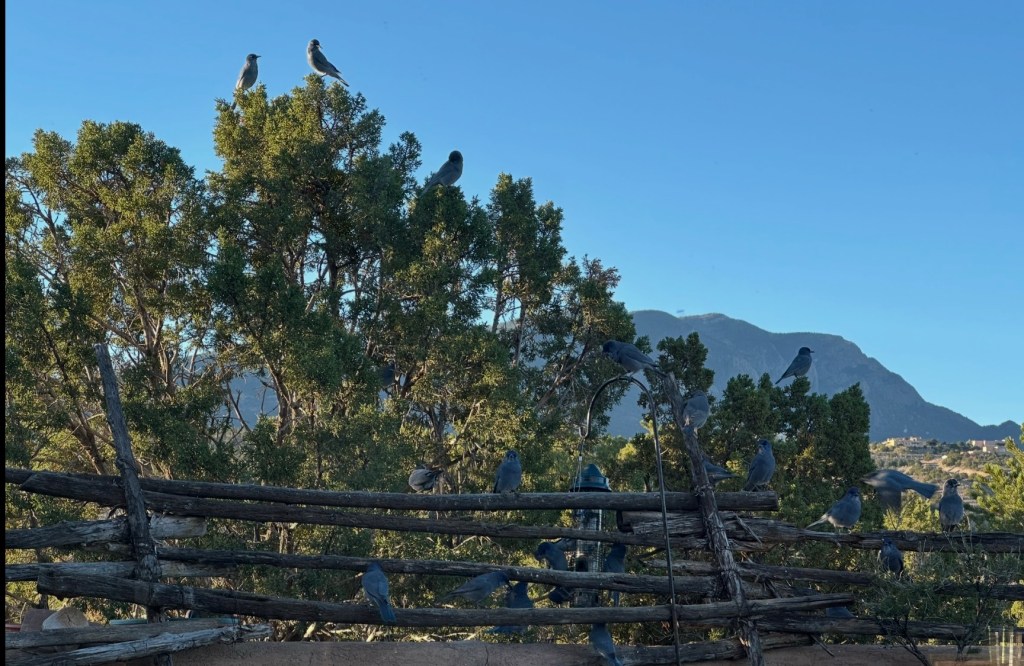
The temperature dropped to freezing overnight and a ruckus of piñon jays flocked in the morning to food and water at 6,000 feet, first ones I’ve seen this season.
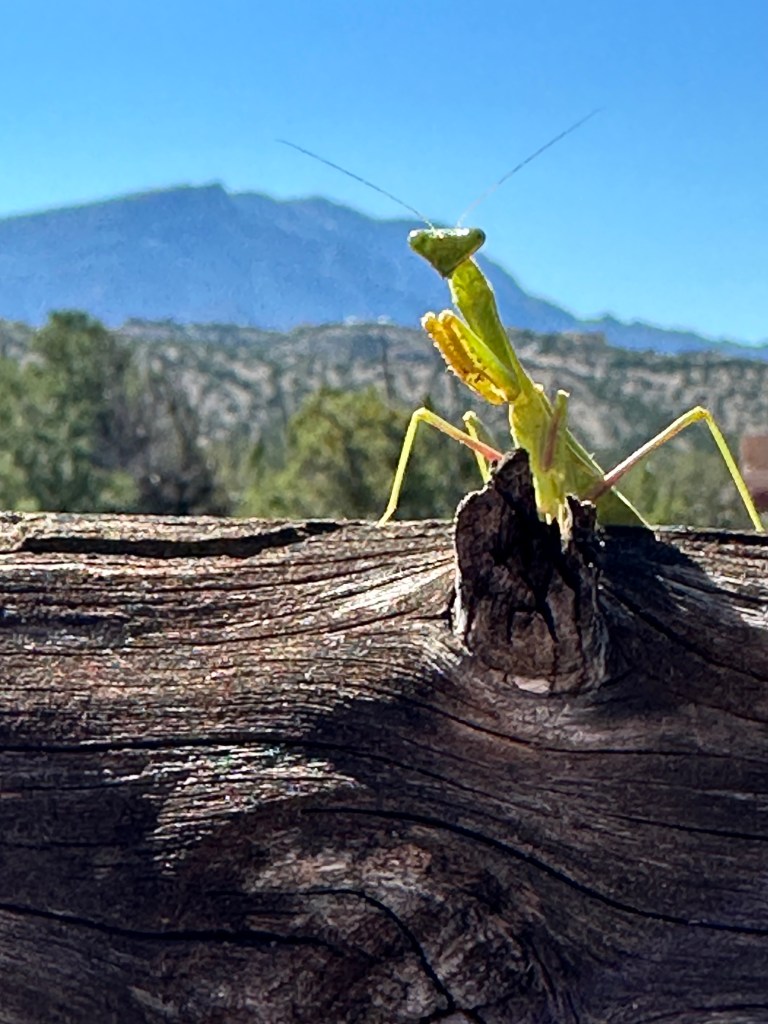
‘
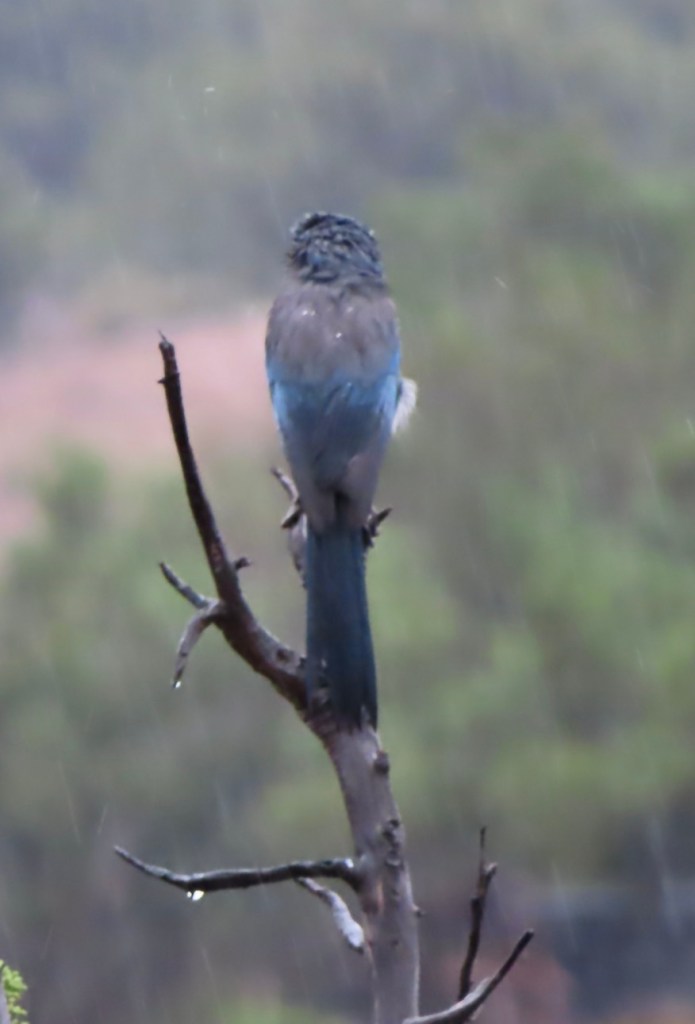
One Placitas gauge has 1.40″ ” in the last 24 hours. I am posting at 5:42 pm, Wednesday, September 23.
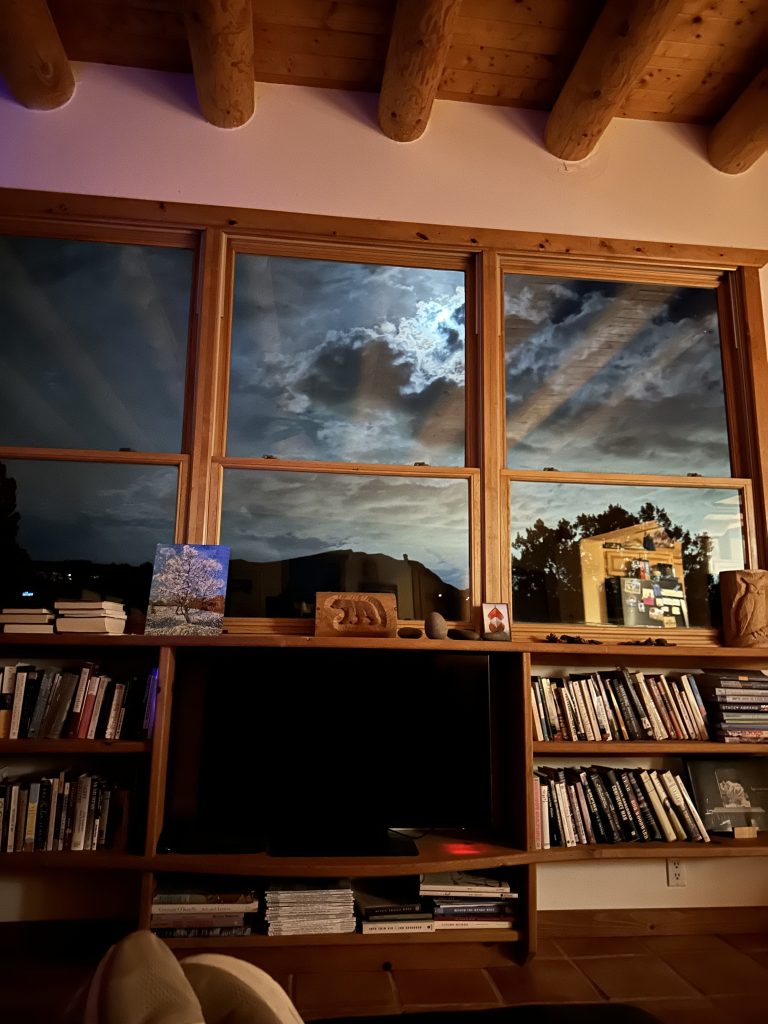
Frost came first. Then Hugo. Then Roethke. Then Frost again. Twentieth century lyrics absorbed into the same mental jumble of colloquial files, remembered in a stream, resonating slowly as I close the day, welcoming sleep.
Stopping By Woods on a Snowy Evening … Degrees of Gray in Philipsburg … The Waking … Stopping By Woods ….
… lovely, dark and deep … The car that got you here still runs … her red hair lights the wall … learn by going where I have to go … miles to go before I sleep.
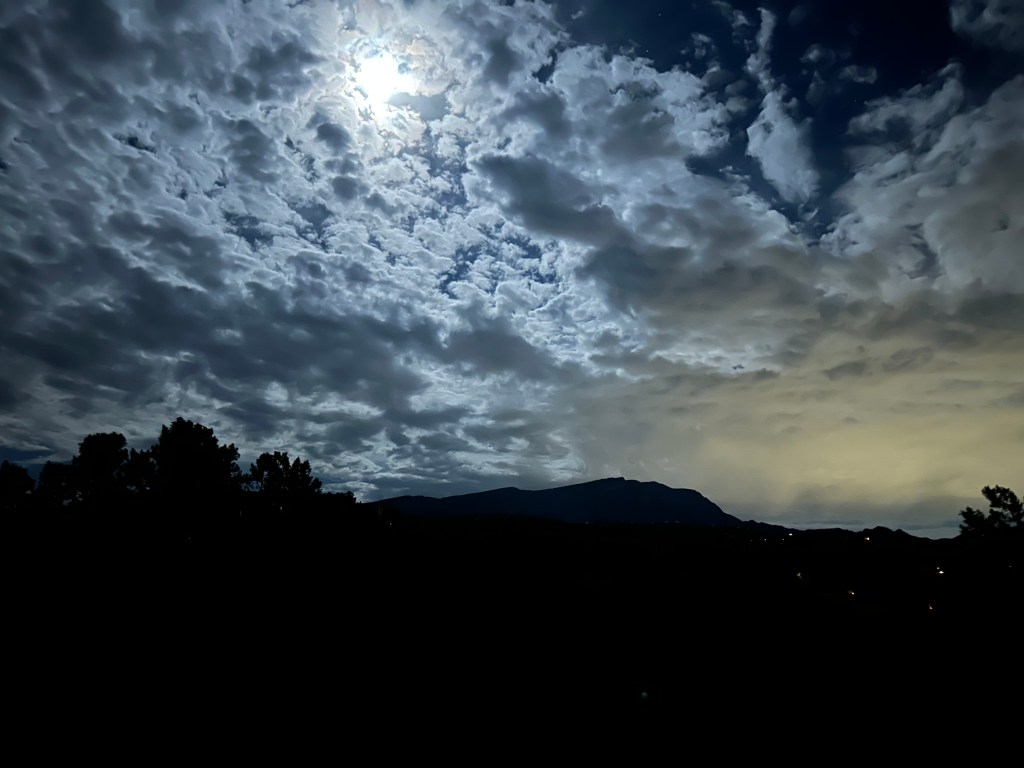
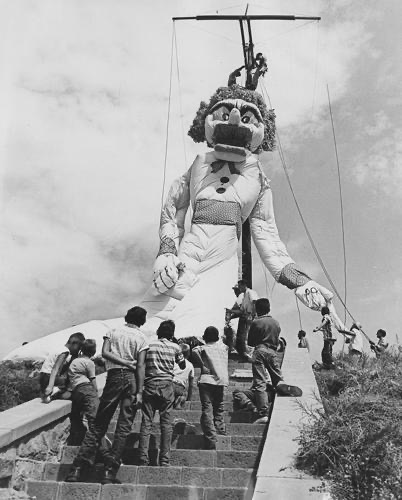
I imagine I might be called out one day to attend the burning of Zozobra with someone’s grandkids — a duty I could not decline — but this year I stayed away again.
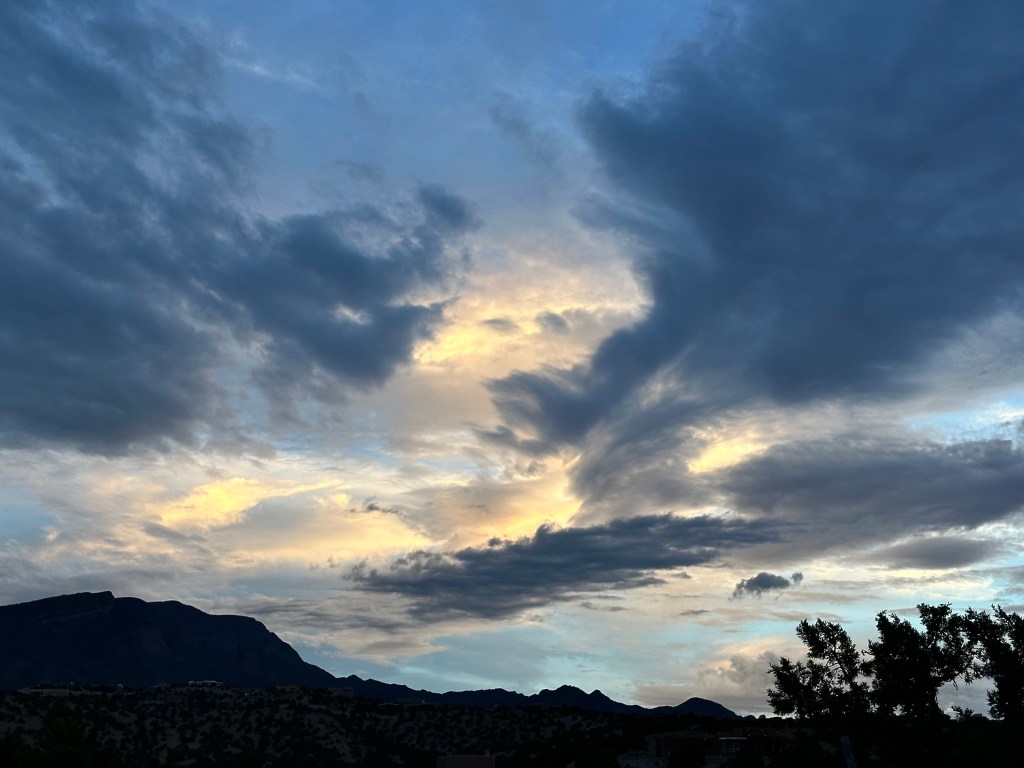
This was my Zozobra view from Placitas last night, or at least what I was looking at as Santa Feans prepared to burn Old Man Gloom for the 102 time.
Forty-six thousand people crowded into Fort Marcy park is too much for me. I haven’t been since the early 1980s and I have a scar in the palm of my right hand from climbing a chain link fence to get in.
With photographer Tony O’Brien in the mid-1970s, as a reporter for the Santa Fe New Mexican, I covered a bottle-throwing melee involving out-of-town bikers and local kids outside La Fonda.
During the Zozobra aftermath in the early 1960s, when Zozobra goers flooded on to the Plaza for food booths, dancing and bar-hopping, my mother was hit on the head by a flying Coke bottle in front of Zook’s pharmacy.
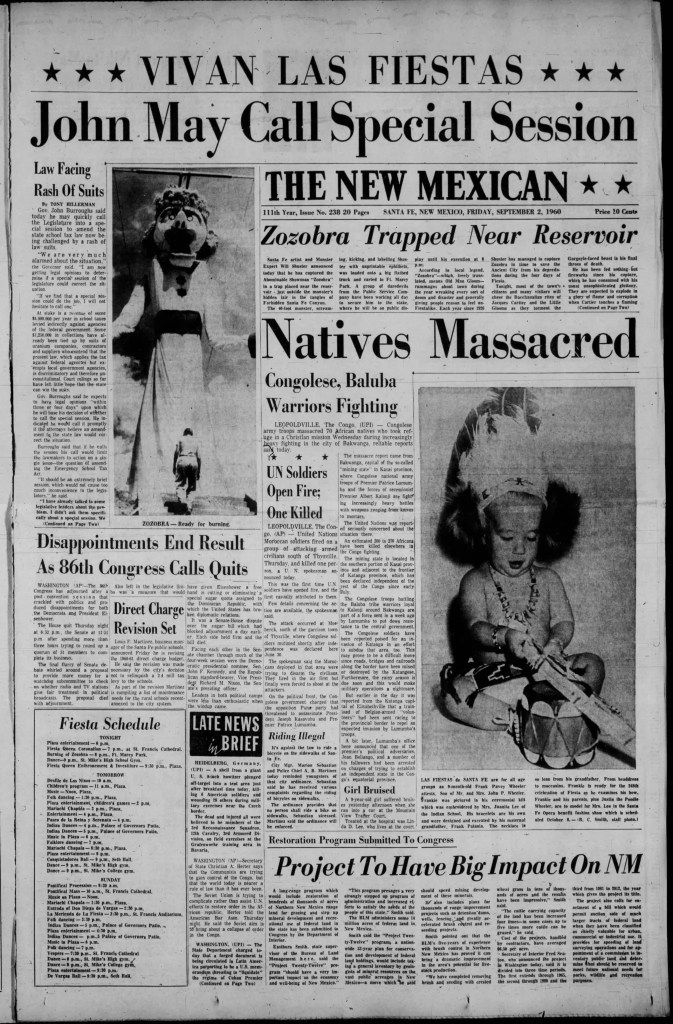
The best experience I remember, other than enjoying the food booths, was coming into town from the far end of Tano Road in an open-topped Jeep and riding the La Fonda elevator up and down while adults hung out at the Plaza Bar. We hoped not to be caught by the no-nonsense front desk person Mr. Wilson, husband of my sixth grade teacher at Acequia Madre Elementary, Mrs. Elizabeth Wilson.
I guess one of the best newspaper assignments I ever had was sampling food booth cuisine for the Santa Fe New Mexican in the mid-1970s.
And I feel a kind of allegiance since the Kiwanis Club, longtime sponsor of the Zozobra production, also sponsored my Coronado Kiwanis Little League baseball team for two years in the early 1960s. Thanks, by the way, to Mr. Padilla, our patient coach.
So, my feelings are mixed but I remain a Zozobra believer, at least in the fun-loving Santa Fe artist concept of having a party and burning away gloom. I think it should be part of every Santa Fe kid’s experience if they are up to the challenge and wouldn’t be too scared.
I would go again if called to duty but in the meantime am glad to watch it from afar. Thanks to this year’s New Mexican reporter and thanks to ever-faithful Zozobra fans Steve Terrell and Inez Russell Gomez for their inspiring Facebook photos.
Temperatures finally coming down a little, August 30.

A little rain and The Overstory, Richard Powers, 2018. Wow on both counts.
As I creaked out of bed this morning and walked stiffly toward coffee, I thought the first challenge of turning 77 will just be keeping the body working.
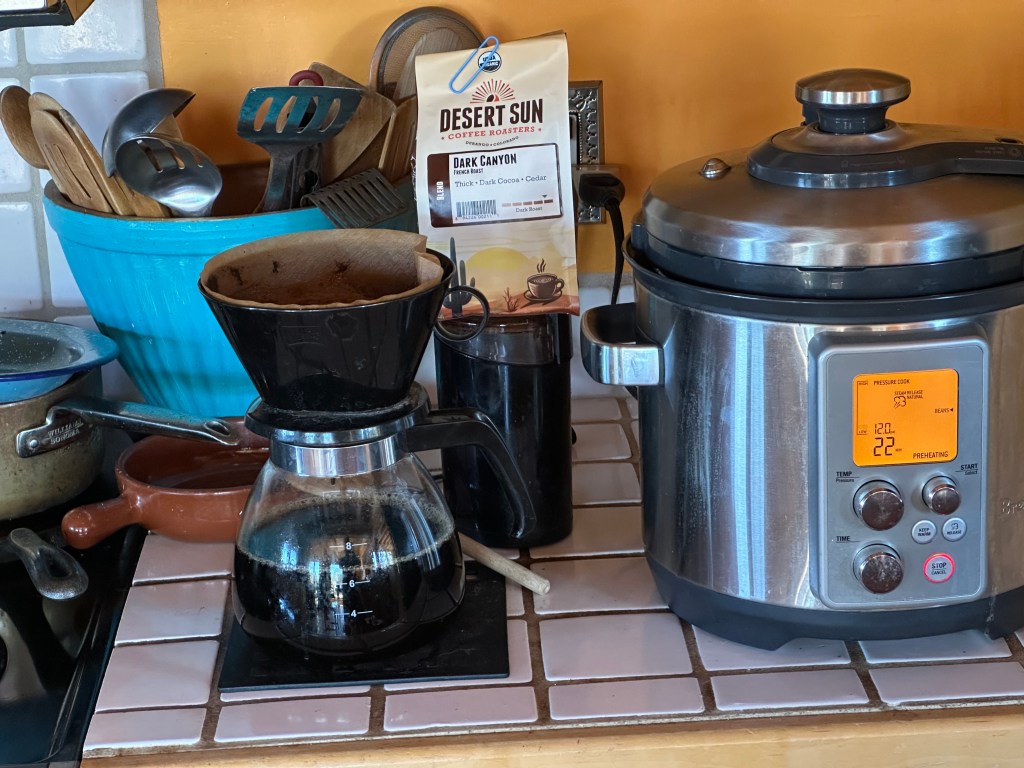
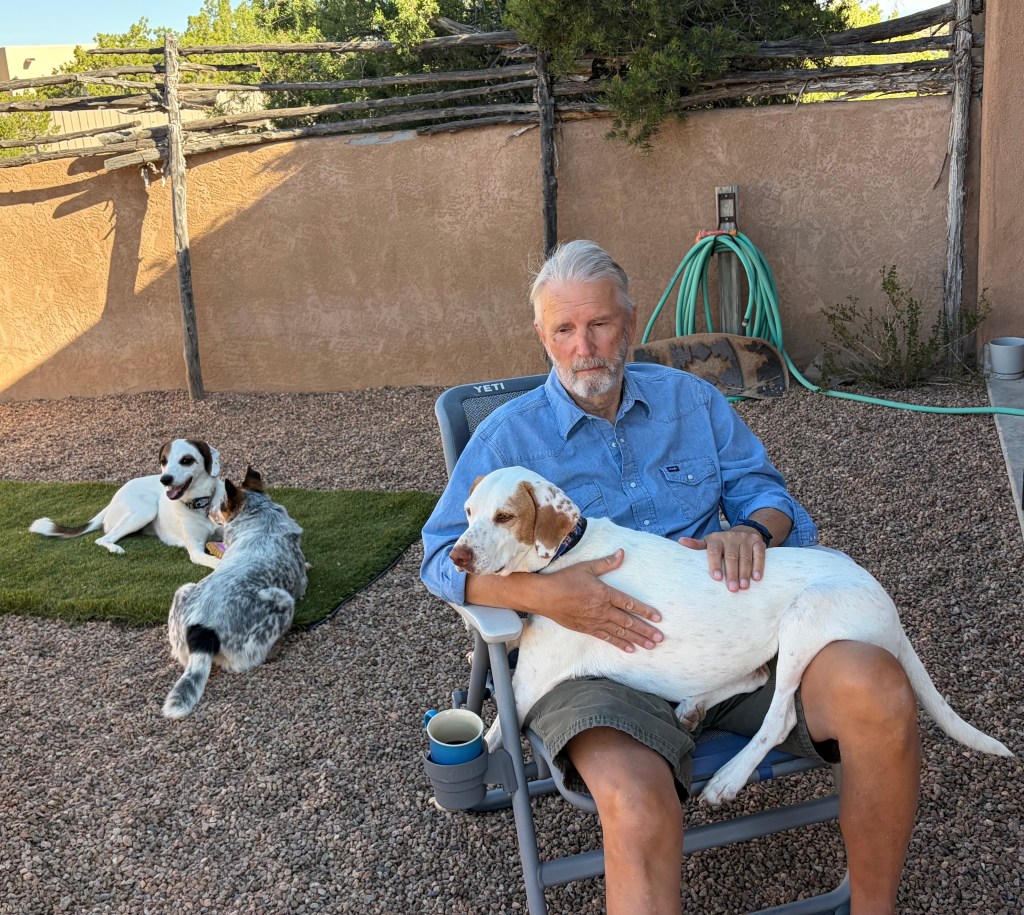
I settled down with a cup of Dark Canyon, a birthday gift from neighbors Lori and Mike, my nutty-but-gentle heeler Cowboy 2 herding imaginary livestock nearby. Peace before body work, I thought, but my next two moves were ill-advised.
I called Presbyterian Hospital to track down the results of the CT scan from a week ago and after several call transfers learned the scan results were still “pending creation.” The radiology department had already cancelled and rescheduled the first date for the scan because “we have no staff.”
Next, I plunged into the internet for the truth about my new recumbent exercise bike.
I have been describing the pedaling as surprisingly comfortable exercise, practically meditative, only to learn from an actual exerciser friend that the resistance function, which I had happily dialed up to 100 percent, apparently isn’t engaged. Artificial intelligence informed me that I’m going to have to disassemble the thing I wrecked my back putting together, even with neighbor Mike’s help.
These developments threatened to erase a great birthday calm that came with watching shooting stars for hours Saturday night with stepsister Susan and her partner Tom and getting a visit on a cool Sunday morning from Lori and Mike, Izzy and Molly, bearing two pounds of coffee from a favorite Durango roaster.
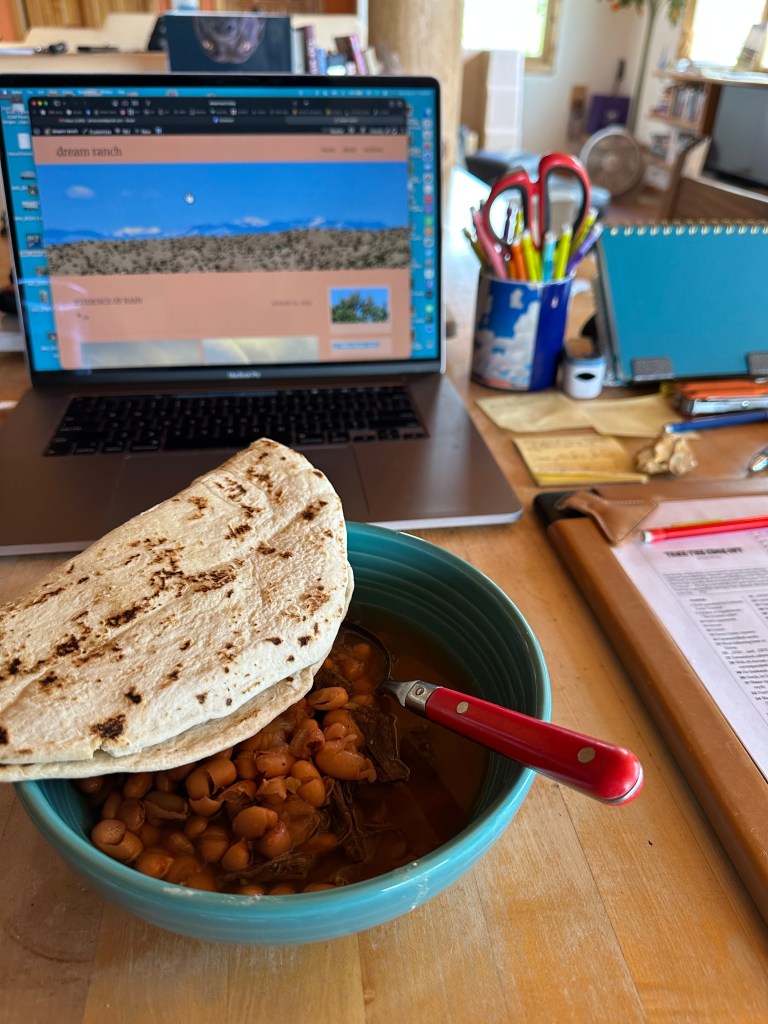
A couple of hours into 77 plus one, I say the heck with scanxiety and exercise obsessions. I’m shoring up my mental health with more Dark Canyon and a bowl of pinto beans that I prepared, without incident, the day before getting a little older.
By the way, the Barelas Coffee House tortilla in the photo, retrieved from the freezer after a recent Barelas foray with buddies Tim and Tom, is a flagrant but rare treat. And pretty soon, I guess, I’ll have to start pedaling for real.