Two days: First winter weather approaching piñon/juniper country.
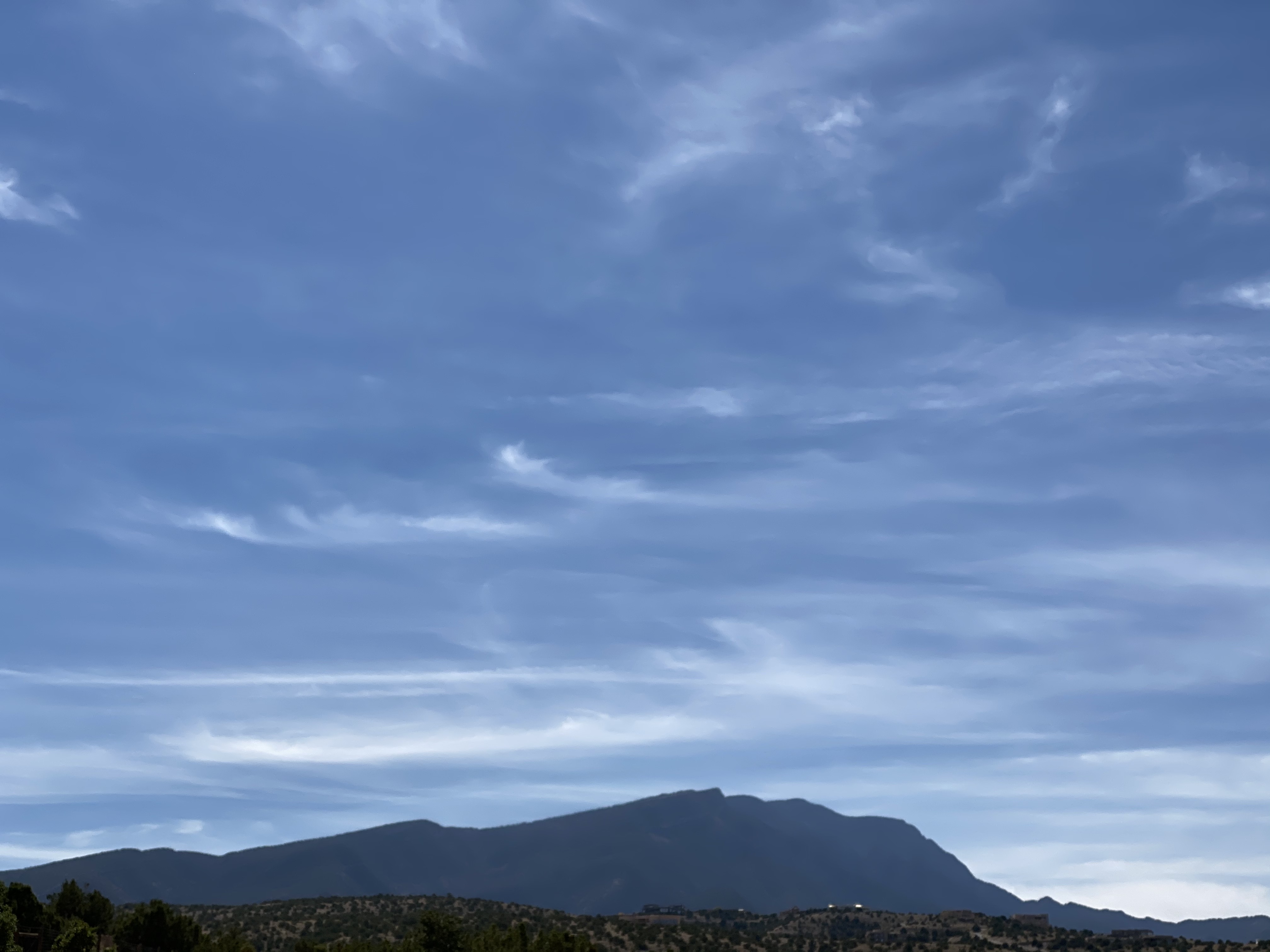
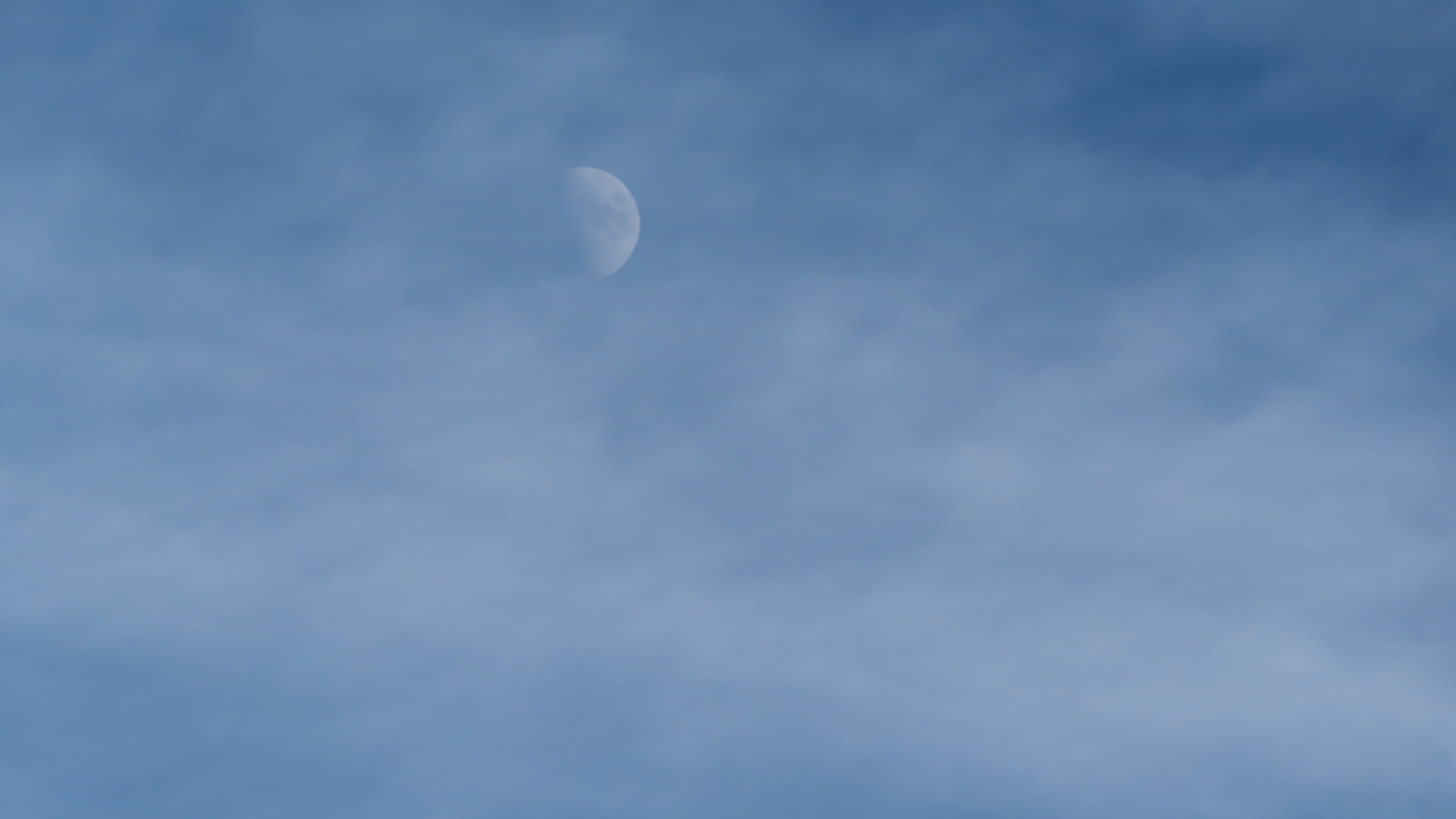
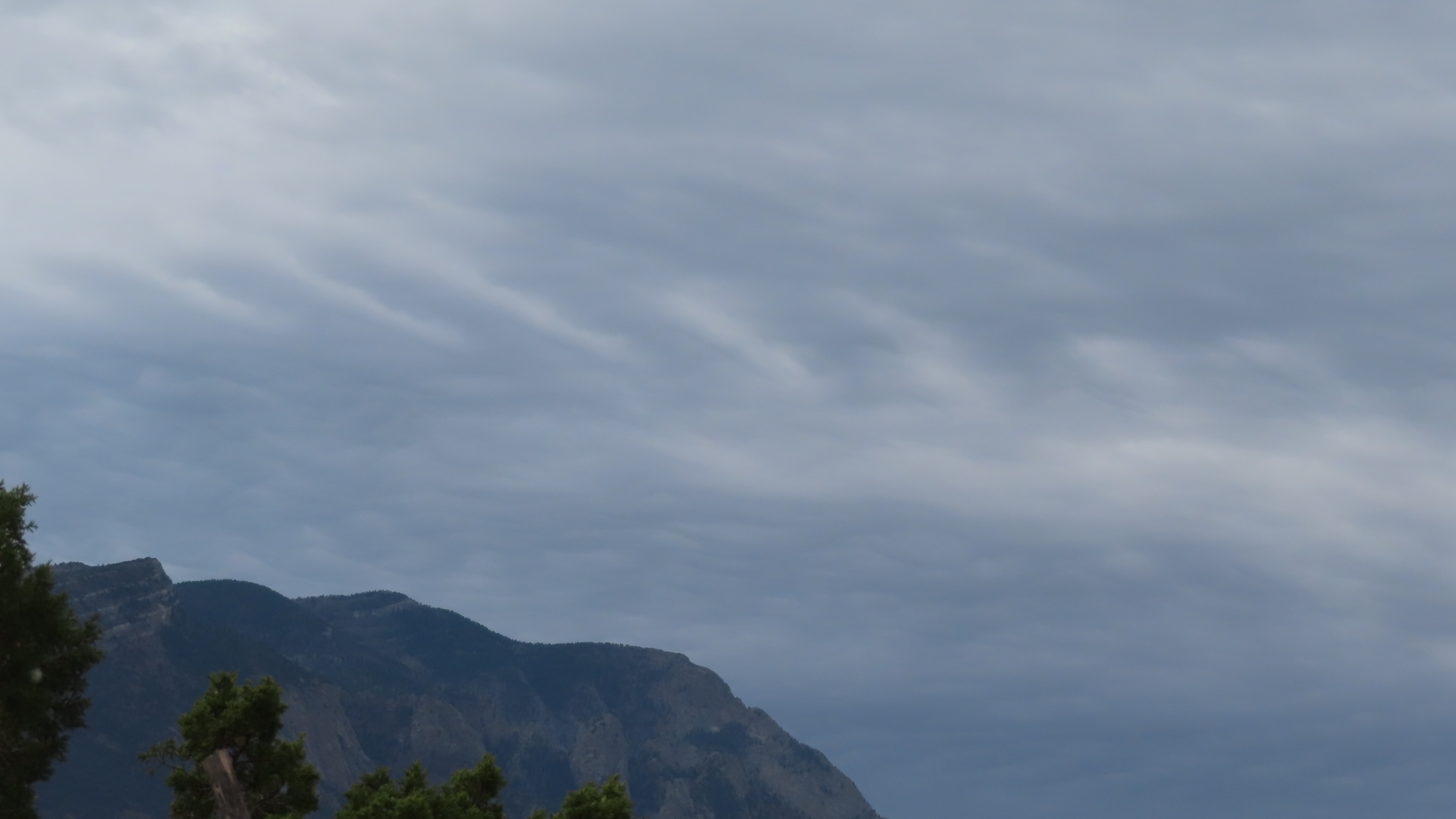
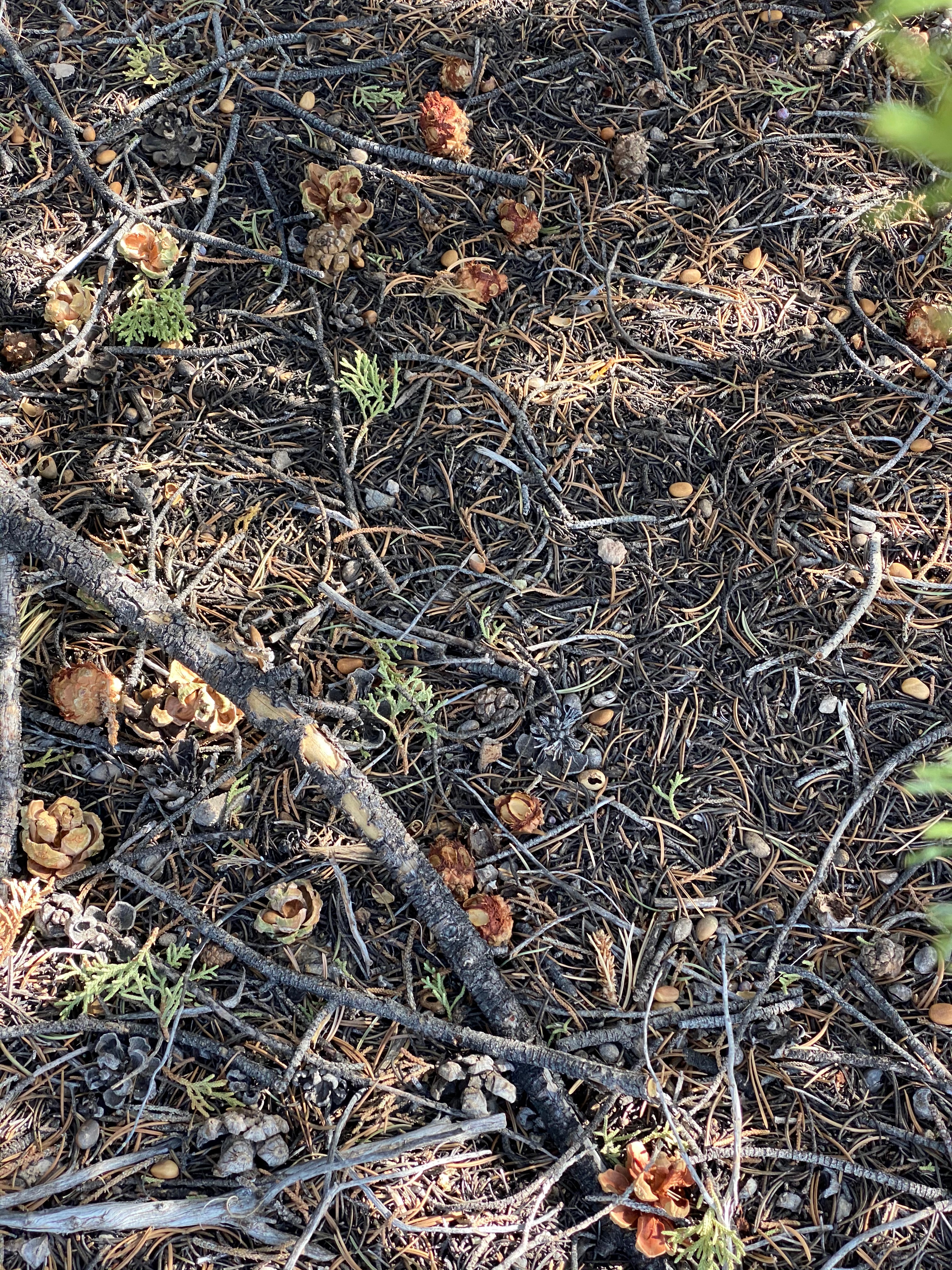
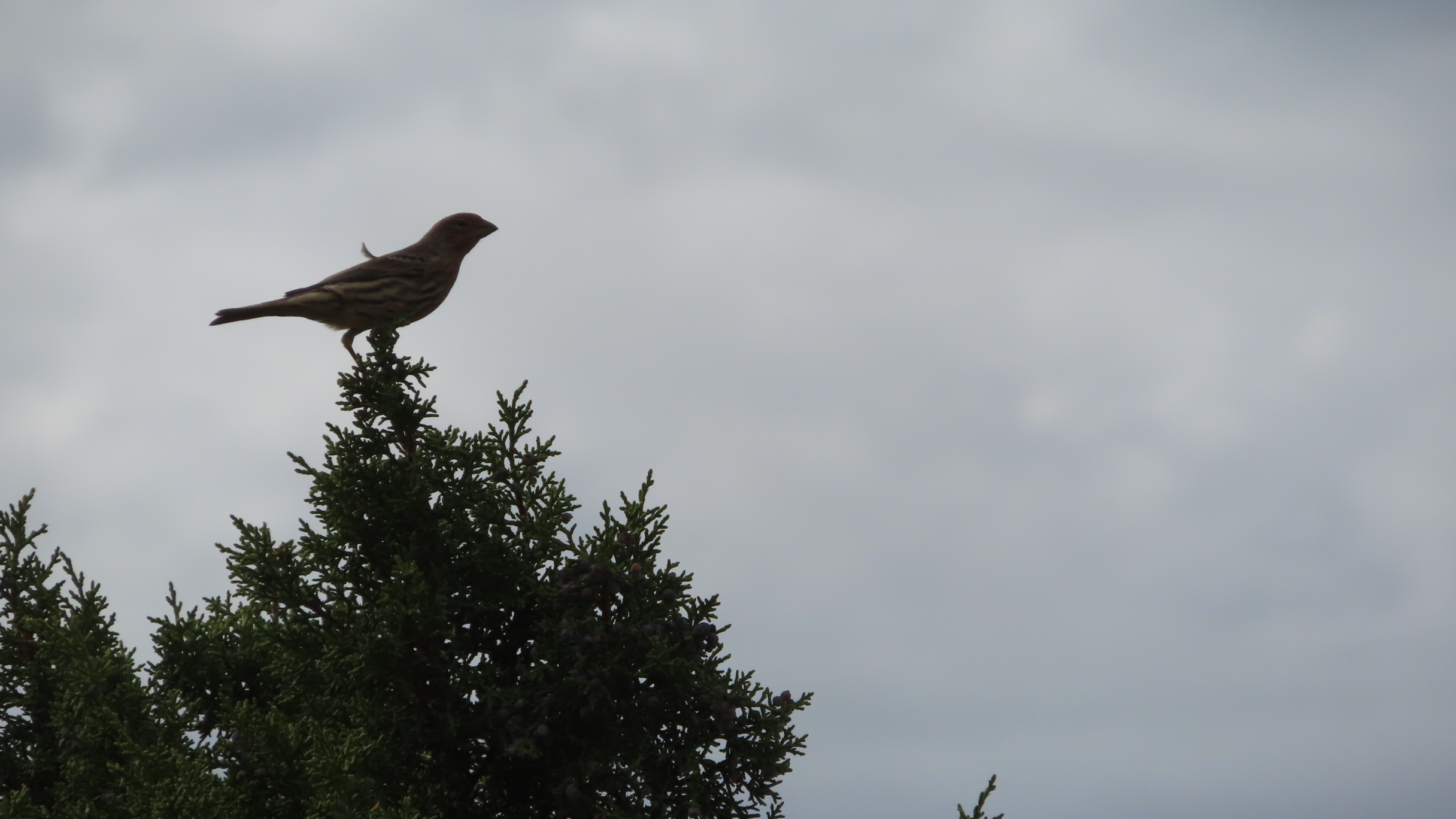
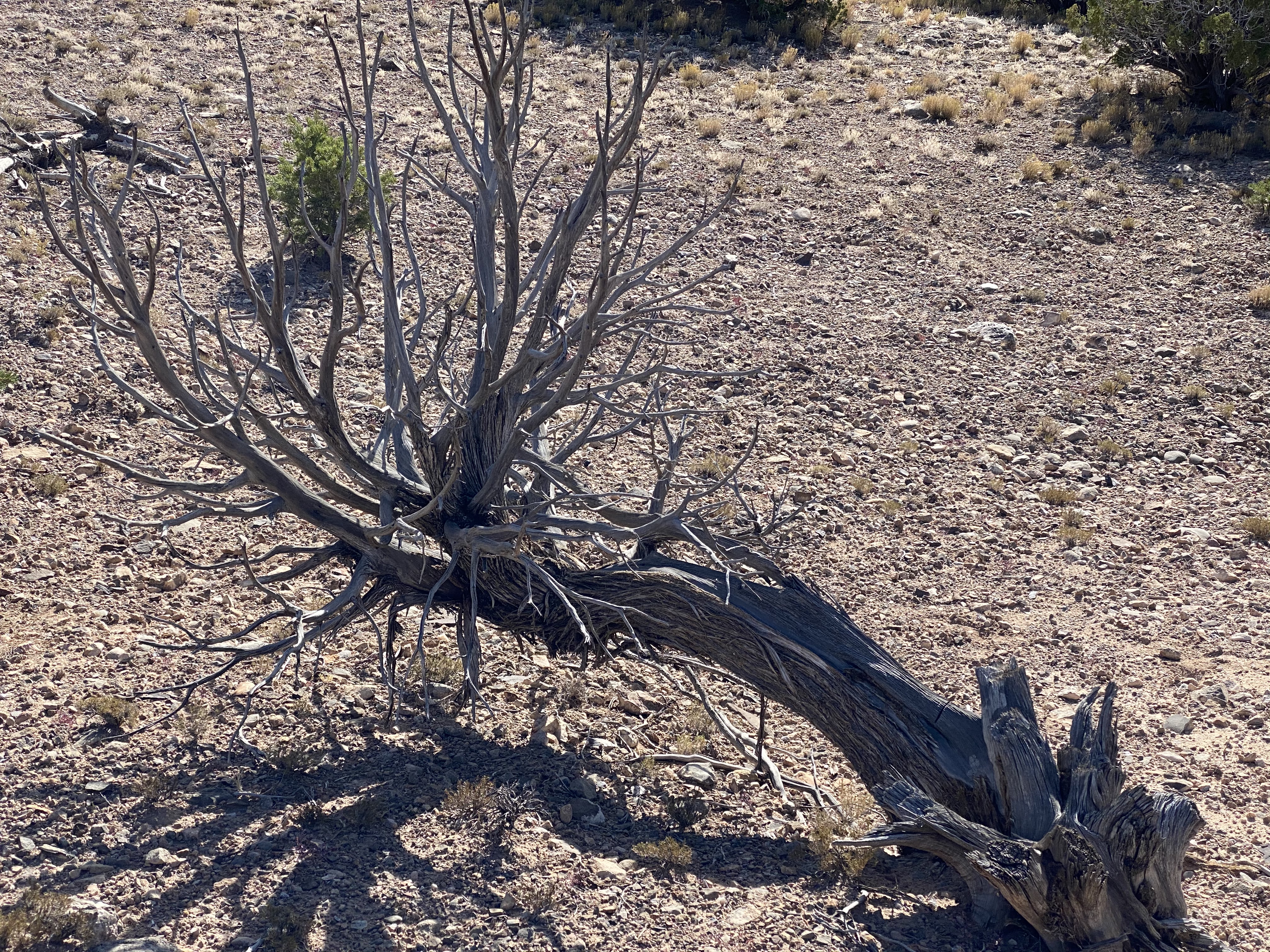
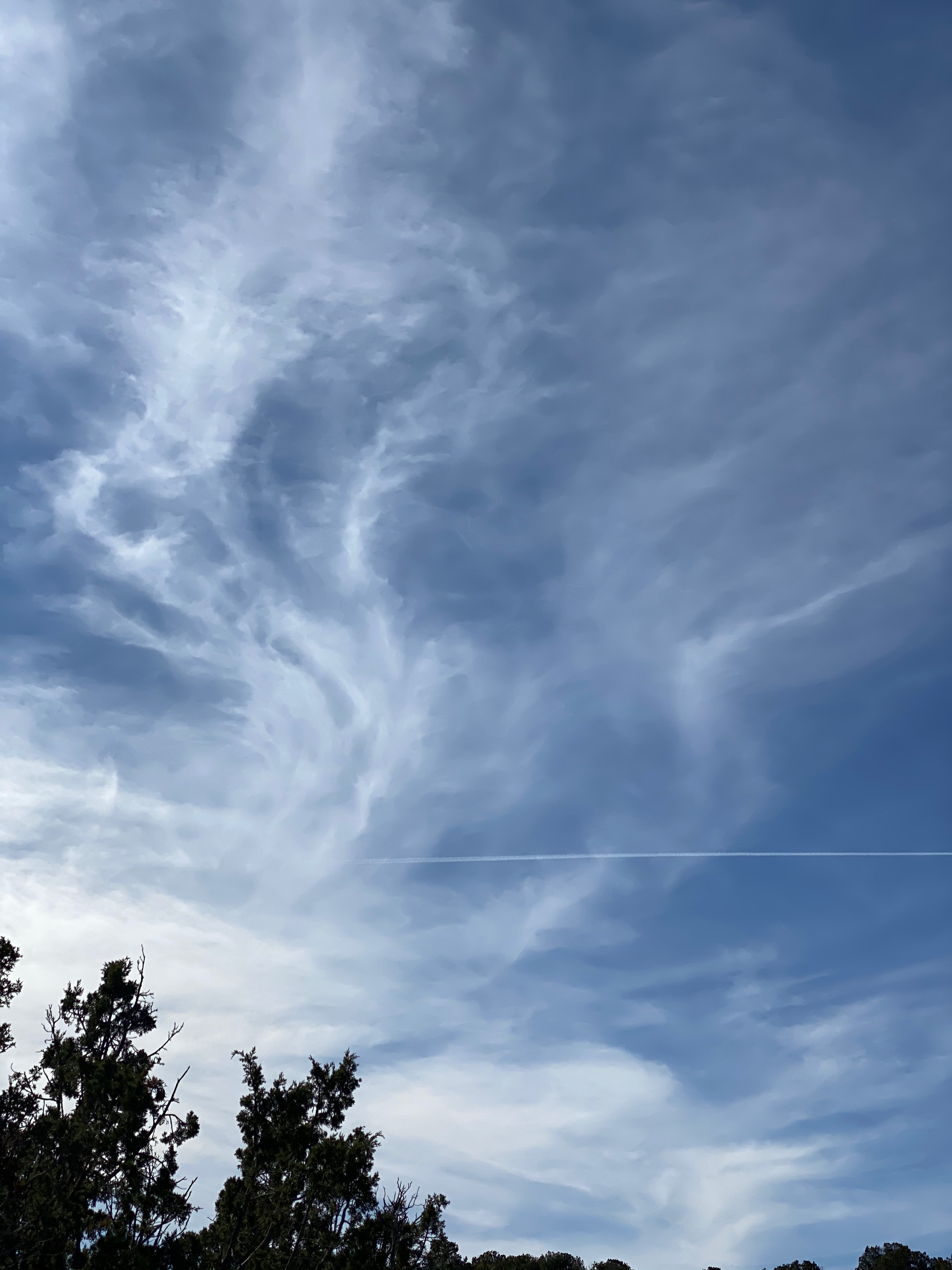
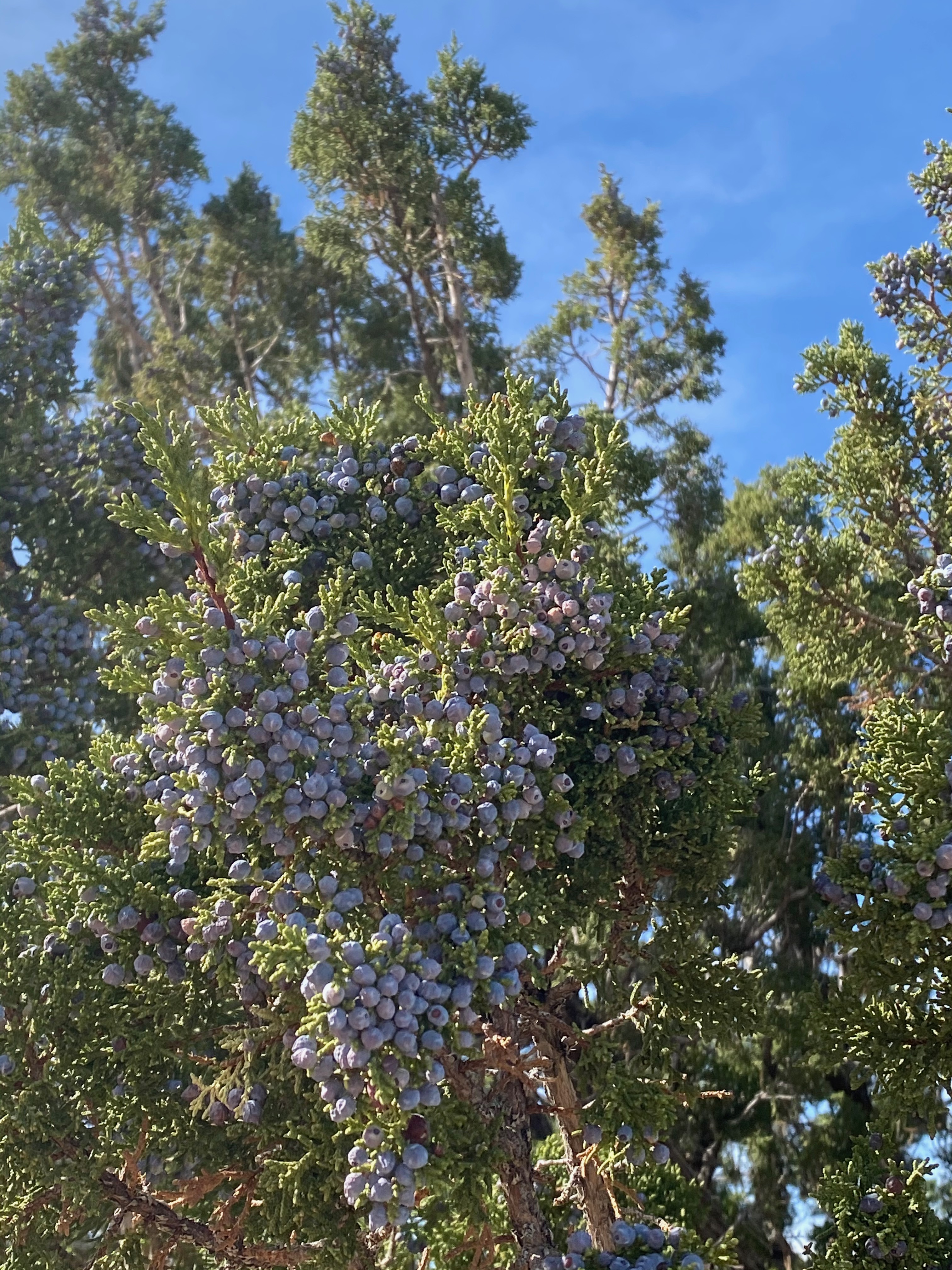
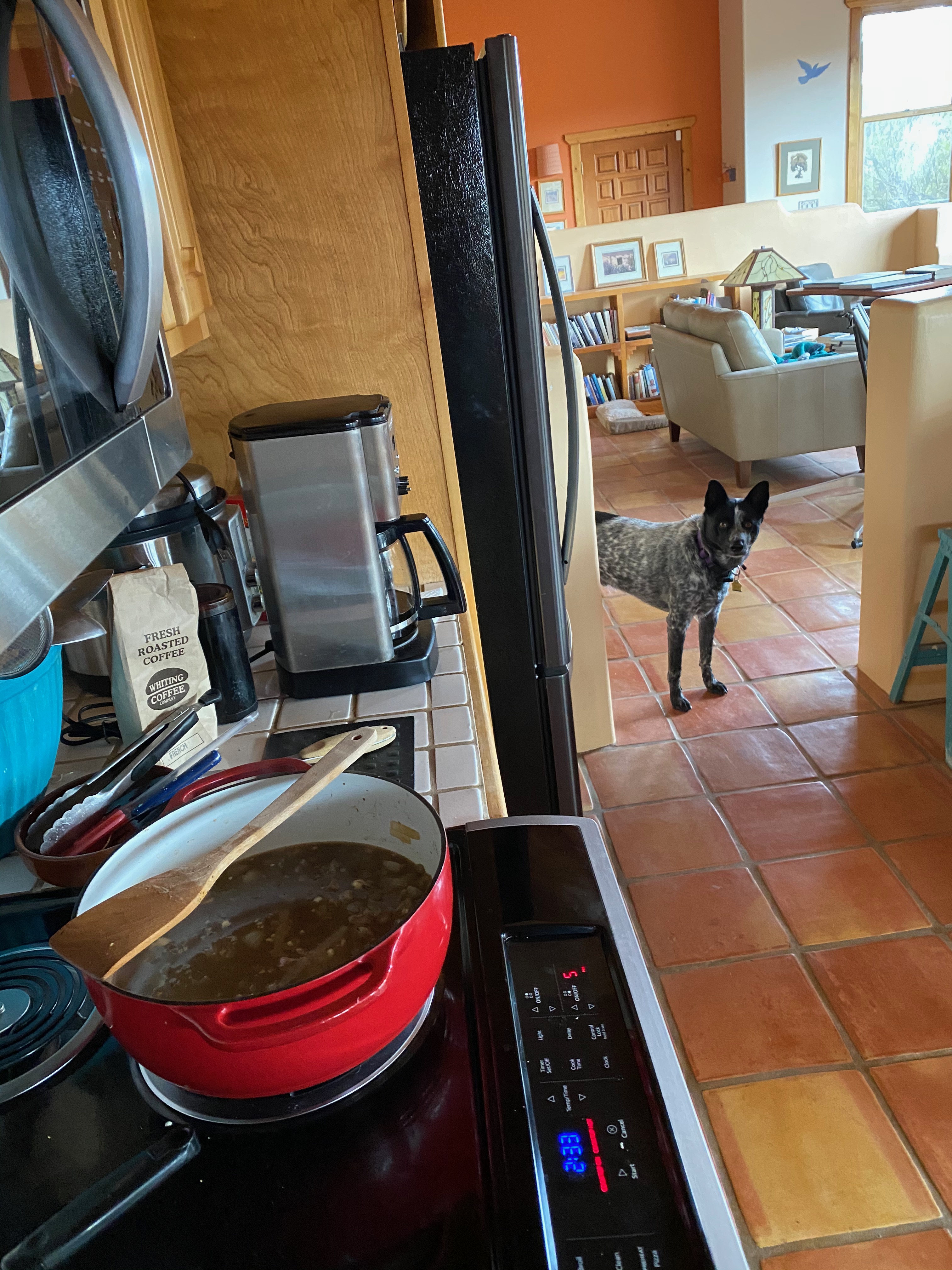
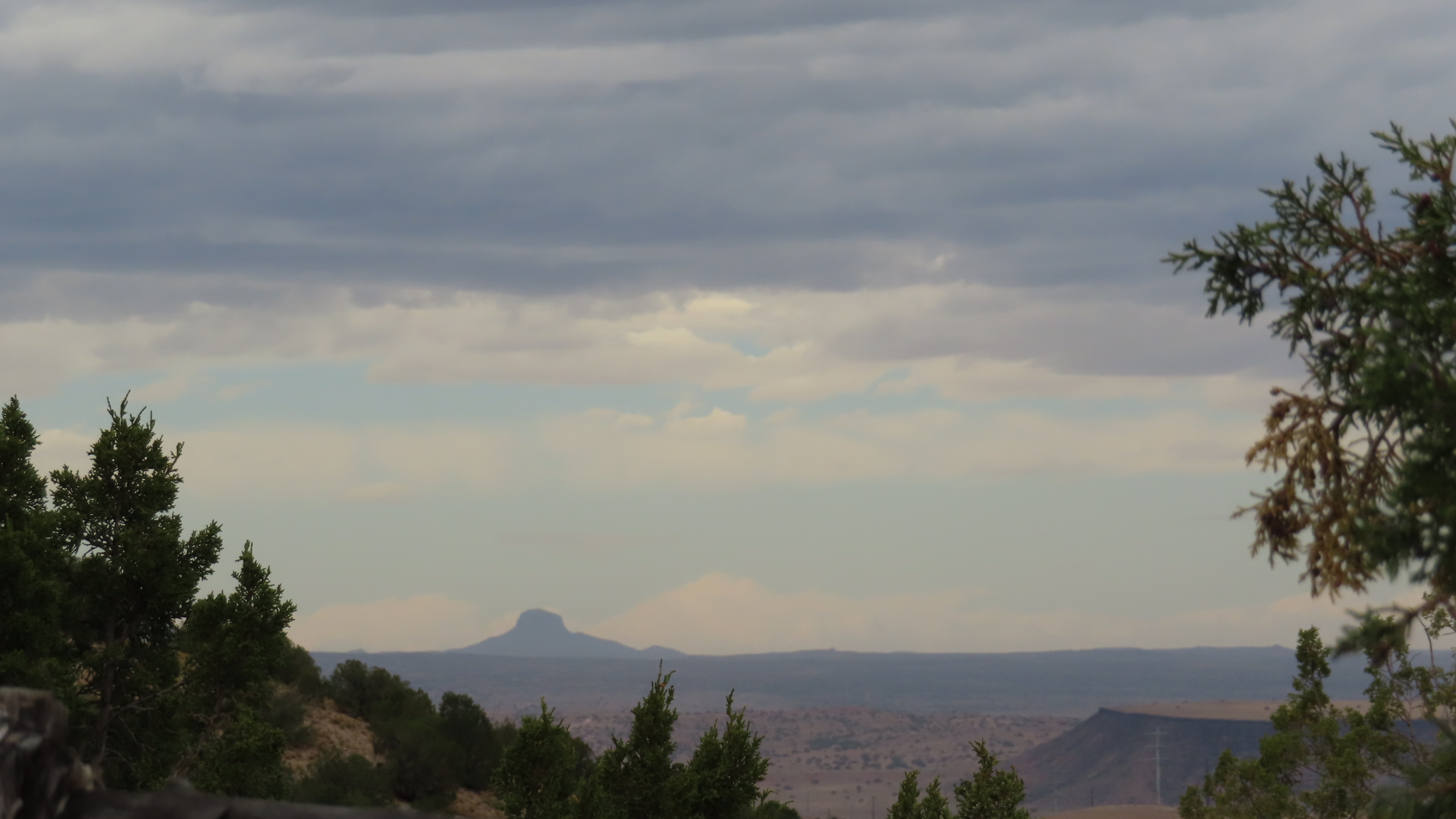
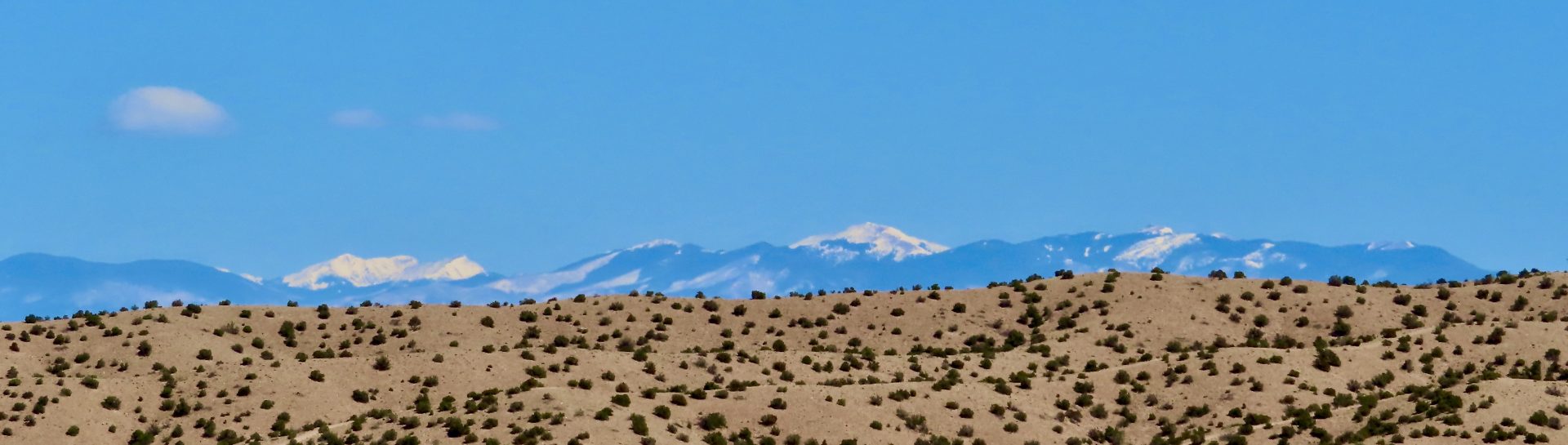

Two days: First winter weather approaching piñon/juniper country.
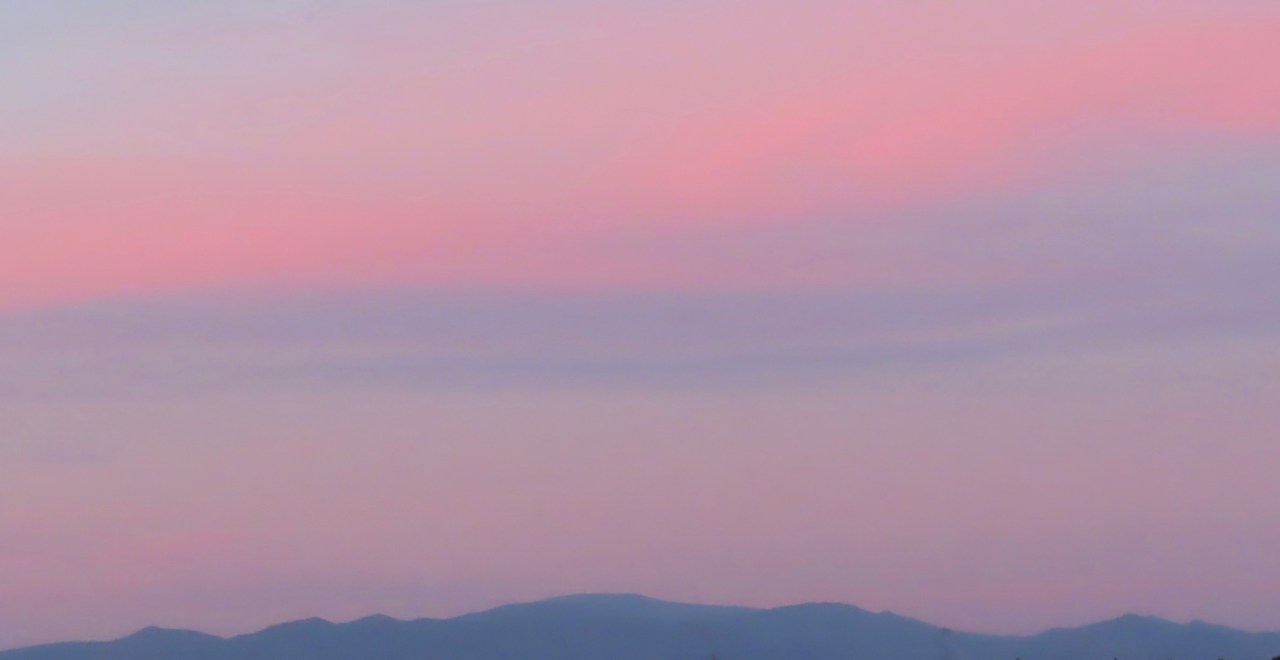
Four views at sunset.
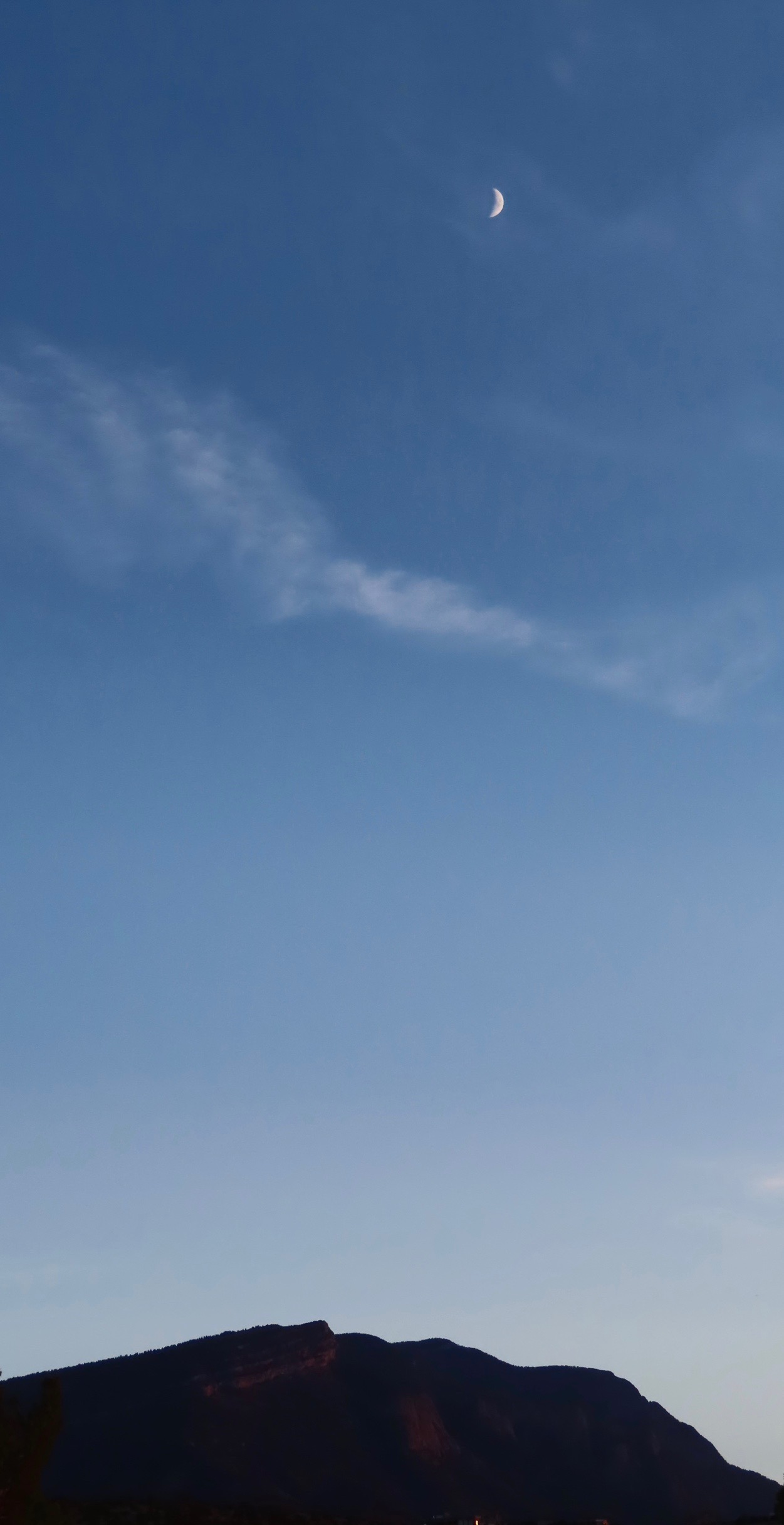
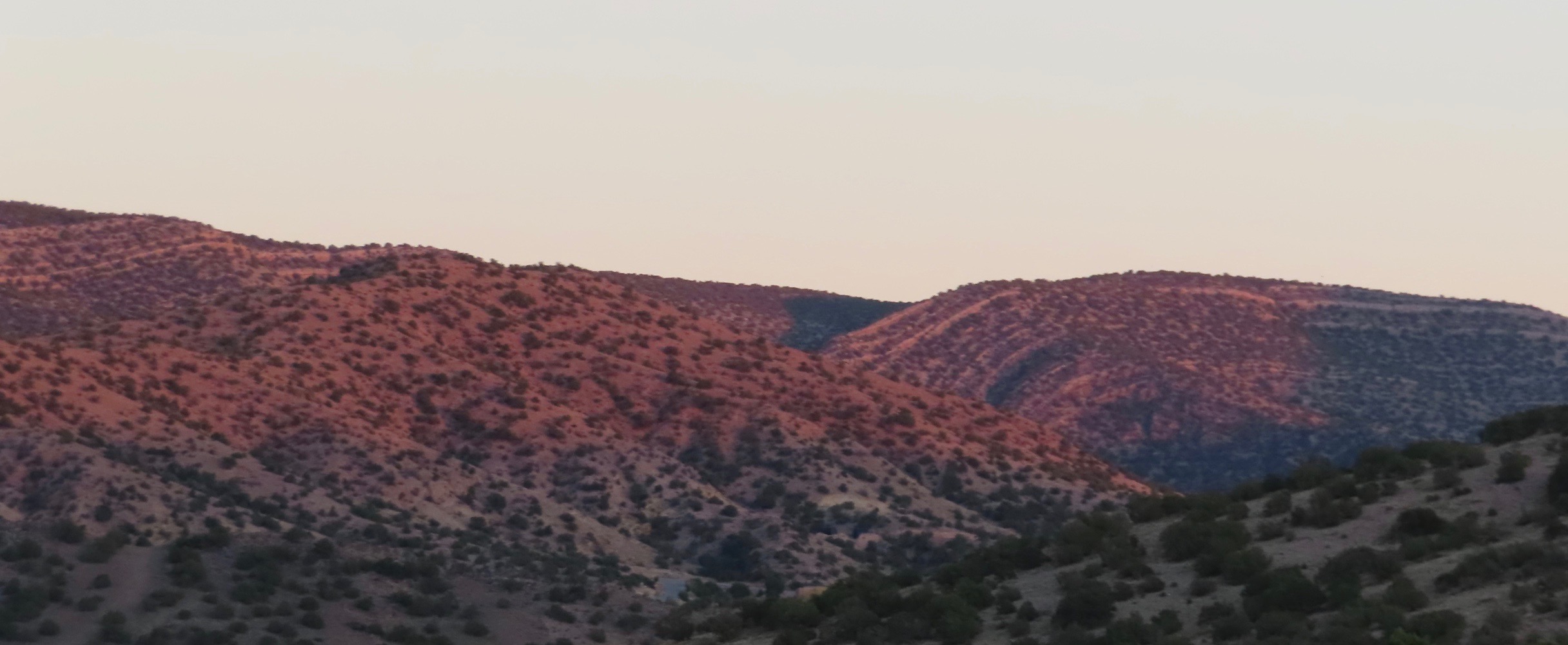

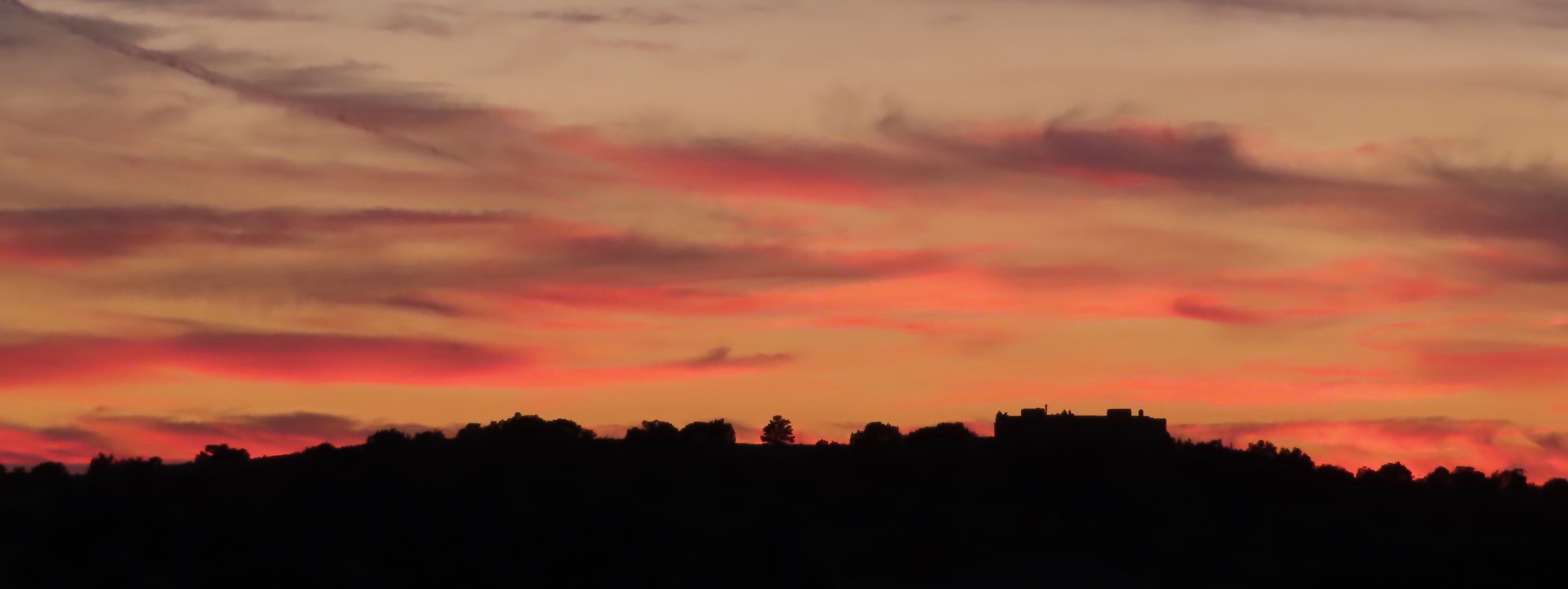

For briefly escaping worries about pandemic, politics, water and wildfire, I am thankful for:
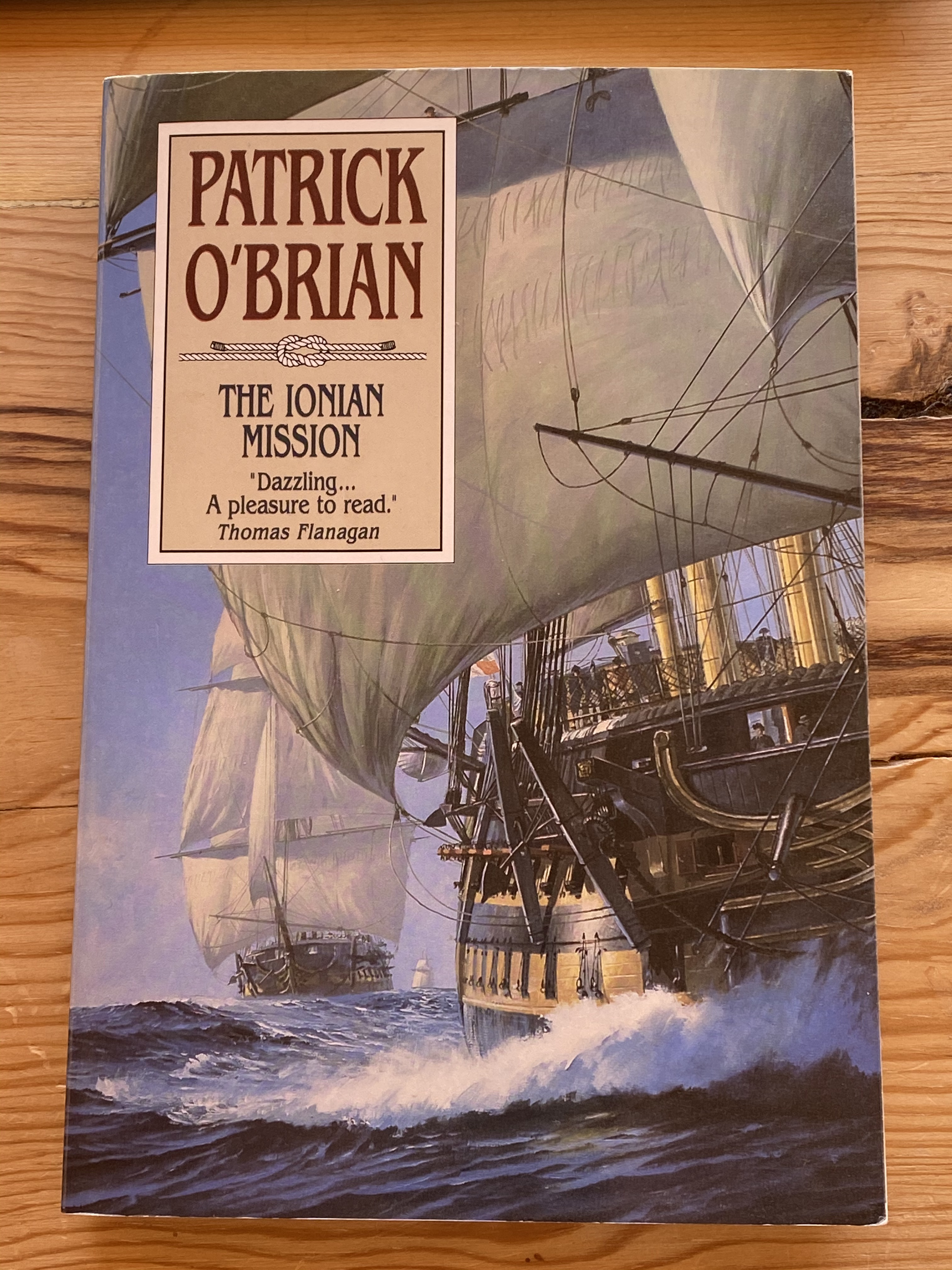
Patrick O’Brian by day and Longmire by night …
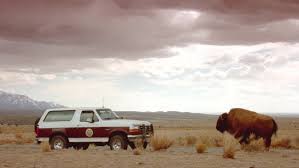
… birdwatching and walks in between …
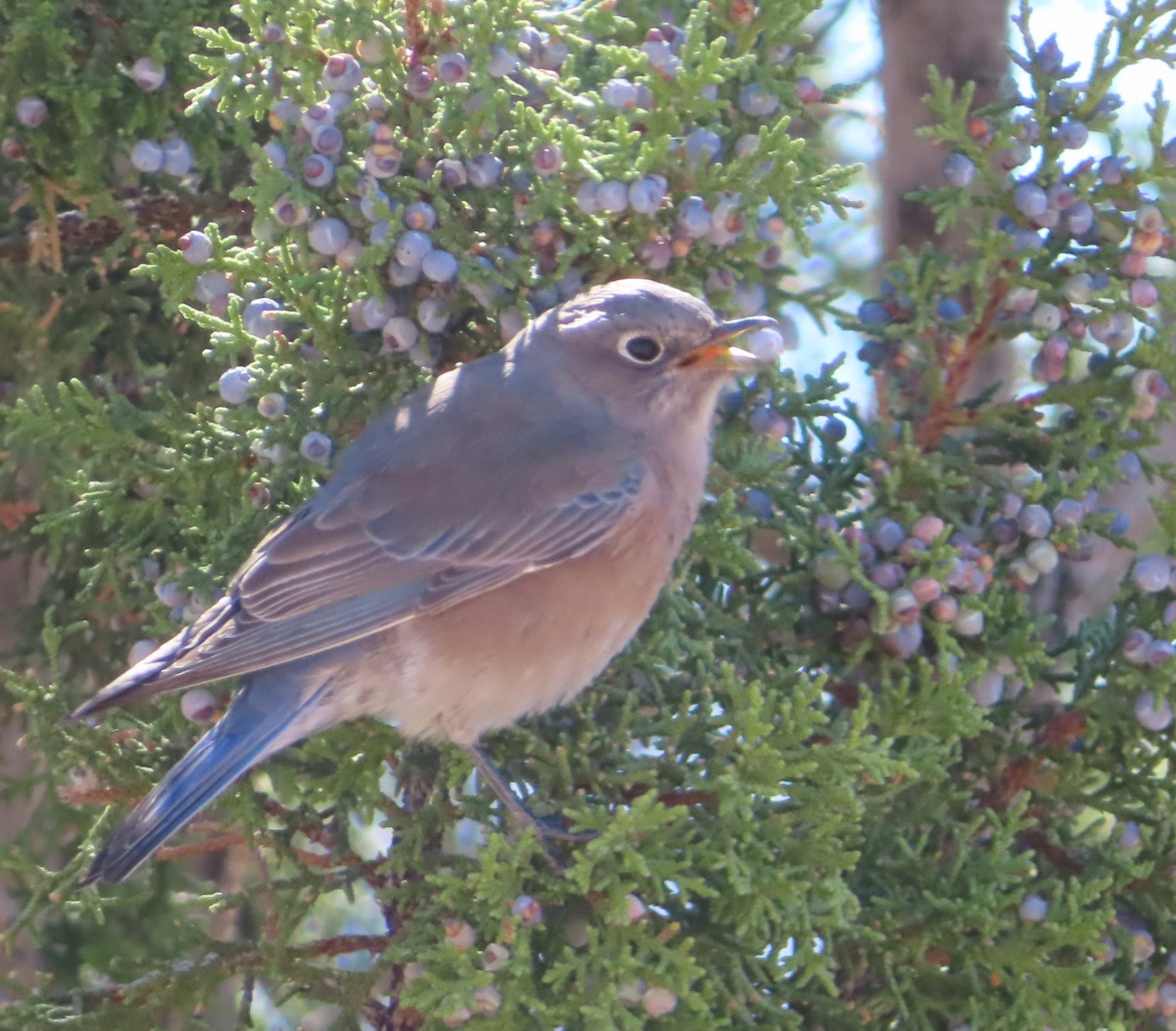

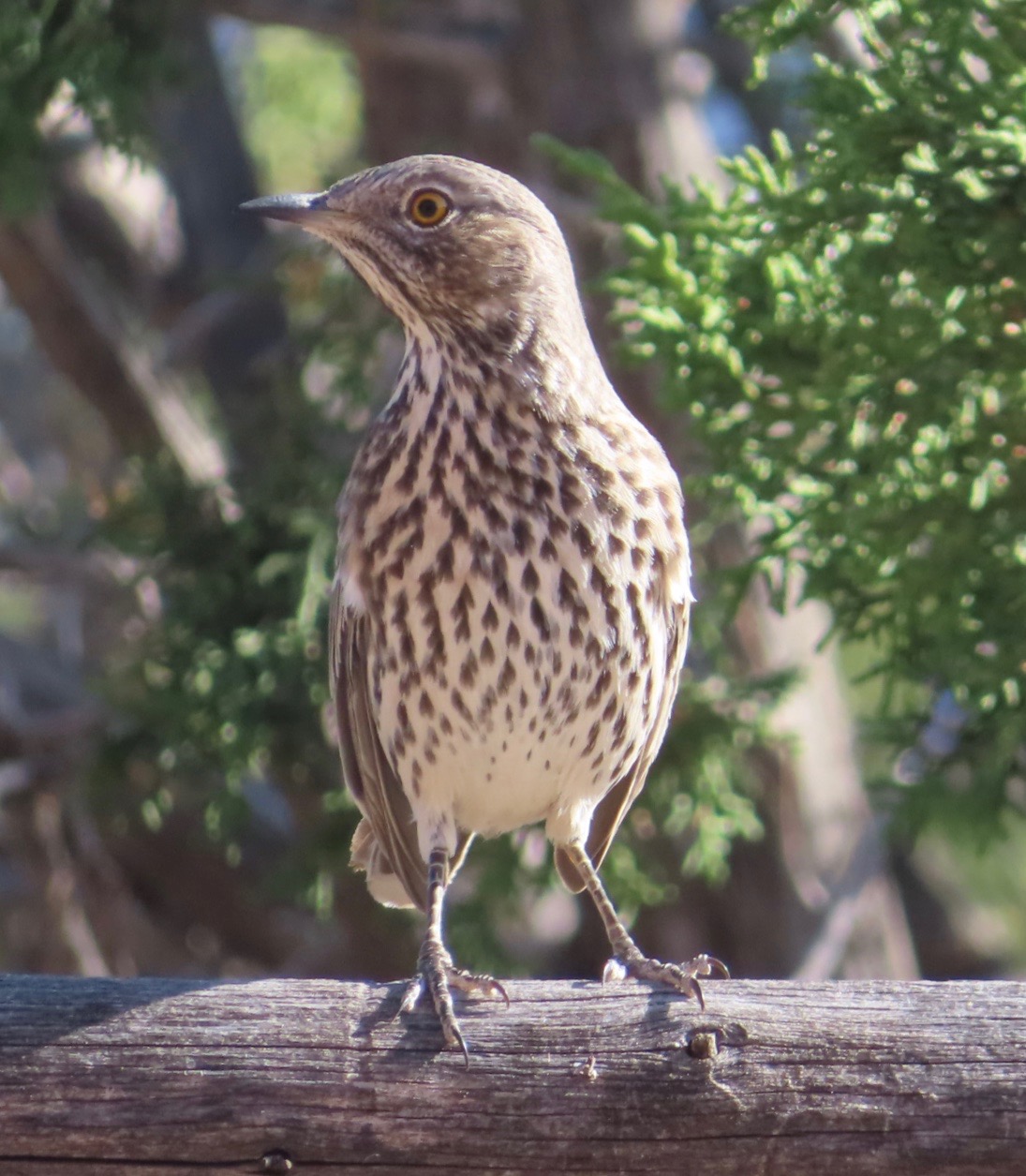
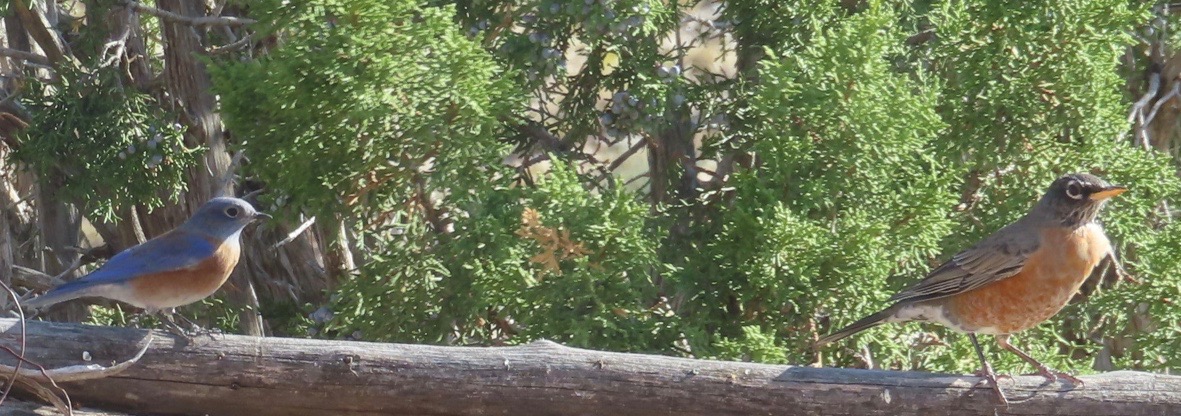
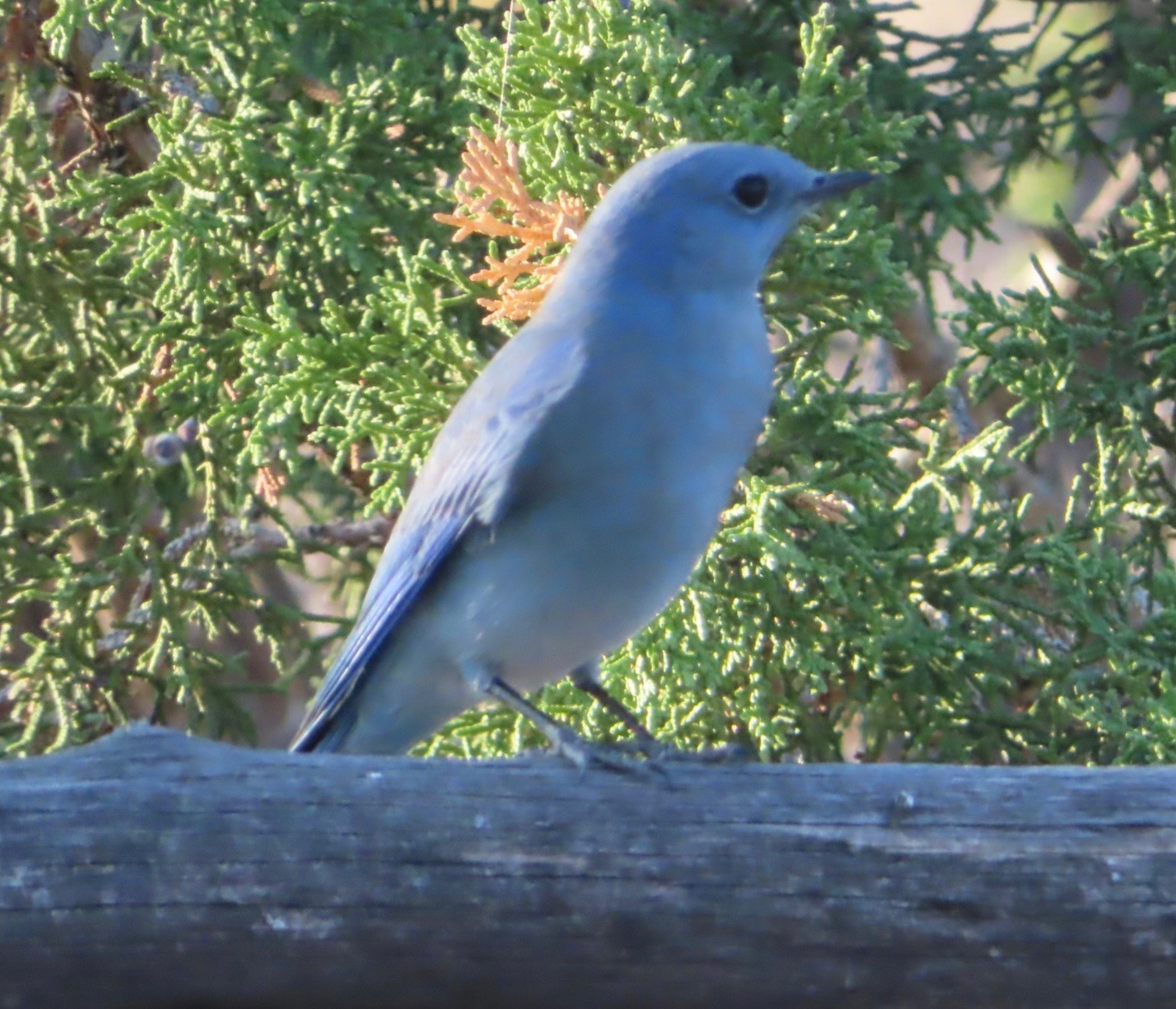
… the view west when the smoke has cleared …
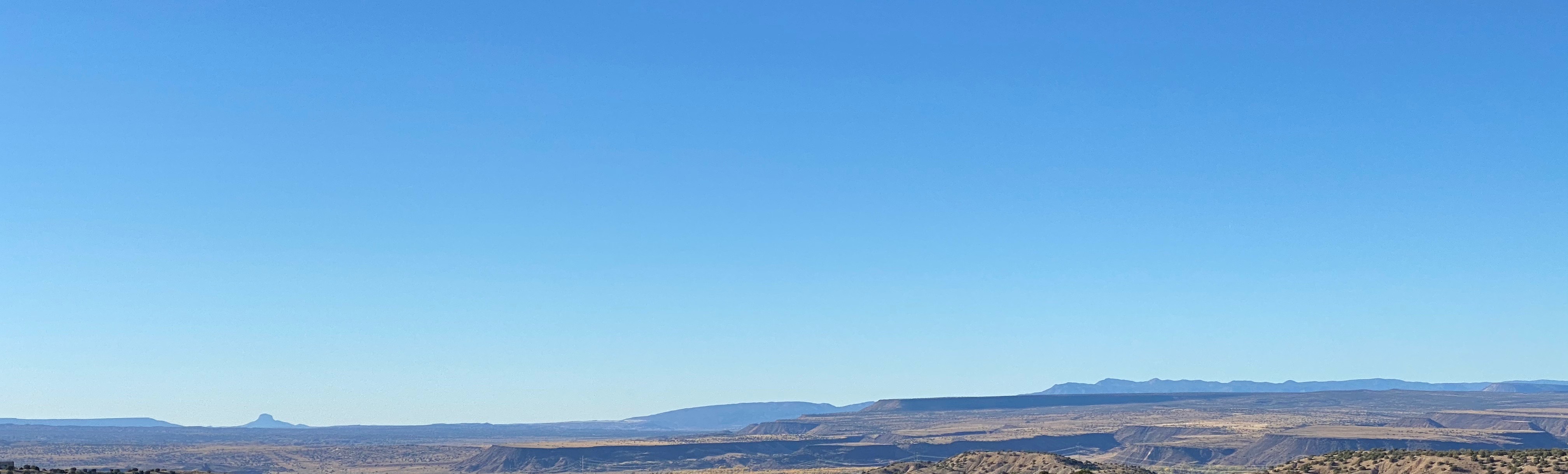
… fall colors …
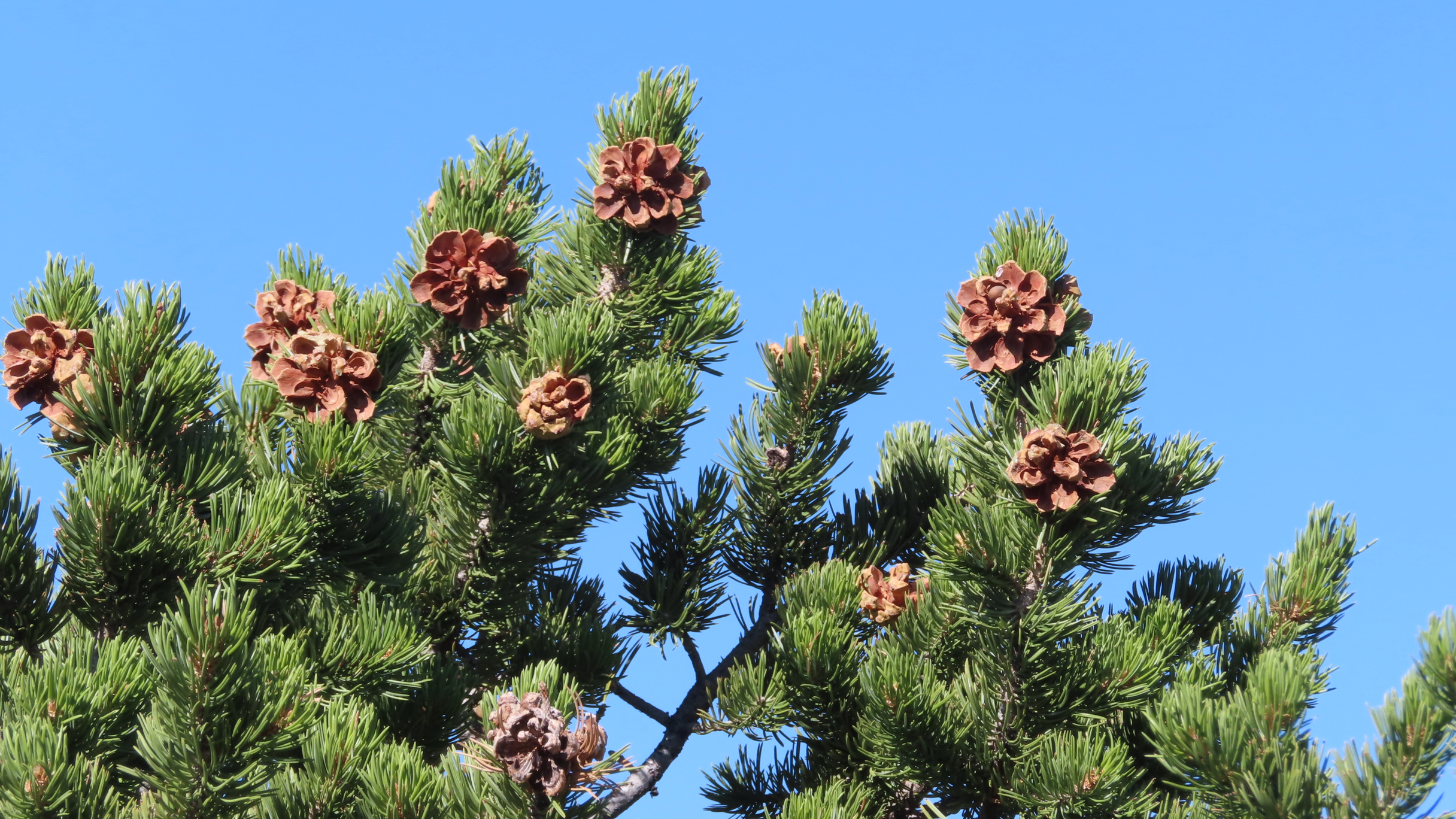
… company at hand …
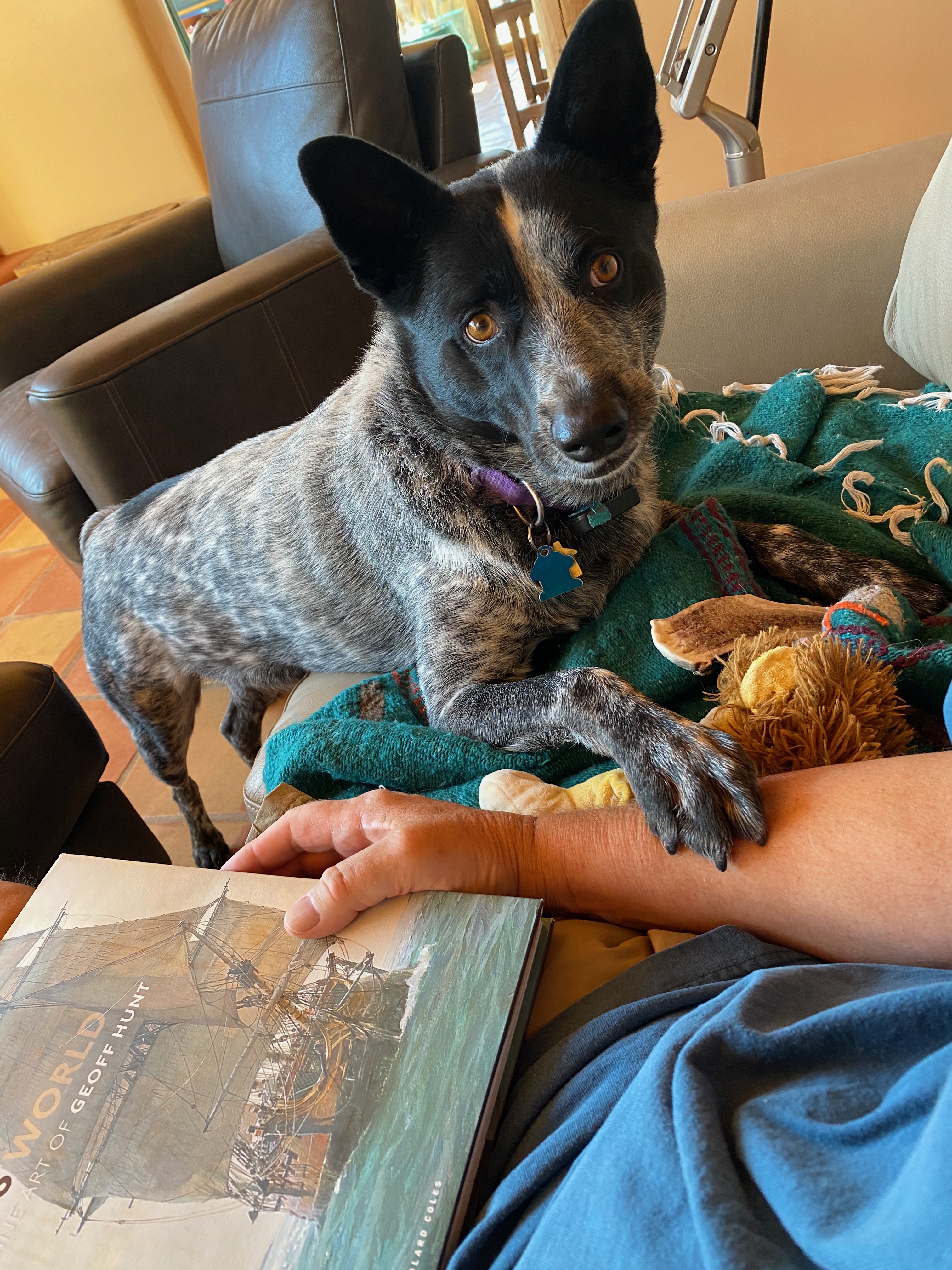
… and thanks to a delivery today, another companion to my Patrick O’Brian reading, a wonderful book by Geoff Hunt, the painter whose art enlivens the O’Brian covers.

— 30 —
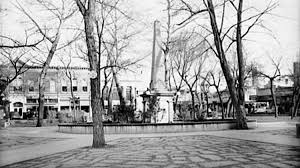
Conversations with friends about the destruction of the Santa Fe Plaza obelisk this week sent me to the Newspapers.com archives of the Santa Fe New Mexican, where I started working the year the word “savage” was chiseled away.
I found the original story from Aug. 8, 1974. I found that it was below-the-fold news on the day it was published. And, in a June 1974 piece by Santa Fe’s Fray Angelico Chavez, I found a proposition to end the controversy before the chisel was drawn.
Hopefully, you can expand the compressed pdf type on your computer if you want to read.

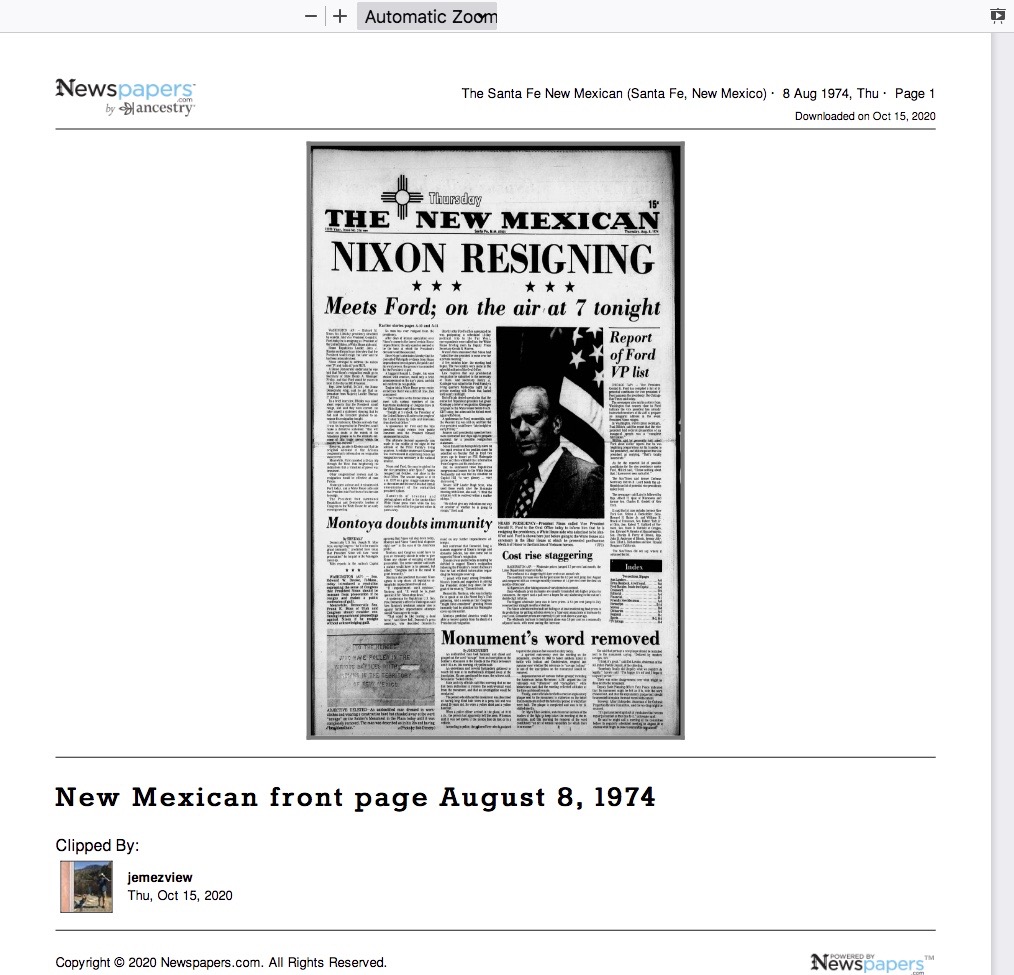
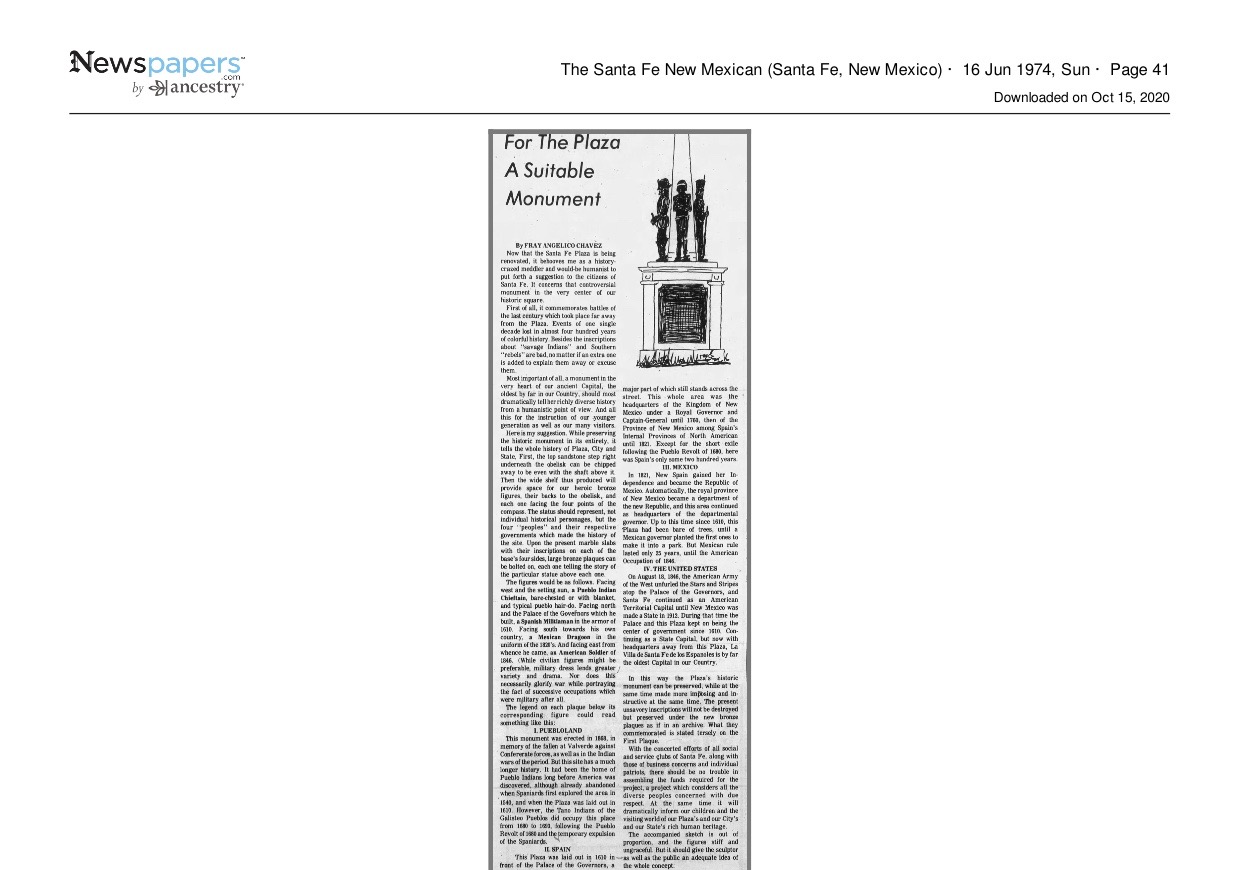
I don’t know if architect John Gaw Meem’s suggestion in 1967 to remove the obelisk to the state Capitol grounds would have relieved the obelisk controversy. And who knows what Roundhouse mayordomo Clay Buchanan, who probably was already busy concealing the Capitol with thickets of thorny vegetation, would have thought of the idea.
I also don’t know how much attention northern New Mexicans were paying at the time to Plaza renovation thoughts. The north was just a few months past the Tierra Amarilla courthouse raid.

I was reminded in the same conversation with friends that the New Mexico Legislature voted in 1997 to install a statue of Po’pay, a Tewa leader of the Pueblo Revolt in 1680, as the second of the state’s two statues in the 50-state collection at the U.S. Capitol. The Po’pay statue was unveiled at the Capitol in 2005, joining the one of Sen. Dennis Chavez.
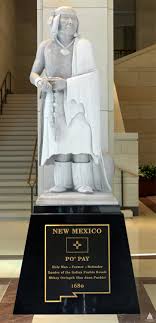
The Po’pay statue was crafted by Jemez Pueblo sculptor Cliff Fragua. The legislation was sponsored by state Sen. Manny Aragon and state Rep. Nick Salazar, both Democrats, and signed into law by Republican Gov. Gary Johnson.
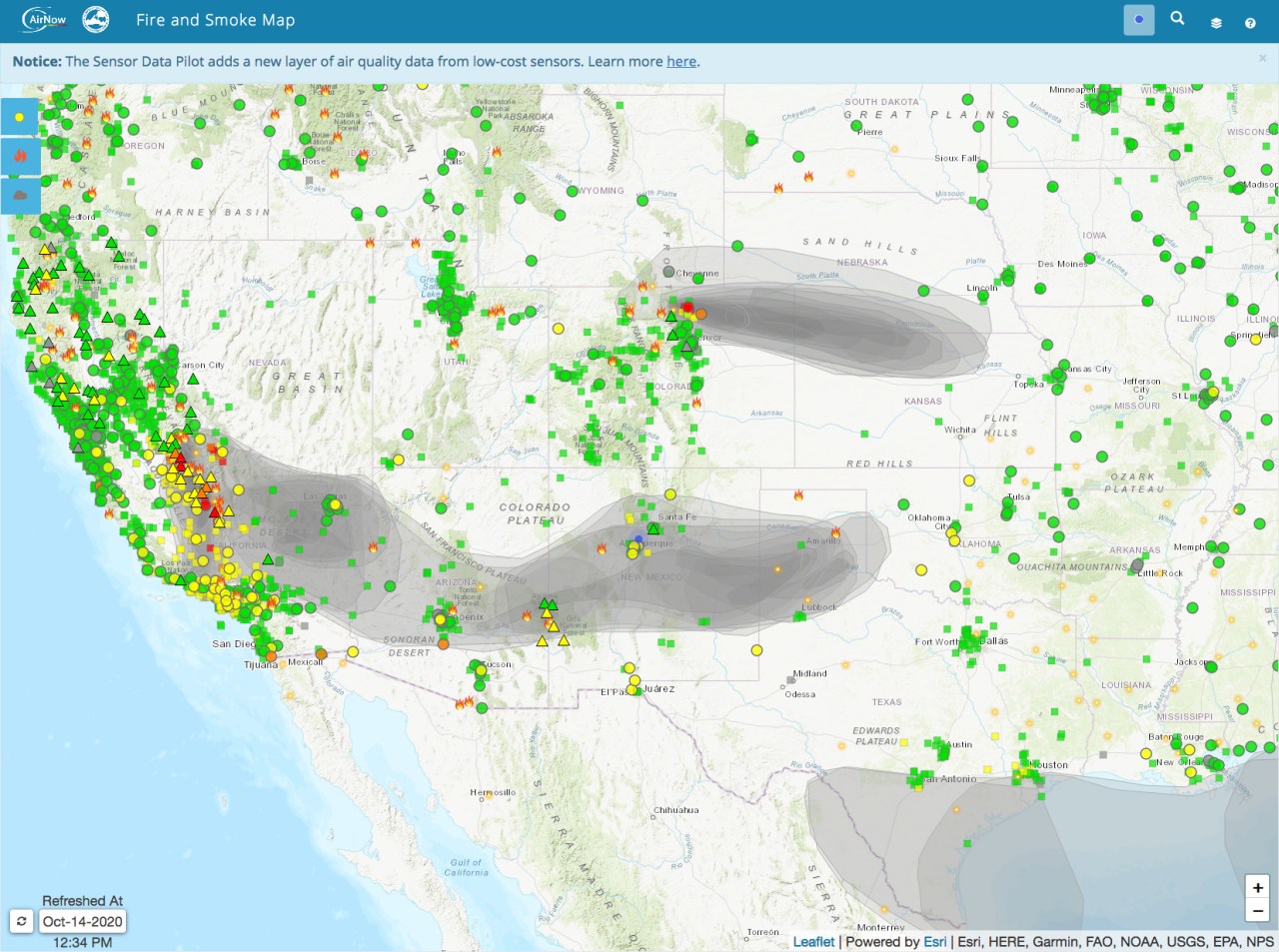
It’s become part of the morning routine: Checking the smoke map.
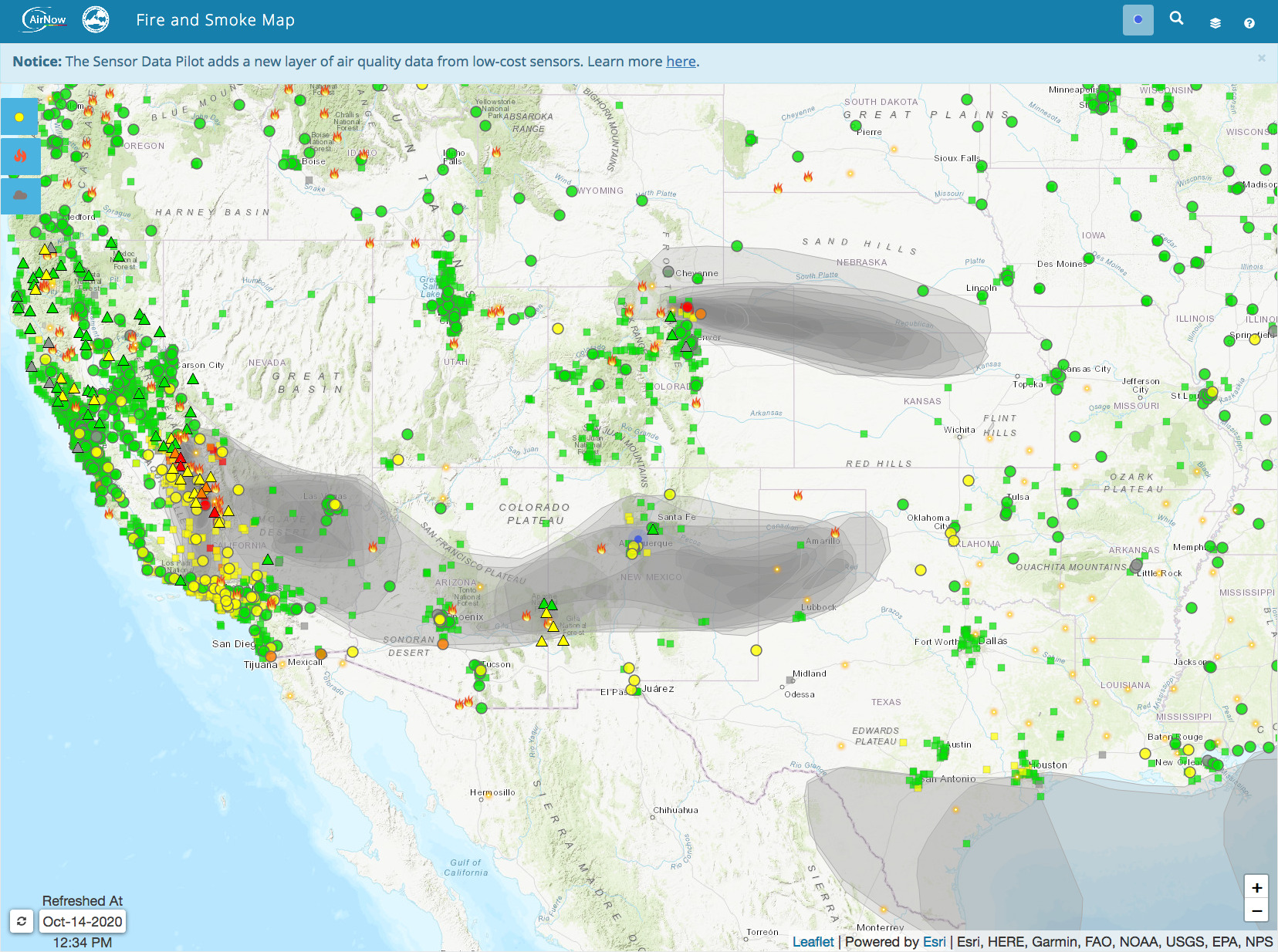
As I clear my head and loosen old joints, the daily drill is this: Fill the birds’ water dish, make coffee, feed Cowboy and check the smoke reports.
I’ve already seen from bed that the smoke has blown in again. I can’t see the Jemez Mountains, my favorite view before so many houses were built on what’s now called Mustang Mesa and before massive wildfires across multiple western states became standard feature of summer and fall. But I want to know where the smoke is coming from. My eyes sting as soon as I go outside.
This morning’s smoke appears to be from the nearly 400,000-acre and less than 60 percent-contained Creek Fire on the west side of the Sierra Nevada mountains in California. This of course has been hell for Californians and 1,300 firefighters are still working the fire. Roughly 900 miles east, it presents breathing issues for me.
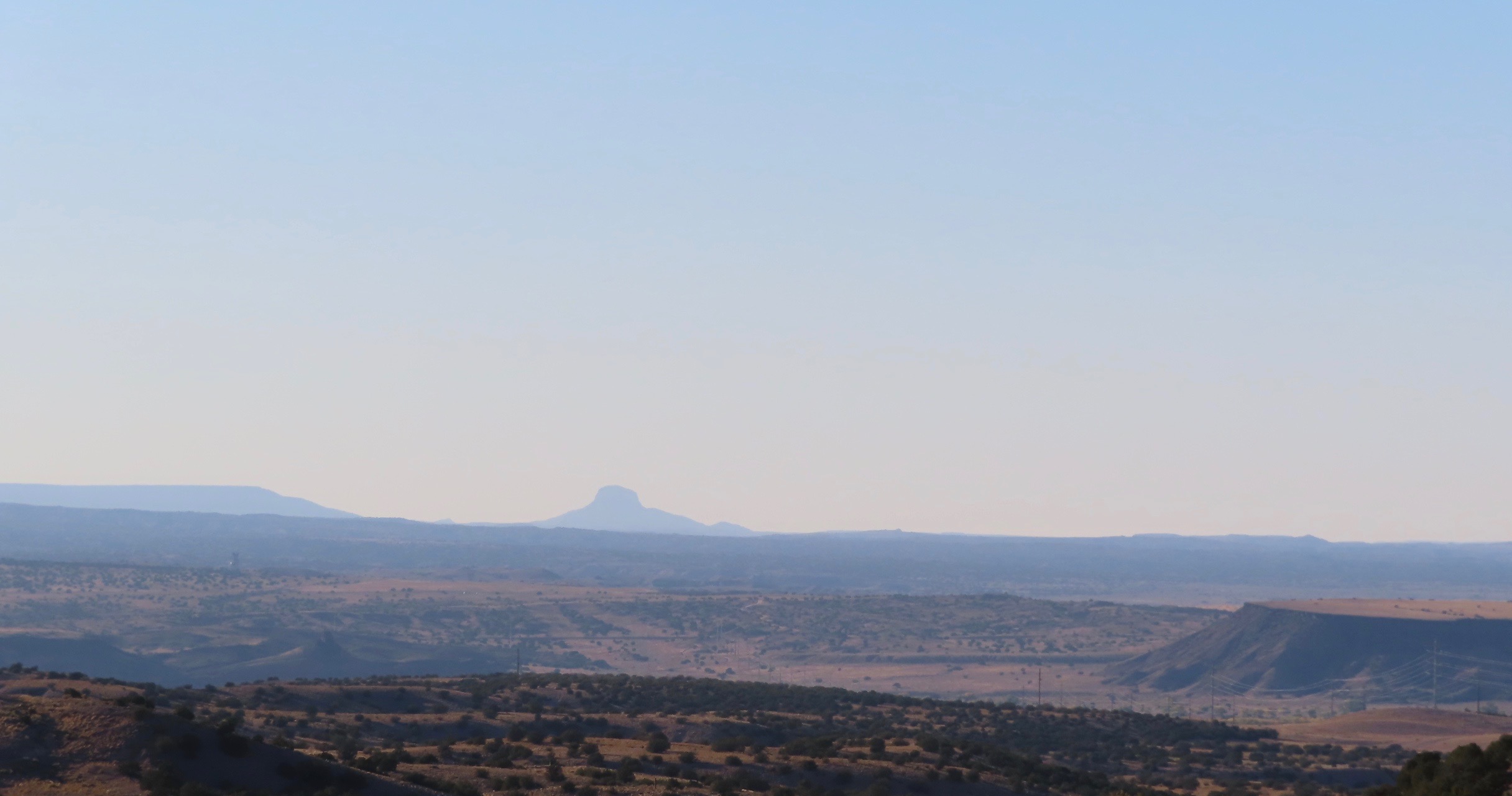
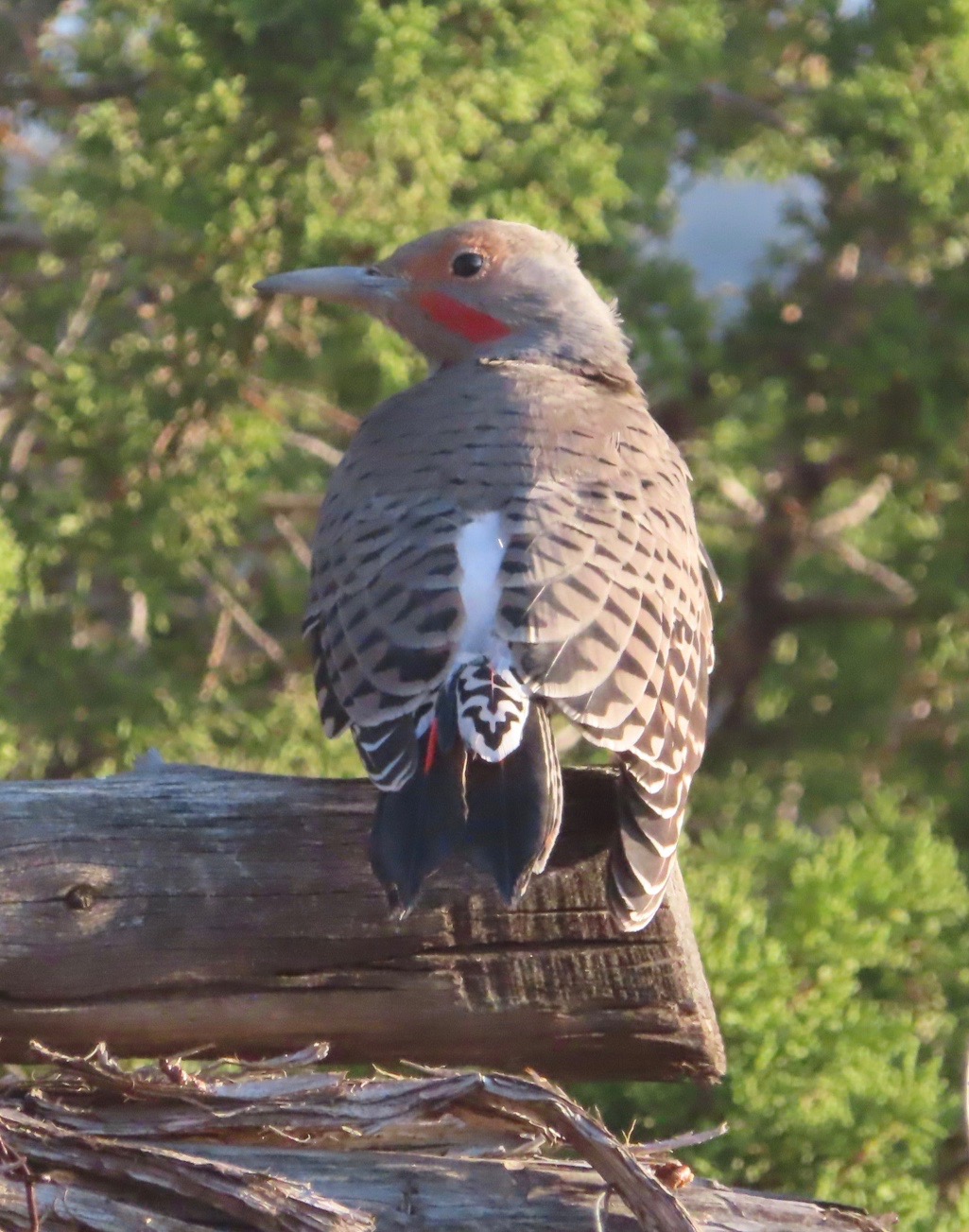
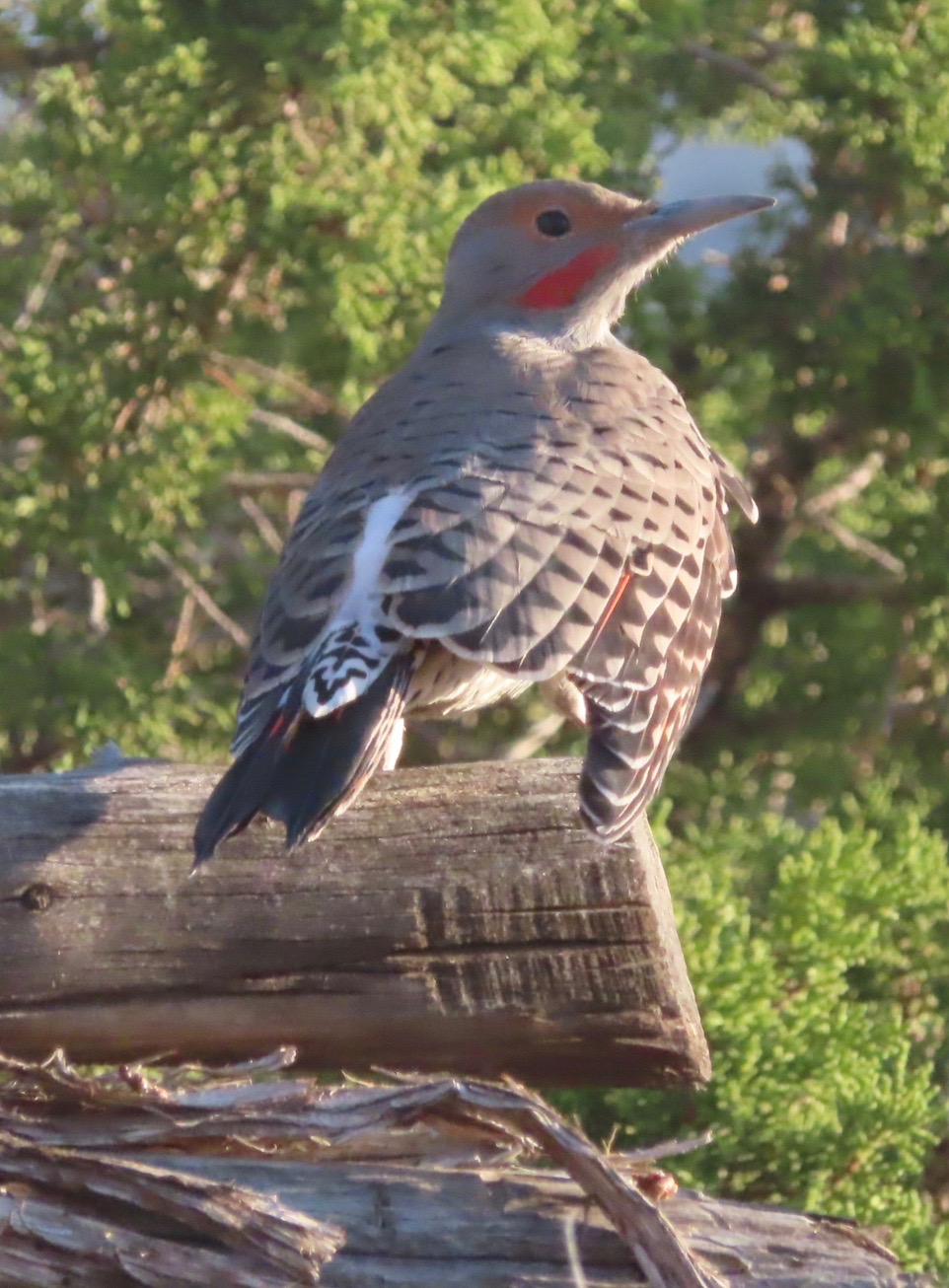
Here at the southern edge of Northern New Mexico, we recently had a solid couple of weeks of smoky days. Fires in Wyoming and Colorado were contributing to the smudging of the sky and air quality alerts in Albuquerque. This last week of October, we’ve had some classic, clear fall days. Last night, Mars was bright but I smelled smoke. This morning the gray was back, smudging out the Jemez and Cabezon from my lower Las Huertas Creek view. I skipped my morning walk with Cowboy. Even birds seemed to be in hiding. Only a few robins and sparrows and the female half of a flicker pair joined me for morning coffee and water.
Here’s the flicker against a smoky background that on a clear day would be the Sandias.
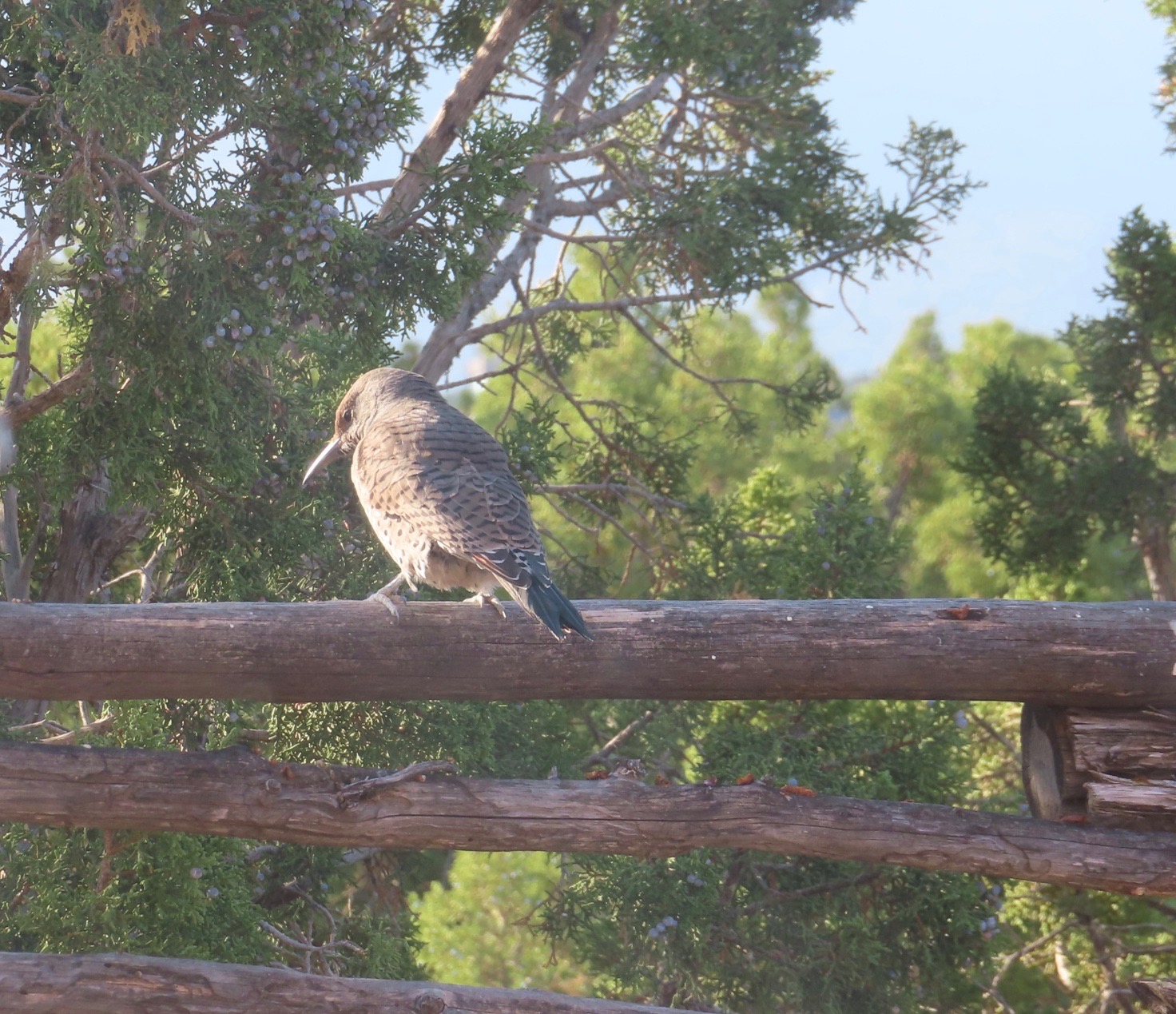
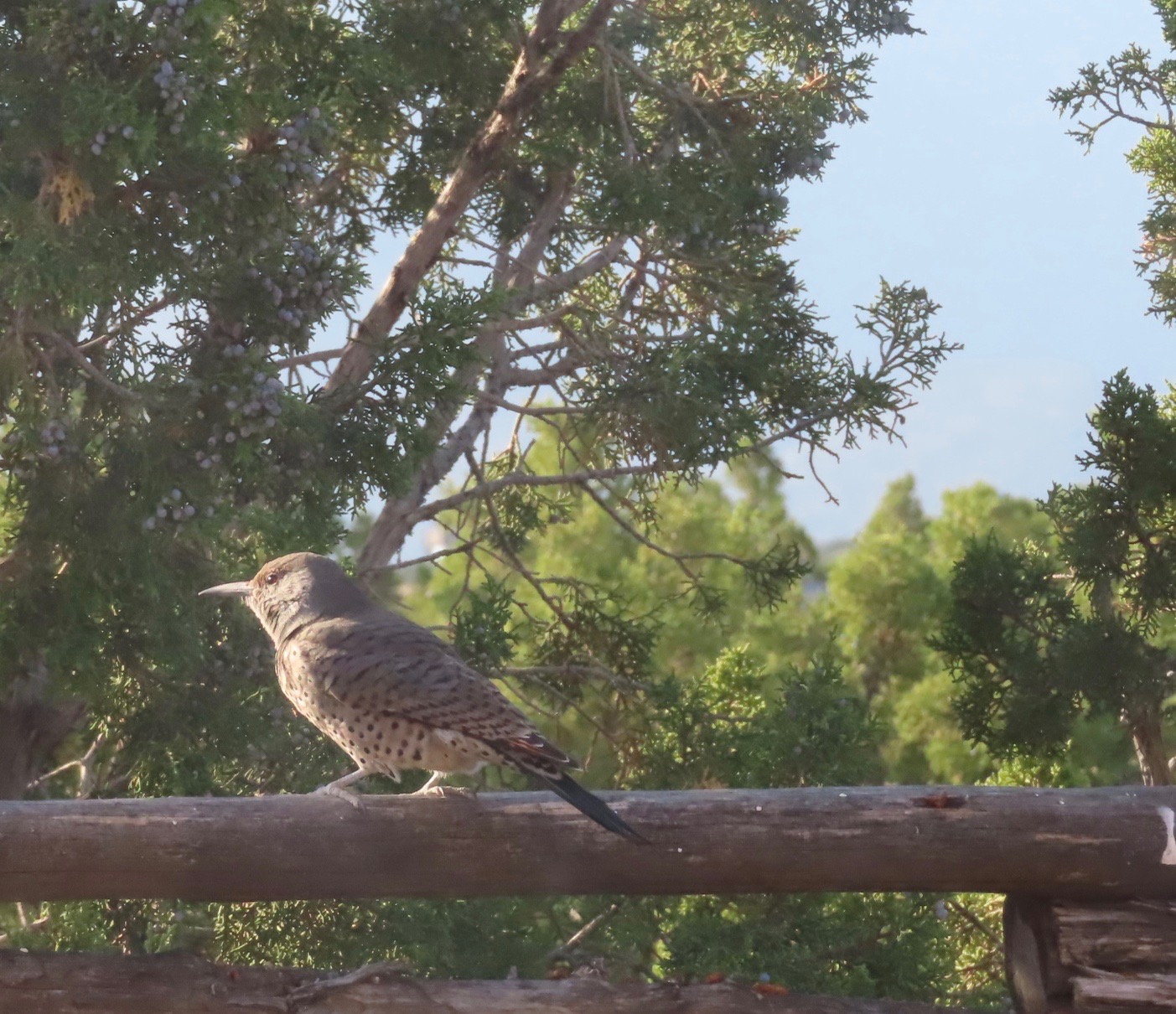
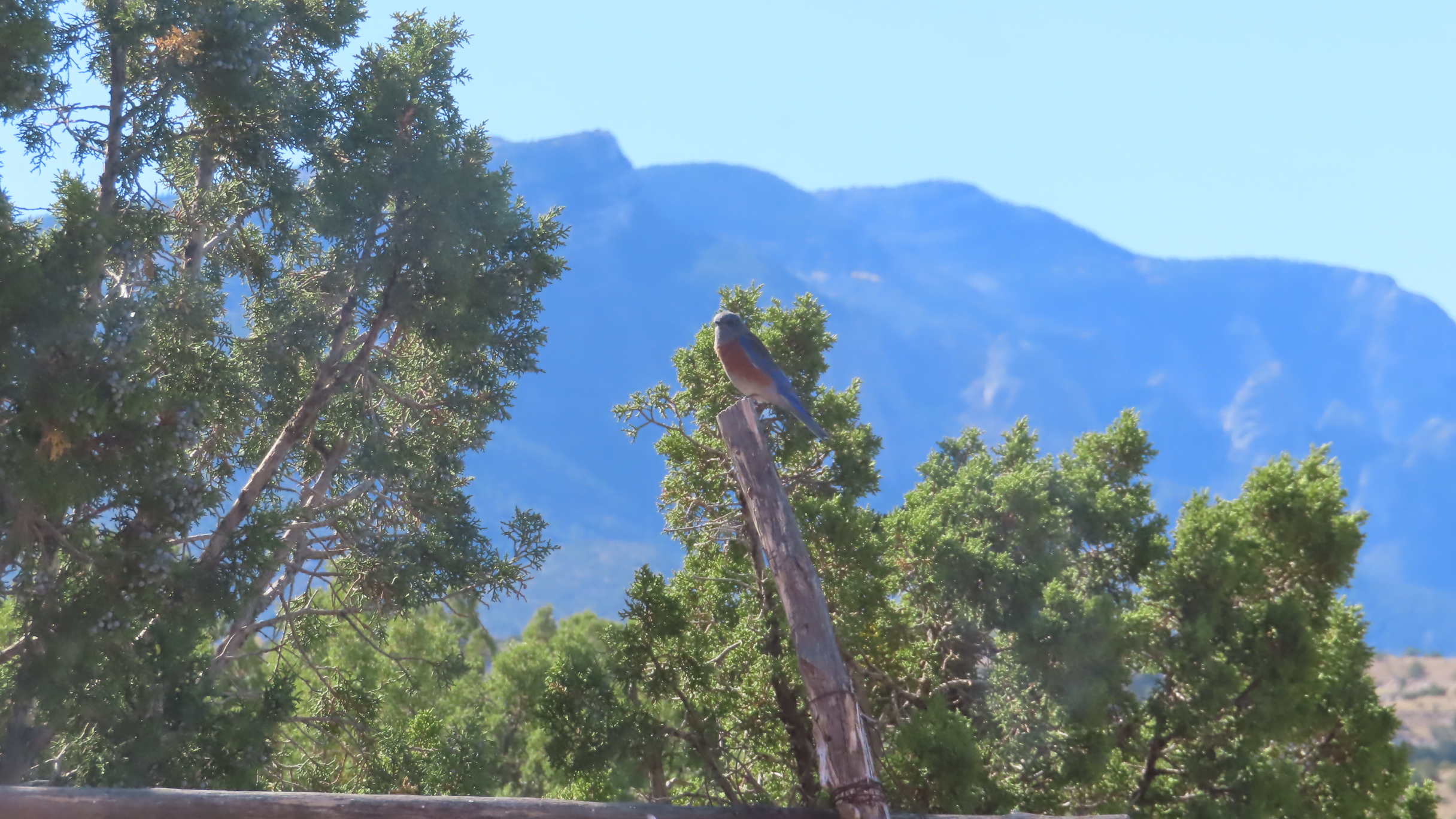
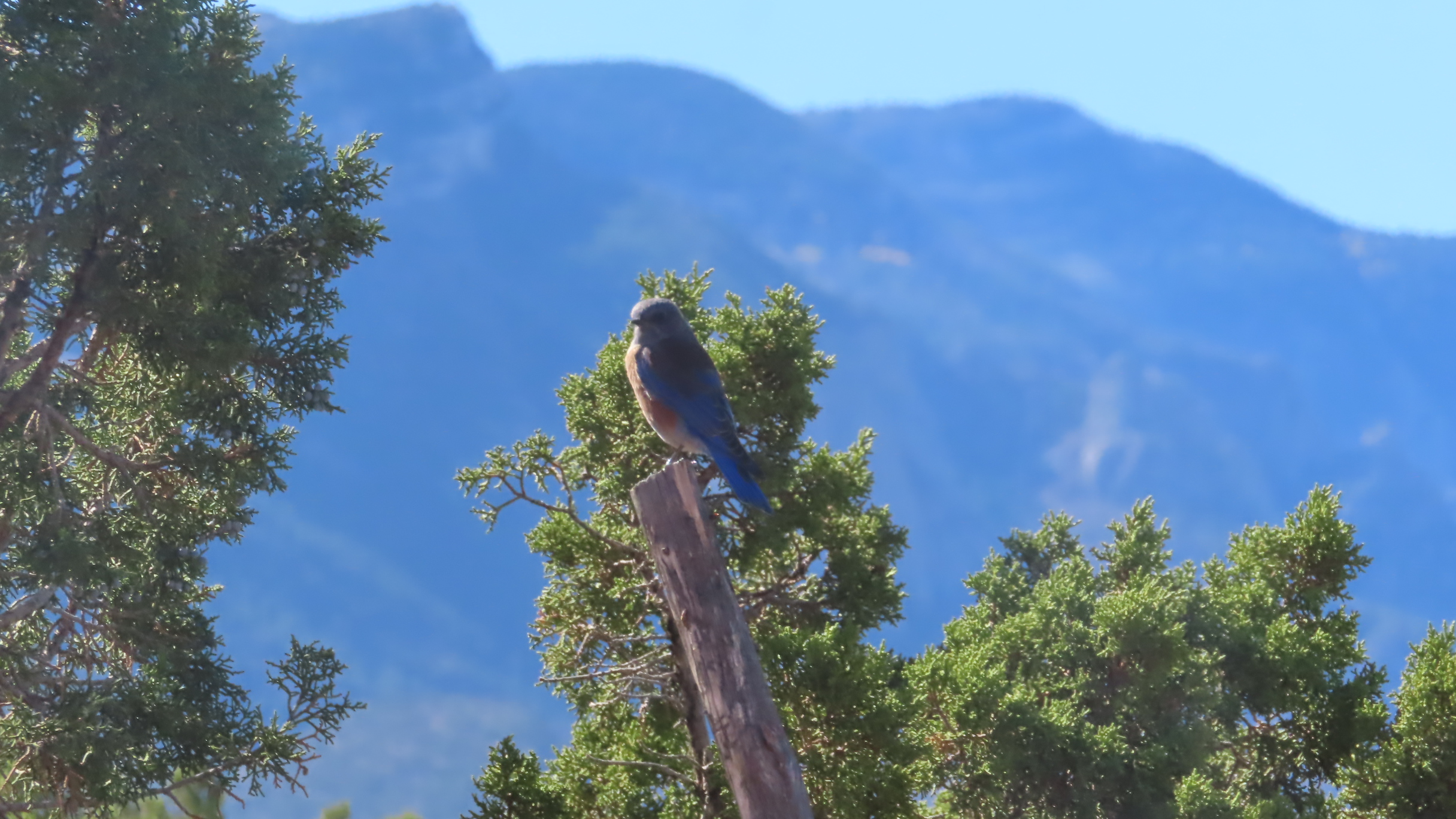
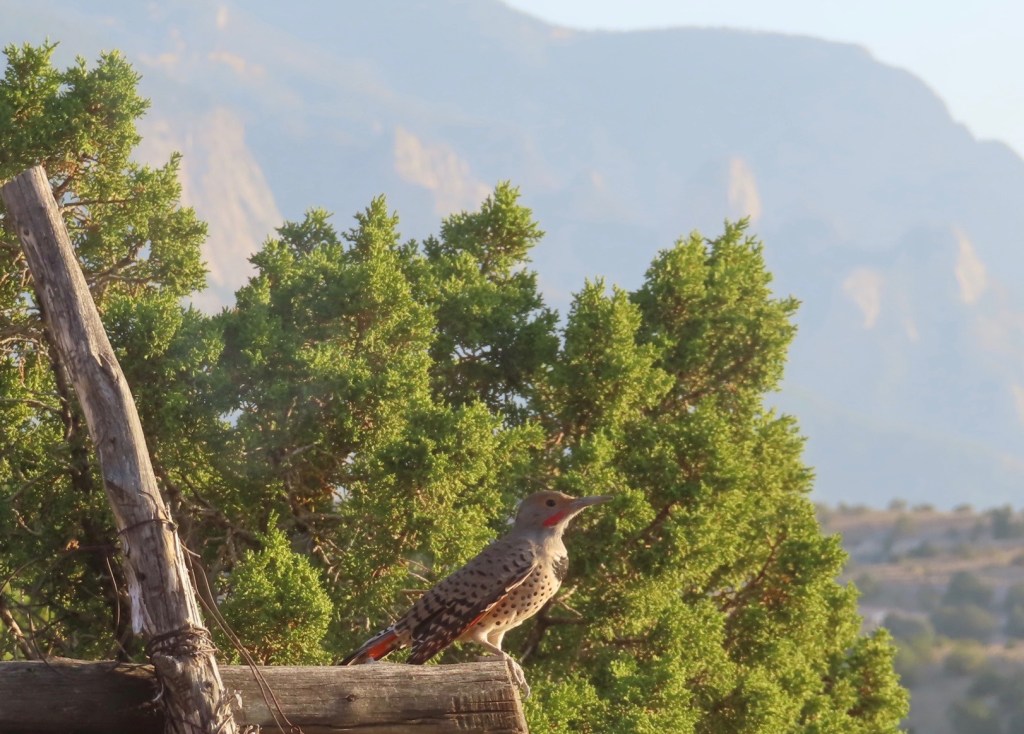
Just a couple of days earlier, flickers and bluebirds posed with backdrops of golden crags at sunset and blue mountains in the morning.

With a high pressure system to the north last month, we saw the smoke hover for weeks. Lately, it’s been blowing in and out quickly. I admit I have COPD. Still, in 2020, checking the smoke reports has become as familiar as lacing my boots.
Little surprises me about wildfires anymore. Fifty years ago, I was on a Type 2 handcrew that fought them in California. But what I saw then would be child’s play compared to what California is seeing now, where 900 fires were burning by mid-September from 14,000 lightning strikes. I haven’t been surprised much since our Las Conchas fire in Northern New Mexico in 2011. It burned over 150,000 acres at a mind-boggling rate — about an acre a second on the first day. And it burned in a lot of country that never seemed too likely to burn. But California — and this year much of the west, from Washington to Colorado — keeps expanding my fears
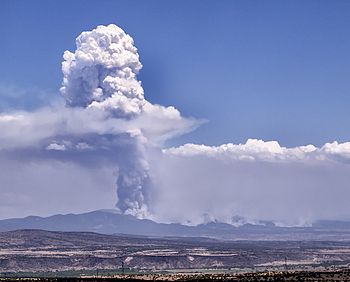
By the way, as soon as I posted this I noticed the U.S. Forest Service had posted a photo of the Cameron Peak Fire west of Fort Collins in northern Colorado, using the increasingly common phrase “extreme fire behavior.”

USFS photo from the internet




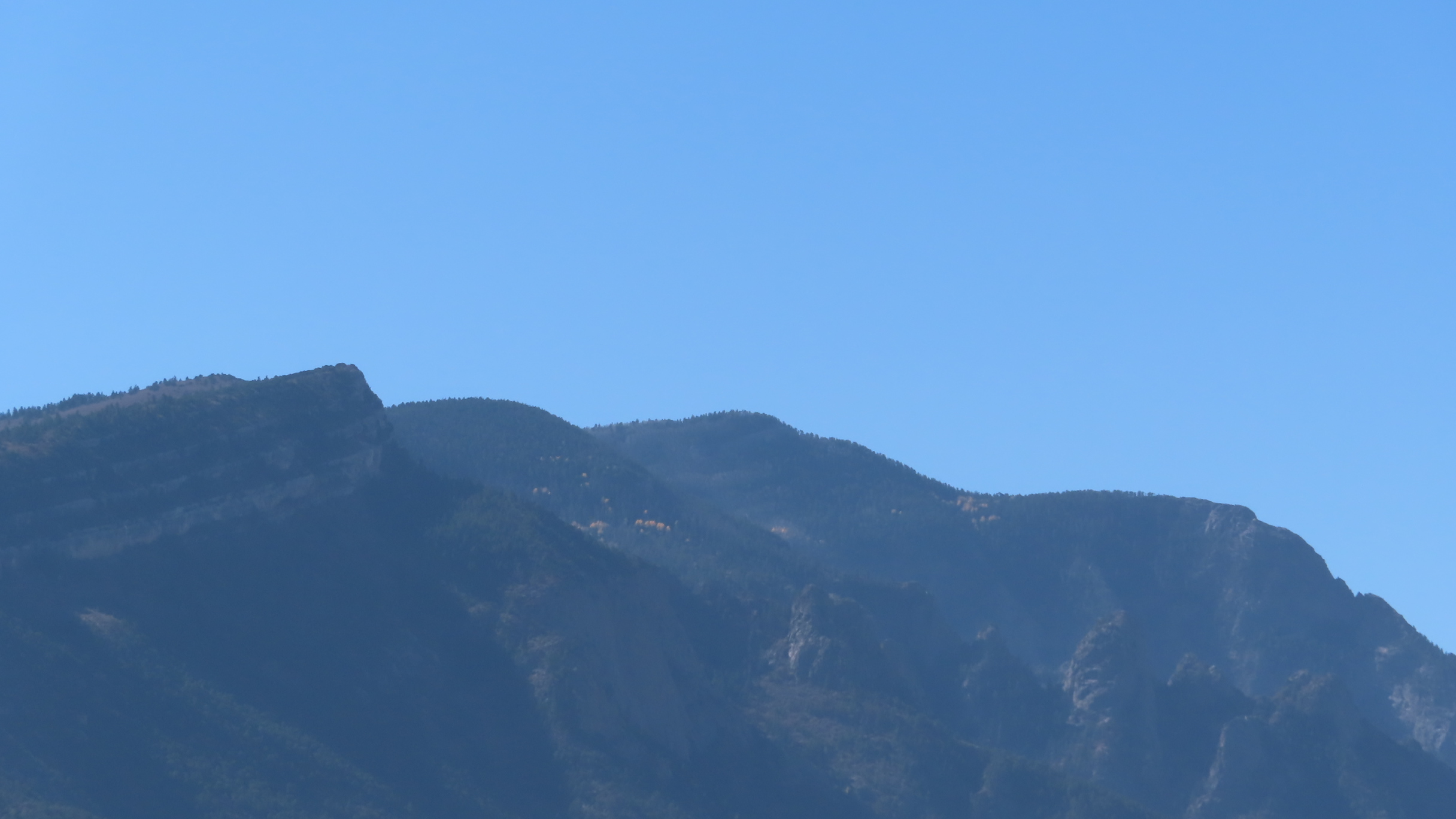
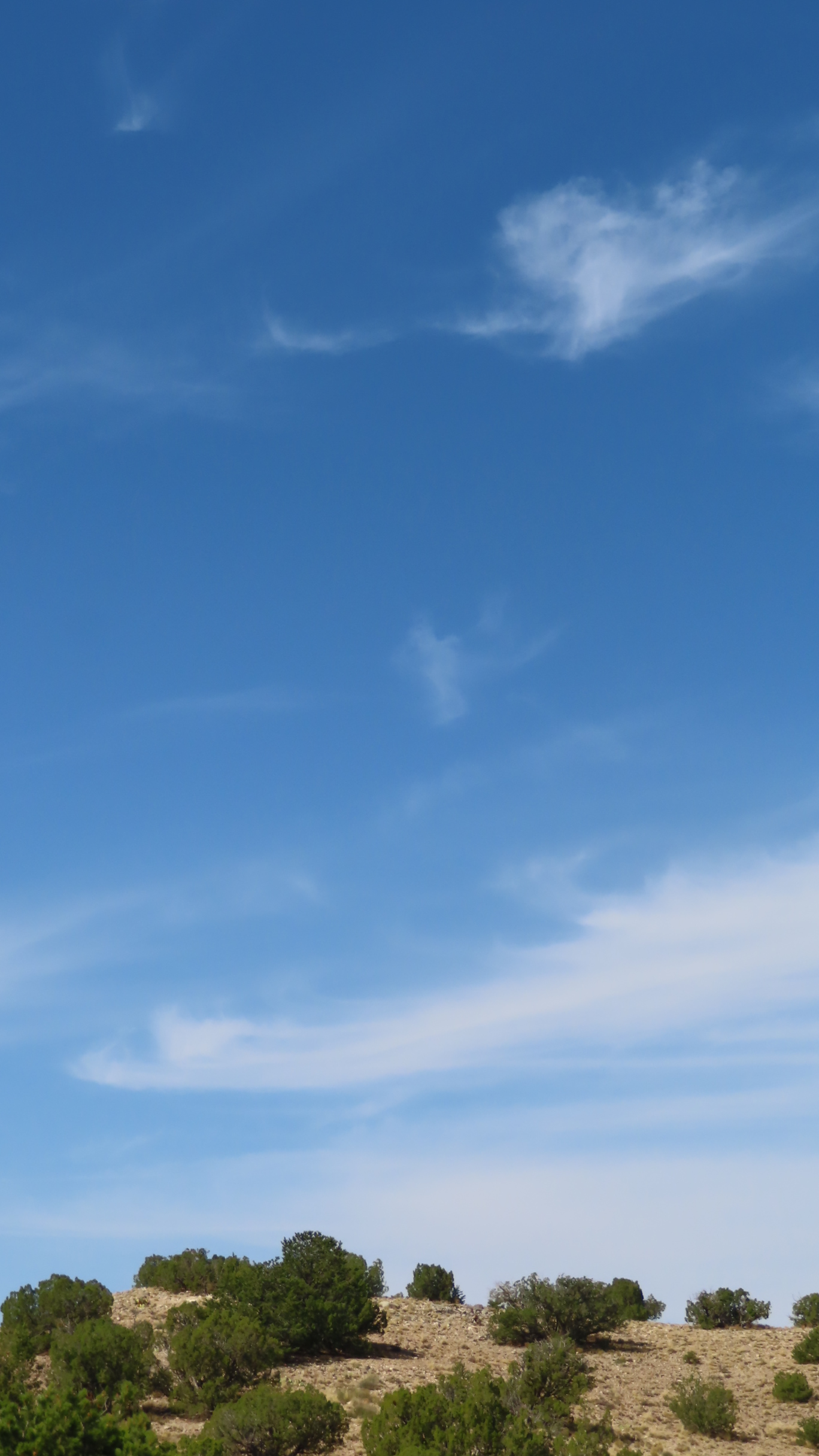
Saturday. Last of the yellow aspen leaves on North Peak and way up Del Agua. Just whisps of clouds with no forecast for rain. Most I’ve seen of Cabezon in a couple of weeks, with wildfire smoke from other states clearing slightly.
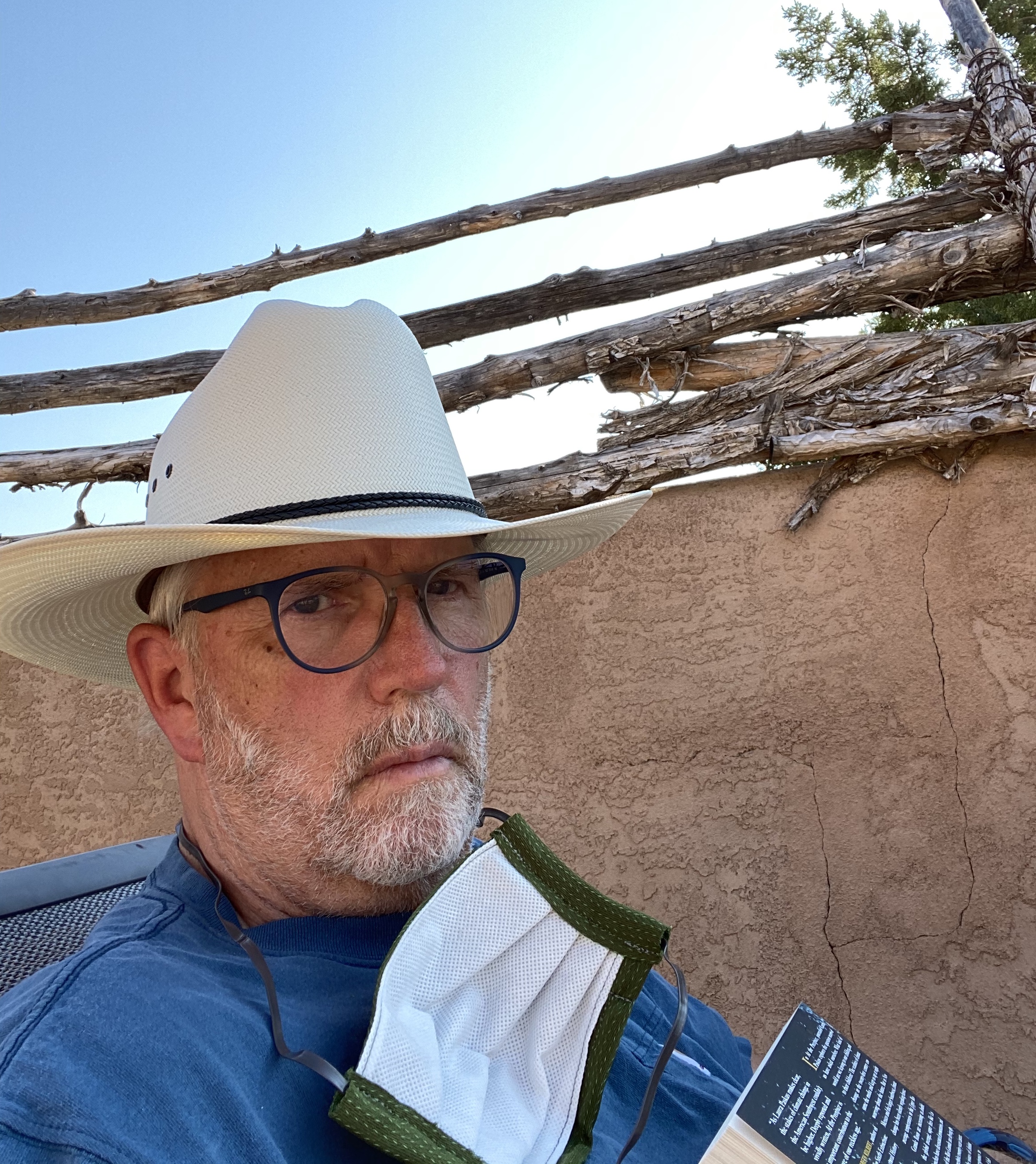
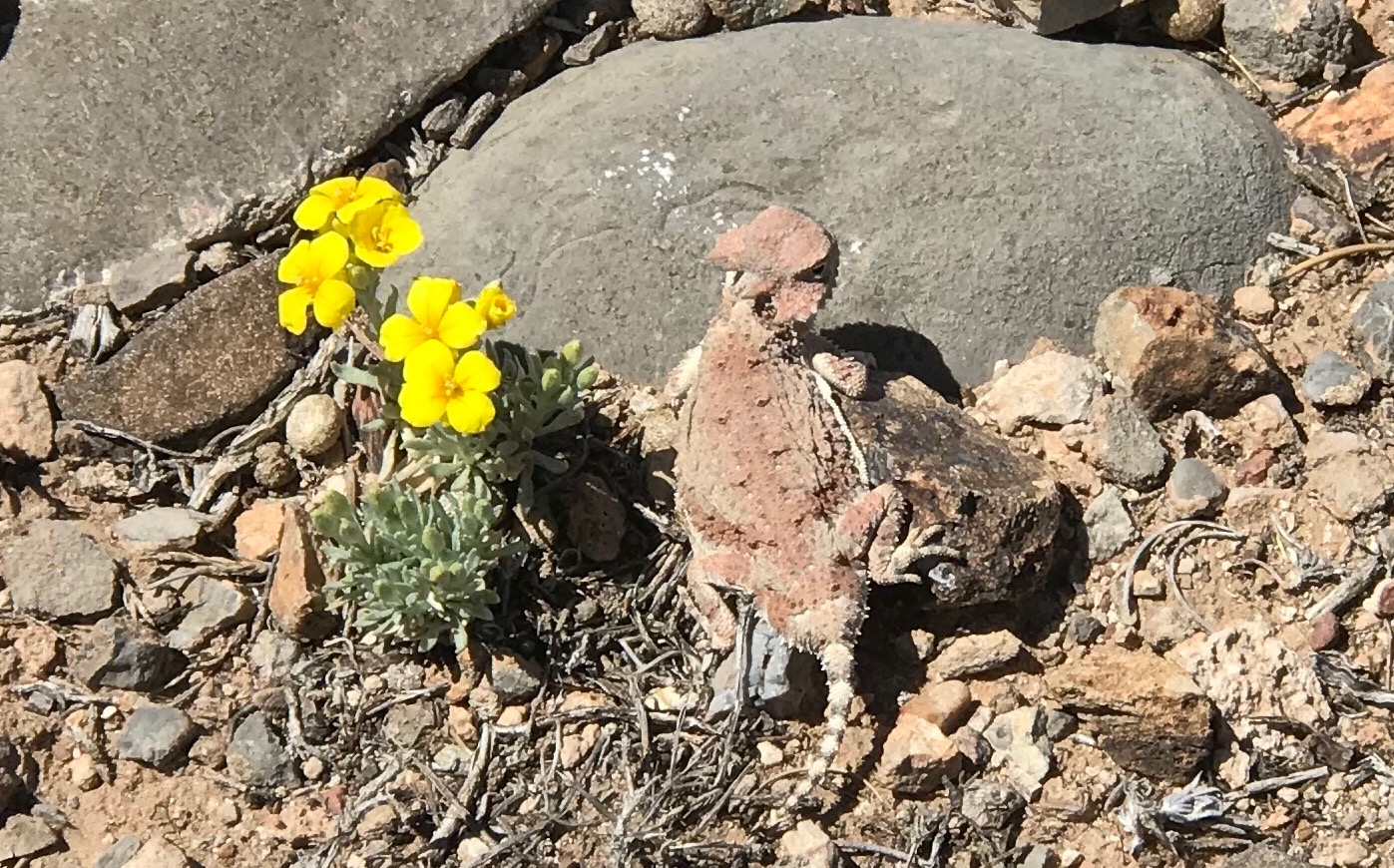
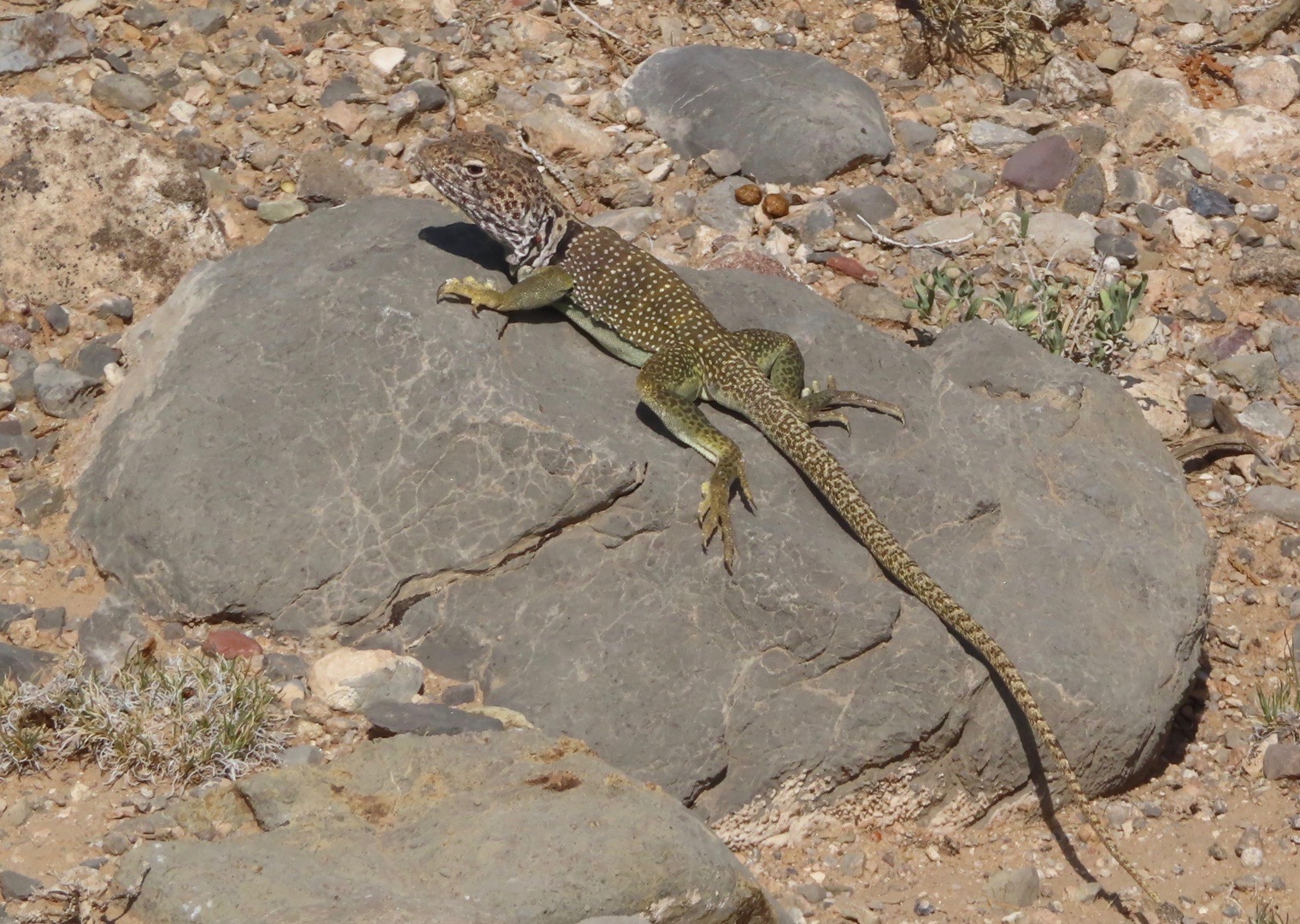
Drought, smoke and pandemic make some critters grumpy.
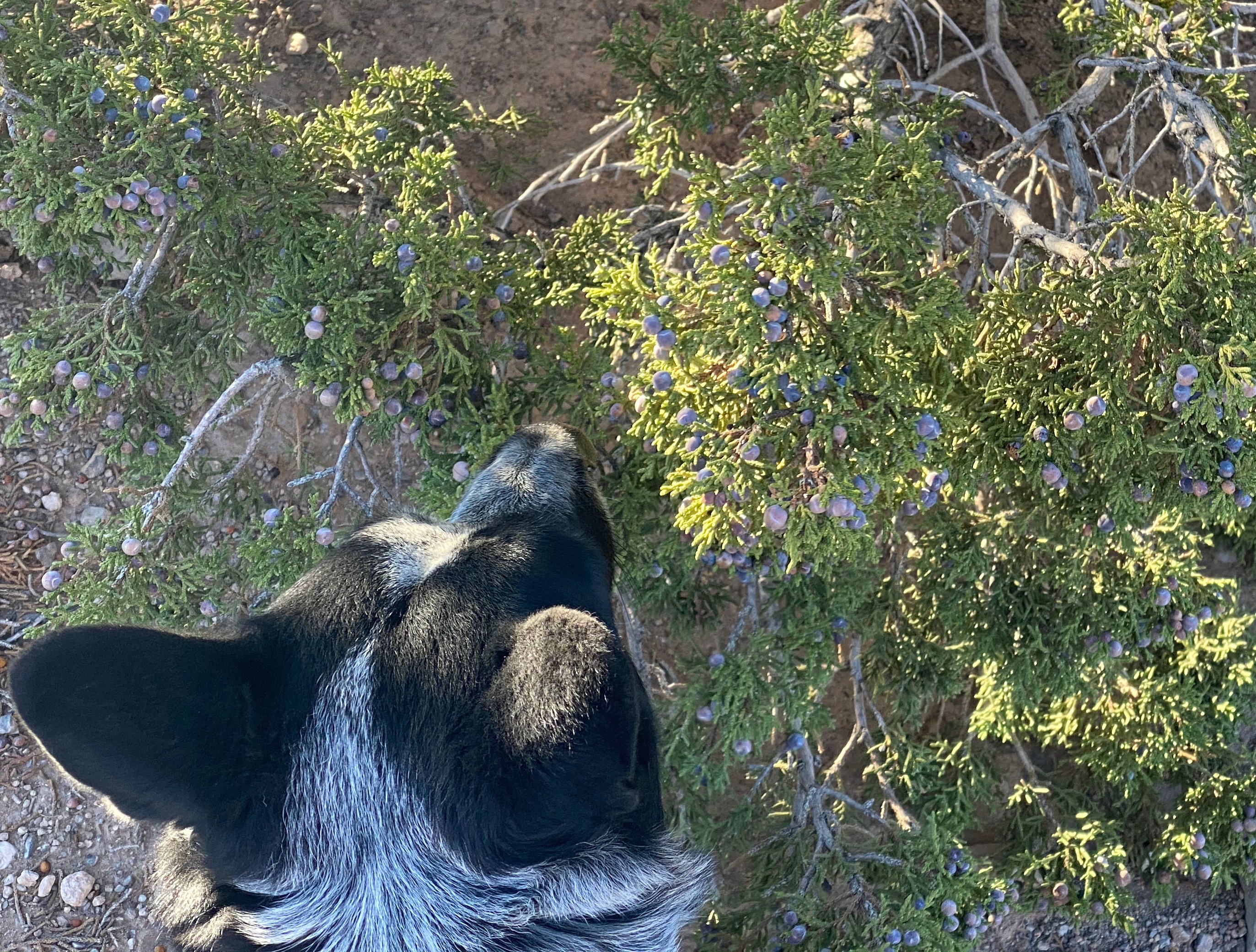
Others stay busy, looking for berries and bugs.
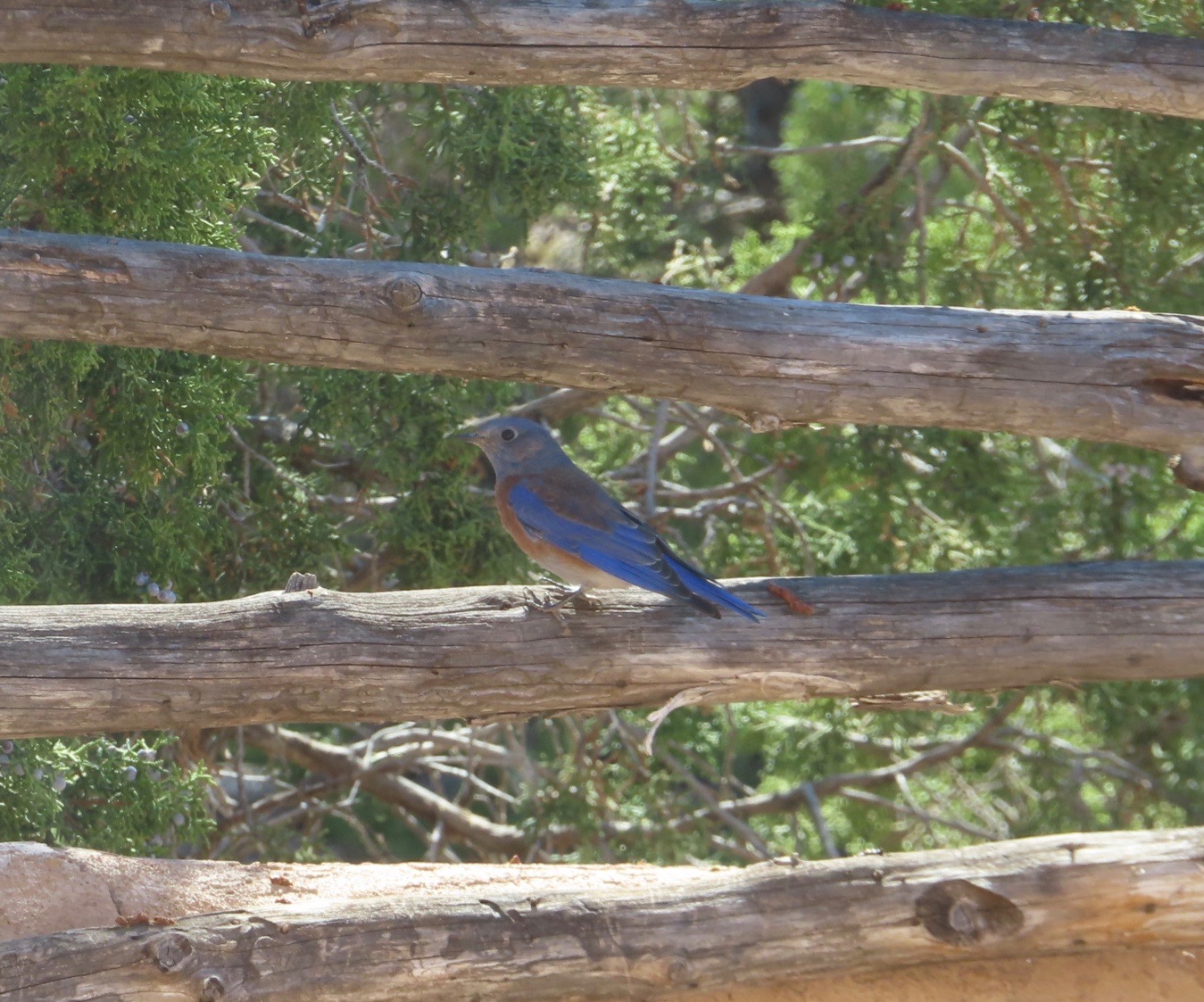
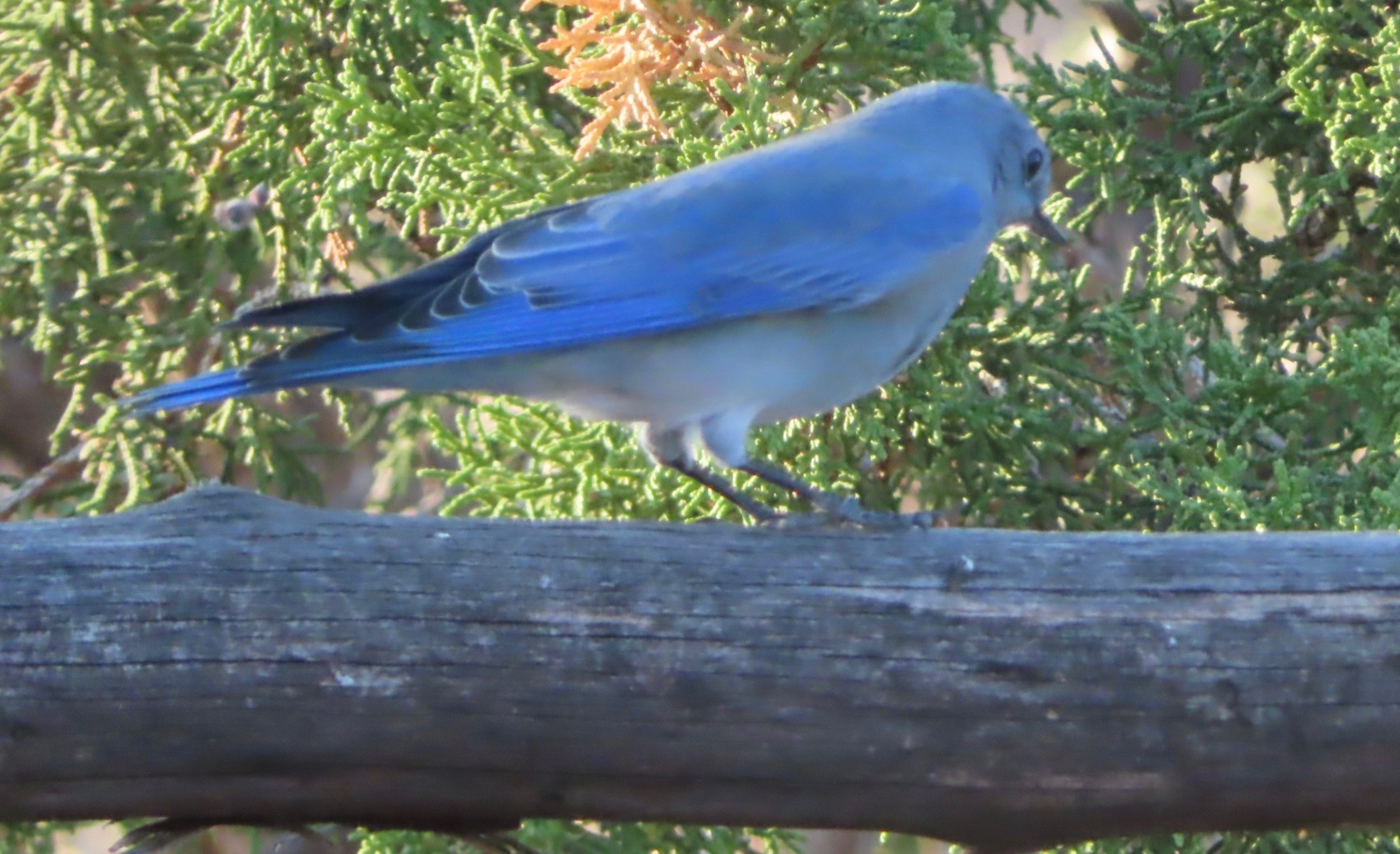
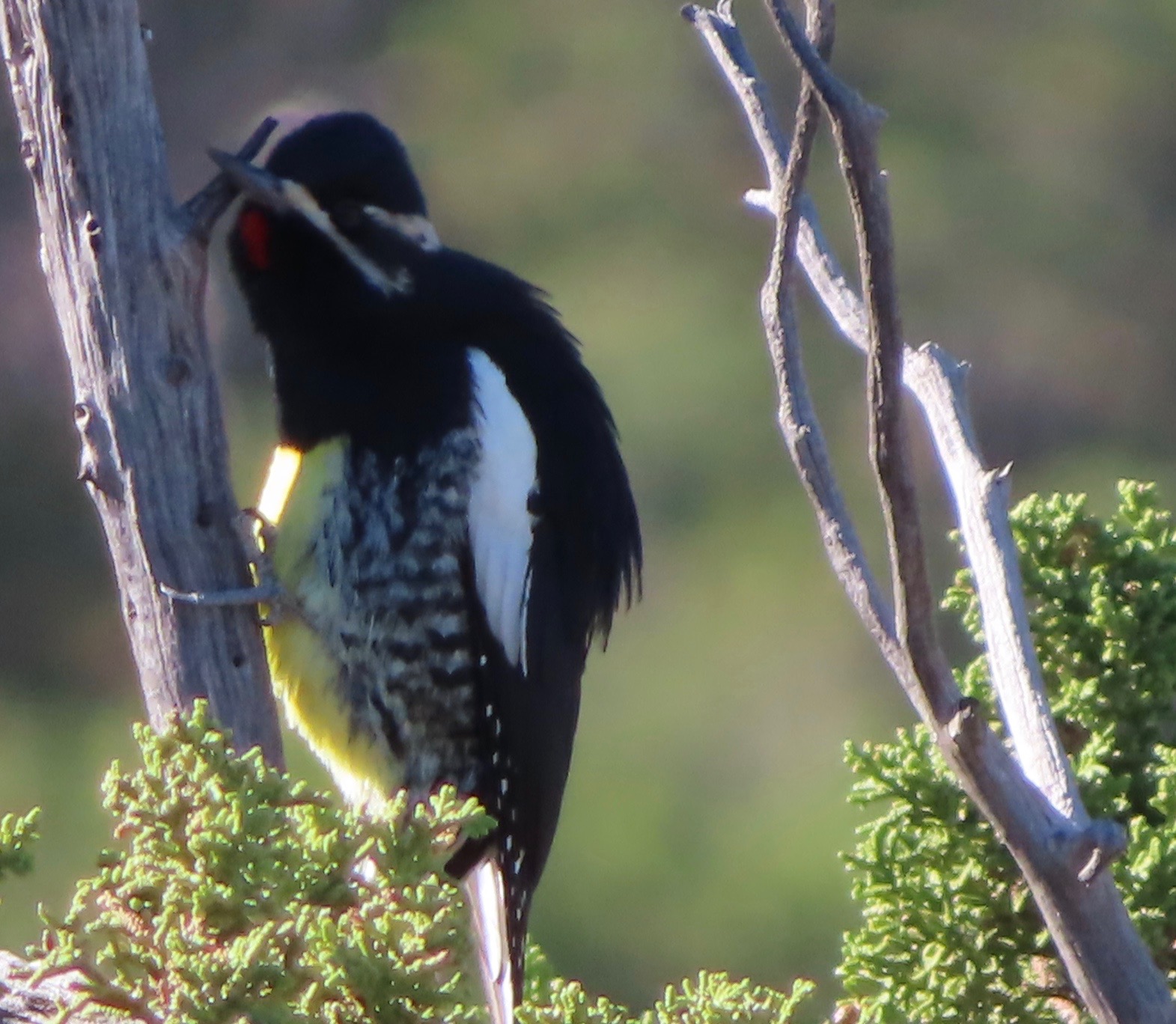
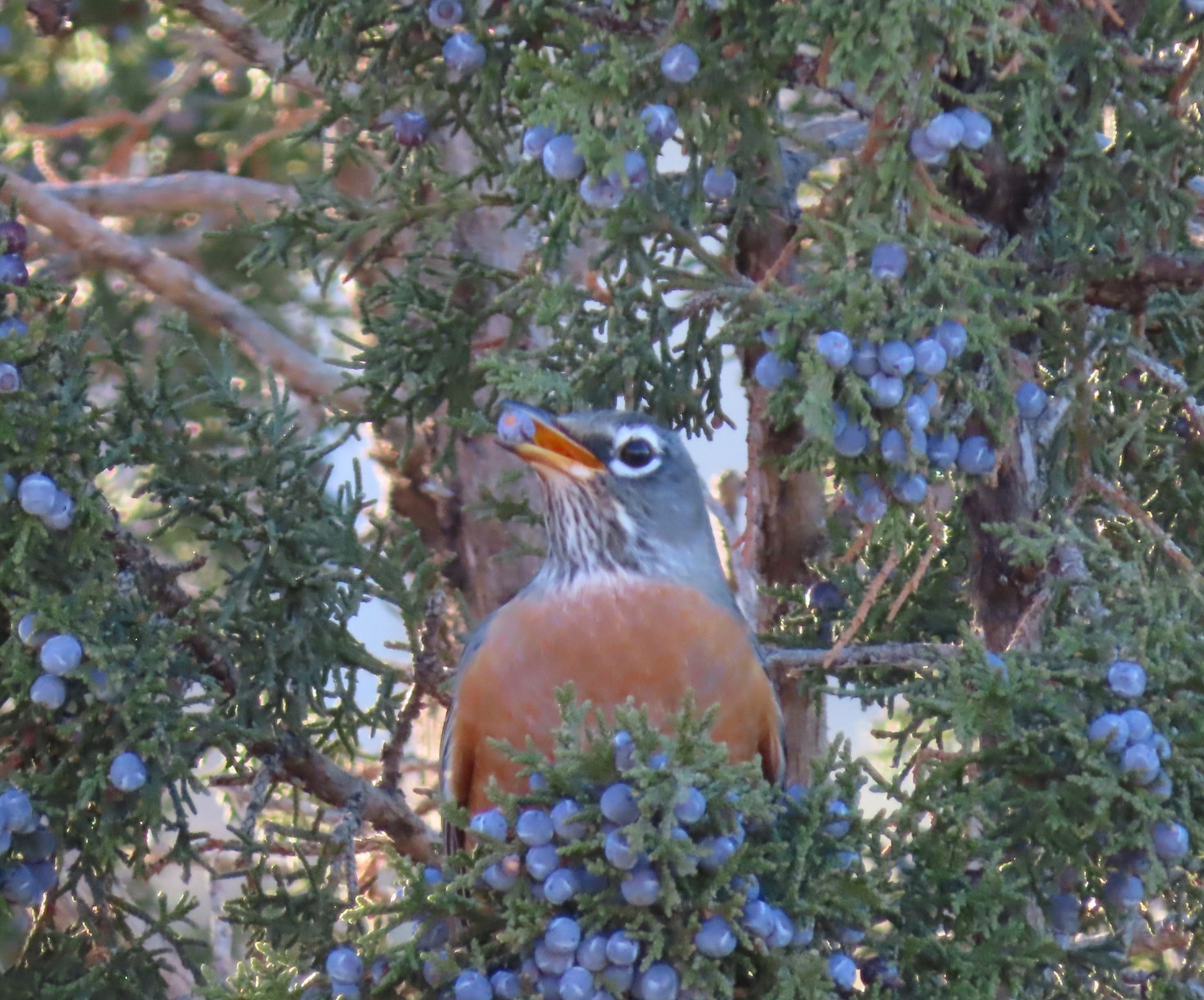
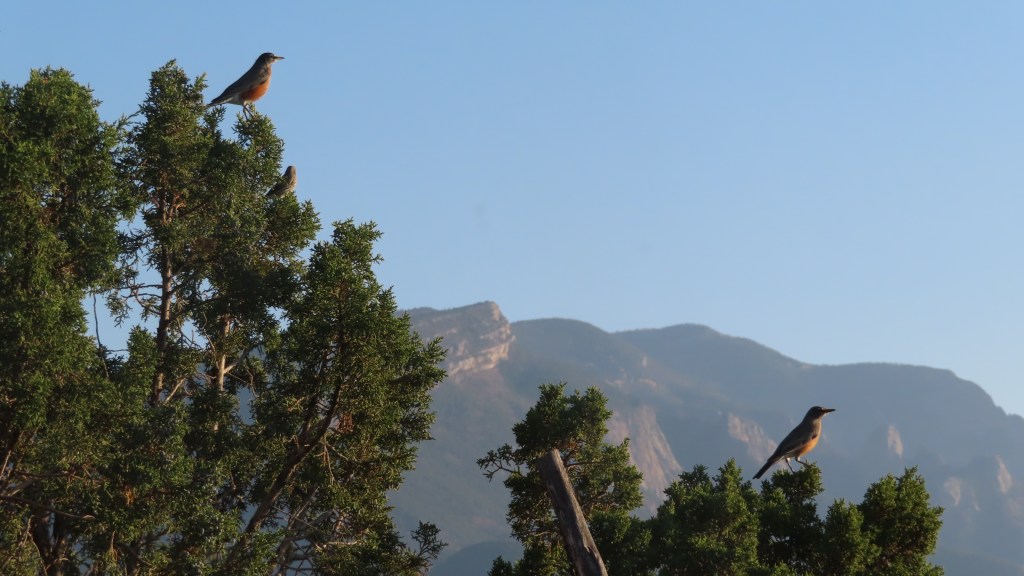
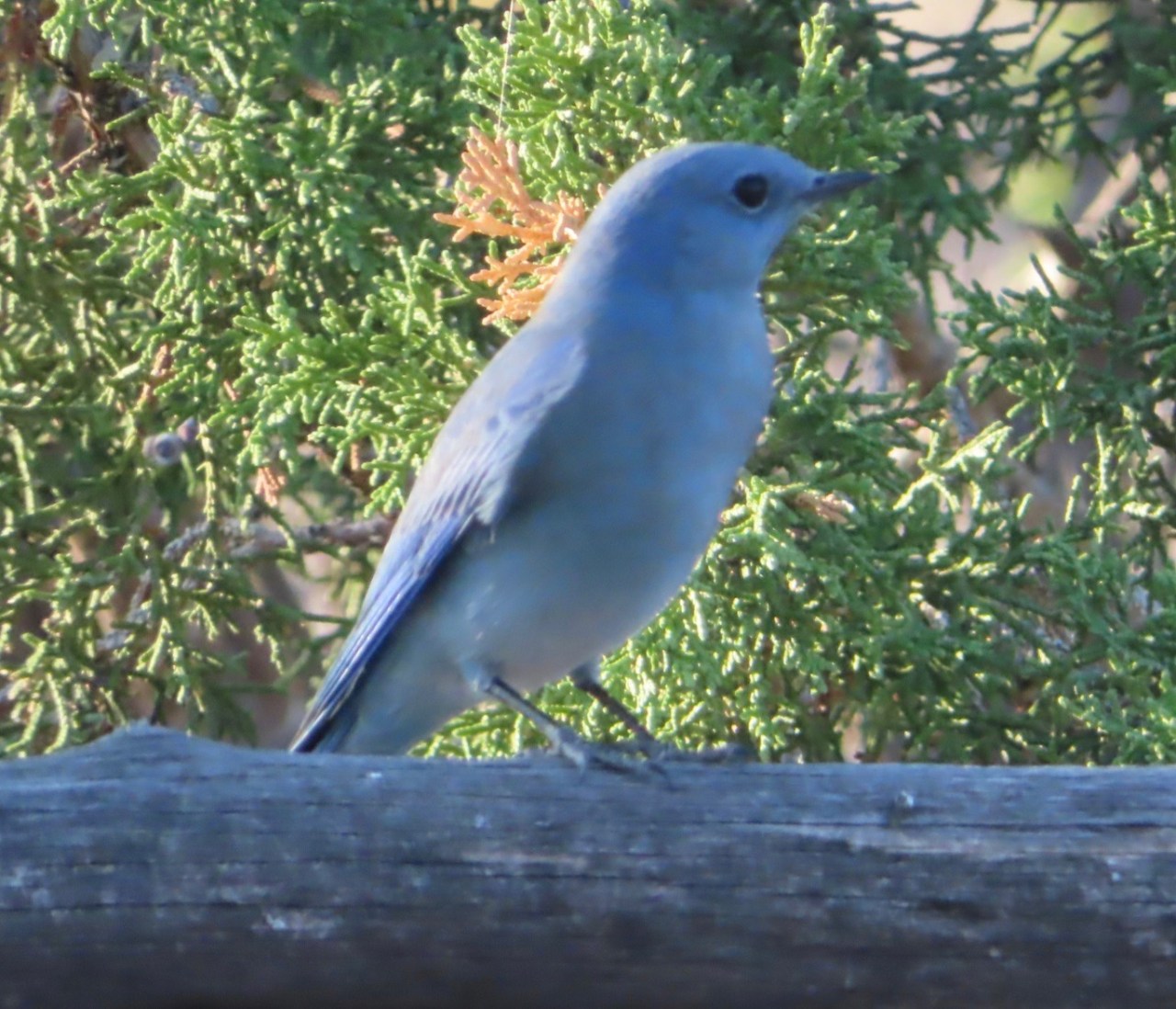
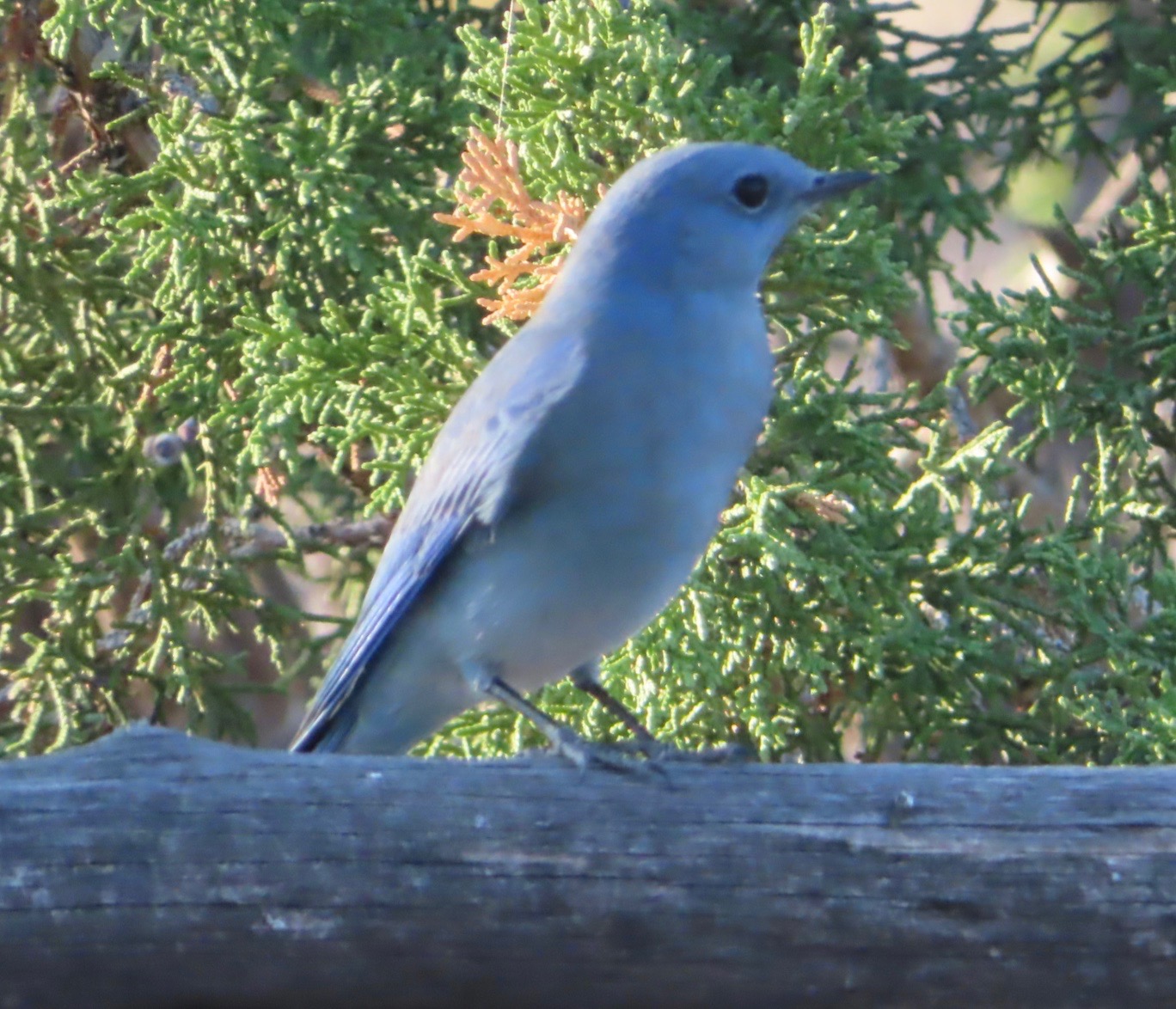
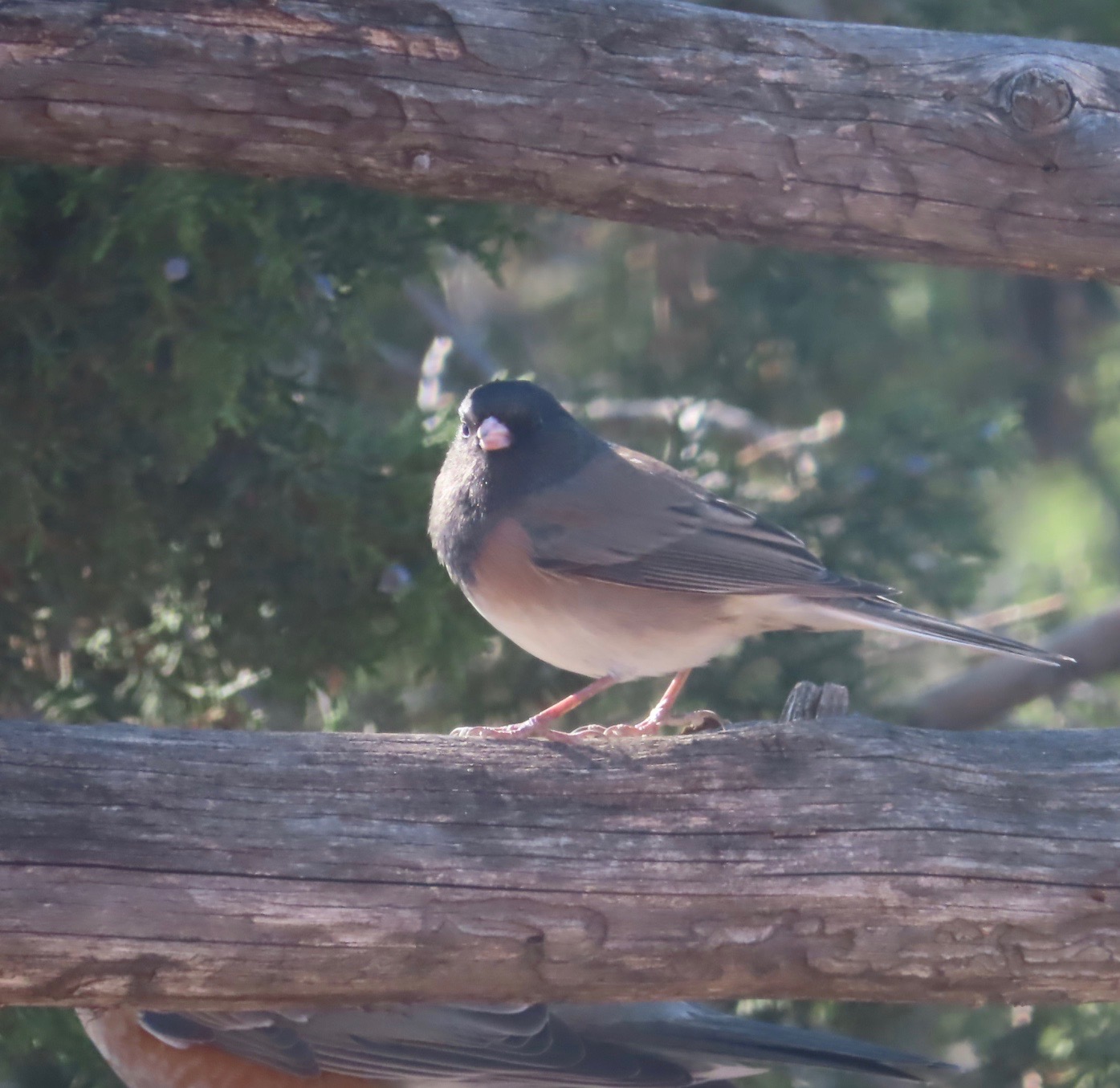

First mountain bluebird I’ve seen at my elevation this morning. Been seeing plenty of Western bluebirds with the turn of the season but this was the first visit of their taller, sleeker, more thoroughly blue male cousins. Yesterday and today, the dark-eyed juncos started showing up. And the robins have been coming in growing numbers for the water and last of the juniper berries.
As usual, wildlife knows far better than I what’s going on up and down the mountain, weather and food-wise. For anyone interested, though, I’ll note that there have been more reports of deer sightings on this north side of the Sandias than I’ve heard or seen in 30-some years here. PS: Some deer seen on 165, along with free-roaming horses, so careful driving.
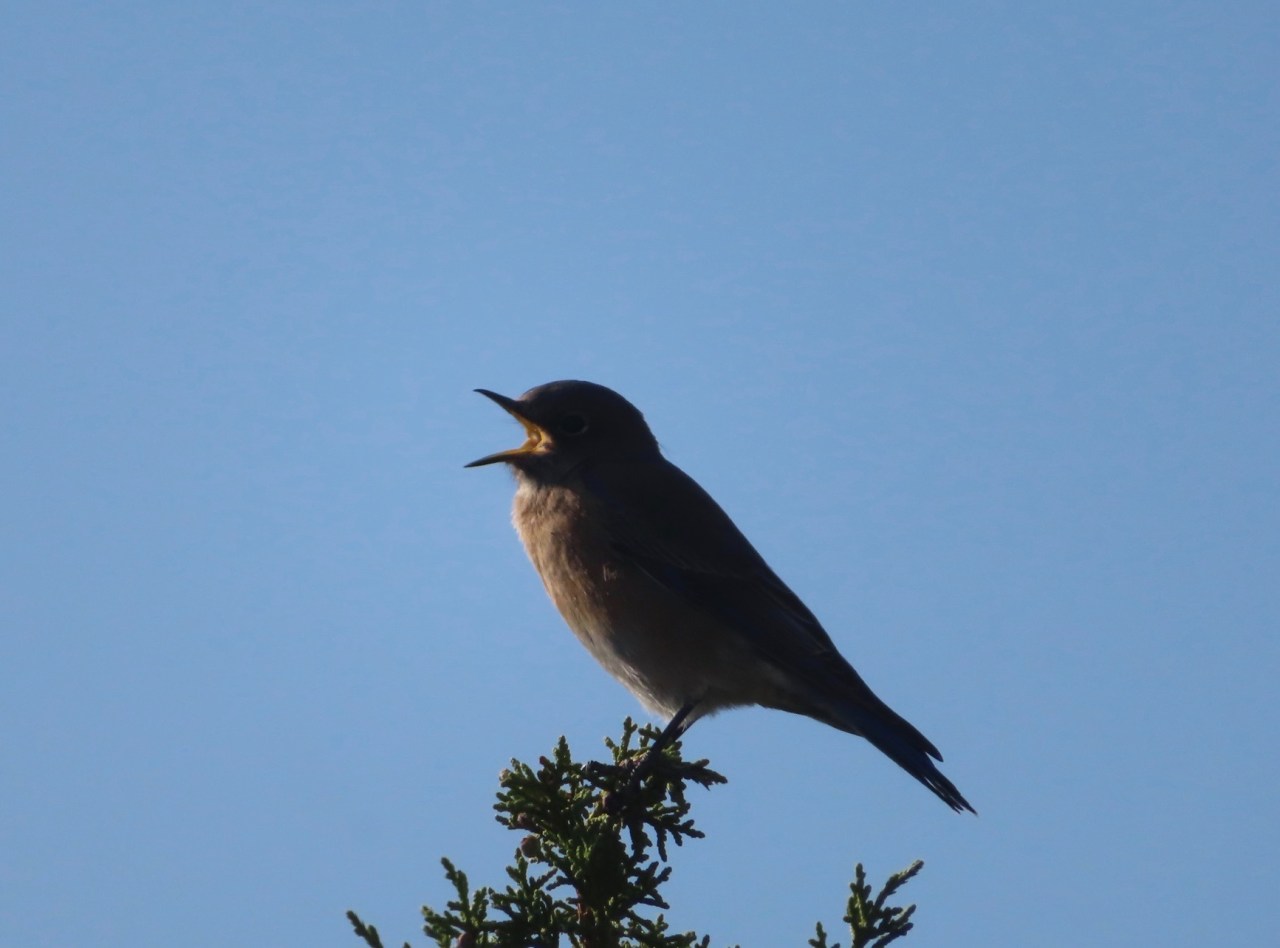
I had hope for a clearer day when I saw a streak of golden light from bed but was reminded how dry the ground was as I rose. I absorbed various facts as I put water out for the birds, made coffee, fed Cowboy, read the news.
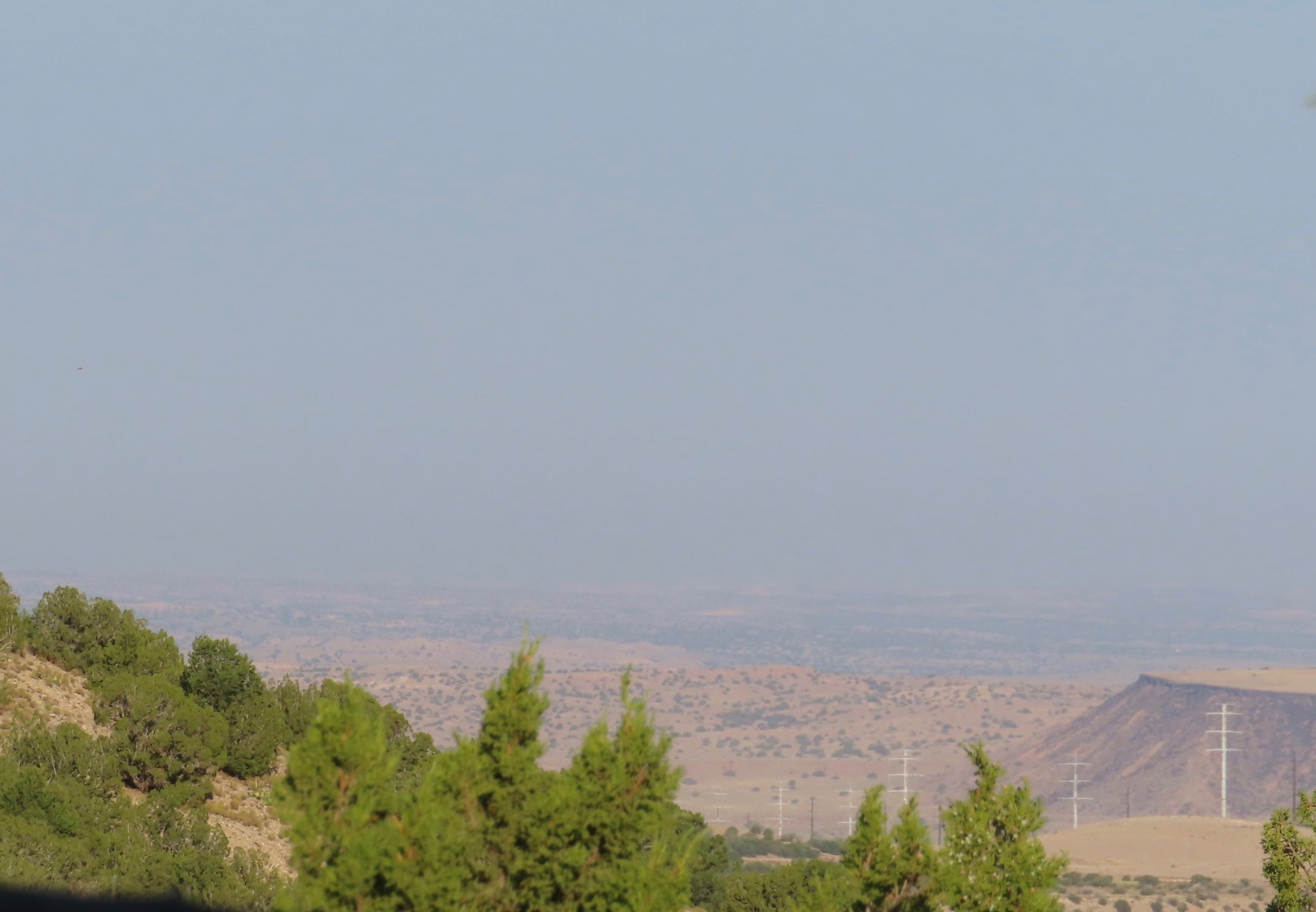
It’s still smoky to the west, over the Rio Grande. I cannot see much of Santa Ana Pueblo, Cabezon, the Rio Puerco or the end of the Pajarito Plateau.

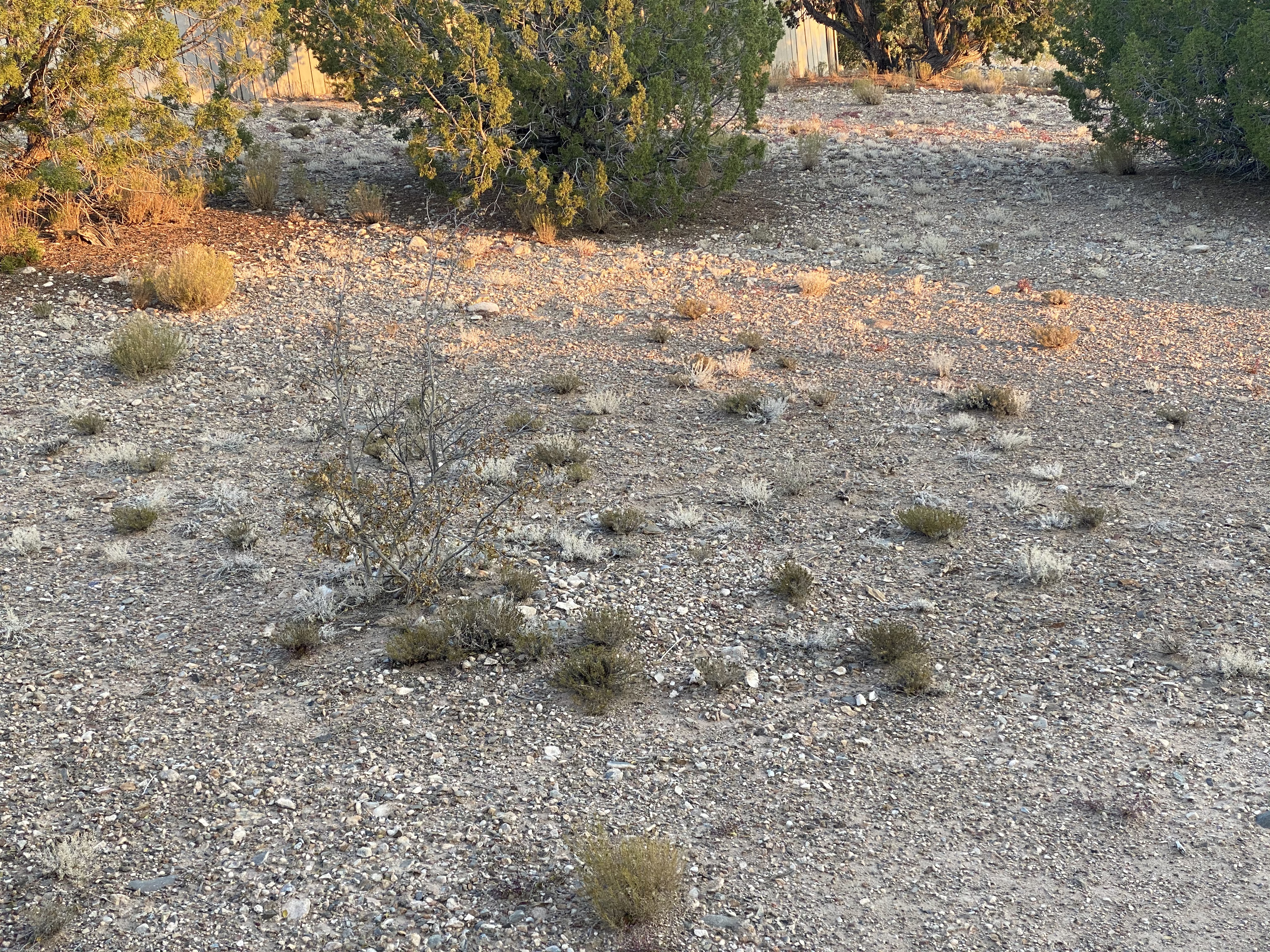
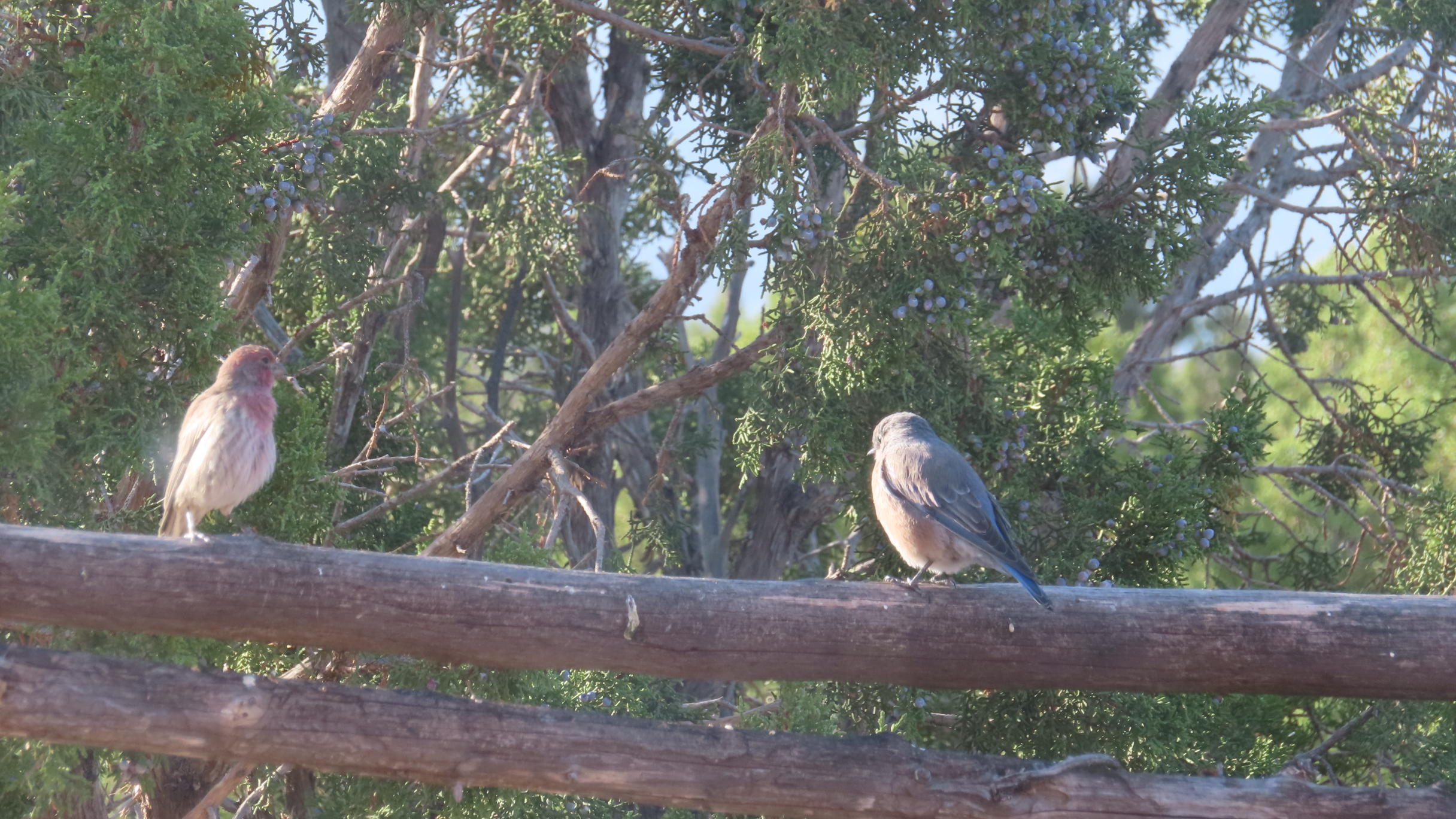
It’s clearer to the south and the Western bluebirds and robins are out in gentle force, calling for others, waiting with house finches for a bath, drying off outside the kitchen window.


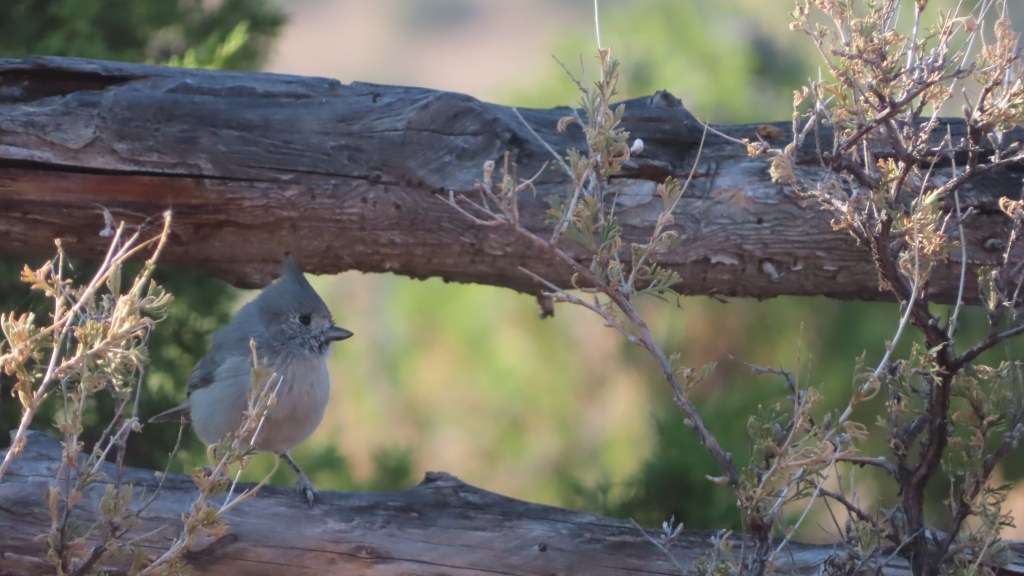
I get a water memo, reminding me of shortfalls in our knowledge. A titmouse peers out from fence poles. I guess they always look worried.
I keep wondering about survivors.
I am reading the new @LauraPaskus book on climate change and New Mexico, “At the Precipice.” This morning the environment and climate scientist Jonathan Overpeck tweeted: Jonathan Overpeck@GreatLakesPeck· It was a bust monsoon most everywhere. Souls are extra dry headed into a La Niña winter – these tend to drier than normal in the SW. So, the SW megadrought will undoubtedly continue…”
I have been worried by the oxygen saturation levels of the COVID-suffering president being reported higher than the ones for COPD-enduring I. Even so, it’s time for a walk.

