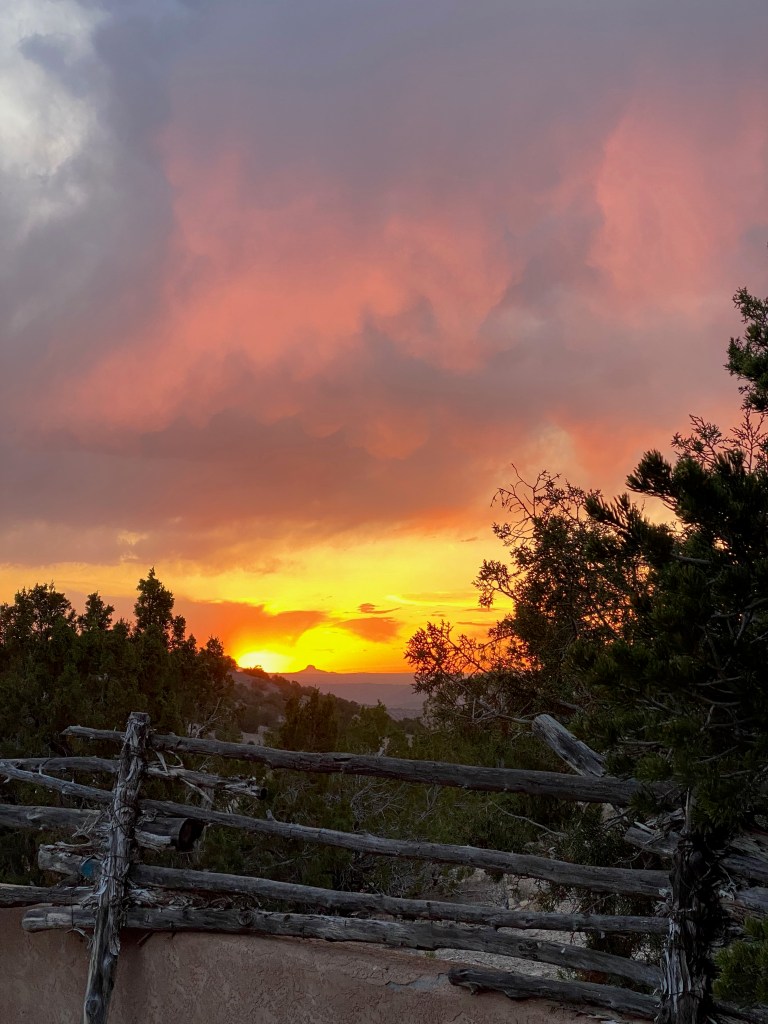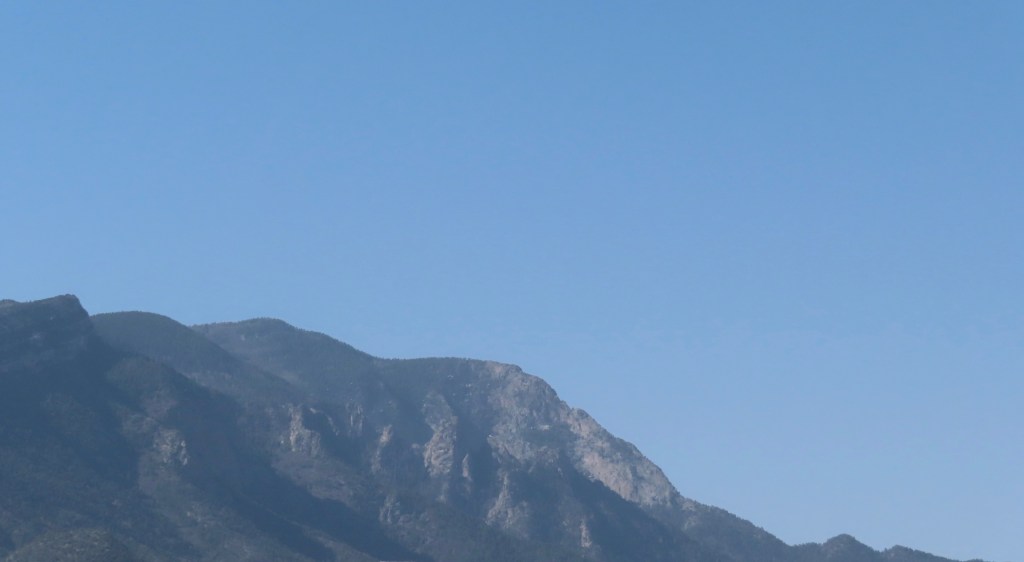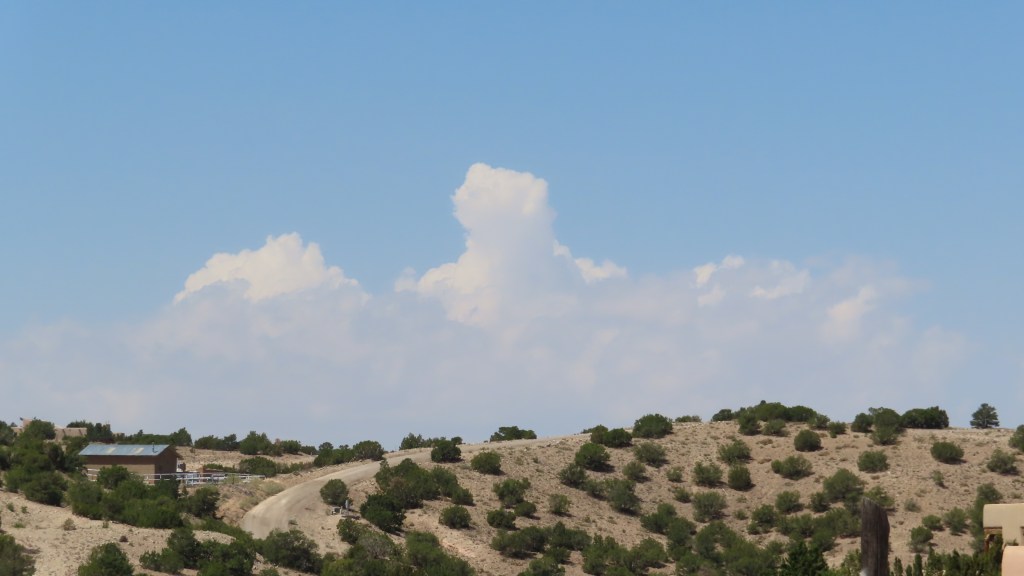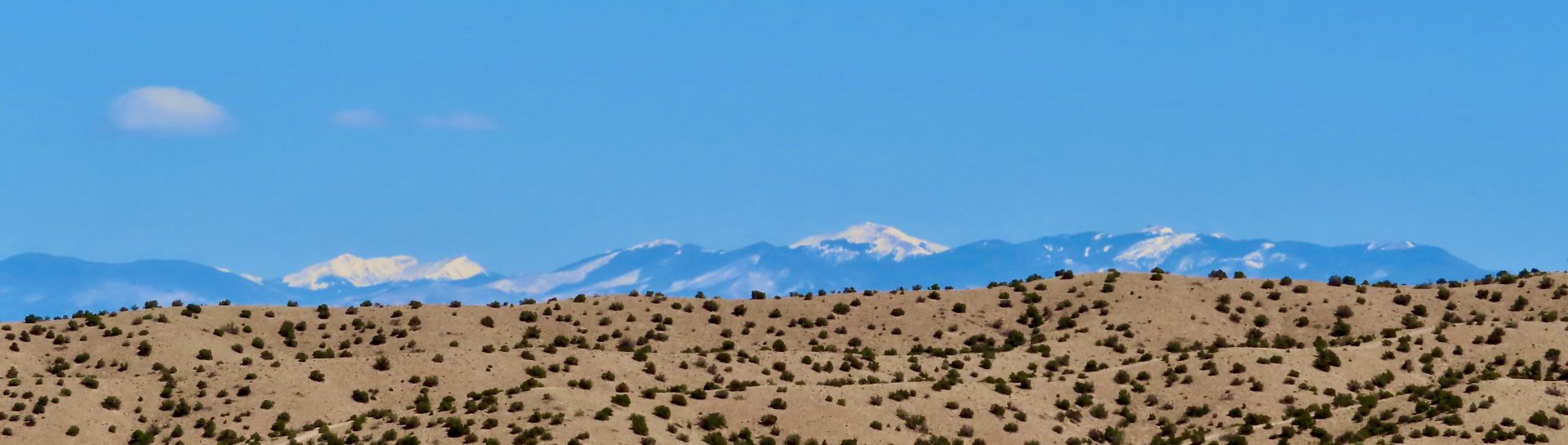
The sun is going down on things I thought I knew.

For instance, I might need to start watering the snakes.

I was two rooms away this morning when I heard Cowboy do his snake bark outside but I try to be prepared for surprises here on the human-wildlife interface.

I keep various snake-removal tools at both the front and back doors. This time my store-bought, non-lethal aluminum snake stick with spring-loaded jaws was handy. It was just a young bull snake, seeming to grin up at me, hopefully it seemed.

I grasped the critter with the stick as gently as a could — I’m not a bare-hander like one of my neighbors — carried it across the walled-in yard and lowered it to the ground outside, hopefully without injury. It disappeared quickly, if only to regroup for another climb back over the wall. I usually like to use a hook instead of the jaws thing — less chance of snake injury, I think — but the stick with jaws comes in handy when faster action is required. Cowboy has been to rattlesnake awareness school and he wasn’t happy with the visitor this morning. This slim little critter could have easily scooted past me into the house as I surveyed the situation through an open door.

They seem to be going for water — or maybe mice who I see evidence of but whose hiding places I can’t find. I know snakes get hydration from stuff they eat, too, but I’m giving weight to the water theory because the one I removed this morning was taking the same route to Cowboy’s outdoor water bowl as the one I removed three times in two days last year. In other words, the arrivals and routes have become predictable.

Unfortunately the mice are part of the ecosystem, too. I think they come to the yard because of the seed and nuts spilled by scrub jays, wood peckers and Texas antelope squirrels. I have to keep the bird food inside of my wall to protect it from the free-roaming neighborhood horses. But I am too afraid of hantavirus to water mice as well as snakes. Cowboy would agree. Them meeces worry him to pieces.

The hard part of the snake thing is is that they always seem to be smiling, as if wanting acceptance or just free travel to Cowboy’s water bowl. It is, after all, June and something like the twentieth year of drought. The creek below my house, where neighborhood critters used to convene, dried long ago. This spring, we’ve been more than 60 days without rain.

So, I am more aware in this 21st Century that snakes need water, too. I’ve managed to keep the bird water pretty much just for the many small birds and occasional rodent interloper. Now I just need to figure out a snake watering system that doesn’t also attract wild horses, coyotes, bobcats, badgers and, gulp, cougars.

More 21st Century change: Medical treatments have improved. Leeches are no longer in use.

Just after the snake encounter this morning, when I felt like a border patrolman pushing an innocent family back through the fence, I caught myself almost sending a friend an out-dated book on prostate cancer, most recently copyrighted in 1997, just a few years before my experience.

Fortunately, I had the sense to Google “changes in prostate cancer treatment” before sending off a book that once was the bible but might not contain new treatment options.

Just as the news business has gotten immensely more complicated since my 40 years on the job, my prostate cancer treatment experience now is mostly a matter of looking back instead of forward. My friend needs to listen first to his doctors. Things have changed since they advised me about the gold standards of my time.

(Update: I note that I received excellent care from Presbyterian after my lung cancer diagnosis in 2015. And on both cancer scores, the bottom line is I’m still kicking. I am thankful for effective treatment. All I’m saying is that cancer treatments, like all things, have evolved and improved over time).

And more change, like it or not: Wildfires, like newspapers, ain’t what they used to be.

I have experience as a wildland firefighter as well as with prostate cancer but the weather has changed, too. Fire behavior has become a study of extremes since my couple of seasons with the California Division of Forestry in the early 1970s, just as prostate science, although for the better, has grown since my treatment 20 years ago.

A friend asked yesterday about my fire experience while we talked about the big New Mexico fires this year. I told her that what I dealt with and saw wildfire-wise 50 years ago are nothing like the mind-boggling conditions and fire behavior we see today.

I saw some big fires in eastern and southern California. We were just as wary then of canyons and wind and dry conditions — and California fire seasons even then were long — but my thoughts back then focused mostly on wishing for bulldozers, fire camp steaks and something cool to drink. We were more aware of water, poison oak, slurry soakings, stump holes, widow-makers, paper sleeping bags and the quality of sack lunches dropped from helicopters than climate change.

I was just a CDF grunt but I saw nothing like the Las Conchas fire in New Mexico that burned nearly an acre a second in the Jemez mountains in 2011 or the unstoppable Calf Canyon/Hermit’s Peak that has burned more than 40 miles, south to north, in the Sangre de Cristo mountains this year. I don’t know that I ever was part of anything as big as the 3,000-person army fighting the Sangre de Cristos fire for the past two months.

We were a 20-man handcrew, cutting line with double-bitted axes, brush hooks, Pulaskis, McCleods and shovels. On web belts, we carried Army surplus, one-quart canteens and files for sharpening our tools. Our always overloaded swamper, in addition to a fire shovel and his own personal gear, carried a little extra water in one-gallon, blanket-covered canteens, sharpening tools and a big, campfire coffee pot strapped to his pack.

Except when we were able to return to a fire camp after a 12-hour shift, we were usually so isolated it was hard to imagine the bigger picture. We were heads-down, swinging tools, squinting through cheap goggles and breathing through wetted bandannas, focusing on our own little horizons of flame and blackened ground.

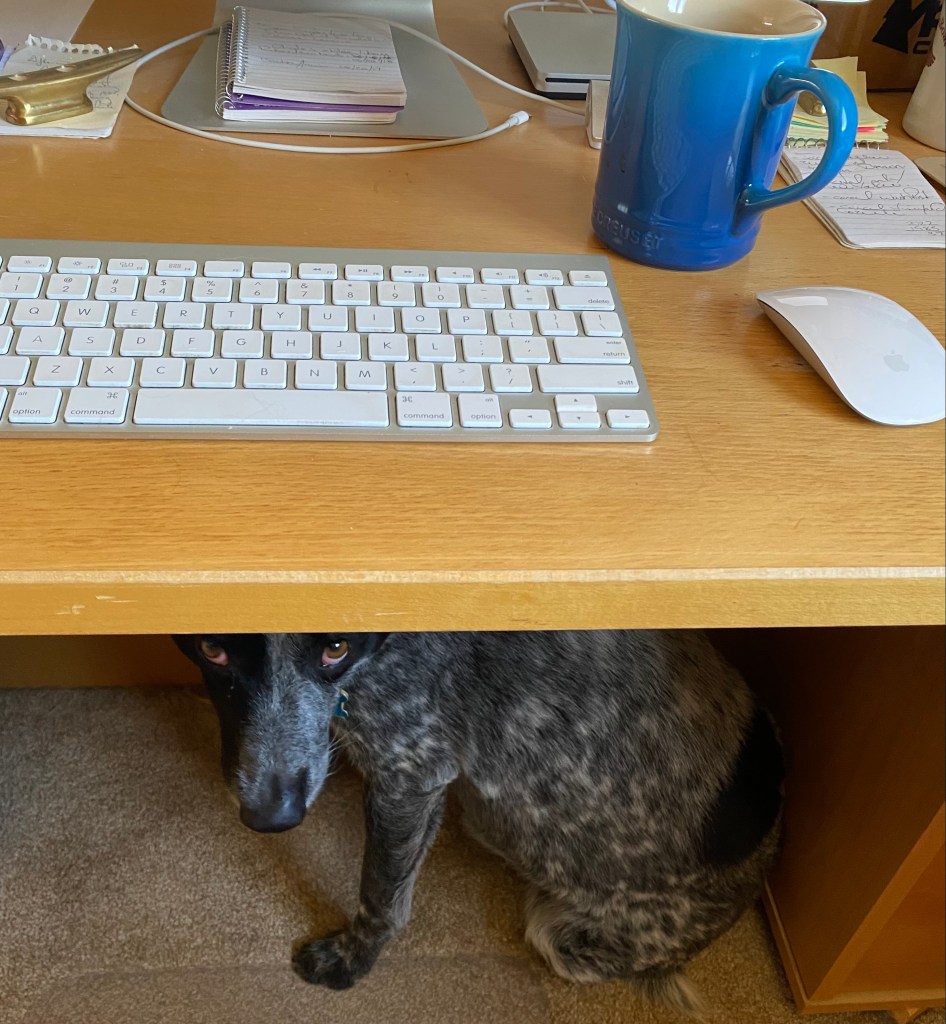
So, as I keep aging out here in the high desert, I am increasingly wary of offering advice, though I am still trusted by at least one friend. Cowboy has been sticking especially close since the thirsty snake excitement earlier today.

Update:

Photo by Allie

After my post above, I learned that my next door neighbor might have had a visit yesterday from the same shade and water seeking critter or more likely a sibling or cousin. She took this photo apparently a few minutes before or after developments at my place.

Sister Hope had the right idea in 2006 — when son Will was just a wee lad — except that Big Daddy Matt had to push the BOB — an “all-terrain stroller”– and got a flat tire.
But some things have changed: Hope and Will at Missoula baseball series, May 28-29, 2022.

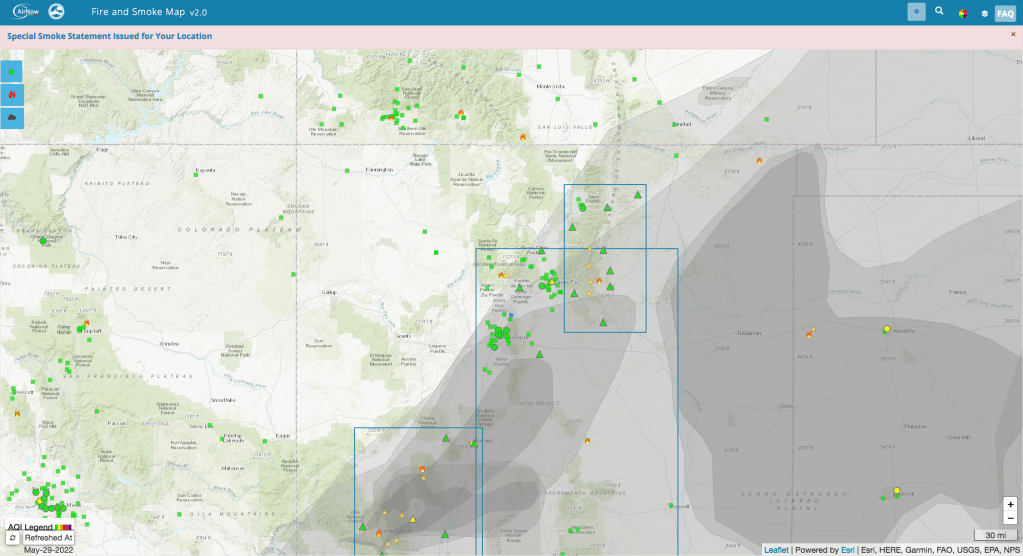
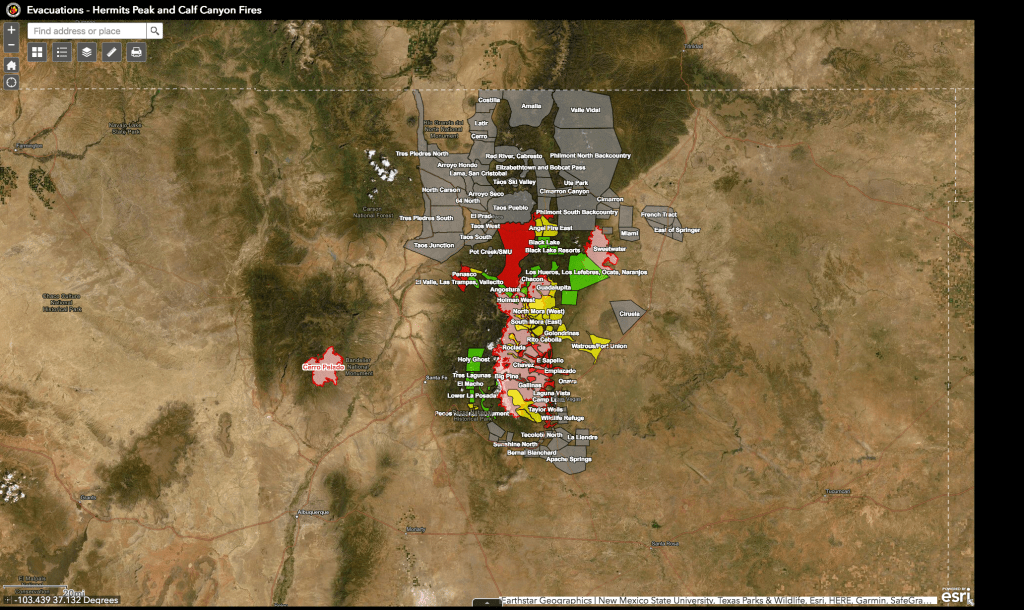
This is likely to change by tonight or overnight but it’s such a great (click here) interactive map I wanted to post it now.

Here’s the link to the interactive map again. You can expand or shrink the detail. Plus it shows the two fires within my views, at least smoke plume-wise, in the same frame. https://nifc.maps.arcgis.com/apps/webappviewer/index.html?id=bfb95b09412840c0afd99626ea2bee4f

Evacuations spelled out in more details can be found on Facebook in news releases from the sheriffs of San Miguel, Mora and Taos counties. Daily fire briefings also are being streamed on Facebook.

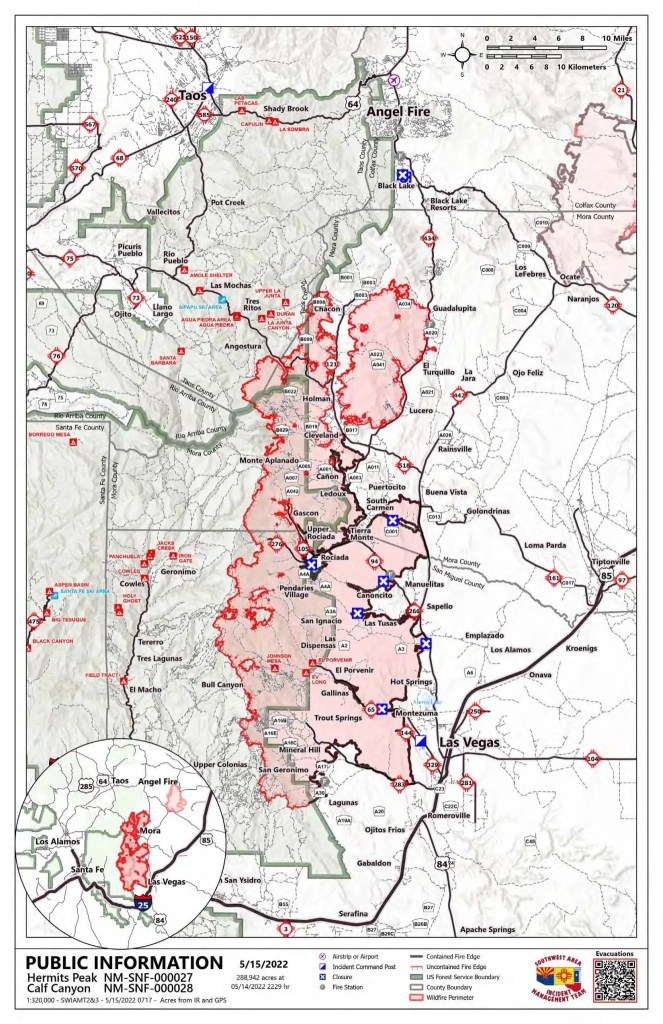
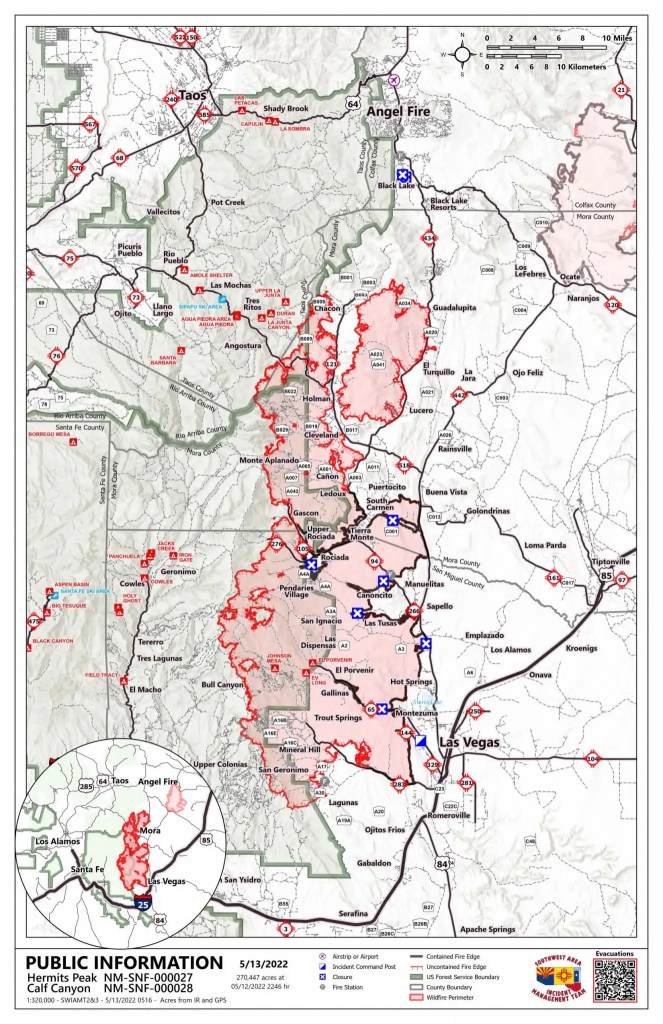
Key statistics for the Calf Canyon/Hermit’s Peak fire in the Sangre de Cristo Mountains this morning were: “Acres: 308,971| Containment: 40% | Total personnel: 2,707 Start Date: Hermits Peak: April 6, 2022; Calf Canyon: April 19, 2022 | Cause: Hermits Peak: Spot fires from prescribed burn; Calf Canyon: Under investigation.” Link to full morning briefing here.

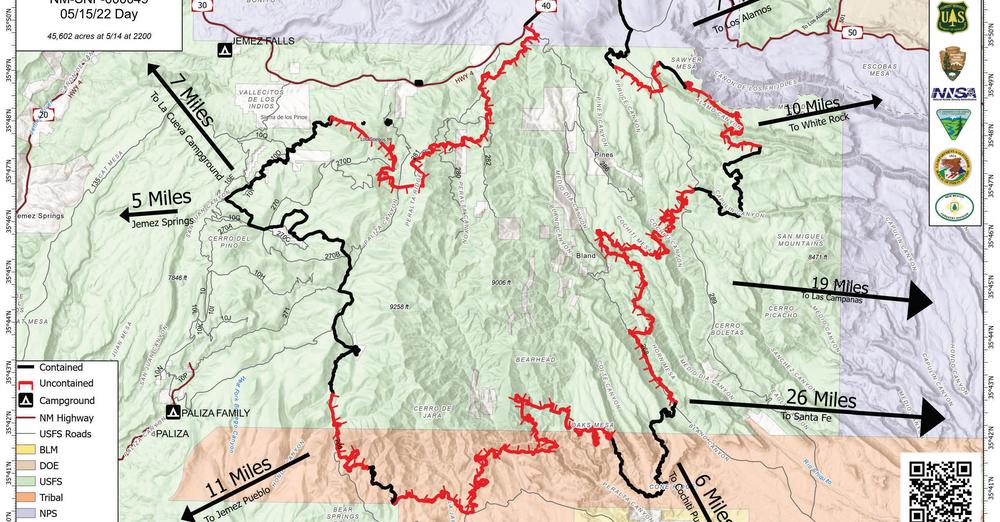
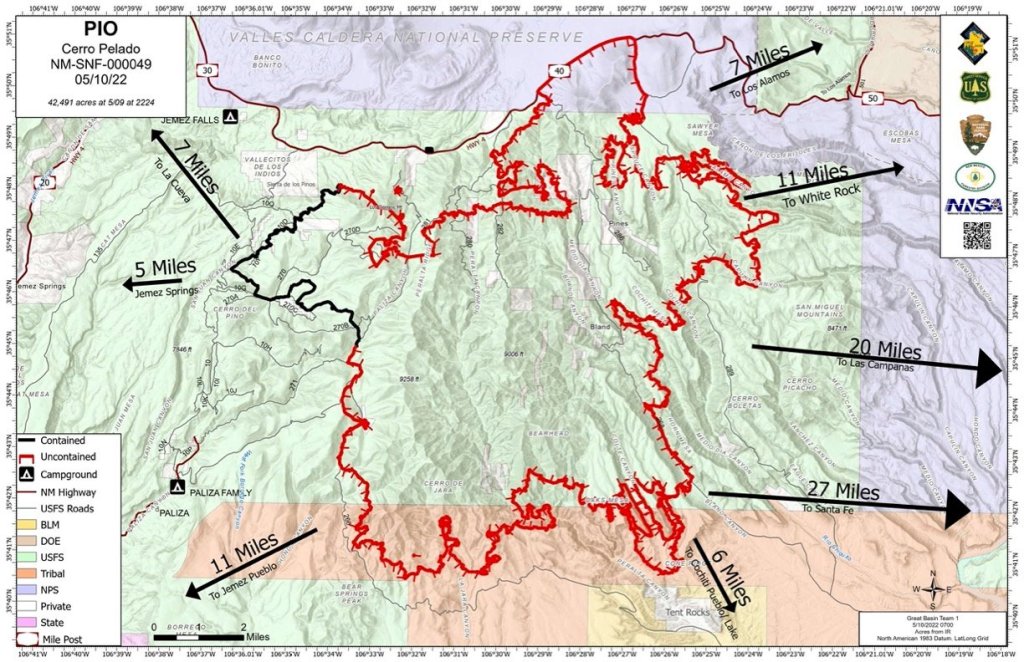
Key statistics this morning for the Cerro Pelado fire in the Jemez Mountains to the east were: “Current Size: 45,605 Acres Current Containment: 75% Start Date: April 22, 2022 Cause: Unknown Total personnel: 580.” Link to full morning briefing here.

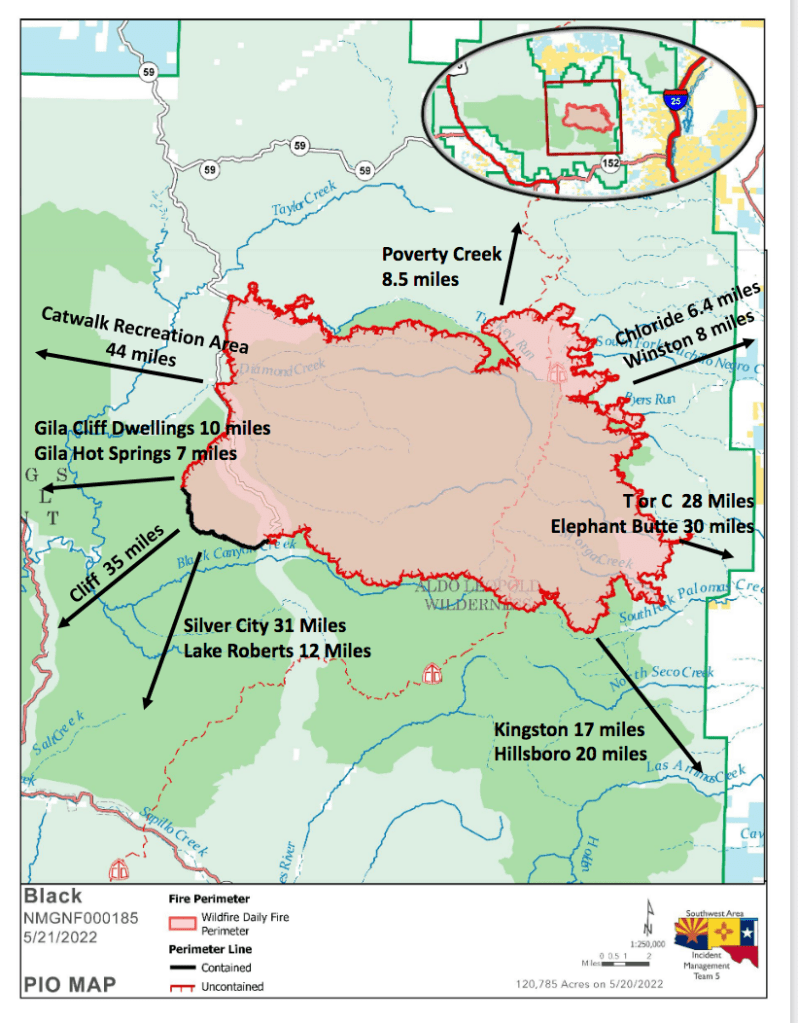
Meanwhile, I shouldn’t ignore the fast-growing Black Fire in the southwestern part of the state, already over 120,000 acres. Here is a link to an early 05/21 briefing: https://nmfireinfo.com/2022/05/21/black-fire-daily-update-may-21-2022/ And evacuations as of 3 p.m. Saturday: https://nmfireinfo.com/2022/05/21/evacuations-on-the-black-fire-expand-3-p-m-may-21-2022/

Can’t say my thoughts eased with the Forest Service nightly briefing Sunday on the Calf Canyon/Hermit’s Peak fire.

I hope we do not have to remember this as the fire that burned from Pecos to Taos.

The 40-day-old fire is near 300,000 acres and stretches 45 miles south to north through the Sangre de Cristo mountains, It might soon be declared the largest in the state’s history.

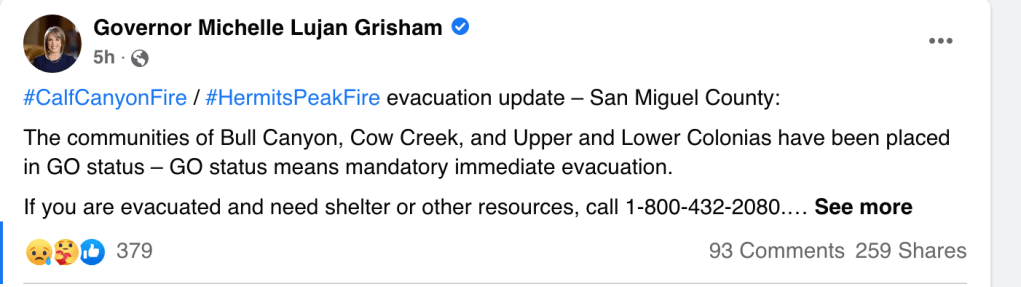
East winds expected tonight and I’m worried about pushes to the southwest toward the Pecos canyon and to the northwest into Taos County. Evacuations warnings for Upper and Lower Colonias and a couple of other areas near Pecos issued Sunday afternoon. Here is the full fire report for May 15:

An army of nearly 2,000 people is fighting this beast but the country is steep and dry and full of little ranches and homesteads stemming from Hispanic settlement of the mountains in the 18th Century.

There is a 40 percent chance of thunderstorms over the mountains tomorrow but even they have firefighters worrying about outflow winds.

Things seem a little calmer on the smaller Cerro Pelado fire in the Jemez mountains, which started later than the Calf Canyon/Hermit’s Peak fire in the Sangre de Cristo. Here is the May 15 report:

Great photo from KTVU FOX2 📸: IG fitzsimonsphotograph.

Once upon a time, in high school days, I washed dishes in the white and gray-blue restaurant over the water in the forefront of this photo, the restaurant then the Glad Hand and now Scoma’s.

I lived with my mother and two brothers in an apartment in one of two rundown gingerbread Victorians almost directly across Bridgeway.

Thank you Al Engel and Bob Hanlon for employing me at the then red-painted Glad Hand and Wiley Bowens and Bobby Thompson for being my friends and helping me along.

Glad to say that I walked and rode my bike over that bridge and sailed under it in a couple of boats. My previous home had been at the end of Tano Road outside of Santa Fe, New Mexico, but this wasn’t a bad place to land in the midst of family upheaval.

Sausalito was a little more Bohemian in the early 1960s but my heroes then were Jack London and the older guys in short-sleeve shirts who magically parked cars on the wooden pier at the Kingston Trio-owned Trident, next door to the Glad Hand along with Ondine.

I also kept a sea bag packed in case some large sailing vessel came by, needing crew for a voyage across the Pacific. The Viveca, for one, was moored for a while off Ondine. Sterling Hayden’s Wanderer was down at the yacht harbor. Pursuit and Bolero and Baruna were sometimes there, too. Fortunately, Bob Hardin took me out on the bay and let me do occasional chores on his 40-foot schooner, Adventurous.

I used to feel sorry for myself washing dishes on Friday, Saturday and Sunday nights and seeing the world go by on Bridgeway. Now I feel lucky to have been there.

Viveca looking good.
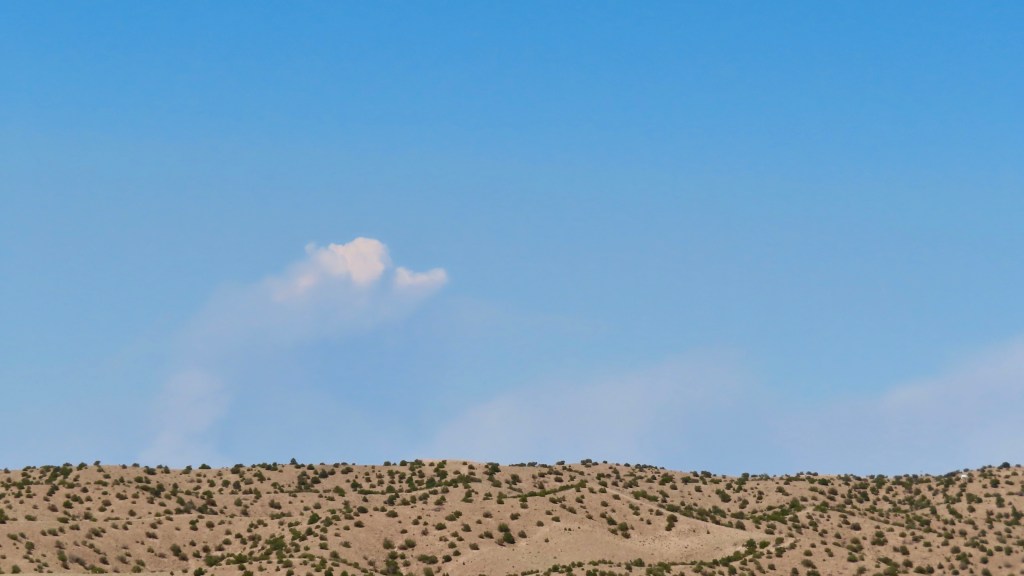
Smoke plume rising Friday afternoon, May 13, from the Hermit’s Peak/Canyon Fire in the Sangre de Cristo Mountains. Photographed from Placitas over the Cuchilla de San Francisco. I could see several plumes rising south to north along 40 miles or so of the range. The Forest Service briefing Friday evening suggested this plume rose from the Elk Mountain area, west of Las Vegas. Go to Facebook and Santa Fe National Forest and #hermitspeakfire for much more photography and video.
Hermit’s Peak/Calf Canyon fire map, May 13. Official briefings on Facebook and Twitter.
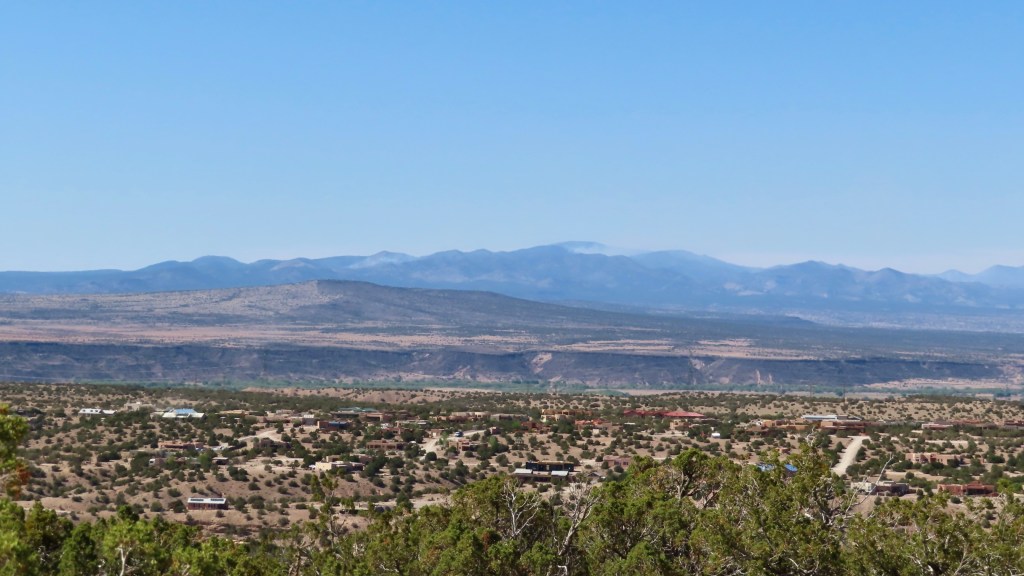
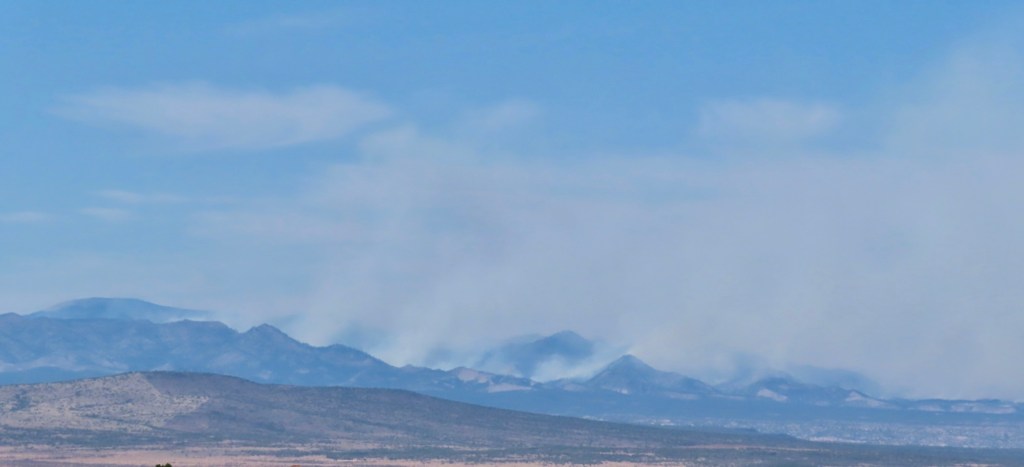
Cerro Pelado fire, Jemez Mountains, from Placitas, May 13.
Cerro Pelado fire map, May 13. Official briefings on Facebook and Twitter.

We were lucky to have them.

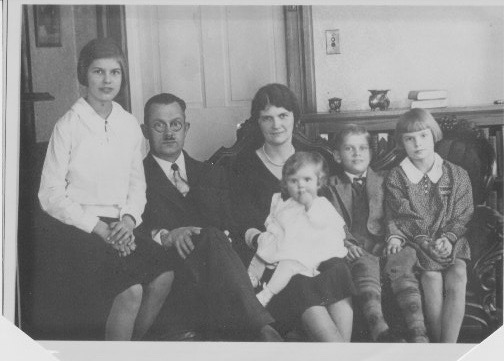
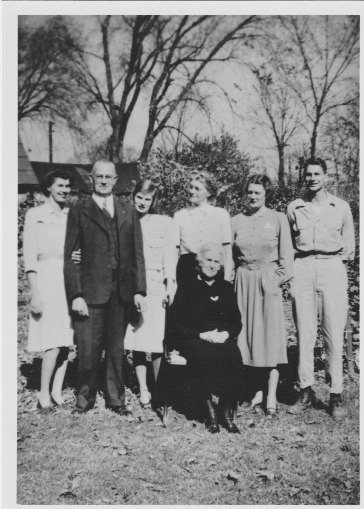
Eleanor, Far (John L. Bjelke), Grandmother (Frances), Nancy, Jack and Barbara. Don’t know when (my mother, Nancy, in Grandmother’s lap, was born in 1930) but surely this is the Bjelke home at 128 S. Main Street, Granville, Ohio.

Back of the photo says: Eleanor, John, Nancy, Frances, Winifred, Jack and Effie Dean Rhodes Heap. Don’t know where Barbara was — maybe home in Colorado.
This is Hadlock, Washington. Eleanor, Barbara, Uncle David and Nancy. I suspect Uncle Bob took the photo.

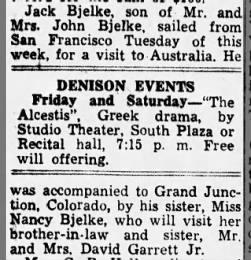
And big adventures begin, as noted in this item from the Granville Times in May 1948.

Best wishes this Mothers’ Day to all Bjelkes, Wheelers, Garretts, Robertsons and Harpers.

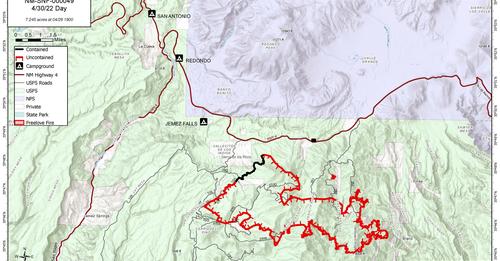
The Cerro Pelado fire in the Jemez Mountains, photographed from Placitas, spotting east on April 30. The fire started in what pundits called a big “wind event” on April 22 — Earth Day, by the way. It has burned into the 2011 Las Conchas burn scar but still threatens cabin clusters on several sides and “cultural resources,” namely sacred pueblo locations, to the south. Los Alamos is about 10 miles to the north. The treasured Valles Caldera, at the foot of Redondo Peak at the left of this frame, is closer, although still north of the fire this morning. The fire is just west of Bandelier National Monument this morning.

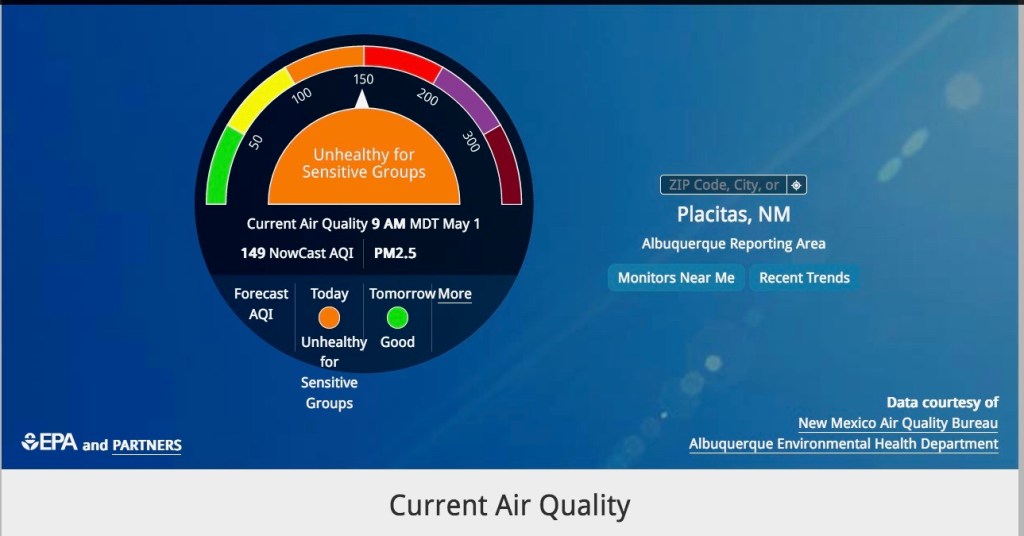
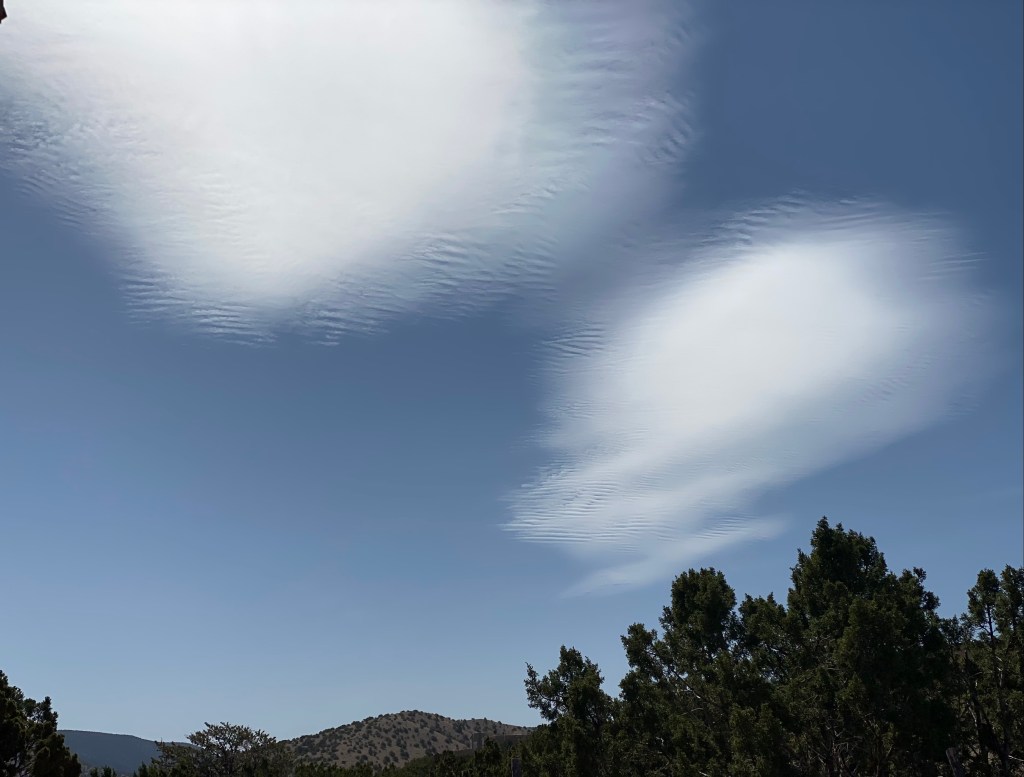
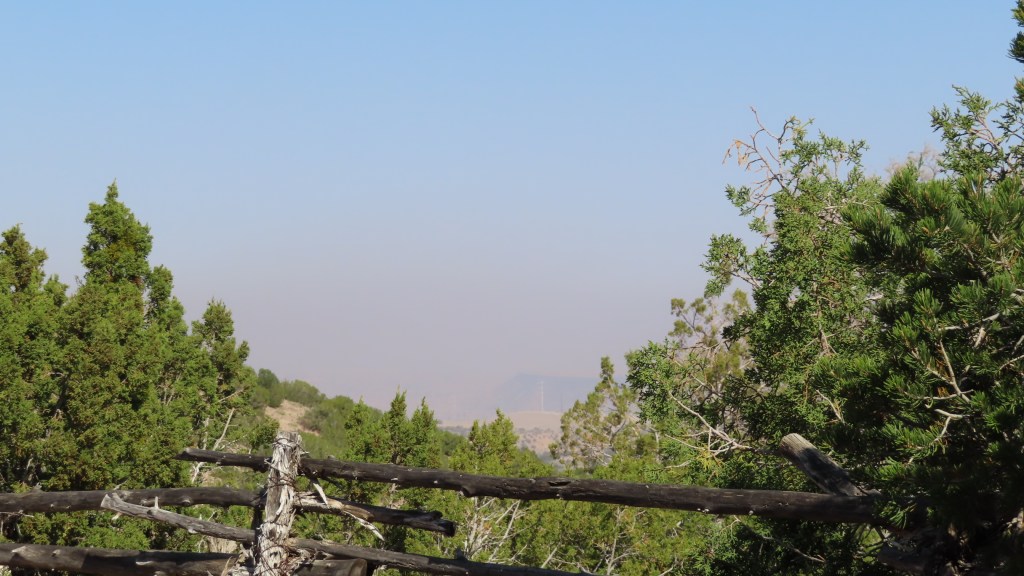
Cerro Pelado is throwing off a lot of smoke. Santa Fe, to the east, has been inundated for days but the smoke shifted to the south overnight and the upper Middle Rio Grande Valley is getting a lot of it today, 05/01/22.

We’ve had good mornings here and there but today was not one of them.

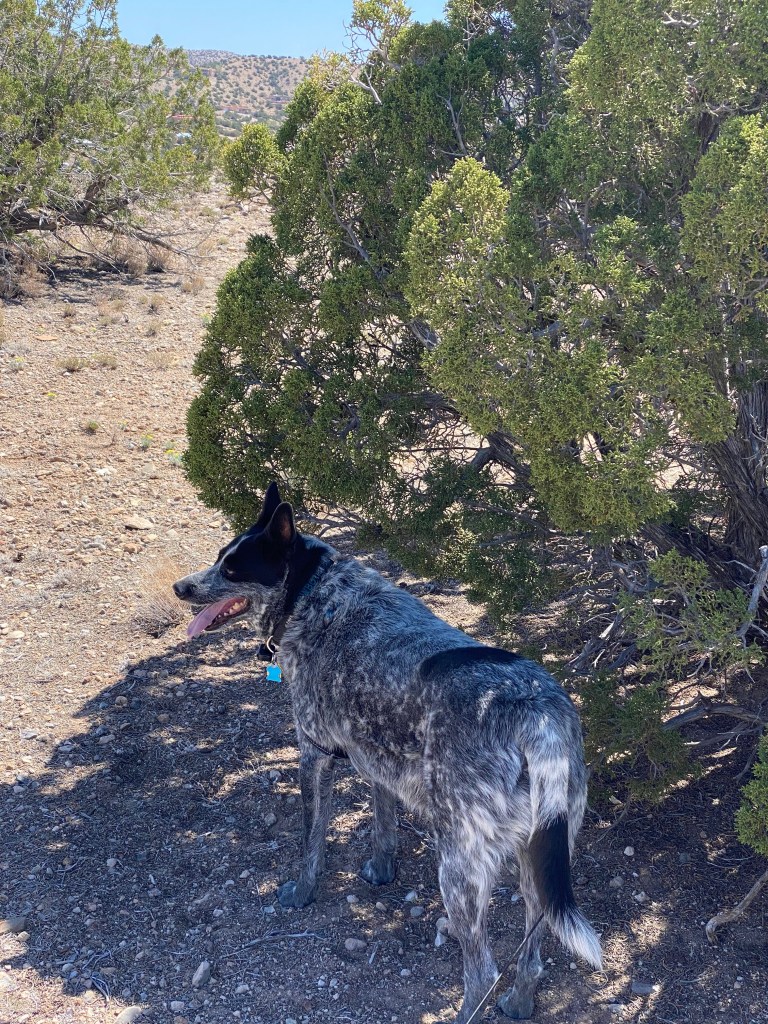
Cowboy was already starting to shade up on our walks, but this is more about climate warming and aridification than just a change of seasons.

Snow on the north side of the Sandia mountain is almost entirely gone. If Placitas got any rain in April, I don’t remember.

The Cerro Pelado fire was up to 15,650 acres on Sunday morning, 05/01/22.

The Hermit’s Peak/Calf Canyon fire on the east side of the Sangre de Cristo Mountains, near Las Vegas, is a bigger and even more threatening fire. (USFS photo).

The Hermit’s Peak fire, shown combined with the Calf Canyon fire this morning, 05/01/22, started April 6 when “multiple spot fires spread beyond” an earlier “prescribed fire project boundary,” according to official sources. The Calf Canyon fire to the southwest or the original fire, near Gallinas Canyon, was reported on April 19 and later combined with the Hermit’s Peak fire. The wind-plagued combined fire was near 100,000 acres on Sunday morning, 05/01/22.

Fire officials said Saturday night that, with no helpful weather in sight, it probably will burn for weeks and still could “easily double in size.” It has overrun and still threatens many small ranches and generations-old homesteads in the mountain valleys. It threatens the Las Vegas watershed and municipal water supply. It’s been clear from the comments of local sheriffs that some residents have wanted to stay home, despite evacuation orders, to protect their properties and livestock.

I’m not sure I’ve ever seen a fire sky as dark as the one photographed by Eddie Moore of the Albuquerque Journal from Las Vegas on 04/29.

Over a thousand firefighters were assigned to the fire as of 04/30/22. The San Miguel and Mora county sheriff departments were handling damage assessments and evacuation orders.
Oliver LaFarge wrote about the life of his wife and her family in the area in the 1920s, publishing Behind the Mountains in 1956.