I love newspapers and newspaper people. I’m pretty sure there’s no one I would rather work with, and I did so for 40 years. But I try to remember that it was not a sentimental business.

“You’re only as good as your last story,” the old saying goes. And last stories often aren’t remembered a week after they’re published.

“Who’s going to read the second paragraph?” is my favorite line from the famous newspaper play and movie “The Front Page” — the question asked by an impatient editor leaning over a feverish reporter’s shoulder.

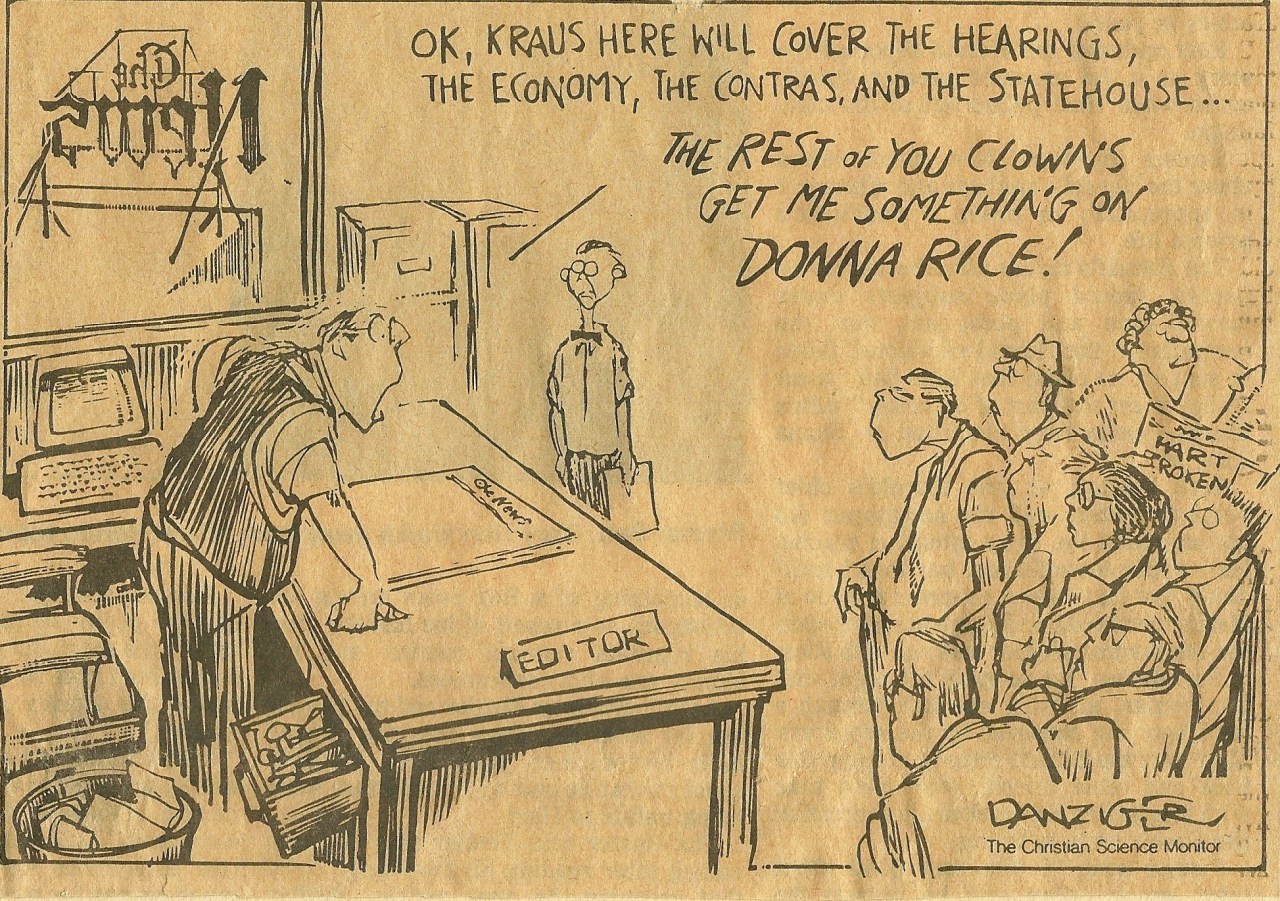
And though I take government and politics seriously, and put a lot of stock in fair coverage, I appreciate this Jeff Danziger cartoon in the Christian Science Monitor in the late 1980s.  I don’t approve of the message — and Matt Bai and others have since straightened us out about the Gary Hart story — but the newsroom scene rings painfully true.

Praise be the more noble editor, but who among has not felt the pinch of these shoes?
Scan 16

Well-intentioned as we were, wherever I worked, we also had to give people what they needed and wanted to read. No, all of you I-took-a-journalism-class-in-college experts, it was not our sole motive, but, yes, it was called selling newspapers.

Everyone I ever liked in the business put their body and soul into doing good journalism. But the world is full of earnest, hard-working people and we chroniclers of the lives and deeds of others probably are closer to heaven when we don’t spend a lot of time patting ourselves on the back.

And, in the afterlife, wherever that might be, I hope I still work where they would laugh you out of the newsroom for using the word “longform.”

Some of my fellow newspaper retiree buddies are down in the dumps over a new Nieman Lab report showing that internet publishing and broadcasting  employment has outstripped newspaper employment.

But alarm over this is like pretending you haven’t heard of the digital revolution. Read Dean Baquet’s recent memo on newsroom changes at the New York Times and be encouraged, folks.

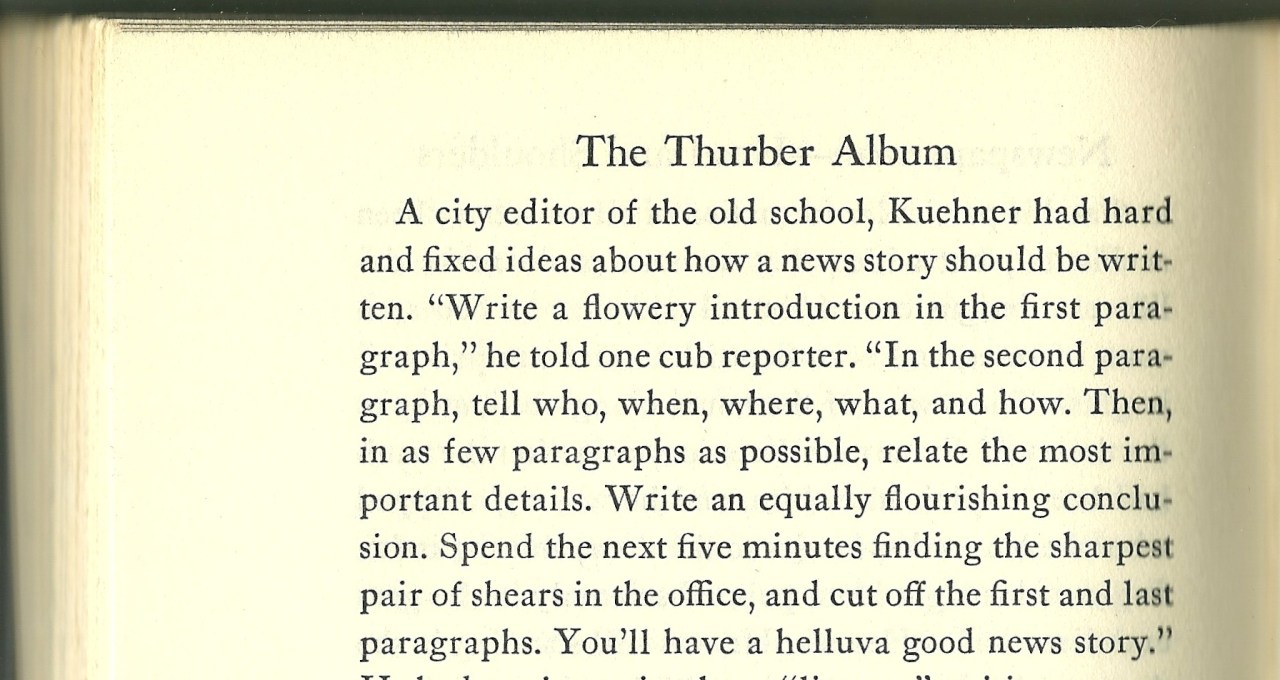
Then find James Thurber’s 1952 story, “Newspaperman — Head and Shoulders,” which also deals with second paragraphs, and ask whether things have changed.
Scan 18

Of course, they have. And despite my dislike for the term “longform” — (I’m not even sure if it’s one word or two) — there are many writers of long stories I greatly admire. But this ruthless revolution is reminding us when it’s better to go long and when to go short. And newsprint isn’t the only playing field around.
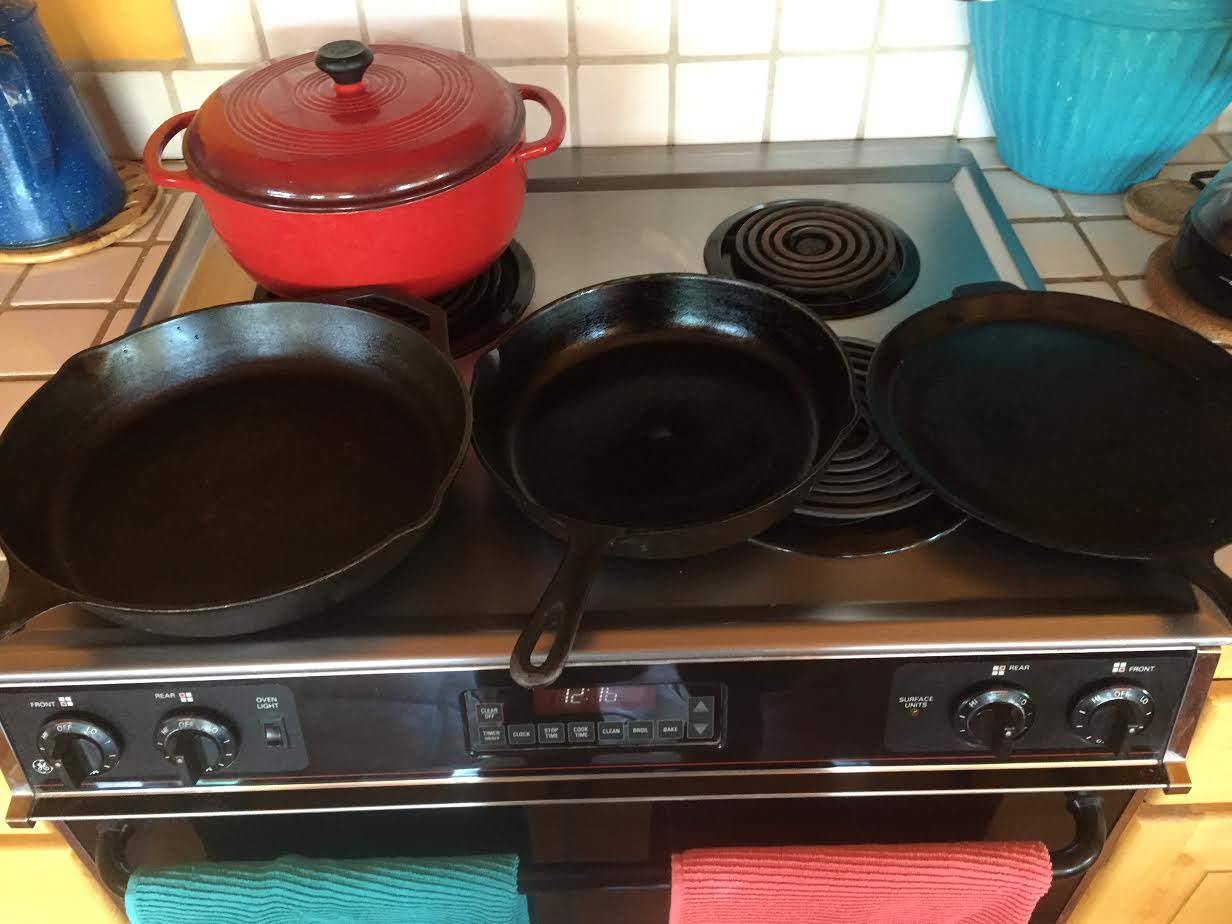
skillets

What’s the best treatment for your cast-iron cooking ware?

I say bacon.

Cooking bacon in them, I mean. Slowly, at a low temperature. It keeps them well-seasoned and rust-free. Soap never sullies their blackened sheen.

All that scary no-stick stuff isn’t necessary if you’ve got a decades-old No. 8 seasoned with bacon grease. There’s no substitute in my book.

Vegetable oils, except olive, are the enemy. The congealing stuff never comes off,  providing a scary example of what might be in store for your arteries. Bacon grease seems benign in comparison. Cleans easier. Smells better, too.

Above are my two skillets and a small griddle. The griddle was hung on my door one snowy day almost 40 years ago, left by a pissed-off girlfriend apparently mellowed by Chrismas spirit.

It is a treasured possession, at any rate, and a relic of Mr. Lujan’s eclectic little mercantile store formerly gracing Galisteo Street between Alameda and Water in Santa Fe. Mr. Lujan’s store was where you could find such things, in addition to saddle blankets, ropes, bridles and nose bags, big jars of dried herbal remedies, sharp, new hand tools and Desert Water Bags.

enamelware

I also have a sets of blue enameled dishes and cups, which I refer to as Lujan-ware,  that I think were given to me by the equally eclectic David Steinberg, formerly of Santa Fe.

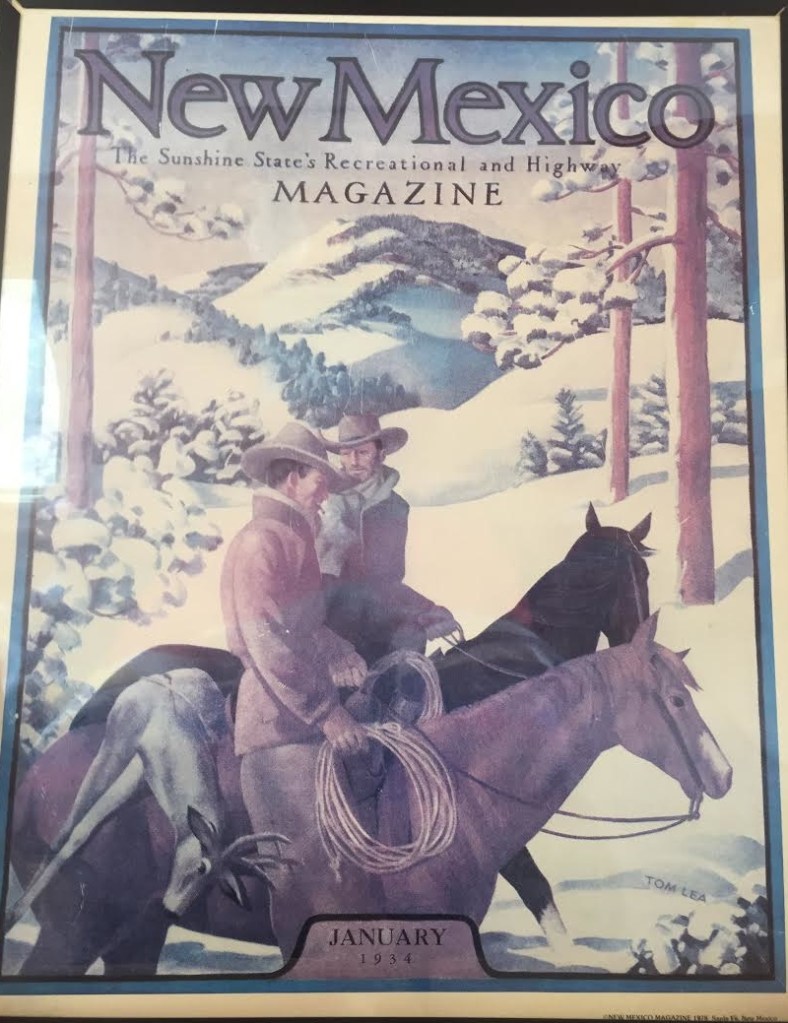
All of which reminds me of this relic, skilletsan aide to my dreams for many a moon.

nmposter

And none of this, by the way, should be considered an endorsement of a New York Times recipe calling for three-quarters of a pound of bacon to flavor a single pot of beans.


In Henning Mankell’s novels about Swedish policeman Kurt Wallander, Wallander’s father is a painter who paints the same landscape every day.

They think the father is suffering from dementia, but I wonder if there isn’t some clarity there, too.

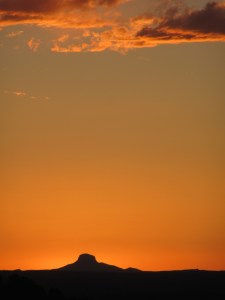
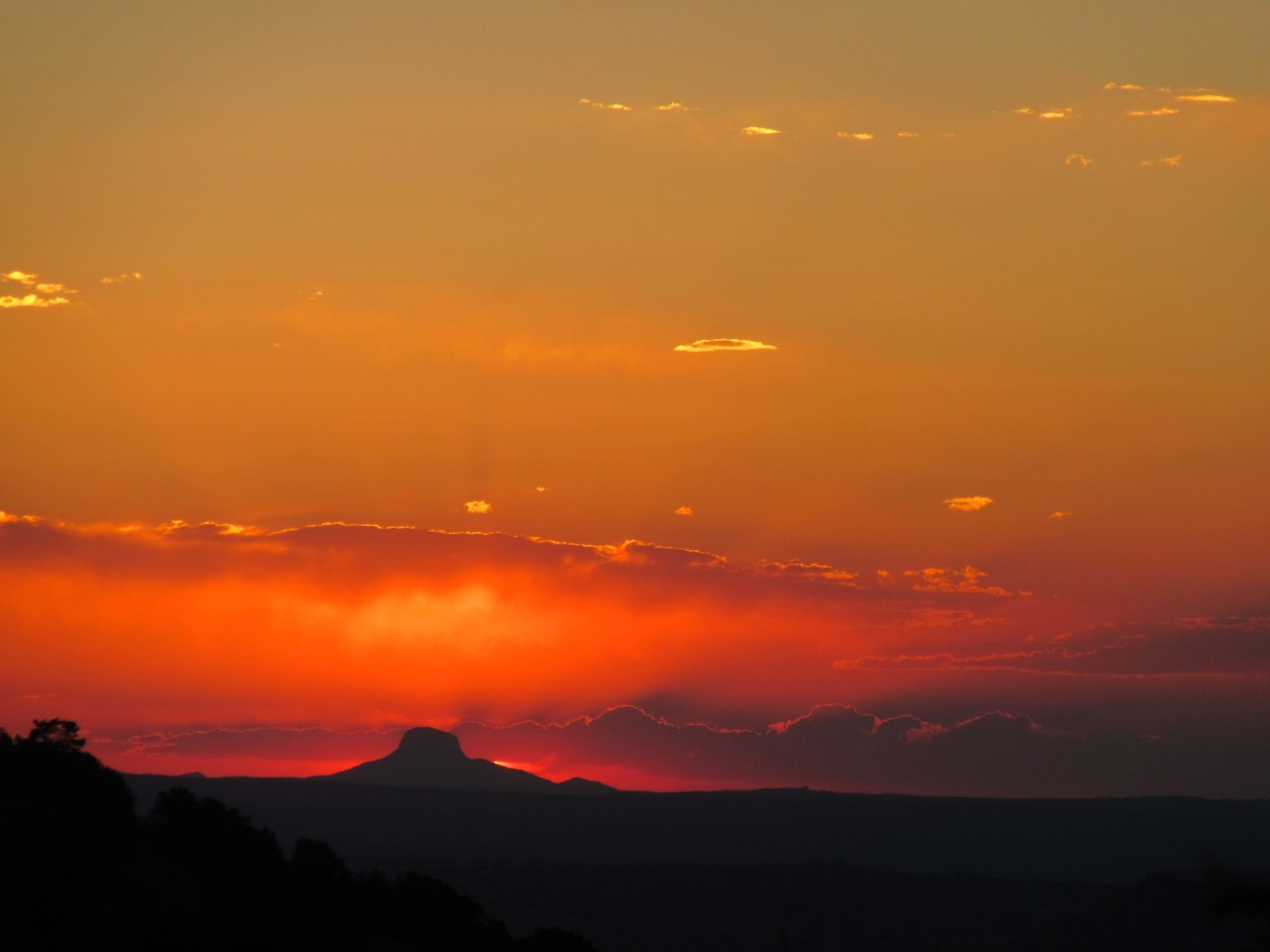
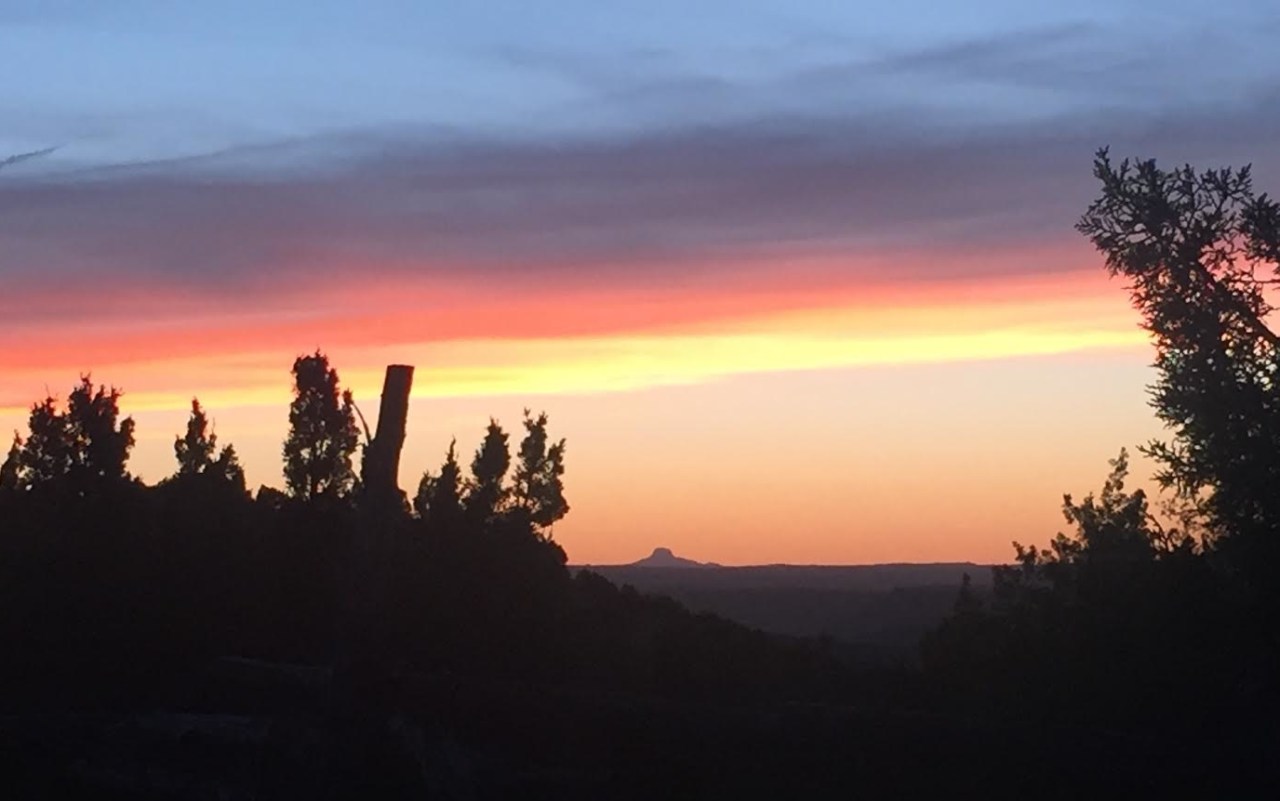
I seem to be stuck on Cabezon myself.

Sharing photographs of the trusty old volcanic plug sitting under a changing western sky might be a substitute for the daily journalism I used to do for a living.

One way or another, it keeps me wondering. And, as far as sharing  photographs goes, at least I steer clear of feral horses and snakes.

IMG_5466


IMG_4961

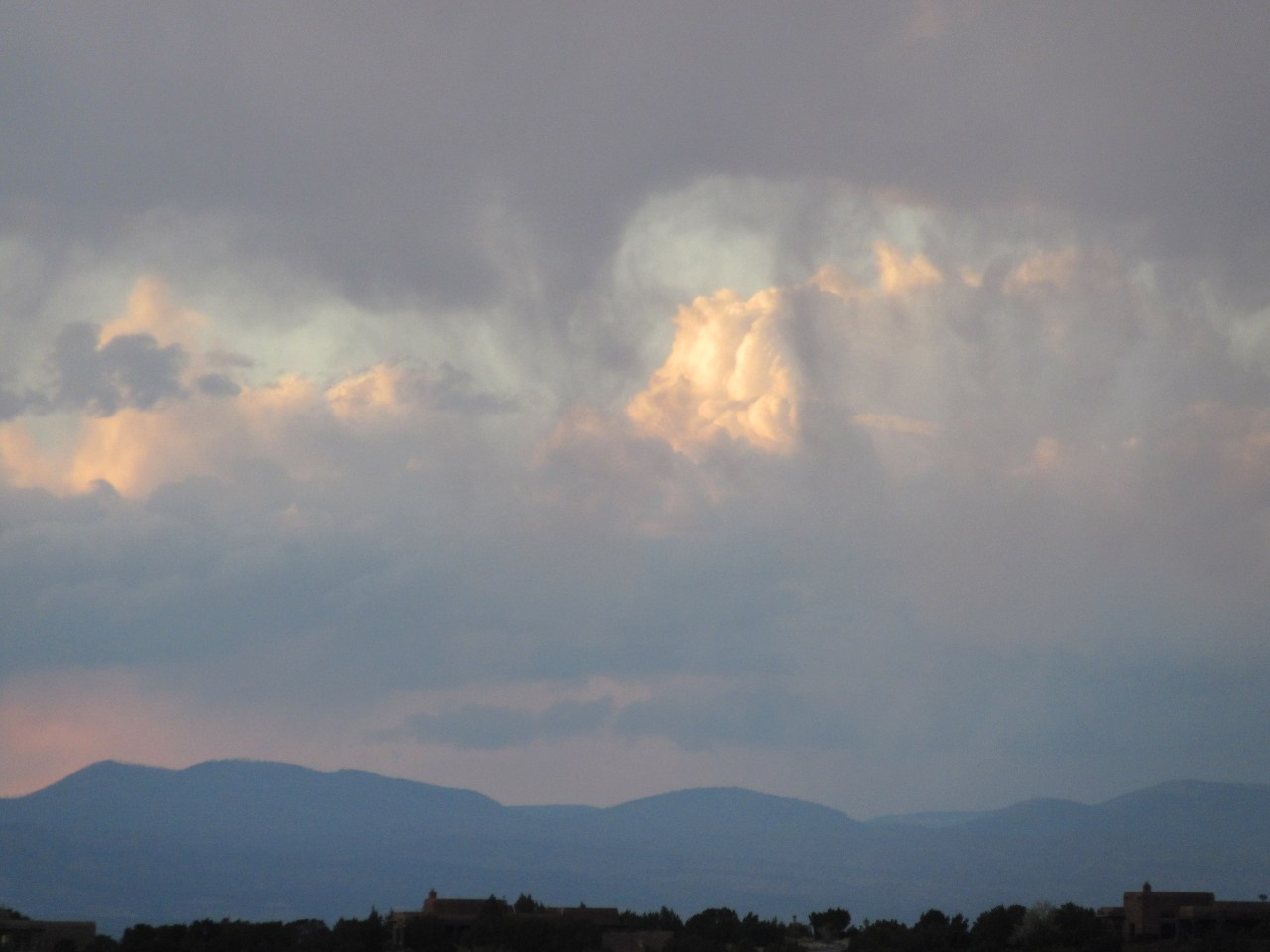
Politics took my words today. If you follow Twitter, you can see that I’m a little bit lathered about that smirking wise guy from New York. All I’ve got left are pocket-cam pictures from the last couple of nights. Shot from the hip, as always, but unlike the New York Times and Bernalillo County Commissioner Maggie Hart Stebbins, no snakes.

IMG_5008

IMG_4998

IMG_5020

IMG_5061

IMG_5055

                                                  HOPE AND DESPAIR

Today was the day Donald J. Trump claimed enough delegates to clinch the Republican nomination for president.

Today was the day that Michelle Obama gave a speech at the Santa Fe Indian School commencement that referred to her own background and embodied what seemed a heartfelt understanding of the school and its students. She was comforting, wise and inspirational. I suspect she connected.

Trump is my despair because I don’t believe he is concerned about anyone but himself and because I fear his strange, amoral and anti-intellectual appeal crosses party lines, making him more of a threat than Democratic talking heads currently foresee.

Michelle Obama and those students at Santa Fe Indian School are my hope.

Thanks to The Santa Fe New Mexican for livestreaming the speech.

“Your community needs you …. Our world needs you, too.”

And to first-year college students: “The minute you feel like you’re struggling … I want you to ask for help.”


It’s tougher than you might think, being retired and trying to find a second wind as some kind of creative writer — an ambition I call, after 41 years as a newspaper reporter and editor, “Making It All Up.”

For one thing, it seems to require discipline, which is a bit of shock to my golden-years metabolism. And, in the past two weeks, as part of my research for morally focused glances at the 19th century American West, I have gone down one reading trail after another. I still have a lot to learn, despite my fictional intentions.

I had to re-read things about the Black Hills Expedition of 1874 and the breachings of the Fort Laramie treaty of 1868. That led me back into Custer, the refuge of thousands of Plains Indians, the Battle of the Little Bighorn, Custer’s actual instructions from General Alfred Terry and, as always, roaming over the maps to fix the geography of the history in my mind’s eye.

Custer stuff led me indirectly to reading about the California Gold Rush, the transcontinental railway, the Great Migration of 1843, Kit Carson’s autobiography and the Long Walk of 1864.

The research led to some related but more or less recreational reading that included Blackfoot writer James Welch’s Fools Crow, Mark Twain’s Roughing It and the temptation to really go out to lunch and reread the late Oakley Hall’s wonderful Ambrose Bierce mysteries, set in 19th century San Francisco. I can see it, smell it, feel it and eat it in Hall’s books.

This all is great fun, of course, but I’m not sure where it’s getting me.

There are so many twists and turns.

While I might have Col. John Chivington to thank for turning back the Confederacy at Apache Canyon outside of Santa Fe in 1862, I grimace at the would-be chaplain’s leadership in the Sand Creek Massacre two years later in Colorado.

My hero growing up was Kit Carson, but as a better educated adult I can’t get my head around his thinking during the forced relocation of the Navajos and the start of the Long Walk to Bosque Redondo ikn 1864.

I have learned that Custer, job-wise, was just a pawn in a bigger game, but isn’t that the story of most of us?

I try to imagine the depth of Chief Joseph’s pain when he said in 1877: “I want to have time to look for my children, to see how many I can find. Maybe I shall find them among the dead. Hear me, my chiefs! I am tired; my heart is sick and sad. From where the sun now stands, I will fight no more forever.”

Beyond the wheels continuing to turn in my own brain, the value of my research is questionable. As I think Monte Walsh (Tom Selleck) said at the end of the trail-drive days in the-made-for-TV movie of Jack Schaefer’s novel:

“You can ride all the way to Canada and back. Ain’t nobody gonna pay you for it.”

And I don’t want to find out that the only winners in it all were the Donald J. Trump types in the Grant administration back in Washington, D.C.

Now, time again to confer with Cooper.