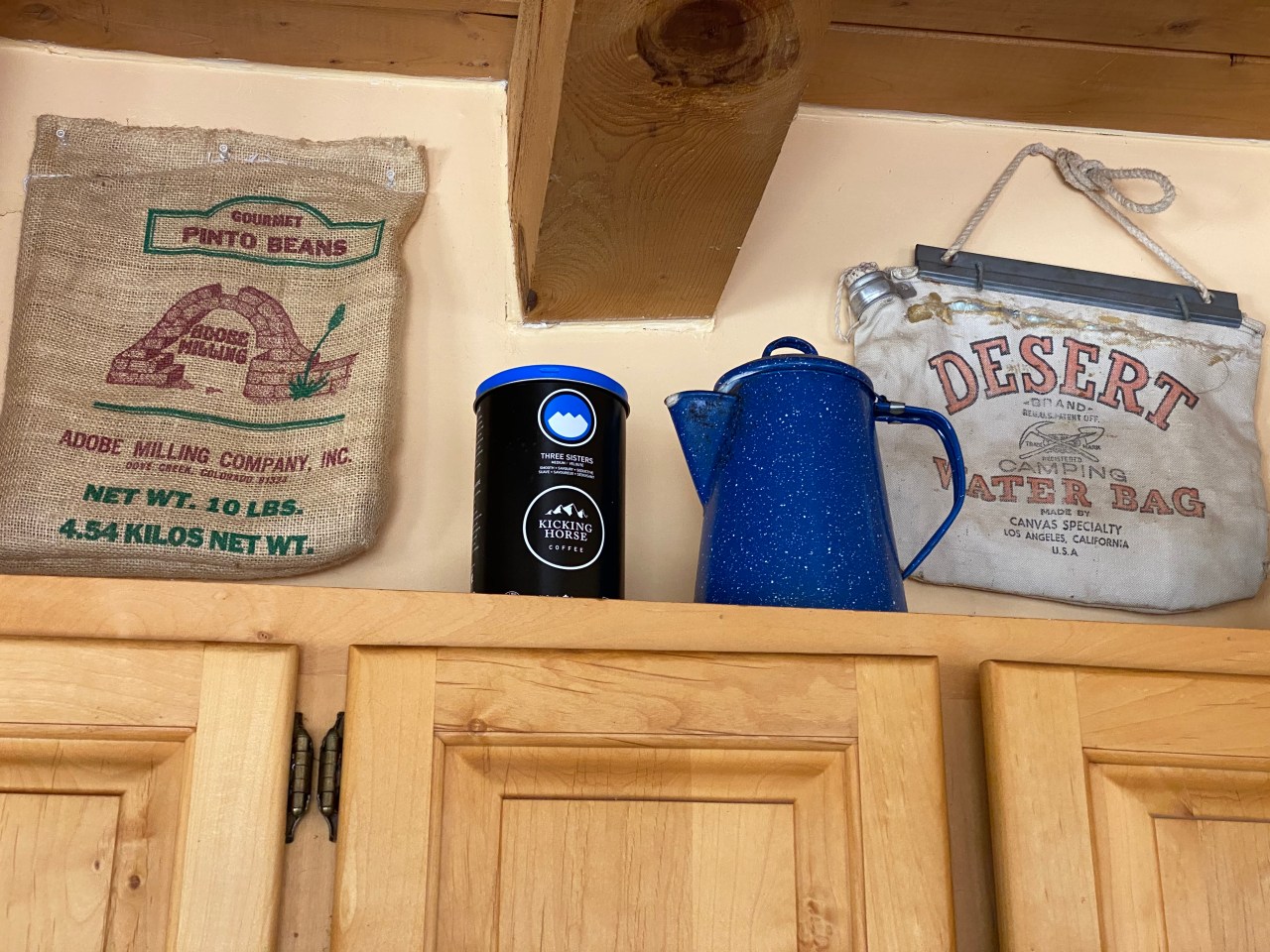
Fame did not come as I wanted.

Jim Belshaw, retired Albuquerque Journal columnist, early riser and waste-no-time emailer, messaged me at 6:09 a.m. Sunday after seeing my name attached to a comment in the New York Times.

“Is this you?” he demanded,  ever the no-nonsense newsman.
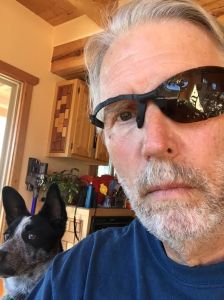
sunglasses

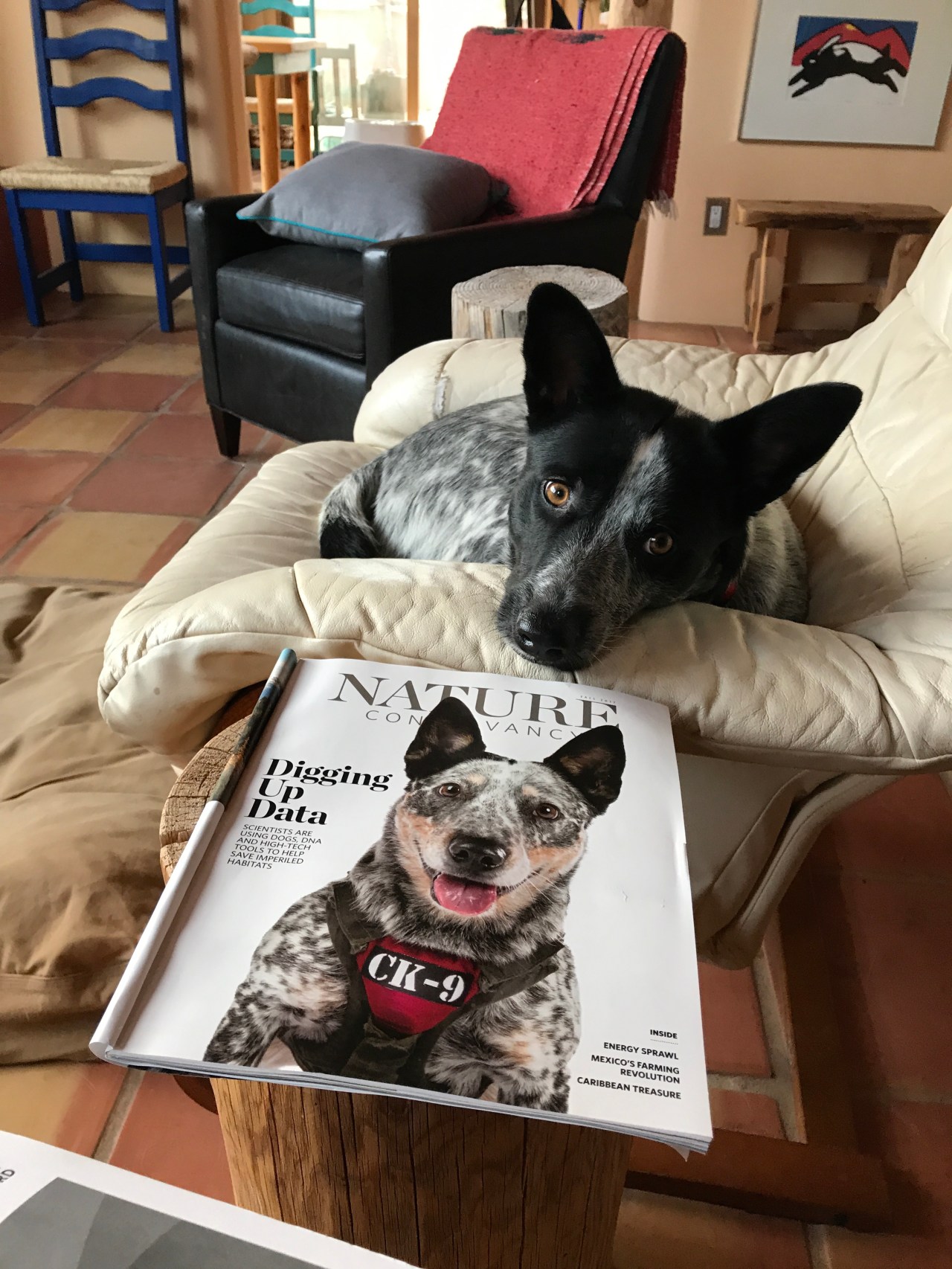
Would-be bean pundit John Robertson and suspected sunglasses thief Cowboy.

In my waking haze, I realized he was grilling me over a snarky comment I’d made about kidney beans. I sent it in a hot-headed moment to a Times food columnist and it was immortalized online. I didn’t know Belshaw read food items but, at any rate, this one did not escape his newspaperman’s eagle eye.

For the record,  the New York Times has for years ignored my thoughts on the great American novel and world peace. What finally triggered mention was a note I wrote in 2014, praising pinto beans and putting down its mealy, tough-skinned cousin, the kidney.  It started, predictably, with with a “Texas chili” recipe shared by the usually sharp newspaper.

Here is a complete transcript of my appearance in the Times:

Apparently “Texas Chili” should have no beans, though one reader, John Robertson, concedes that if you must add them, his “preference for any bean in proximity to chili or chile always will be the toothsome, flavorful and inherently noble pinto.”

I read to to the bottom of the Times story, looking for more of my erudite discussion of beans, but that was it. I acknowledge, however, that some of the other comments in “New York Times Recipe Commenters (Politely) Spill Their Guts” were funnier than mine.

“Who eats a chuck roast cooked with a stick of butter?” asked one reader.

Another noted that both Jeb Bush and President Obama had written to complain about that infamous green-peas-in-yourguacamole recipe.

And another questioned food writer Mark Bittman’s 40-minute preparation tip for the “Best Scrambled Eggs.”

I should have remembered the sage advice reported by Times writer Jennifer Steinhauer in 2014, quoting Texas food historian Robb Walsh: “I don’t disagree with anyone’s chili.” But I felt I was in good company in this column by Times comment moderator Lisa Tarchak.

Still, I am worried about my legacy on the internet and in the New York Times.

I fear that my top Google search terms will forever be: “John Robertson, beans.”

————————————————–   30 —————————————————–

Read a fine story about the late Jim Belshaw by Ollie Read here: Jim Belshaw obit by Ollie Reed in today’s Albuquerque Journal: https://www.abqjournal.com/2541425/journal-columnist-championed-underdogs-knew-how-to-make-readers-laugh.html

Previously on dreamranch: Brushes with fame and opera and Don’t mess with the beans
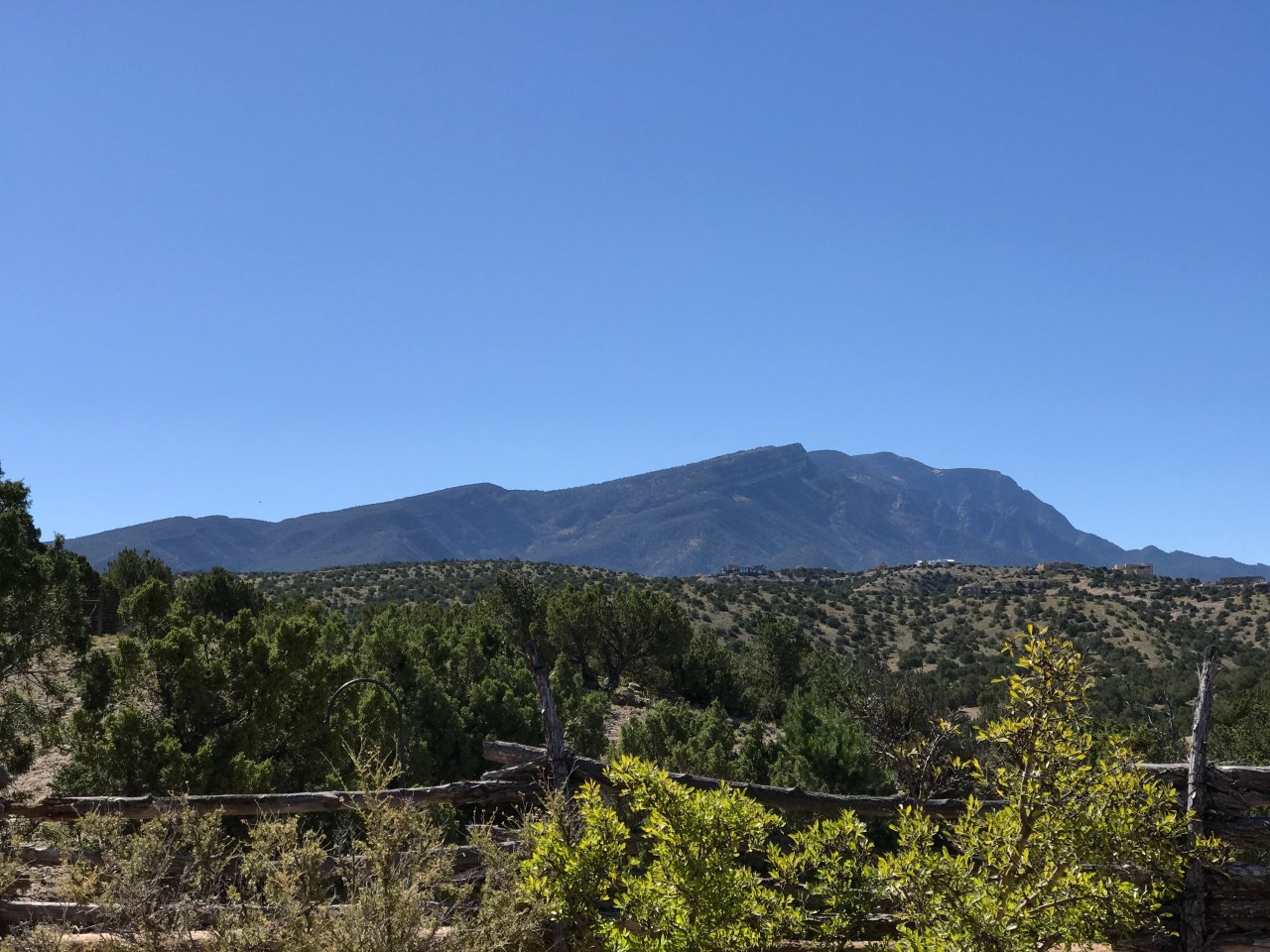
It’s tough being Albuquerque, although it often shines at the same time.

Here we are in early October with the softer fall light sharpening some of the clearest days of the year. The balloon fiesta is in full swing, with thousands of visitors in town, and then the Albuquerque Journal greets you on Sunday, with frowning front-page headlines, reporting on the nature of city’s crime problem, state government’s inherent budget limitations and dirty secrets of public school administration New Mexico-wide.

IMG_0645

This was pointed out to me by one of my former co-workers at the paper, noting in a morning email the downbeat presentation. I respect his views, but I think most of us local journalism veterans also know that half of Albuquerque would accuse the Journal of hiding the news and promoting happy talk if it had presented more of an upbeat look during the city’s signature tourism event.

I read each of those front-page stories because they involve some of the most pressing problems of the day.

One story reminded me that an abundance of public school administrations is a reflection of New Mexico’s reliance on government spending. Yes, we are a big, spread-out state, but it’s also true that there are few, if any, industries other than public schools in many of the state’s small towns.

I was glad to see the crime story included this perspective from a lawyer in the justice system:  “I think the worry from our office is that the public hears ‘repeat offender’ and assumes that to be someone who engages in serial, violent conduct, when in fact APD is often referring to people who, because of homelessness or drug addiction or some other condition, become trapped in the system,” said Scott Wisniewski, a public defender.

Short-sighted, it seems to me, was this comment in the state budget story: “The amazing part to me is that, with the enormous increase in funding in 2008-09, we still did not move the needle, when it comes to education,” Sen. William Sharer, R-Farmington.

I think that view illustrates our hugely flawed tendency to expect overnight improvements when, in a poor and culturally diverse state, decades probably are the more realistic timetable.

It’s unfair, too, to single out Albuquerque as troublesome. Most communities in the state have struggled for centuries with familiar economic problems. And if the economic issues in New Mexico don’t get you, maybe cultural ones will.

Journalists in my adopted hometown of Santa Fe have recently reported on the affordable housing problems there, as well as historical rifts in the city’s pre-balloon fiesta in September, leading to angry confrontations on the Plaza and bronze statue amputations in Alcalde.

So, maybe it’s sometimes tough just being a New Mexican, although the light in October makes me think I would want to live nowhere else — to say nothing of good neighbors and endorphin-inducing food.

I admit that I have just consumed a homemade breakfast burrito with a blanket of red chile. And I am a smiling hypocrite, avoiding many Santa Fe and Albuquerque arguments, living halfway between.

Previously on dream ranch: Never-never Land: https://dreamranch.wordpress.com/2013/09/01/never-never-land-santa-fe/

Back in the late 1970s, when Santa Fe started bursting at the seams, one of the era’s many water consultants told county commissioners that hydrology is as much of an art as it is a science.

IMG_0243

Dawn over the Rio Grande.

I am reminded of this not because of deep thoughts about water in the Southwest but because of a text messaging error over our possibly faltering Well No. 2 in Placitas this morning — actually, the guesswork in anything involving water and wells.

This morning’s confusion: One of the smartphones involved in repair work communications kept “auto-correcting” the word “electrician” to “electrocution.”

Obviously, I am still alive, but I had been at Well No. 2 only a couple of hours earlier to reset the “Coyote,” an electric switchbox that was flashing a red light and reading “voltage overload” before dawn.

Our is a small community water system, in a supposedly good aquifer, but the fragile, electric-powered equipment needed to get water to our homes from 600 feet below the ground can easily trigger head-scratching, shoulder-shrugging and, sometimes, crossing of communication wires.

Things are much worse when actual water supply is in question, and our current issues might involve no more than a layer of silt and a clogged pump; better yet, just a bad connection. But it’s all difficult to diagnose when some of the answers lie underground.

I know there is some science about what goes on down there in the unseen water mazes called aquifers. I’ve seen geologic studies, drilling samples and well data used to support claims of water abundance. And I’ve always hoped there are topographical clues, like my aquifer lying under the Las Huertas Creek drainage and water dumping into the Galisteo Basin from the tail end  end of the Sangre de Cristos, south of Santa Fe.

But I think I also remember a report that said Rio Grande recharge from rain and snow atop the Sandia Mountains takes 50 years. And that’s water traveling underground.

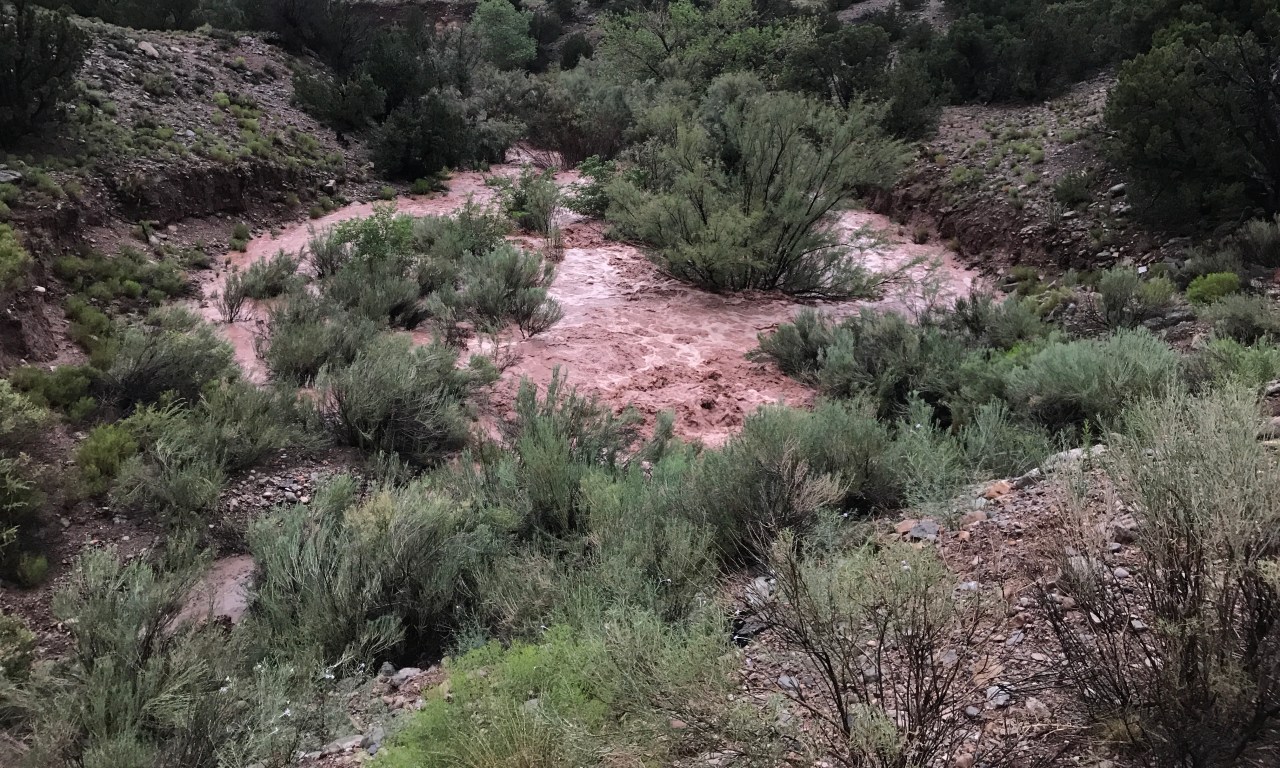
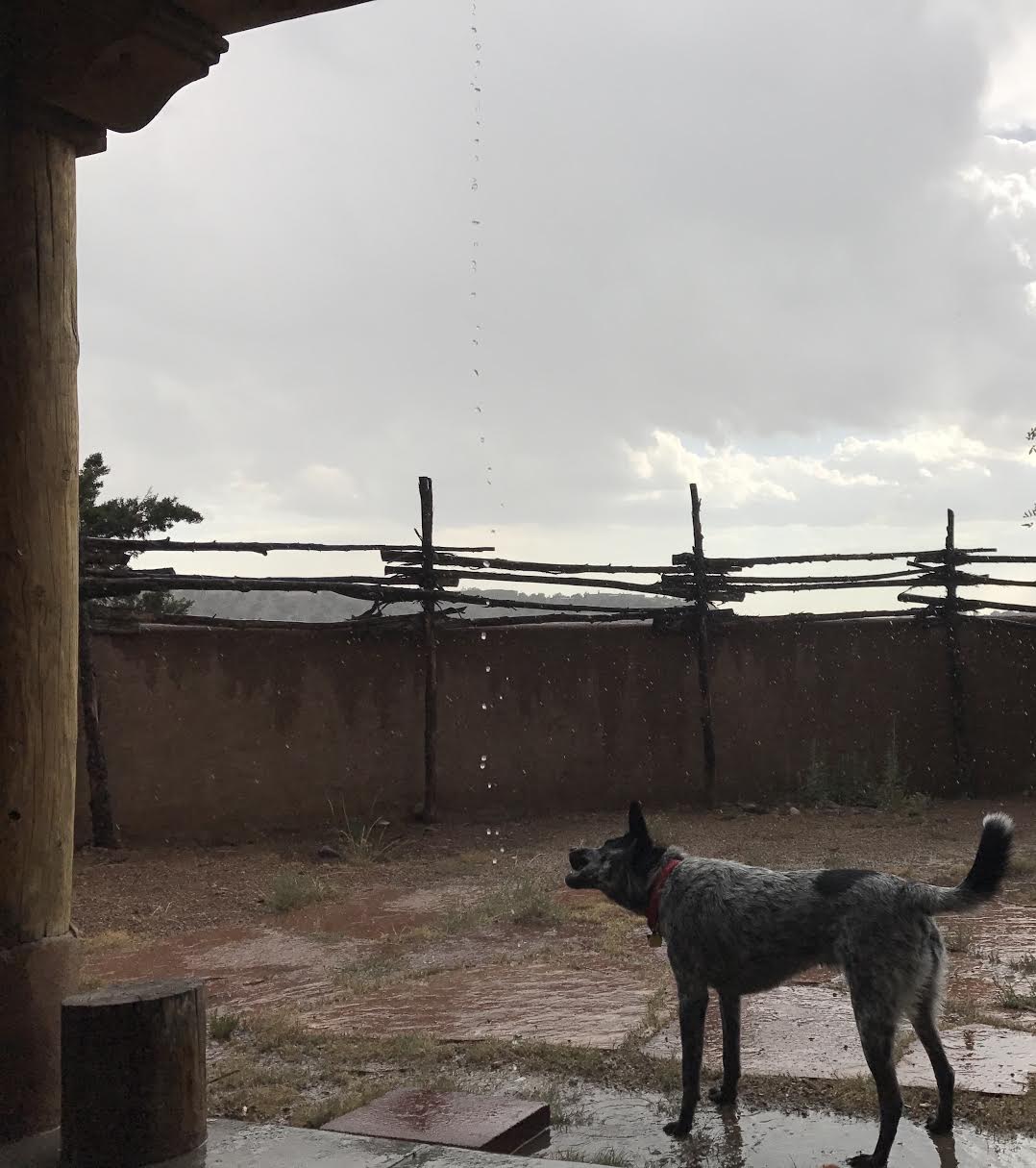
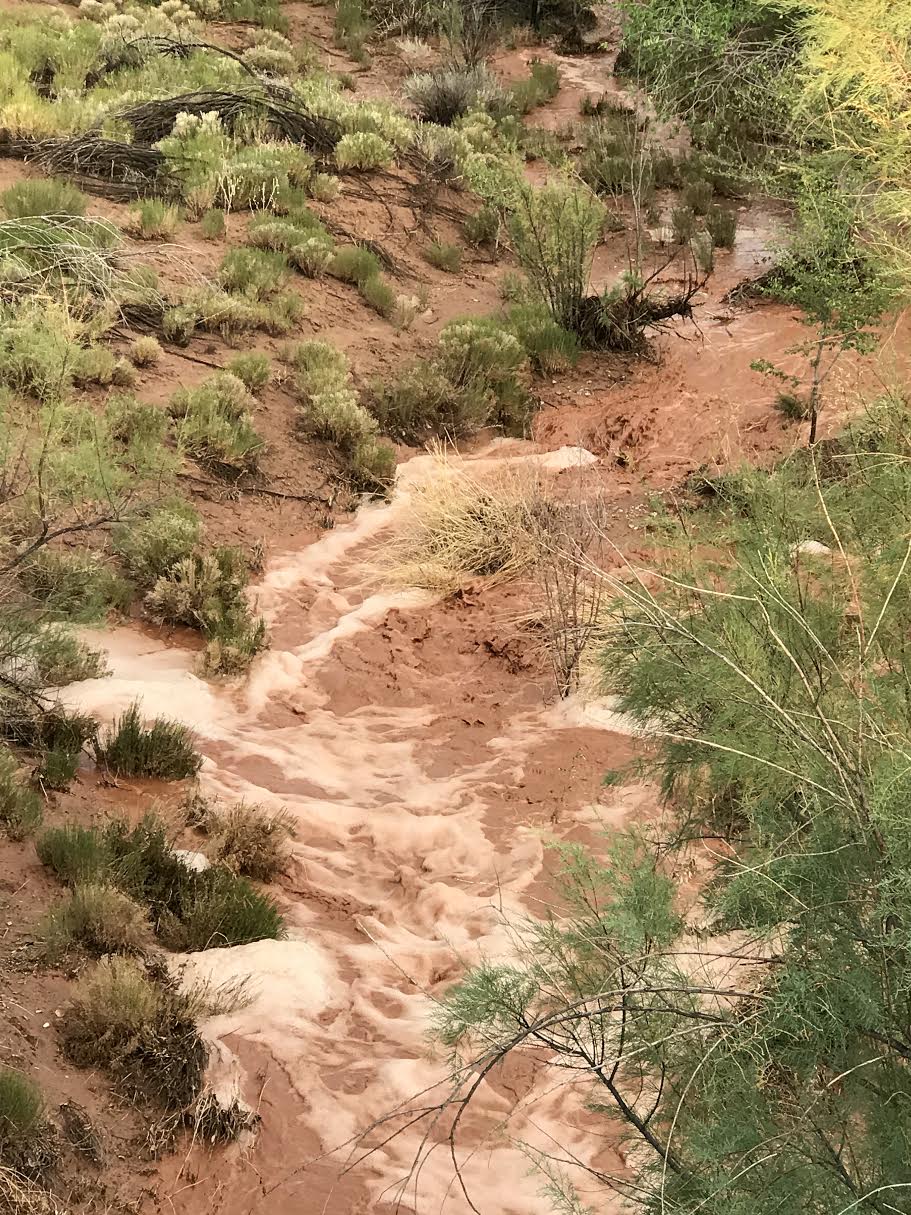
And one of the ironies of living in this neck of the woods is seeing clouds gather and darken miles away and, in nearly the blink of an eye, sending what seems a generous percentage of our annual rainfall speeding down arroyos to the Rio Grande and Elephant Butte.

IMG_6164
Easy come, easy go

I acknowledge that human water systems here always have been complex, although the tools of the trade used to be just sticks and shovels.

This area along Las Huertas Creek has been farmed, small and large, for thousands of years by Native Americans and Hispanic successors. Two creeks flow into the drainage (both ran year-around when I moved here), but you also can still see the outline of an old acequia and old well shafts dot the valley floor. Today, we have several wells, of varying ages, providing water to some 50 homes.

modelhome

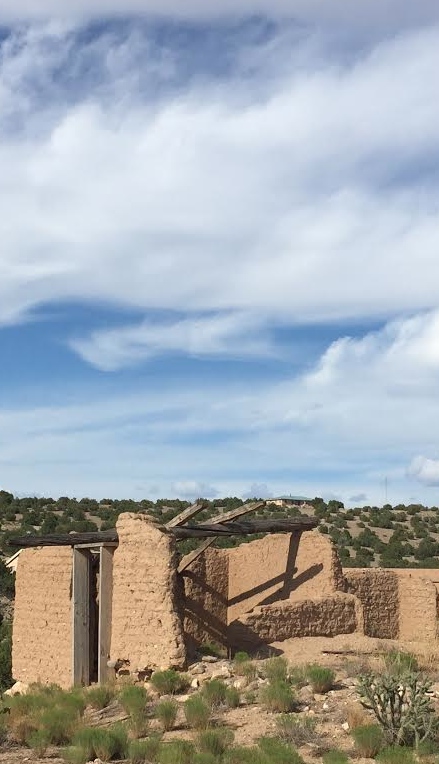
Former Las Huertas Creek farm building

But with or without knowledge, I am going nowhere near Well No. 2 again today. I’m just gonna pray.

Better yet, why worry about drainages, water tables, drilling depths and electric-powered pumps, to say nothing of  all those new straws going into the ground all around ours?

I could move Albuquerque or Santa Fe, where they seem to have stopped worrying about groundwater wells, relying heavily on water from Colorado River tributaries in the San Juan Basin, piped under the Continental Divide into the Chama and on to the mighty Rio Grande. Seems foolproof.

This really is about me and not my 19-month-old dog, but sometimes I think my self-knowledge might not be much deeper than his.

I have been struggling lately with too much news and a lost appetite for fiction.


You see, I grew up thinking I would be a fiction writer. But my newspaperman instincts surfaced when I wondered as an adolescent where the fire engine was going, watched national political conventions gavel-to-gavel and got busted for curfew violation, out on bicycle, monitoring the tidal surge on San Francisco Bay the night of the Alaskan earthquake in 1964.

Climate change and Donald Trump haven’t made life questions any easier. And I put my journalism ambitions out to pasture two years ago.

I watched Harvey, Irma and Maria like I used to watch political conventions. I never liked horror movies — Why pay to be scared? — but I either have some eerie fascination with the darkness of Trump or I am wired to keep my eyes on snakes within striking distance.

I have been depressed, but as the great American poet Theodore Roethke wrote: “In a dark time, the eye begins to see … ”

IMG_9534

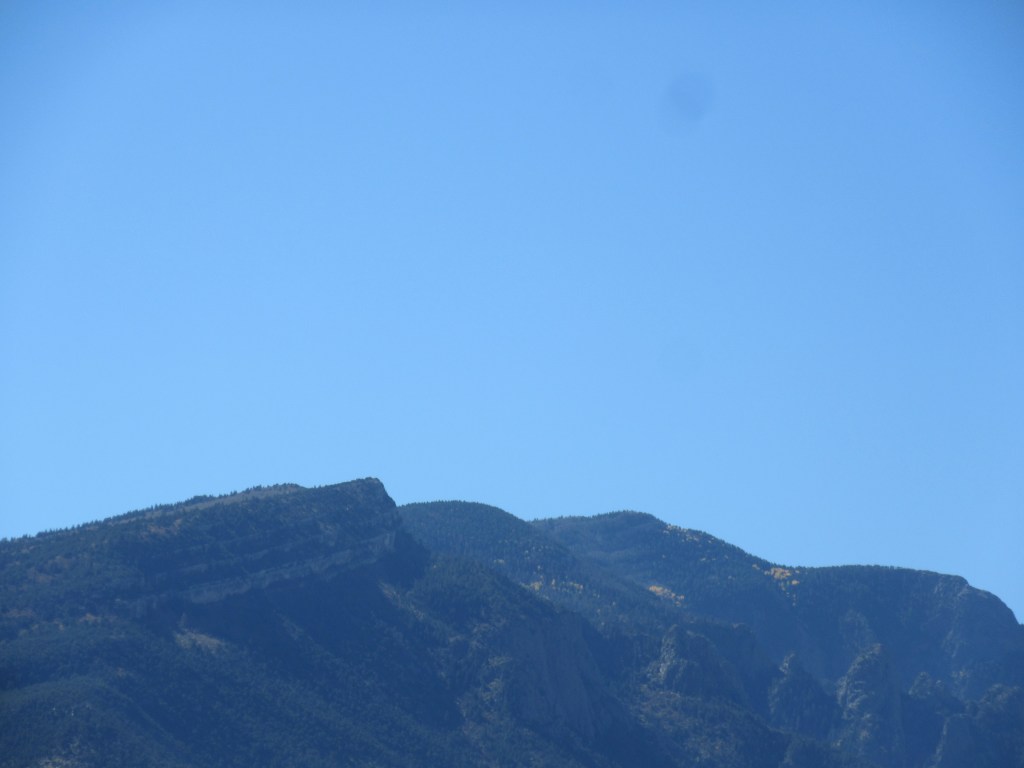
Lightning south of the Sandias.

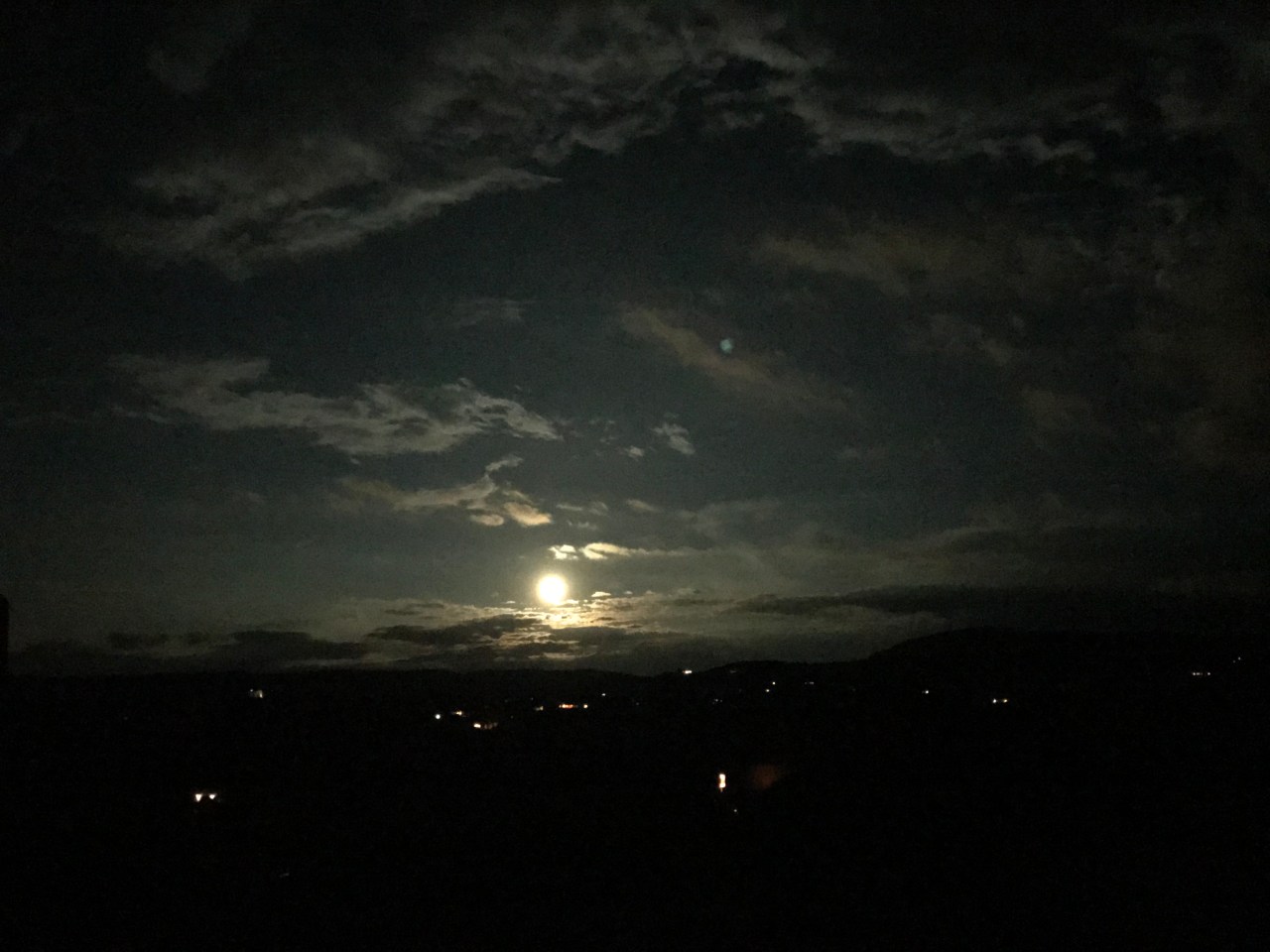
I woke in the middle of last night and went outside under the Harvest Moon to see if my sleeping mountain was undisturbed — if Trump had yet set the world on fire. Before I fell asleep in front of 24-hour news, where I sought clarity, Trump had posed at the White House with a bunch of generals and their wives, scaring the hell out of everyone, probably, by saying the scene represented “the calm before the storm.”


IMG_0124

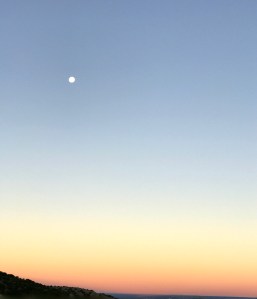
Harvest moon rising over my neck of the woods.

IMG_0150

Cowboy in the moonlight.

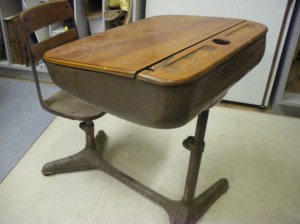
Cowboy came out to join me. He seemed a little scratchy, to use my sisters’ term for mild irritability. I know I was on edge. I have been resentful about  international affairs, partly because, from the third grade through the sixth, I practiced hiding under a wood-topped school room desk, ink well and all, in case of a possible nuclear attack. Now, with Trump and Kim Jong Un running the show, here I am again, thinking about bomb shelters and stocking up on food in my retirement home in Placitas.

IMG_8955

Bomb shelter, a la Acequia Madre Elementary School, 1960.

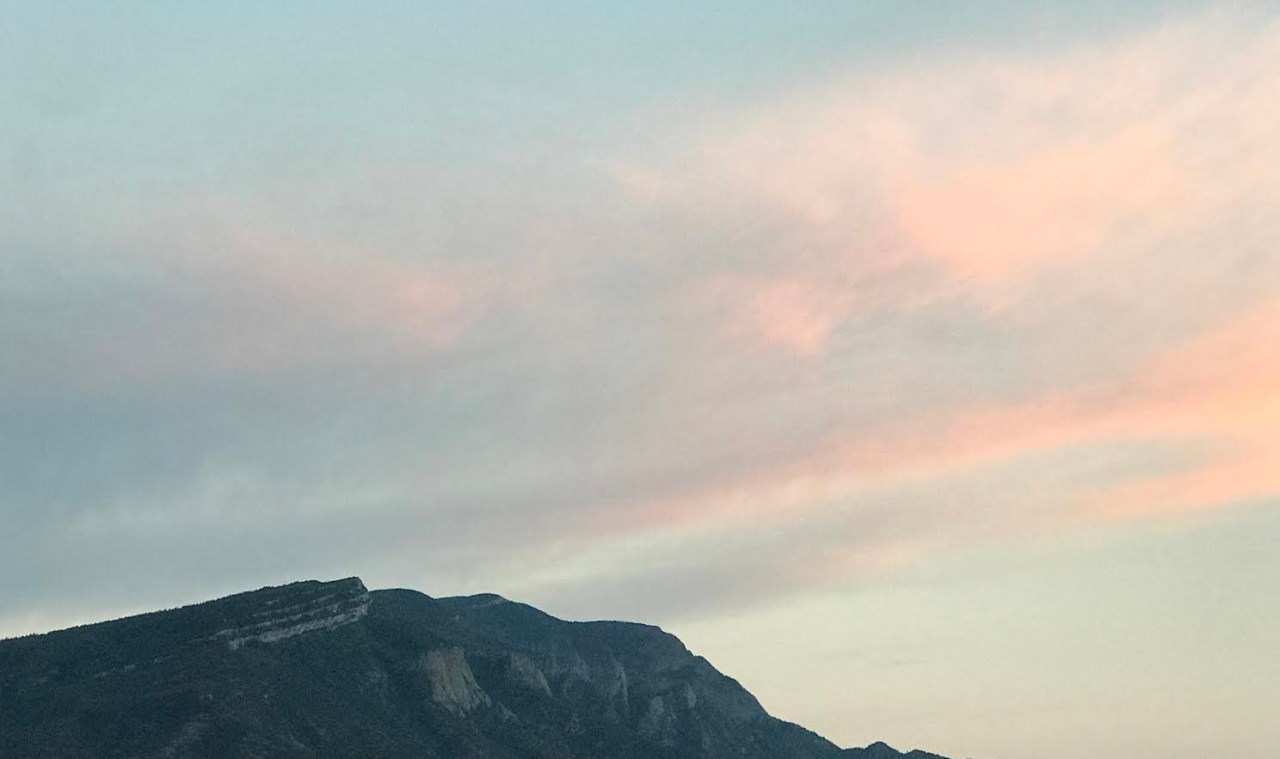
The mountain was still there, under the moonlight. I went to bed, only to rise staring fiction in the face.

I still don’t know if my newly acknowledged aversion to it is because it’s too hard to write, my inherent laziness or that I simply am not interested. Or could it be that news is outpacing, outweighing, literature?

Novels are stacking up around the house, despite my good intentions. Bookmarks stick out only a couple of pages or chapters in. Fiction in my New Yorkers has gone from occasionally read to never read.

I think I read close to every word of Hemingway and Steinbeck as a kid. If any story is imprinted in my brain, it is Hemingway’s “Big Two-Hearted River.” I read Erich Maria Remarque’s “All Quiet on the Western Front” during the Vietnam War and it seared into my consciousness. Lines from Shakespeare still pop up like teachings from the Bible. But my patience with fiction has increasingly thinned.

I don’t like it when my eyes roll back in my head over what I once thought was the love of my life.

But one thing is for sure: Trump has taken all the fun out of saying, “You can’t make this stuff up.”

IMG_8177

The little bit of Martha Stewart in me rose this morning like yeasty dough and grew into a couple of half-baked theories for practical living in New Mexico — namely cheap art and waterless landscaping.

Actually, I was up earlier than usual to deal with a community well problem and the sunrise illuminated my habitat. I’m not waving a finger at anyone. I have friends with green thumbs who are conscientious about water. I have artist friends who skillfully wield paint brushes and even more who are photographers. I’m not arguing against people buying art they like, especially local art. I am only noting options in home decoration and alternatives to outdoor irrigation.

cheapart

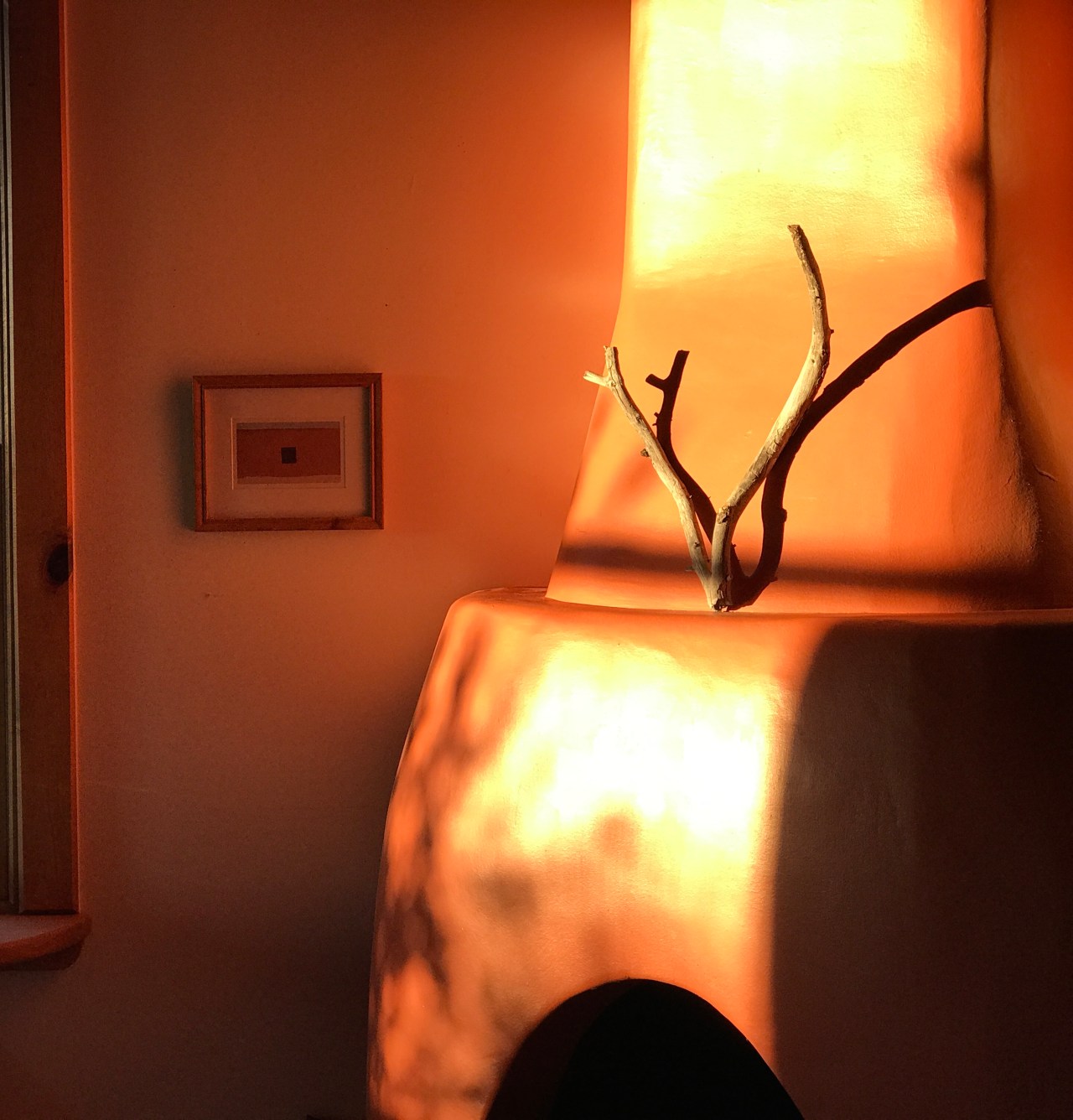
The photo above reflects my interest in this Georgia O’Keeffe “Door” painting, hanging next to my fireplace. And since I am not in the O’Keeffe acquisition class, it is a framed postcard. It is enough to remind me of the concept — and O’Keeffe’s genius — every day.

I do not, however, share O’Keeffe’s affection for home decorating with animal bones and I have fun collecting pieces of piñon, juniper and cholla that resemble antelope horns. Thus, my fireplace adornment is part of a rotating and always affordable collection.

As for landscaping, I admit that I may be as inherently lazy as I am environmentally aware. But, I guess because of the fragility of pumping equipment and secretiveness of southwestern aquifers, it goes against my grain to apply potable water to plant life that thrives — in a desert sort of way — on our annual precipitation of 11 or so inches.

Here are some examples in this morning’s early light. Left to right: Russian sage; cliffrose; Apache plume; and autumn, or cherry, sage.

I water none of these, and maybe you think it shows. But they bloom plenty for me; you just have to wait for the season. I also find that the red flowers on the cherry sage attract plenty of hummingbirds. During dry spells, I throw my dishwater on them to keep them blooming.

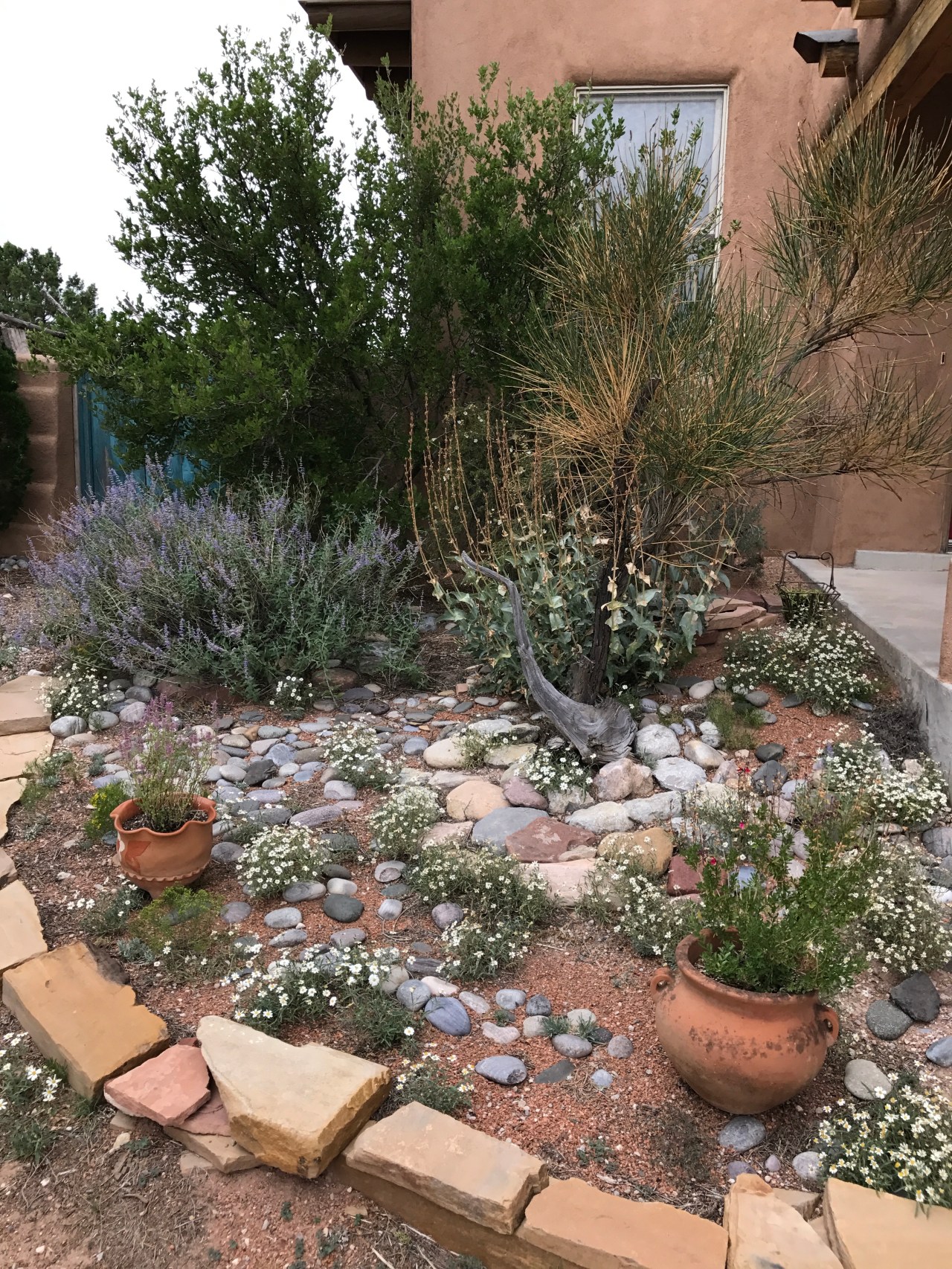
Next is an example of full-blown lazy, except for the two pots, which I am trying to remember to water for an absent neighbor.

frontlandscaping

Here you will see desert olive, Russian sage, big sage, Apache plume, wild penstemon, Spanish broom and this year’s second crop of blackfoot daisies. I guess you have to like the shaggy look, but no irrigation, folks.

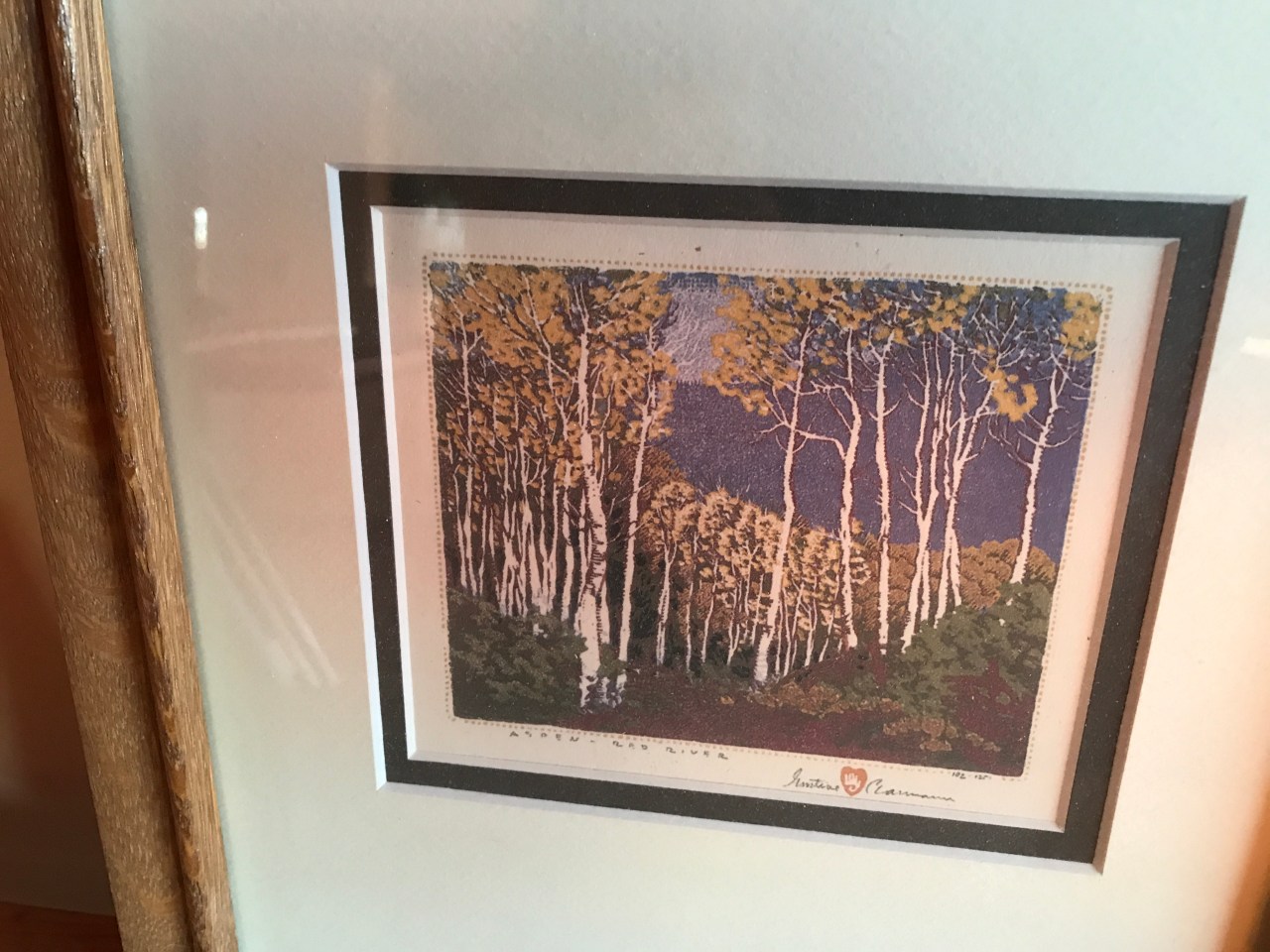
A couple of other notes: I confine my aspen at this 6,500-foot elevation to Gustave Baumann prints,

baumannprint

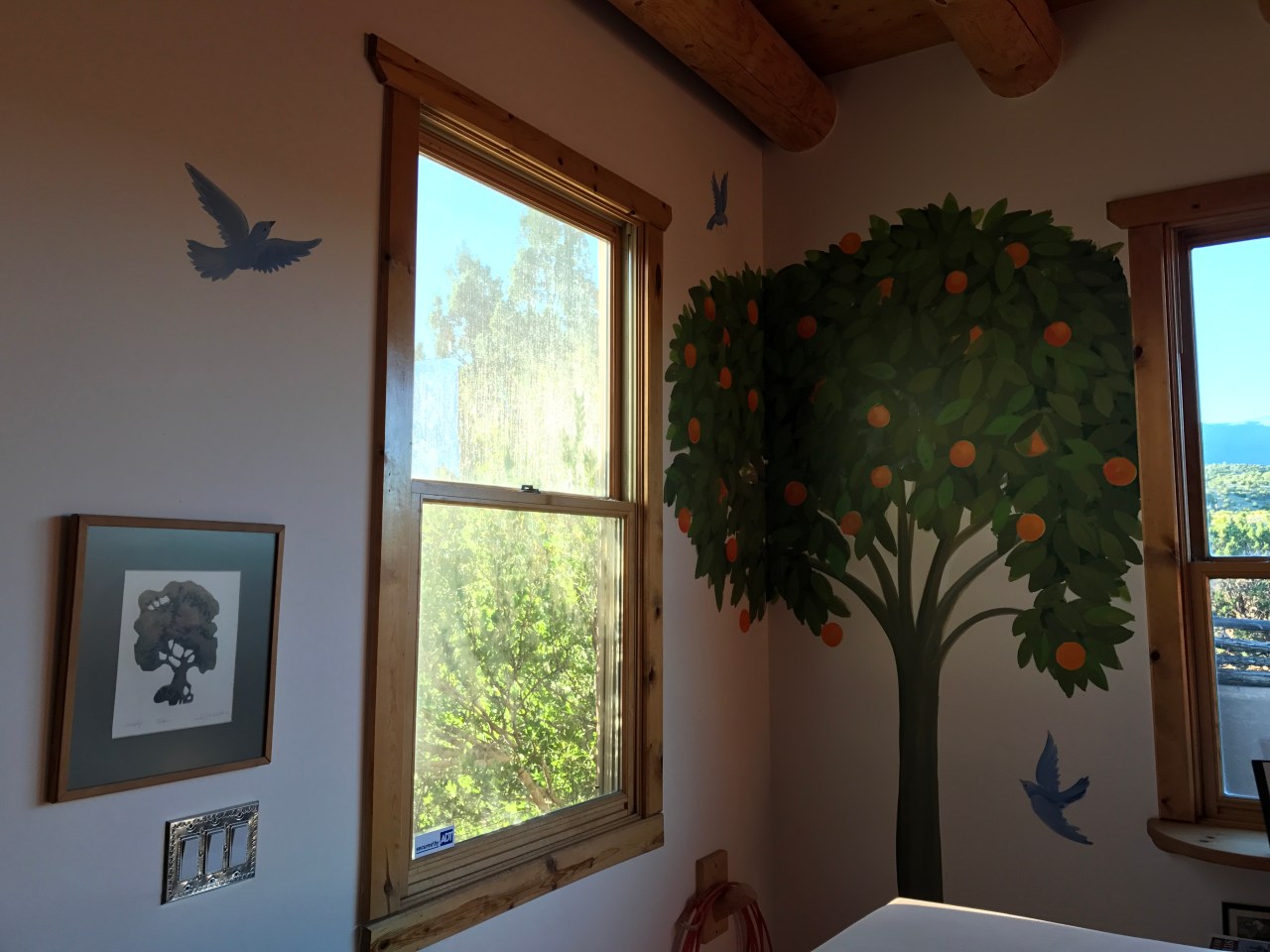
and for the ultimate in waterless and effortless landscaping, I have a Jerry West proof and a tree mural inside, neither of them costing me much green.

indoortree

At the end of the day, I throw my leftover drinking water or coffee on the pink-blooming Christmas cactus that never dies. This always reminds me of Bruce King telling me about cowboys on the move with no milk, dousing morning corn flakes with coffee.

I wonder: Was there a little minimalism and a bit of Martha Stewart in our late governor, too?

Did I really wake to a world where the president of the United States fumed again on Twitter at a couple of TV hosts? Bitterness spewed internet-wide over coverage of himself on a show I’ve never watched?

Will the Trumps go on a Fourth of July picnic and eat hot dogs and potato salad?

smokebetter

With much of America beginning a four-day weekend, risking the highways to travel and hopefully not forgetting to be careful with campfires, is the president’s holiday message really “Happy Canada Day?”

It’s only seven hours since I put down my nighttime New Yorker, reading not about health care or Syria but about the emergence of the National Enquirer in national political debate.

My 15-month-old dog, eager to get the day started, is trying to start a rumble in bed, but I look out out the window and see a gray horizon.

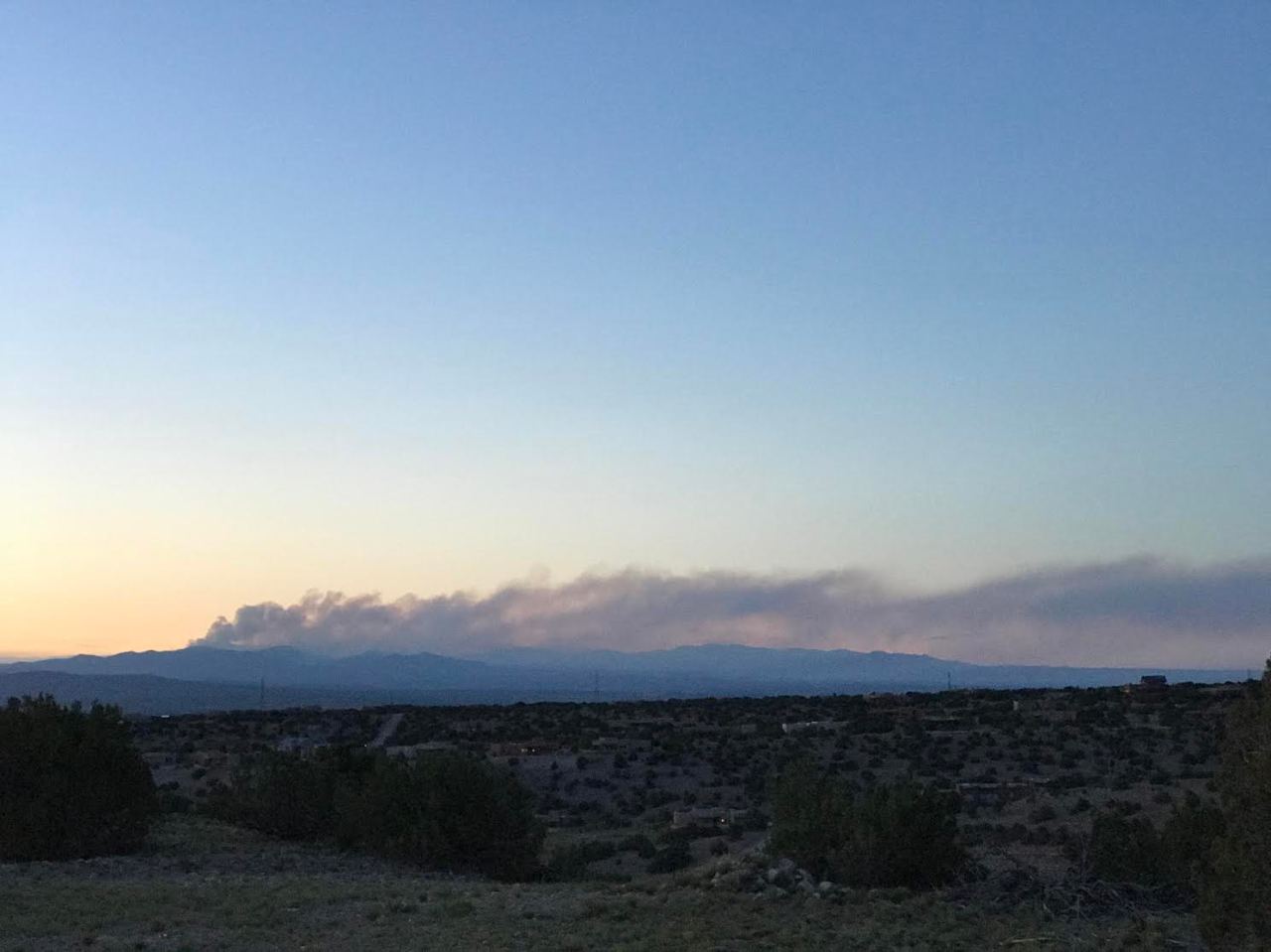
mesasmoke

My New Mexico, along with Arizona, is one of the two fastest warming states since 1970.  Wildfire smoke has become a more noticeable signature of June than greening hills. I think of a winter coat in the closet that I now never wear.

Oh, well. I am encouraged after lunch yesterday with a fellow cancer patient, even though saddened that she has to go through this. I pull a Bruce King and probably pat her too hard on the back after surgery, but she seems sharp as a tack, looks seriously healthy and determined to stay that way.  I am cheered by a Facebook photo of a friend on the Snake River, looking happily independent, grinning her big grin on the back of boat cruising Hells Canyon.

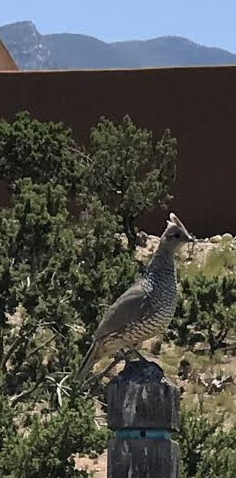
quailonsignpostYes, onward into the smoke it is, still believing there is a cure.
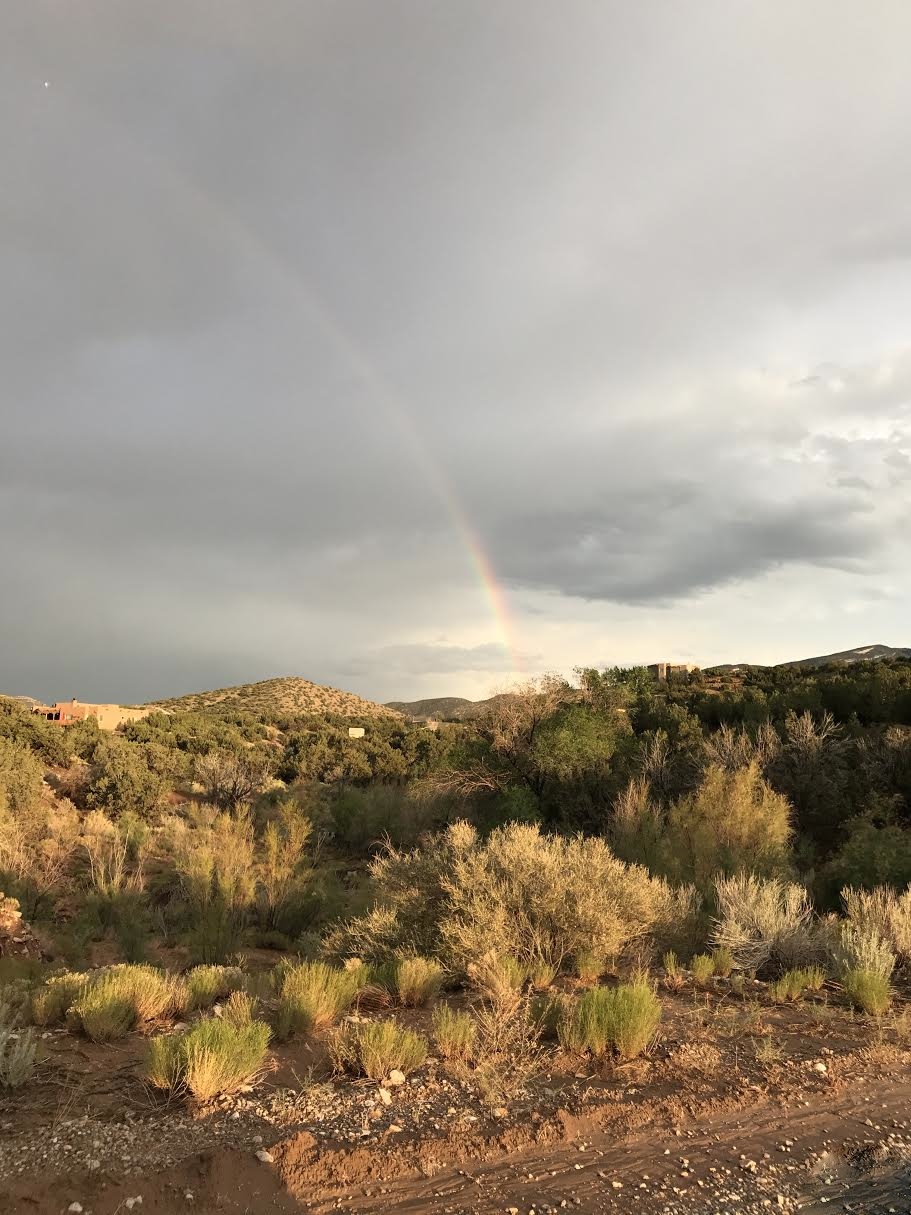
When the days end like this …

sunsetheat

and the dogs look like this …

we start hopin’ for more of this …

boilup

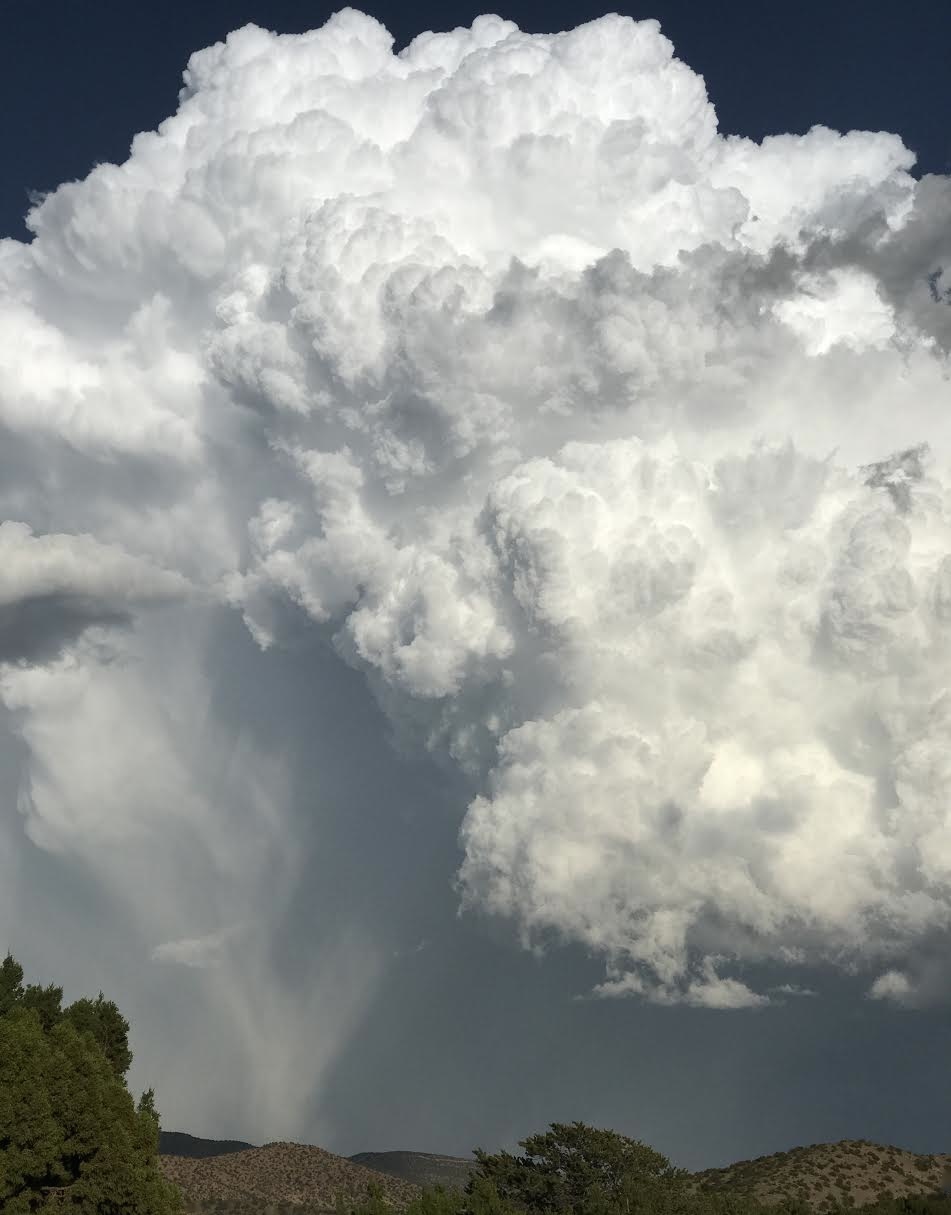
Notes on photos: Big brown dog with water bottle is Sara, Cowboy’s good friend, owned by neighbors Lori and Mike; sun setting behind Cabezon with plenty of wildfire smoke trapped down low; yours truly, collapsed in the lobby of La Posada after a day of touring Santa Fe with visiting sister Hope; Cowboy shading up on a morning walk; big build-up looking east from Placitas toward Montezuma Ridge.

typewriter

Photograph: Dad, Pat and Mus. Near Mora Flats, Pecos Wilderness, 1970’s. My father’s typewriter.

Note: Originally posted June 16, 2016. I am putting it up again for Father’s Day. And the title is a joke about my own bad Spanish. My father was fluent and had a master’s degree in Spanish literature.

Dad used to joke about what he was reading in the waiting room when we were born. The titles I remember are Nausea and As I Lay Dying.

This did no justice to his first wife and mother of his three sons, but it was the humor of an earnest, hard-working Depression-era guy who came from a blue-collar family with two disabled, stay-at-home sisters. His own parental career began early in college and produced the third son when he was in graduate school at the Writers’ Workshop at the University of Iowa (in Iowa City, Iowa, in case you’re lost).

He was a good teacher, newspaperman and Peace Corps administrator. After a collection of short stories for his MFA at Iowa — the first Robertson I know of to make it past high school — he managed through sheer grit to pound out at least two novels, 25 years apart. But nothing sold.

novel

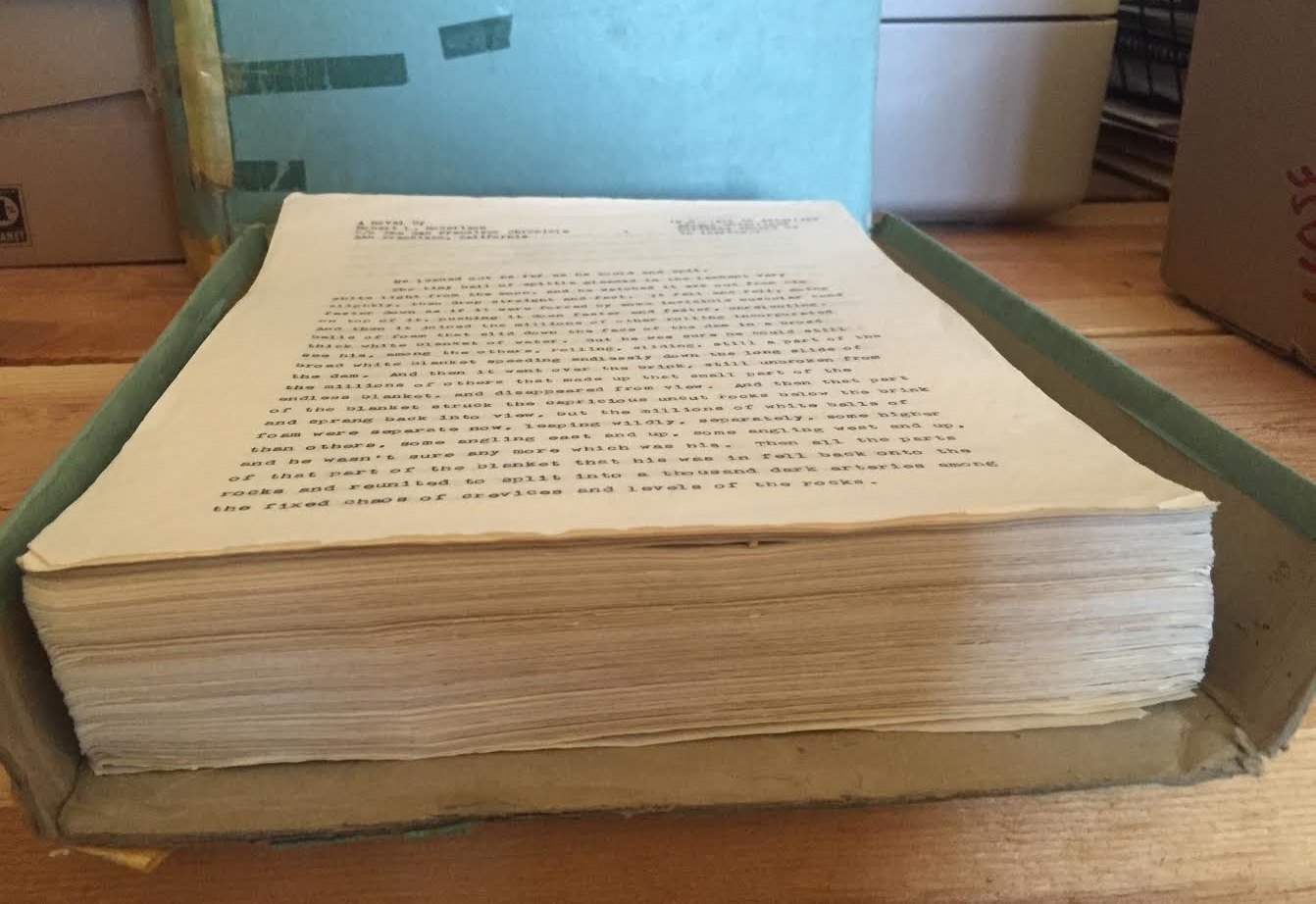
I still have the 359 onion-skin pages of the first one, immaculately typed on a Smith-Corona portable nearly 60 years ago. I can still remember the sound of his thick fingers pounding the keys in the basement, before and after work at the Columbus Citizen.

His brilliance with language extended from fiction and poetry and newspaper writing to fluency in Spanish and Turkish and letters that melted your heart and put iron in your spine. From him — the sound of his voice reading Theodore Roethke still rolling through my mind —  I got my own love of words.

He finished his first novel or started a second in Mexico, after abandoning home. He came back, but maybe after relinquishing some of his writer’s fire. He gave his time to his sons and understanding new wife, to his aging parents and ailing sisters. Sometimes he couldn’t take the mainstream and would break away, once in the middle of the night to follow King on the march from Selma to Montgomery. But somehow, with all his strength and grace, he could not make headway in the publishing world.

Scan 19

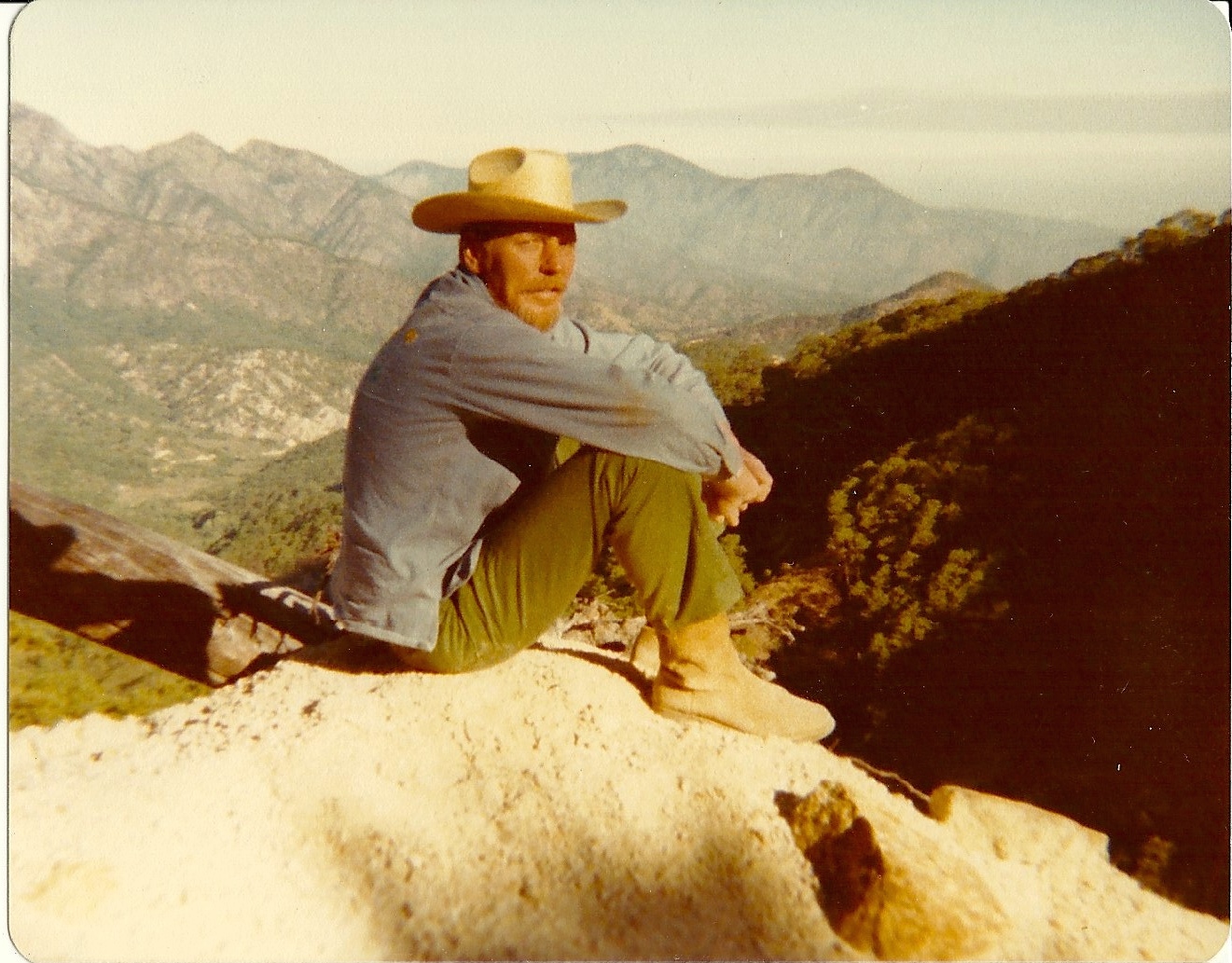
I like this picture of him looking happy in the Sierra Madre of Mexico after he had retired from the Peace Corps to try to write again full time. The note on the back of the photo says, “Enroute to the village of Cuale, Mexico, 1975.” But he was not yet free of family responsibilities.

I think he got trapped by the post-war, suburban stability version of things before he could really let loose with a Great American Novel. And he probably was too kind anyway to write much about his own family. He was never free of the family he grew up in, let alone the one he produced.

He enlisted in the Marines after high school, but World War II was just over and his struggles became the post-war, middle-class challenges of money and family, even as he started college on the GI Bill. He had no connections in the Ivy League literary scene and career had to be less an ambition and more one that paid the rent. We were always on the short end of the American dream, although never out in the cold. My stepmother’s support might have given him more chances. I always thought he was smarter and tougher than anything, but in the abbreviated haul — he died just short of 67 — that didn’t include booze.

Freedom was his elusive treasure of the Sierra Madre. I can see the look in his eyes.

The more I study this photograph, it looks to me like he was sitting on a tailings pile of an abandoned mine. Maybe gold or silver. I’m guessing he thought of the ironies before I. And I could still stand to have him tell me if I used the words correctly.

The size of the crowd at Mark Holm’s memorial service in Albuquerque on Saturday told me he was valued as much for his grace as a person as his talent as a photojournalist.

Several hundred people turned out, I’d guess. This struck me as exceptional for a newspaper person, especially for we 60-somethings, who started out in newsroom environments far more caustic than today’s.

Mark Holm probably always would have been exemplary, though, then or now. His brother, Peter, said yesterday it just wasn’t in Mark’s nature to be fierce, competitive or cruel. He had another way.

After learning of his death at 63, friends and co-workers described him as a quiet, kind and generous guy. He was remembered as patient, mirthful, encouraging, a mentor to many younger people coming up in the business. We were not close friends and I did not know him well, but working with him always felt good. My recurring image is that he always had a smile for you. I thought he had an aura. I understand now it was the aura of a beautiful person. I liked him from the start.

Mark’s grown-up kids — Alison, Mary Kate and Luke —  did wonderful jobs of remembering their father with well-chosen words. All three managed through grief and the stress of public speaking to draw fond, knowing laughter from the memorial service’s saddened crowd. I suspect they learned the trick from their father, known for grinning under a mustache that one daughter with familiar, gentle humor described as “confident but not aggressive.”

Mark didn’t need a camera for a penetrating look. You saw genuine interest when he faced you. You knew he listened, just as he might study through the lense. One of the memories that impressed me most yesterday was a daughter describing a father with the patience and love to learn and build on what was unique in each of his three children. It showed in their poise Saturday.

I never get over wondering what’s fair about a good person dying, especially when they seem so young. The loss seems so great I wouldn’t know what to suggest as consolation for Mark’s wife, Joan, who, by the way, I do not mean to overlook in the child-rearing equation here, nor in Mark’s care. But I am also moved by how much Mark Holm meant to so many people.

So far, the only conclusion I’ve been able to draw from his passing is that day-to-day, dealing with others, I should try to be more like him.

And I probably should just move on alone with my thoughts, but I guess it’s the newspaperman in me that compels me to report on the memorial service. And word herder that I am, I’ll inflict one more cliche on my photographer friend: Here is a picture worth a thousand words.

mark holm