We were celebrating your 60th birthday with this 1989 hike in Colorado, but the photos will do for Father’s Day. My late father, Bob Robertson, 1929-1995.
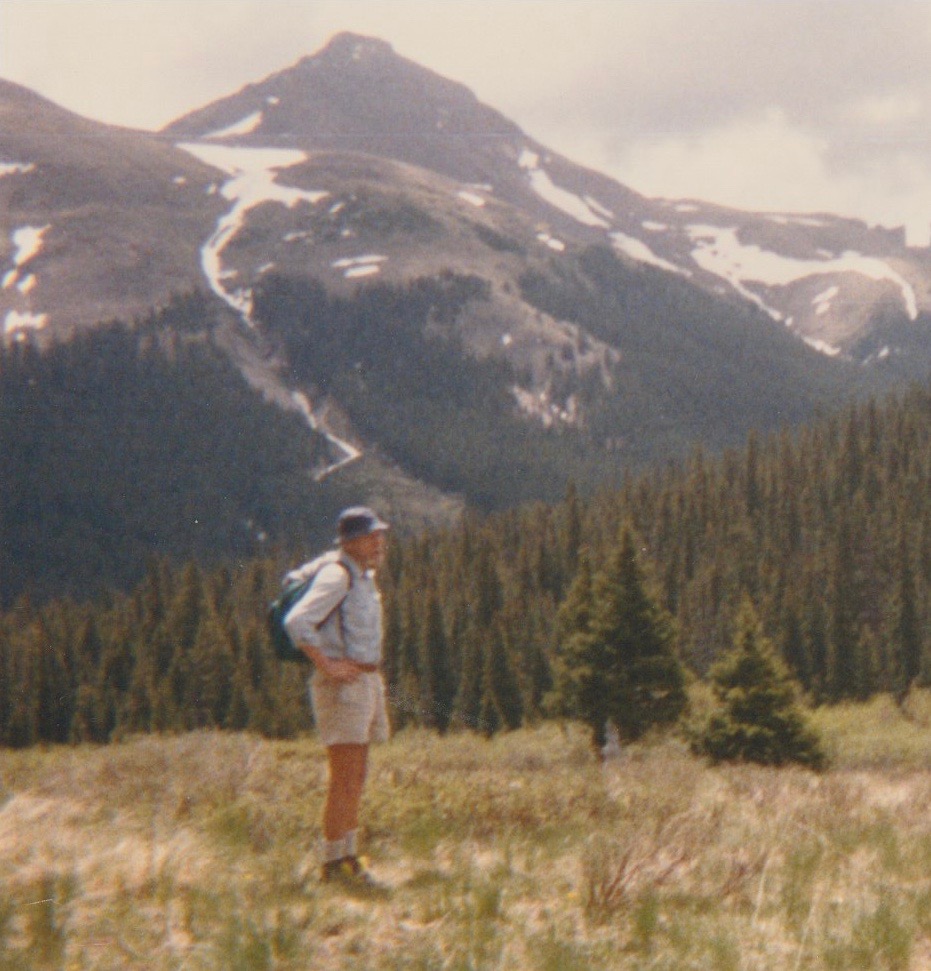
Rio Grande Pyramid
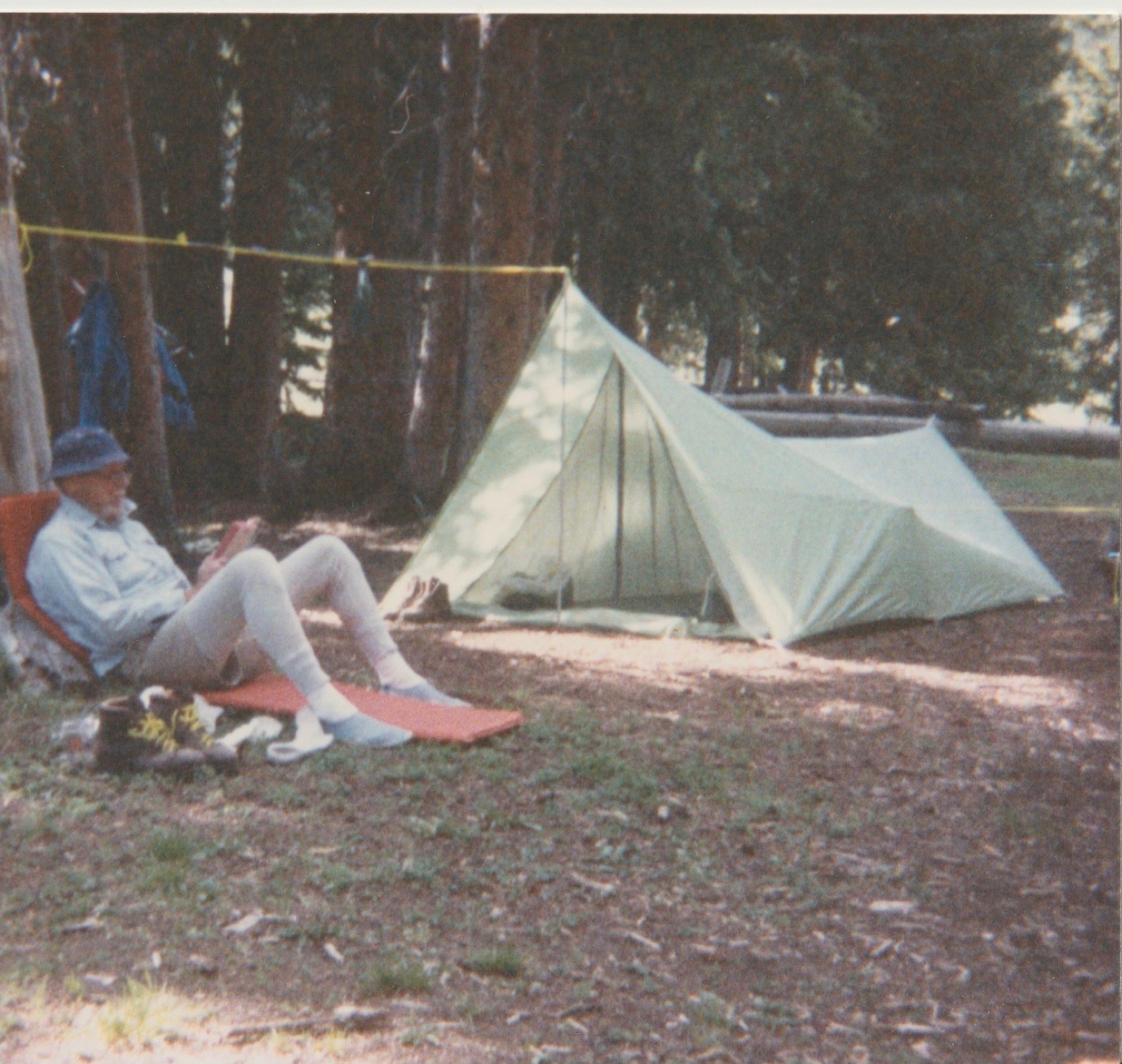
Ever the reader.
We were celebrating your 60th birthday with this 1989 hike in Colorado, but the photos will do for Father’s Day. My late father, Bob Robertson, 1929-1995.
Rio Grande Pyramid
Ever the reader.

The sky is so gray with smoke sunrise doesn’t wake me.
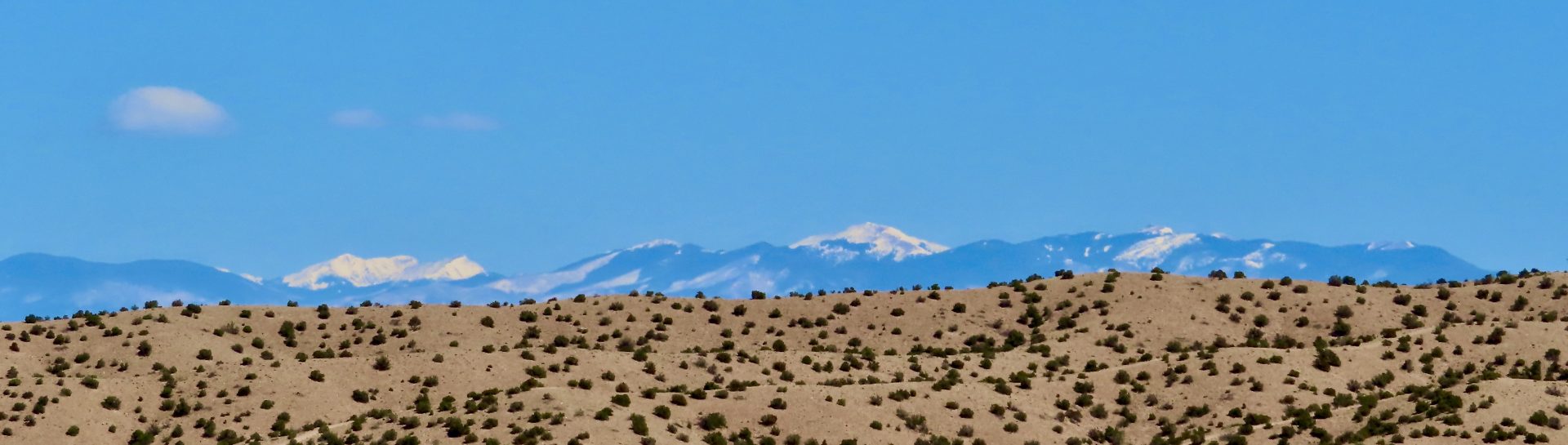
Western wildfires in June are predictable, but with climate change they seem more frequent — and larger. The smoke this Thursday morning, June 18, 2020, obscured the Sandia Mountains to the south and Indian Country mesas to the west. I could barely make out the Jemez Mountains to the northwest. The smoke is mostly from the 100,000-acre and growing Bush Fire, northeast of Phoenix, but others in Arizona and New Mexico are spewing smoke northward.


It lifted a little before sunset but my eyes still burned.

Fires and smoke, June 18, from AirNow.gov
Almost 50 years ago, I fought wildfires in California and thought little more of them than as a way to earn good overtime pay. Too many of today’s fires, in size and intensity, are practically unfightable.
Tomorrow is Juneteenth, celebrating the emancipation of African-American slaves in Texas on June 19, 1865, and the end of slavery nationally, more than two years after President Lincoln’s Emancipation Proclamation. (Washington Post: An original “Juneteenth” order 
found in the National Archives). On our smoky Thursday, historian Michael Beschloss tweets a June 19, 1964 photo of Martin Luther King Jr. flashing what I guess is a combination victory and peace sign, after learning that Congress has finally passed the Civil Rights Act of 1964.


Twitter then showed a photo of the Arthur Ashe monument defaced on Wednesday with “White Lives Matter” initials in his hometown, Richmond, Virginia.

President Donald Trump , after widespread objection, had earlier delayed by a day a campaign rally scheduled for Juneteenth in Tulsa, Oklahoma— as if his staff had never heard of the holiday or Tulsa’s past. Today, Politico reported, he tried to take credit for winning Juneteenth national attention.
“Nobody had ever heard of it,” Trump said in a Wall Street Journal interview. “I did something good: I made Juneteenth very famous.”
There was news this morning that the Supreme Court, with Chief Justice John G. Roberts Jr. voting with the 5-4 majority, upheld the Deferred Action for Childhood Arrivals act, protecting undocumented immigrants brought to the country as children.
Trump soon tweeted criticism of the court, calling the DACA ruling “shotgun blasts into the face of people that are proud to call themselves Republicans or Conservatives.”
The city of Albuquerque, 30 miles south of me by road, issued a health alert because of the smoke. I decide against a morning walk. Cowboy and I were forced to play in the yard, my combination COPD-COVID bandanna hanging around my neck.
The not-forgotten past, often still part of the present, has underwritten many recent current events.
The Santa Fe New Mexican reported today that more historical monuments are being removed, after the June 15 fork-lifting of the Oñate monument at Alcalde, recorded by the Albuquerque Journal’s Eddie Moore.
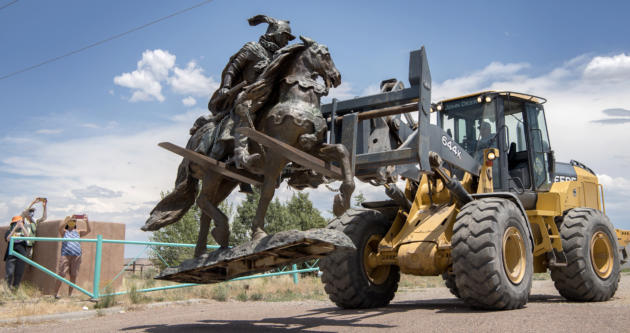
Albuquerque Journal photo by Eddie Moore
The New Mexico Legislature began a special session to deal with fallout from the coinciding crises of coronavirus pandemic and oil market collapse. The 112 “citizen lawmakers” might also consider voting protections and police use-of-force reforms.
Efforts on Wednesday to communicate the session by video because of coronavirus and security got off to rocky start. The headline in this morning’s Albuquerque Journal was “House members hit with racial slurs.”
Bill Soules, a veteran Democratic state senator and former public school teacher from Las Cruces, tweeted the night before: “I’ve been threatened with bodily harm twice in the last two weeks. I reported the incidents to state authorities each time. The negativity from people who disagree with my views is astonishing and frightening.”
On Wednesday, Albuquerque-based New York Times reporter Simon Romero, posted on Facebook a photo of the foot severed from the Oñate statute at Alcalde in late 1997, a remembrance of the conquistador’s atrocities at Acoma Pueblo in 1599.
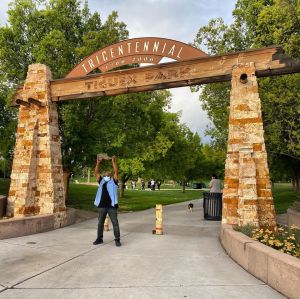
Facebook photo by Simon Romero
Elise Kaplan, a reporter at the Albuquerque Journal, who has been covering protests, armed militia presence and violence in Albuquerque, along with reporting partner Matthew Reisen, also tweeted on Wednesday night, sounding exhausted.
“I’ve now clocked at least 34 hours in the past three days and I am signing off.” she wrote. ‘There has been a lot said from both sides and we do hear you. All this stuff is hard.”
Following her reporting in the Journal, I know she has only recently been pulled away from coverage of the coronavirus tragedy on the Navajo Nation.
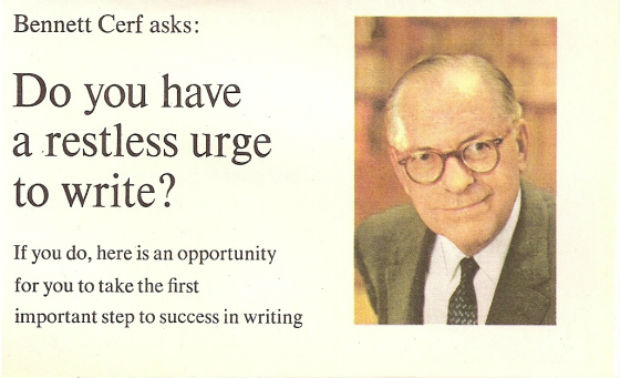
Here’s some writing advice that made sense to me. I found it in an anonymously written column called “The Notebook” in the Martha’s Vineyard Gazette.

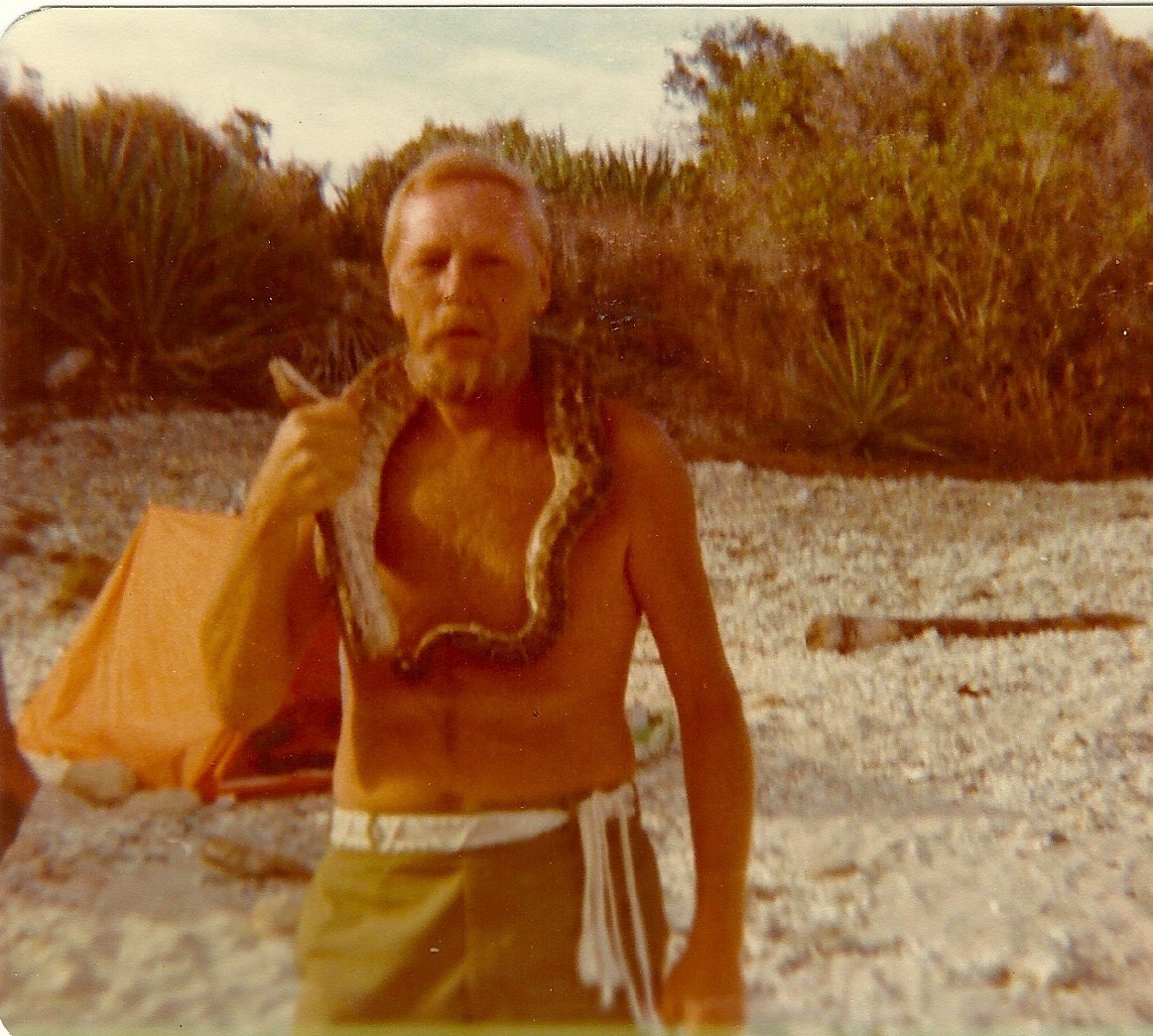
I’m getting a head start on Father’s Day, already picking out pictures to celebrate my late, one-of-a-kind, Marine Corps-to-Peace Corps, writer, teacher, newspaperman, linguist father. Here mocking risk as always on a beach near Yelapa on the Pacific coast of Mexico in 1975.
I could live without the snakes but otherwise thanks, Dad.

Too windy for birds this morning. And for me, when it comes to the latest debates in journalism, too windy to haul rocks.
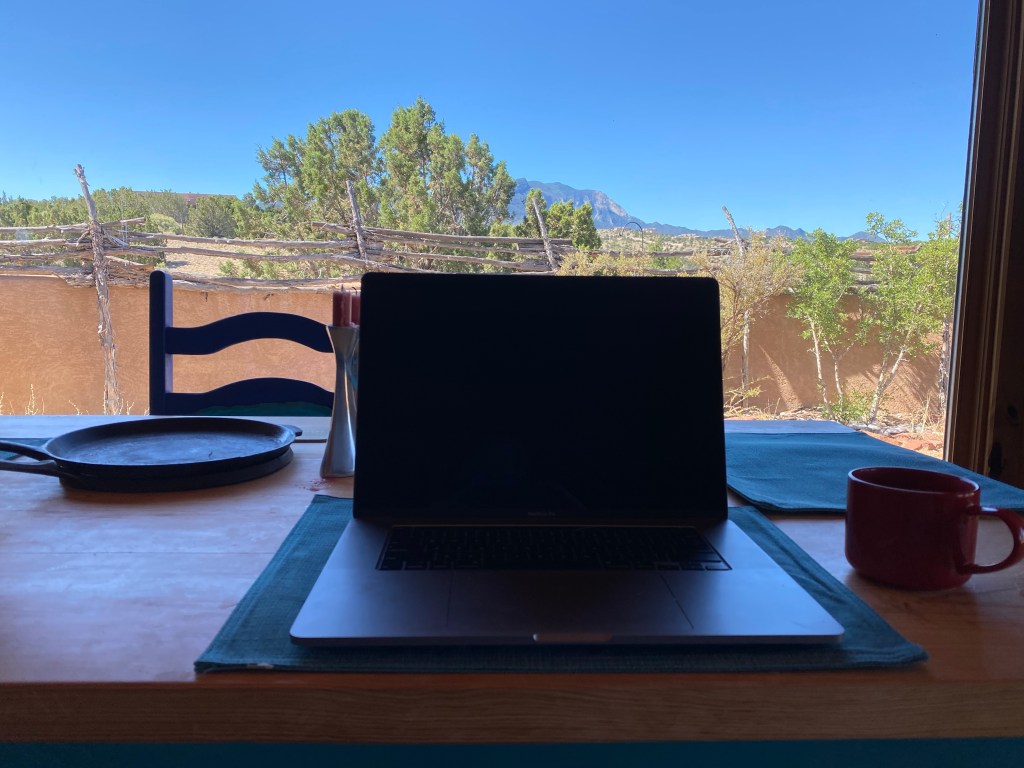
Maybe I finally have a grasp of that cryptic phrase often heard from a late photojournalist friend, Richard Pipes, a real pro who hailed from the gusty plains of West Texas. I’m not sure, but I’m still keeping my head low.
I have been trying to sort out my feelings about debates over news coverage, especially recent firings and resignations of editors over coverage involving justice, racism and coronavirus — in addition to whether the media should even cover Donald Trump’s White House briefings.
I’m trying to do more than just dodge rocks. My mostly conventional 1974-to-2015 newspaper career often pulls me back, but at least I am trying to be smarter than I was yesterday. At the same time, I am only an observer. I am retired and my armchair feelings really don’t matter. They are not the issue: People in the streets are. And these journalism things are going to be decided anyway by a progressive, younger generation of journalists shaking up newsrooms now. I guess readers, too.
“Now, as America is wrestling with the surging of a moment that began in August 2014, its biggest newsrooms are trying to find common ground between a tradition that aims to persuade the widest possible audience that its reporting is neutral and journalists who believe that fairness on issues from race to Donald Trump requires clear moral calls.”
I think Smith is referring to Ferguson and the Black Lives Matter movement, but I think at least the journalism revolution was rumbling before 2014. I think I saw glimmers of it at a Poynter seminar in Oakland in the late 90s, and even then I probably was late to the game. But the arguments and events have grown exponentially even since the March 21 column by Margaret Sullivan, the Washington Post’s media writer, on covering Trump briefings.
Though it dealt with understanding in general rather than just journalism, one of the most helpful things to me so far was Kareem Abdul-Jabbar’s May 30 op-ed piece in the Los Angeles Times on the Black Lives Matters protests. Jabbar reminded me of the importance of truly understanding the views of others, particularly of those most directly affected by current events. I learned the importance of of simple respect a long time ago, that giving respect usually results in respect returned. But Jabbar was writing more deeply about seeing things as others would.
“If you’re white, you may be thinking, ‘They certainly aren’t social distancing,'” Jabbar wrote about protesters in the Los Angeles Times. “What you should see when you see black protesters in the age of Trump and coronavirus is people pushed to the edge, not because they want bars and nail salons open, but because they want to live. To breathe.”

Then I read a Michelle Goldberg June 4 column in the New York Times about the controversy over the Times publishing a June 3 opinion piece by conservative Sen. Tom Cotton, R-Arkansas.
” … when I first saw the Cotton Op-Ed I wasn’t as horrified as perhaps I should have been,” Goldberg wrote. “I figured he’d helpfully revealed himself as a dangerous authoritarian. But as I’ve seen my colleagues’ anguished reaction, I’ve started to doubt my debating-club approach to the question of when to air proto-fascist opinions.”
But Goldberg concludes: “So the value of airing Cotton’s argument has to be weighed against the message The Times sends, in this incendiary moment, by including it within the bounds of legitimate debate. Everyone agrees that The Times draws those boundaries. The question is where.
“I could be wrong, but I don’t believe The Times would have published a defense of family separation by former Homeland Security Secretary Kirstjen Nielsen during the height of that atrocity, or a piece by the senior Trump aide Stephen Miller about the necessity of curbing nonwhite immigration. In both cases, I’m pretty sure the liberal inclination to hear all sides would have smacked up against sheer moral abhorrence.”
I, maybe like Goldberg, was used to thinking that people would eventually see the truth even through straight, deadline reporting of possibly controversial speech and events. I often think of American reporters in early-Hitler Germany in the 1930s. But the wind has been changing for some time. I remember being challenged by other journalists in 2013, before retirement, when I blogged live John Bolton statements from a Pete Domenici conference at New Mexico State University for the Albuquerque Journal. A couple of critics told me my quick, real-time reports should have included context, fact-checking and counterpoint. I figured Bolton’s obviously controversial statements could be assessed on their face.
Maybe my Bolton anecdote and revolts in today’s newsroom are different stories — one practical and the other moral — but they are at least related in terms of current debates over directions in journalism.
Just two nights ago, I had a surprising editorial experience here at home when writing about my father’s coverage of the Selma-to-Montgomery civil rights march in 1965. The San Francisco Chronicle gave him a loose rein and he sometimes wrote in the first-person and quoted the crude and profane language of what then were called “segregationists” and today would be called racists or white-supremacists.
I was too squeamish to repeat their offensive quotes about black marchers. I admired the grit of my father’s on-the-ground reporting 55 years ago, but I worried about how the words might hit contemporary readers.
Then I remembered a long-ago Poynter seminar in Oakland, filled with sharp reporters and editors from the LA Times, Boston Globe, Sacramento Bee, Des Moines Register, Minneapolis Star Tribune and other papers, including at least a couple of Pulitzer Prize winners, some participants still big names in newspapers today. One day the question was whether we would publish a photo — as someone just had — of California farmworkers stripped to their underwear and being hosed down after a day in insecticide-laden fields.
I unwisely picked up the seminar throw too quickly, suggesting it would be valuable for the treatment of farmworkers in the long run to show publicly how they were being treated by employers.
Most of the room said they wouldn’t publish the photograph, citing how the farmworkers might feel about appearing mostly naked on the front page of a newspaper, men and womeni in public, roughly washed down by expedient bosses. They also suggested that most of us in the all or mostly white room would readily defer to the sensitivities of country club members.
Today, in retirement but still following the news, I keep coming back to Kareem Abdul-Jabbar and that recent LA Times piece.
He wrote: “So what you see when you see black protesters depends on whether you’re living in that burning building or watching it on TV with a bowl of corn chips in your lap waiting for ‘NCIS’ to start.”

“I am ashamed — ashamed for myself and for the church — that we have not been here sooner.”
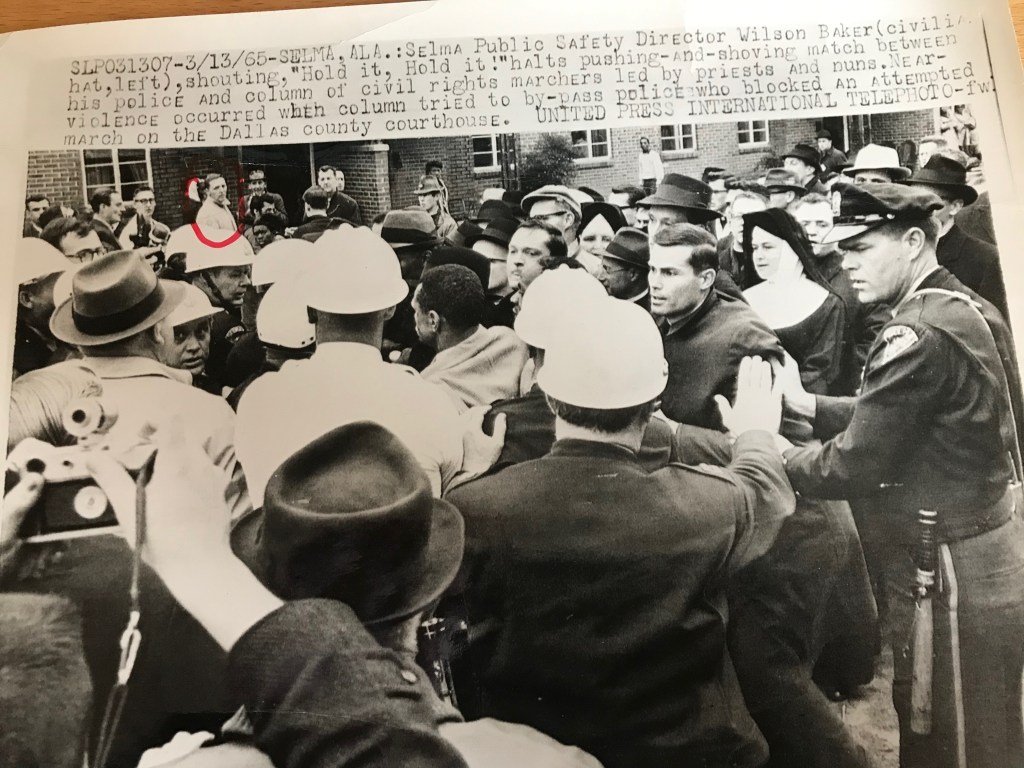
That was Monsignor David Cantwell of the Catholic Interracial Council of Chicago speaking to my father at the end of the five-day civil rights march from Selma to Montgomery in March 1965, led by the Rev. Dr. Martin Luther King Jr.
The words from my father’s reporting 55 years ago for the San Francisco Chronicle came back to me Sunday after reading about Black Lives Matter demonstrations across the country, “systematic racism,” Mitt Romney marching with evangelicals and management shake-ups over BLM-related coverage in big-city newsrooms.
My father, then 37 years old, walked the Selma-to-Montgomery route with King and thousands of 1965 marchers, interviewing blacks, whites, locals, out-of-towners, cops and clergy along the way. One headline, two days after the thousands of marchers reached Montgomery on March 25, was “A Search for Answers.”
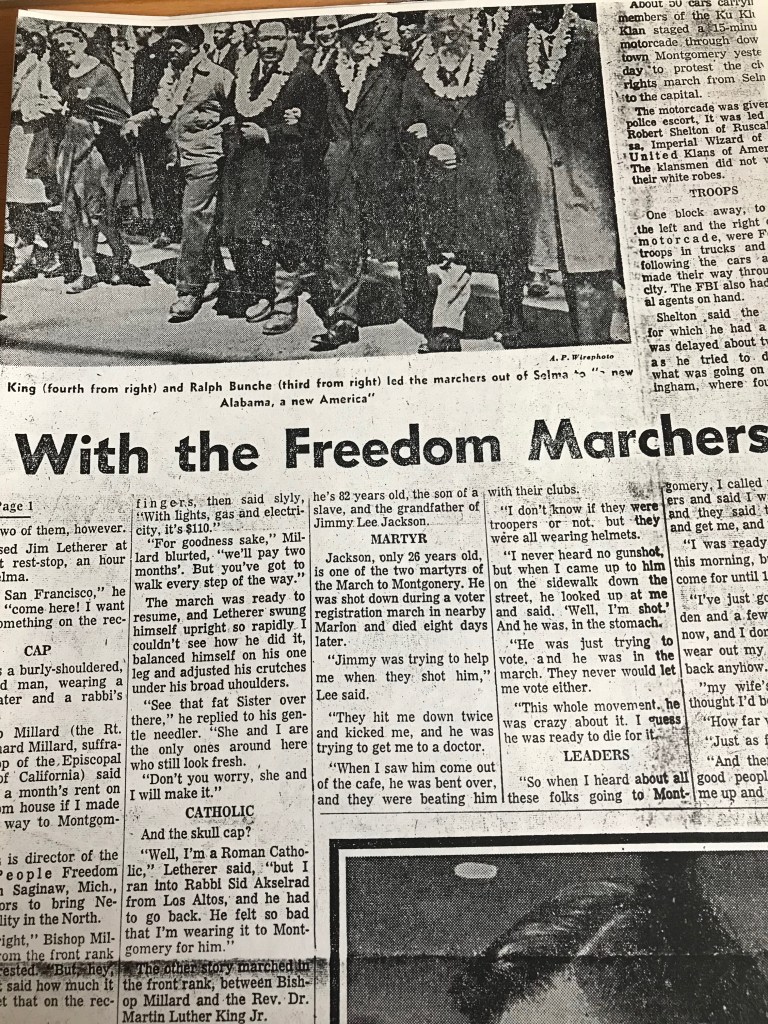
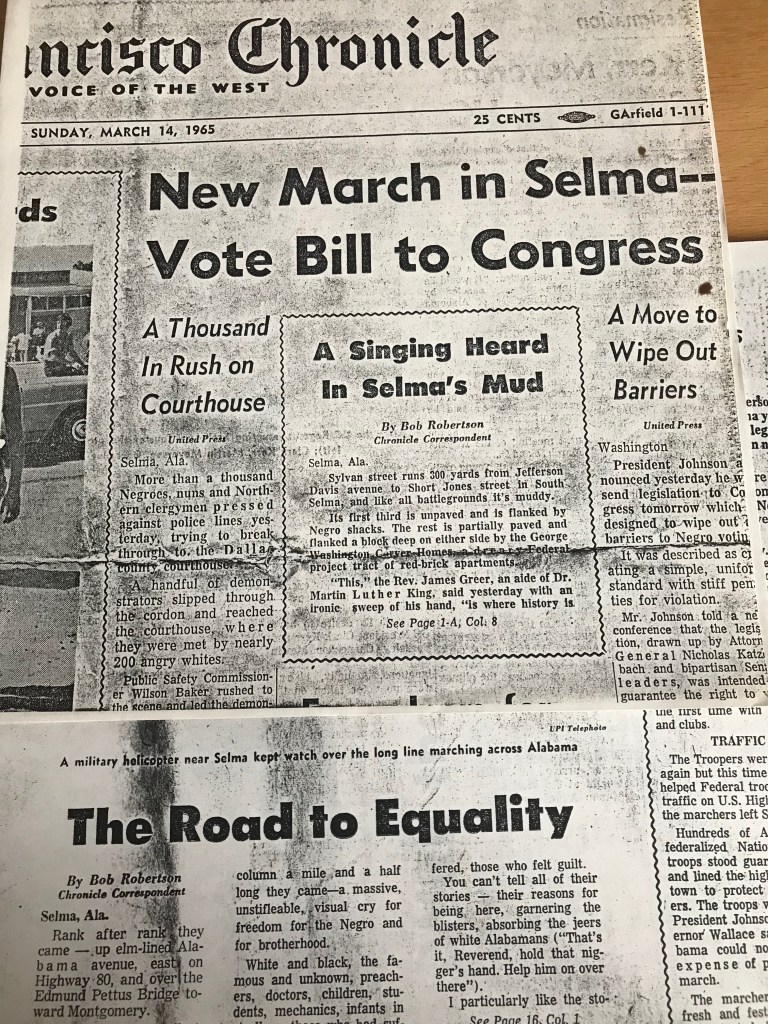

A subtitle after a section on what King said at the end of the march about the legacy of racism, read “GUILT.”
My father wrote:
“The only persons I saw in Alabama during the past two weeks who were ready to accept blame were the white men who had rushed to Selma last week in the heat of the struggle to cast their lot with the Negro.
“Almost every one of them would admit quickly that they came to Selma out of guilt.”
And Cantwell, he wrote, told demonstrators and state troopers along the barricades, “I am ashamed … that we have not been here sooner.”
Earlier in Selma, Dad spoke with another white clergyman who had come for the King-led march, the Rev. Don Schilling from St. Andrews Presbyterian Church in Marin City, Calif.
“It’s an evil system we live in,” Schilling told my father. “When government moves as slowly as it does, you’ve got to create a sense of urgency.
“It’s not that Selma’s problem is any worse than a lot of other places,” Schilling said. “But Selma has created the urgency with two killings and the brutality of the State troopers.
“We’re trying to point up Selma as a symbol of the injustices that exist across the land,” Schilling said in Selma, in March 1965.
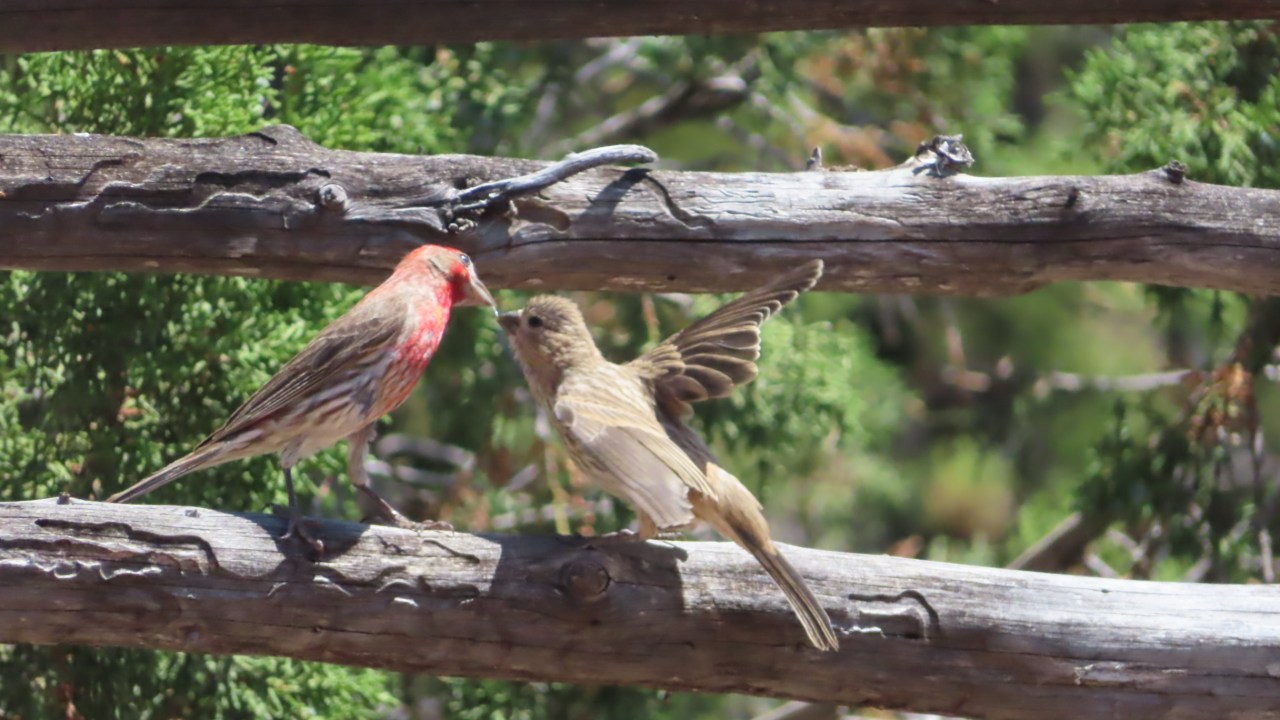
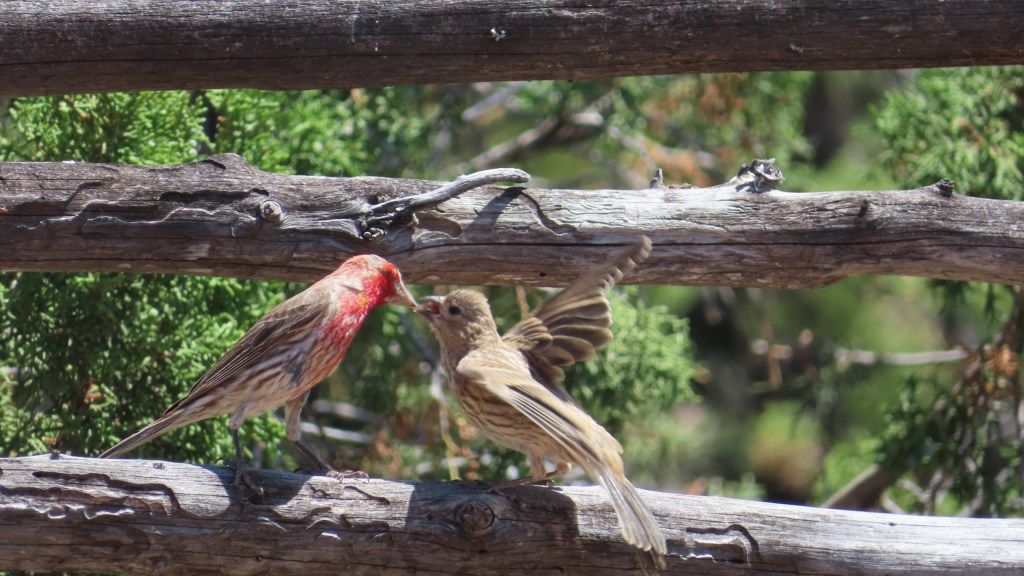
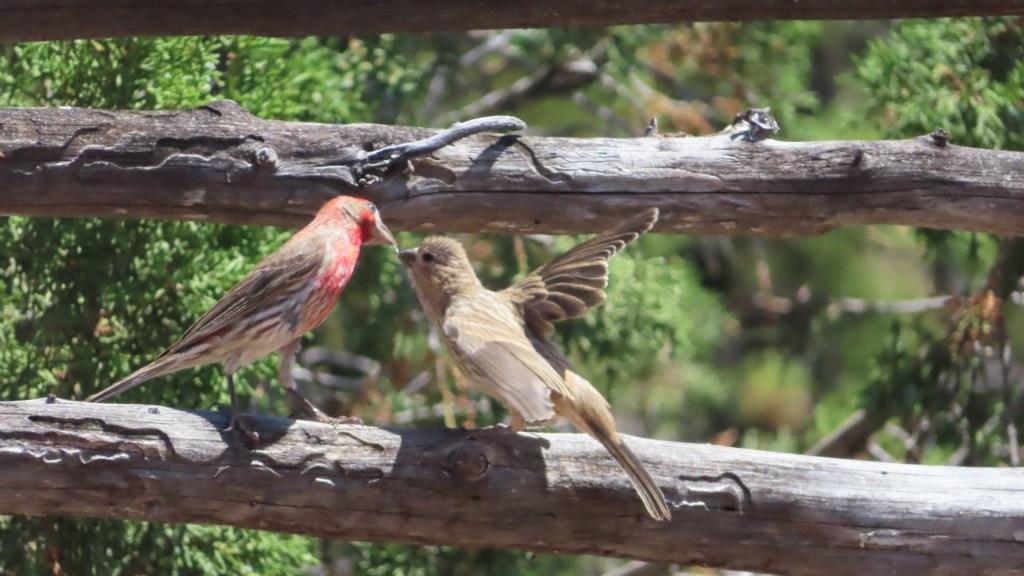
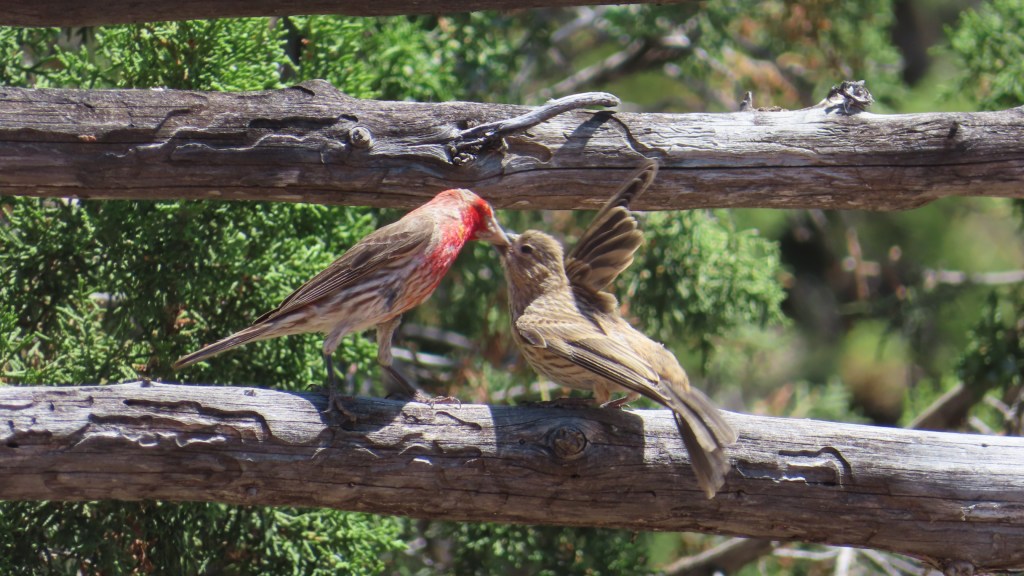
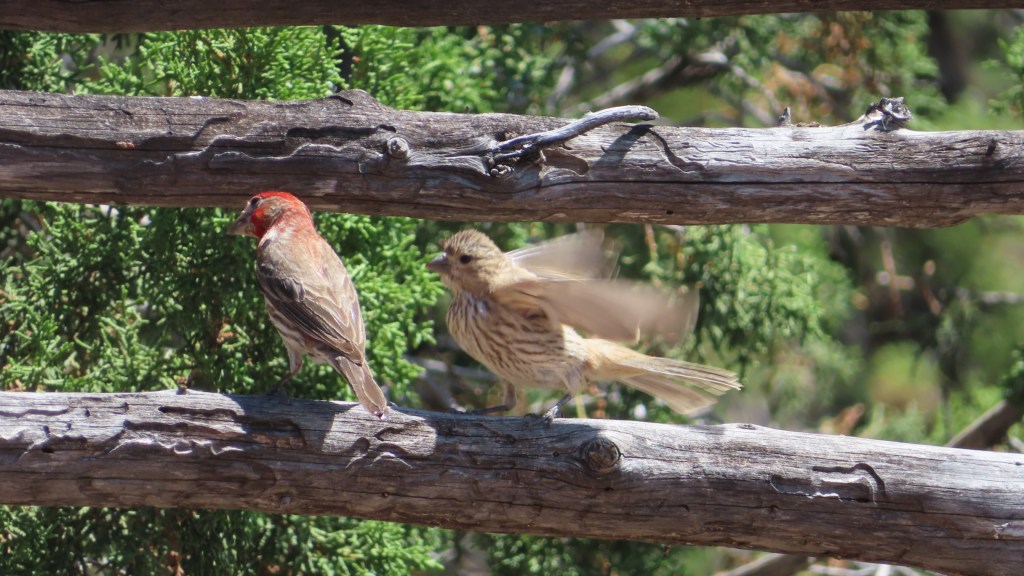
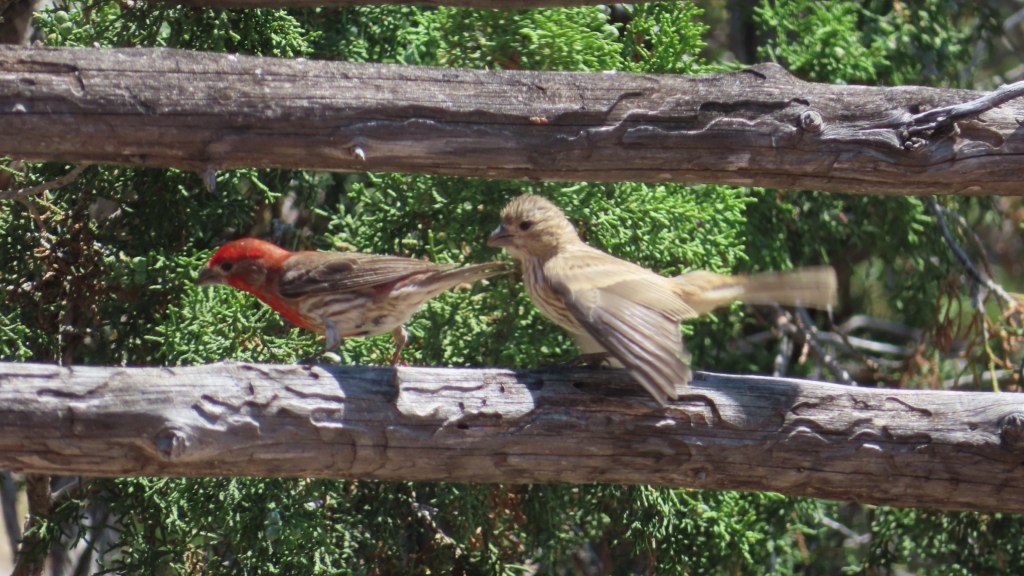
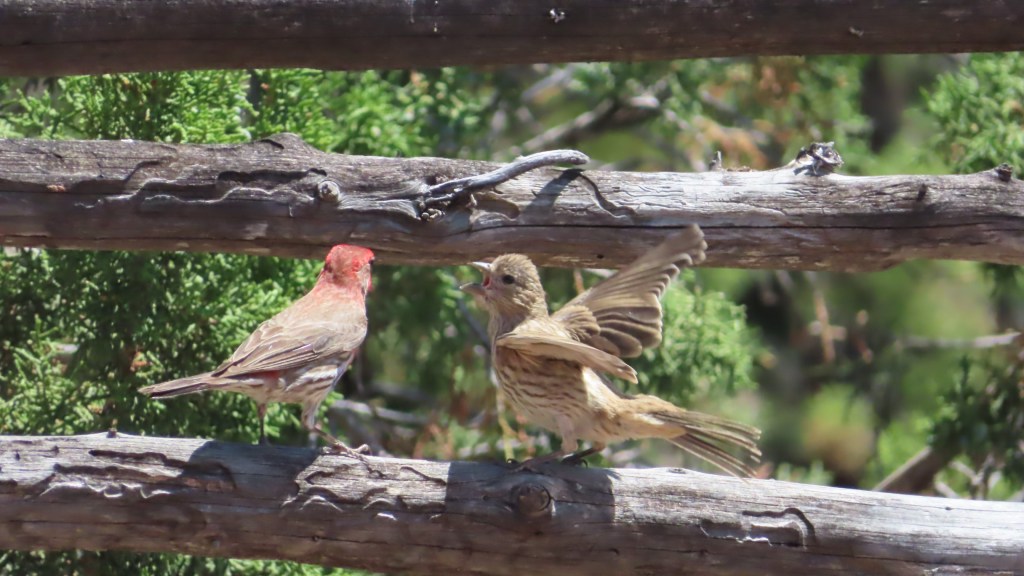
I’ve grown to like the house finches at my place more and more. I see them every day now and guess that some have nested nearby. They often arrive in pairs. When these two perched over the water dish, I thought they were just love birds, but then I started to think it was an adult feeding a juvenile. Whatever they were up to, it looked tough doing it in the wind, at least for the smaller bird. Tough enough just balancing on the fence rail, right? Please correct me if I have misidentified anything.
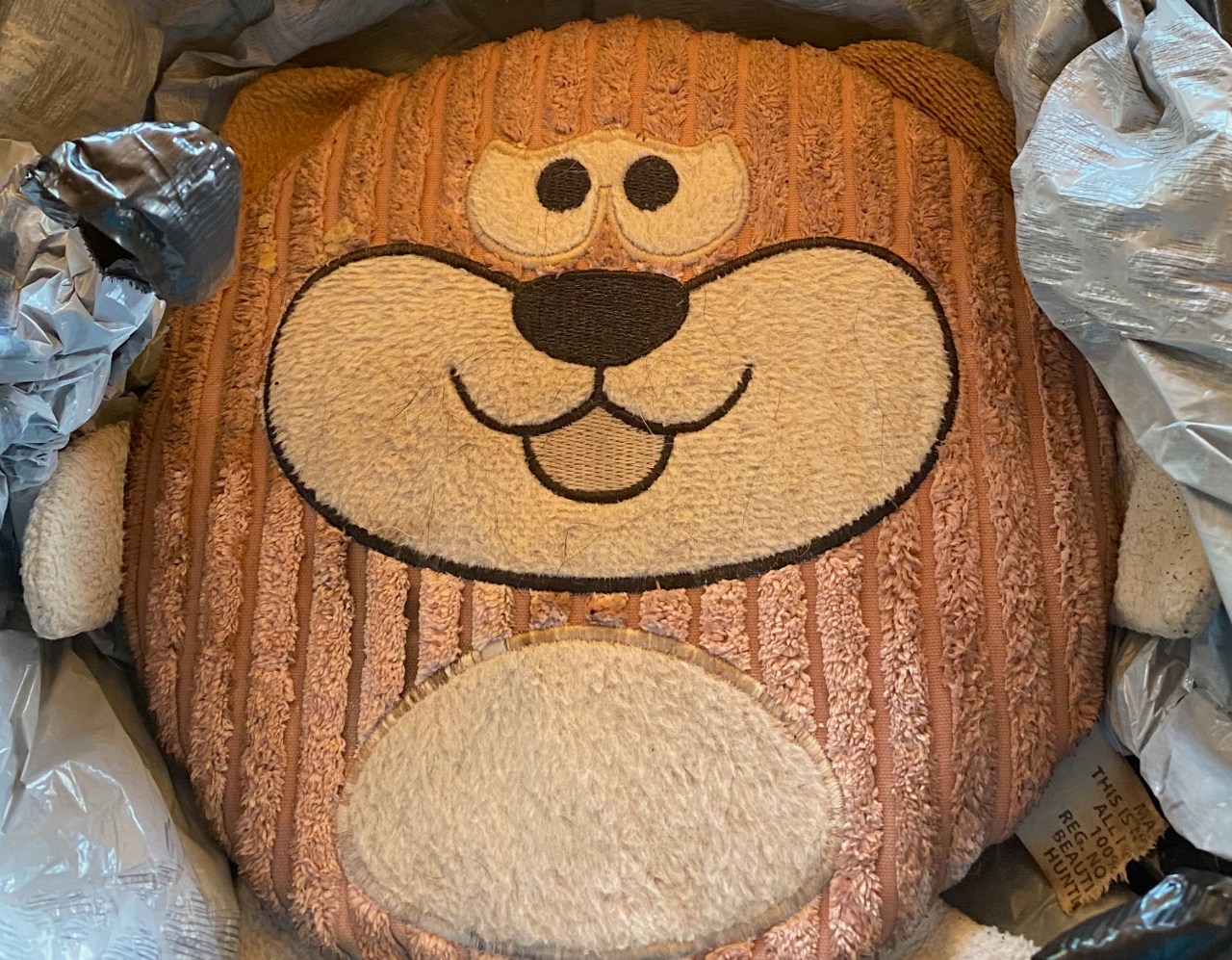
The demon dog toy got me again. But this was the last time.
It most recently had resided on top the of the bedroom bookcase, high out of Cowboy’s reach and any prospective victim’s path. Always hard to see because it’s flat like a whoopee cushion and brown like everything else around here, it had startled me many times with its unsettling squawk.
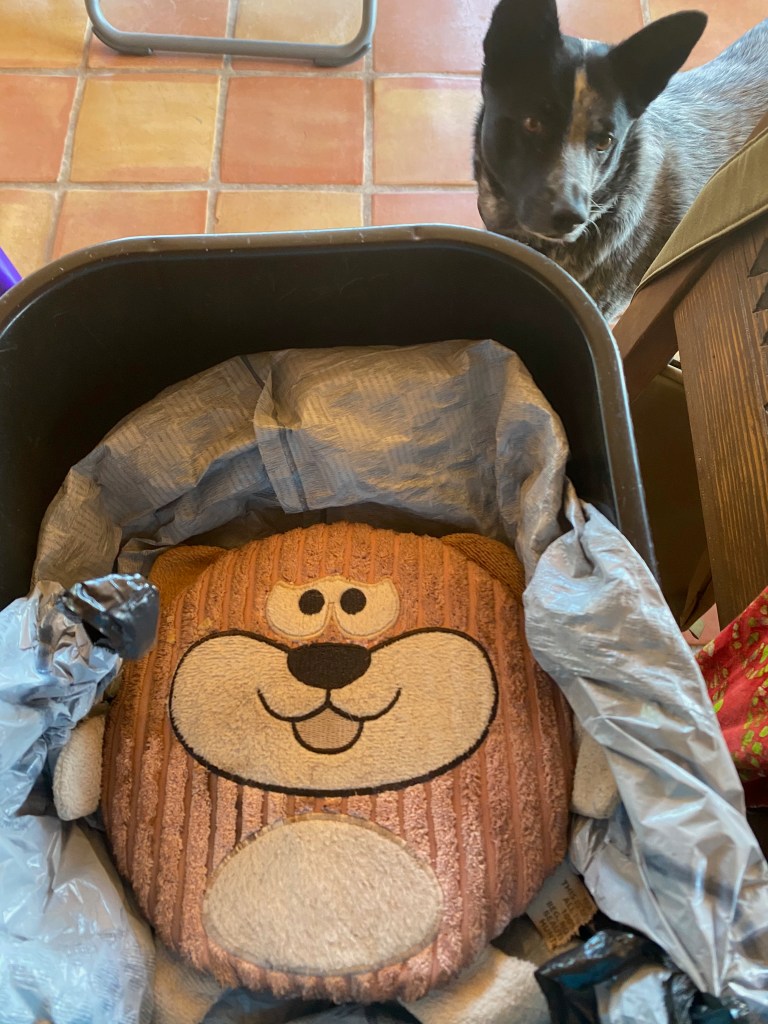
It often got me on the way to the bathroom in the middle of the night, left in the path with questionable innocence by my canine comedian sidekick, Cowboy. One of the highpoints in its residence was Cowboy himself yelping and leaping skyward after stepping on the unseen thing in the after hours – possibly on a mission to once again alarm me.
I spotted it this morning atop the bookshelf, where I’d last hidden it, and decided that disposal should be the better part of valor. Why keep the thing around if I’m constantly moving it out of the way? Thanks to Cowboy, I have found it lying in wait inside and outside, on paths to and from the bed and the route to the bird water — on the floor, on chairs and in the bed.
No more.
So, this morning it went into the trash. Of course, an hour later I added something to the plastic bin, forgetting what lay beneath, and pushed down on the accumulated, non-recyclable waste. The demon toy protested with a veritable last laugh.
I’d long been reluctant to get rid of it. It was well-meaning present to Cowboy from our young friend Sophia, niece of neighbor Lori. I’m sure it was not demonically possessed when Sophia got it. It just turned out to be a too convenient partner for Cowboy in household pranks that were amusing only to him.
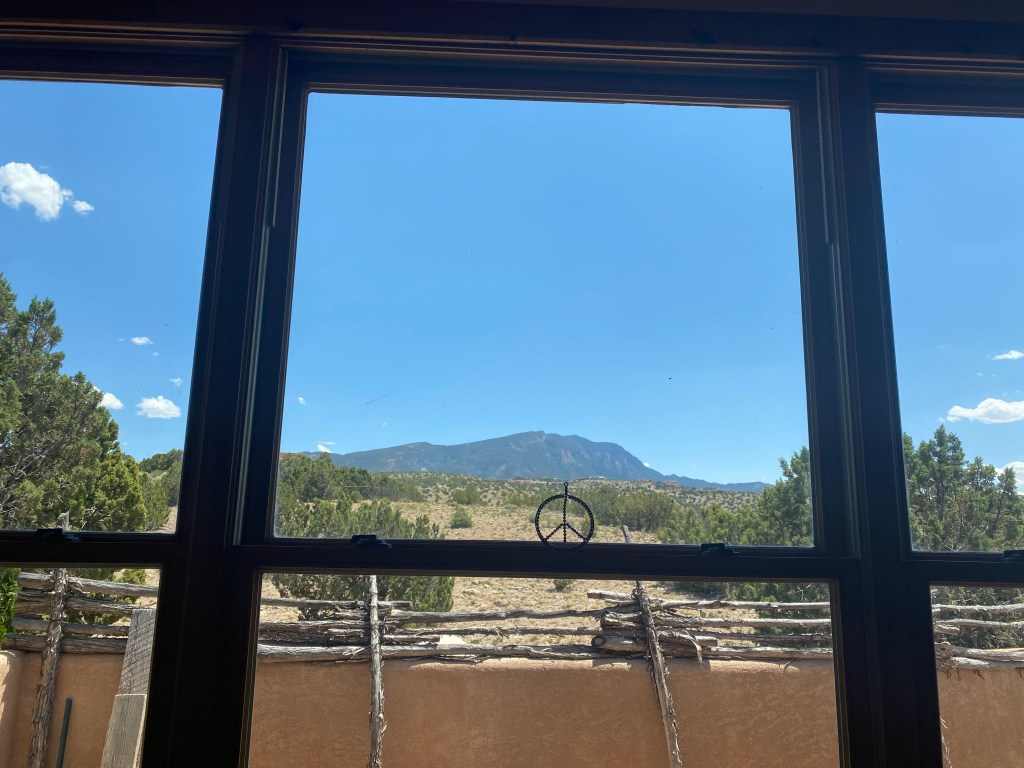
So, sorry to do away with your years-ago gift, Sophia. But Cowboy was there for the ceremony. And rest assured that we still have another of your presents — the beaded peace sign — which causes no trouble and helps keep birds away from the living room windows.
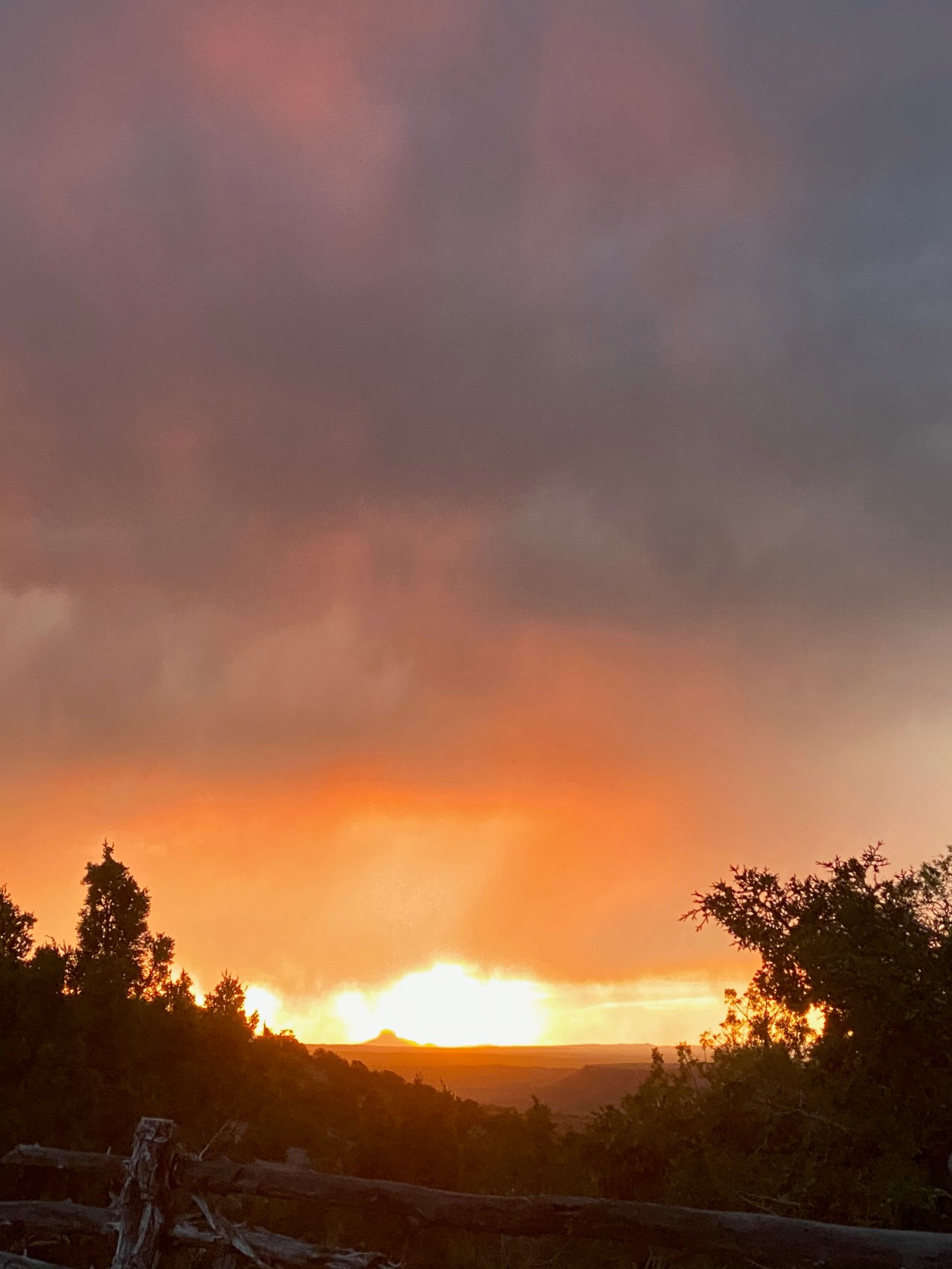
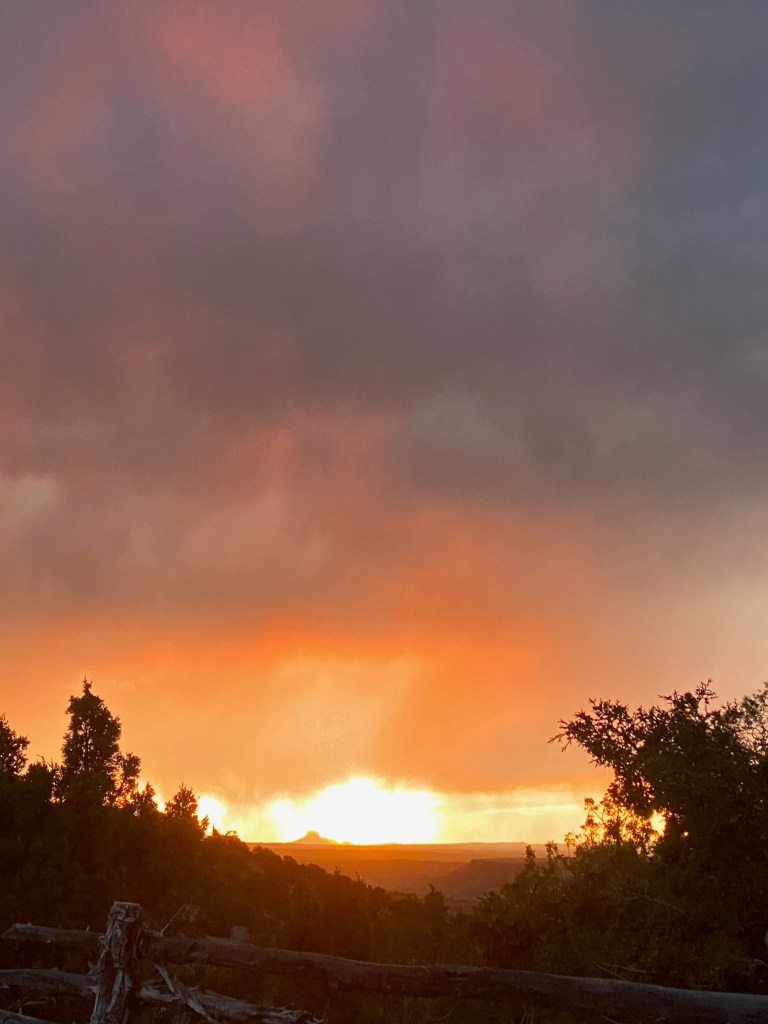


8:07 p.m. May 22, 2020.
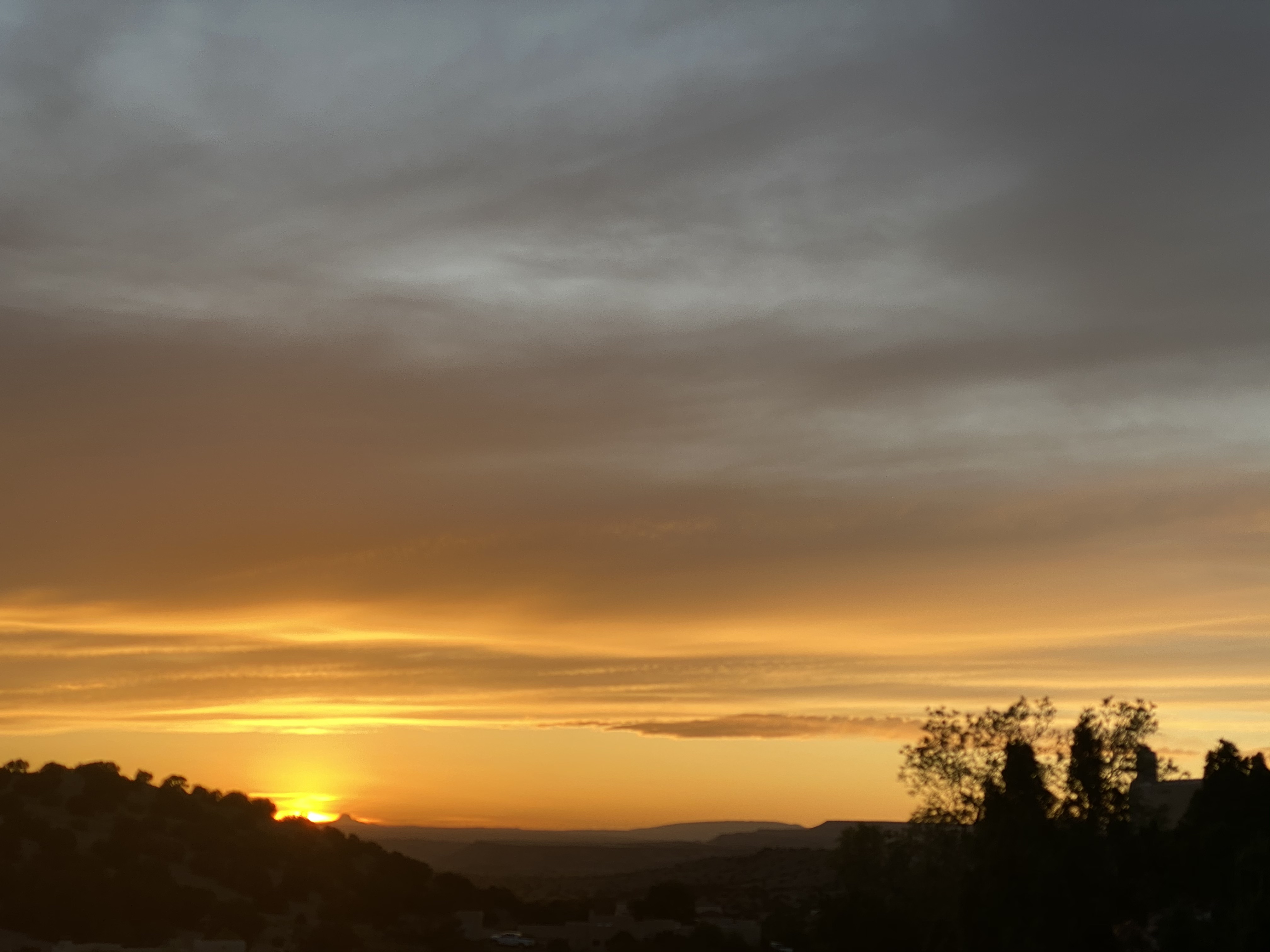
8:22 p.m. May 22, 2020.
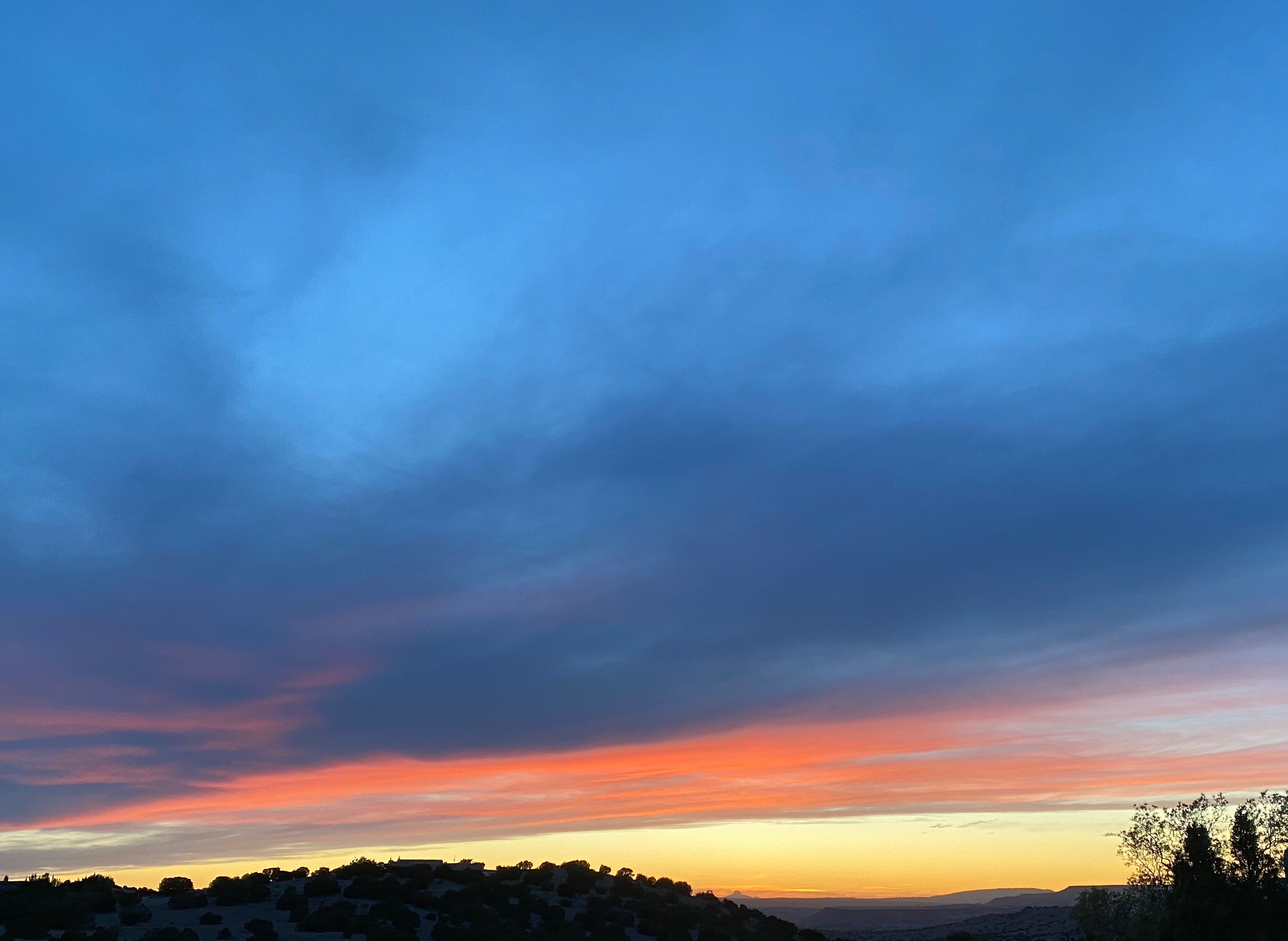

 dreamranch