IMG_0840

I have an obsession I’ll call clean-camp syndrome and it turns out that my habits might match the orderliness of the people who settled my birthplace at the start of the 19th century.

granvilleplat

The founding families of Granville, Ohio, built the first cabin on the village site in November 1805, according to a history I am reading now. They built in the hilly, green country along the west branch of the Licking River, also known as Raccoon Creek, where nearly 150 years later I caught my first fish.

granvillefirstcabin

The second building, a log schoolhouse with neat, square-ended beams, sturdy roof, oil-paper windows and planed puncheon desks fixed to its walls, was completed in January, 1806. A library was completed the following year.

The first pulpit was the stump of the first tree they felled, this history says.

Some community members planted corn while others cut timber for buildings. An abundance of wild turkeys provided much of the meat for the first year.

There were plenty of rattlesnakes and wolves, but settlers were not deterred, drawn there by cheap western land after over-farming around their Massachusetts community of the  same name. Granville grew primly, begun by New Englanders and looking like a New England town, church spires rising over a latticework of compact avenues among the hills and trees.

Their faith was Protestant, although apparently somewhat cliquish: The community was laid out with a central village square — now the intersection of Broadway and Main — with lots at each corner for a church of a different denomination.

I was baptized in a new Episcopal church one door away from the church on the southeast corner of the square, the new church reportedly being built after a feud over the propriety of working on Sundays. My congregational predecessors believed it was OK. To this day,  I am proud to be part of a community, but also like to think of my identity as at least one door away.

st. luke's

And here I am now, on a Sunday in New Mexico, reading Granville: Massachusetts to Ohio by Horace King, a late art professor emeritus at Denison University, doing  some research for something else I’m writing.

granville bookIt’s easier to read about Granville than it is to return. It is too settled for me. My life hardly has been as neat and tidy as its founders made Granville, but I appreciate their self-determination and industry.

Clean-camp syndrome means that I am better off being a dream rancher than a real rancher because I could not ride out for a day’s work without worrying about falling corrals, sagging gates or peeling paint. Domestically, it is probably true that the Martha Stewart in me exceeds the John Wayne. And Granville is the beginning.

The first place I lived was in married student housing on the Denison University campus in Granville, where my father was an undergraduate. In 1949, the dormitory-like rows of post-war buildings were known as the Enchanted Cottages.

Enchanted_cottages, Denison University

We lived in several places in Granville — briefly in the Bjelke home on South Main Street, on Pearl Street and the Kappa Sigma house on Broadway for part of a summer, when my father was both a brother and caretaker. All this was before the second grade, which meant a move to the less settled world of Las Vegas, New Mexico.

Granville is  where I have my first recollections of smells, my first sense of words, my first sense of sadness because my mother insisted on reading “The Little Match Girl” to us on Christmas Eve.

It is the setting for my first and still recurring nightmare. I suspect my father, as a stunt, let the baby stroller roll free down a steep, curving, brick drive to the university, showing off by catching it before a crash.

It’s where I had my first crush, although the dalliance might have lasted only the length of a school bus ride. Her father ran either Taylor’s or Scott’s drug store, across Broadway from each other, and it’s unclear in my memory whether the crush was linked to dreams of special soda fountain access.

Granville, as I said, is where I caught my first fish, although it was returned to Raccoon Creek after swimming around for a while, confused, in my grandparents’ kitchen sink, just up the hill on Main Street. My father said it was a sucker.

It’s where I remember having my first soda fountain Coca Cola in a bell-shaped glass, sweating with crushed ice.

It’s where I wandered in the garden with my grandfather and a salt shaker borrowed from the kitchen, plucking fat tomatoes from the vine and downing them on the spot, like big, sloppy apples. That’s him below, John L. Bjelke, sitting on a bench on Broadway, near the intersection of Broadway and Main. His home and garden were a few doors down S. Main.

Scan

Granville is where I first glimpsed undercurrents of other histories when I was shown the secret doorway of an Underground Railway hiding place in the old fraternity house.

It’s where I first wore rubber boots and a yellow slicker in the rain; where I studied the Farmer’s Almanac, suspended by a string in my grandfather’s lavatory, down near the coal chute in his basement; came to know Camel cigarette packs and Rotary watch chains; where I slurped brassy-tasting water from green, iron fountains on Broadway; where my grandfather would put pennies in glass-topped machine to give us handfuls of salty, shelled peanuts on the porch of the feed store by the railroad tracks, leaving me with a lifelong association of peanuts, rabbit pellets, diesel fumes and Ralston Purina; where I first fancied fire trucks; poked oak logs in a brick fireplace; turned up my nose at anchovy paste; learned to play Mumblety Peg.

And I am lucky I did not become Wimpy, because it also is where I first smelled fragrant hamburger grease, wafting over the sidewalk from a small diner’s ventilation fan on the Main Street side of the Opera House.

It is where I first heard stories, told by my grandfather, read by my mother; and poetry, metrically, from my deep-voiced father.

It’s where I first sledded in winter snow, careening belly-down, nose-first past the 19th Century graves of the Old Colony Burying Ground.

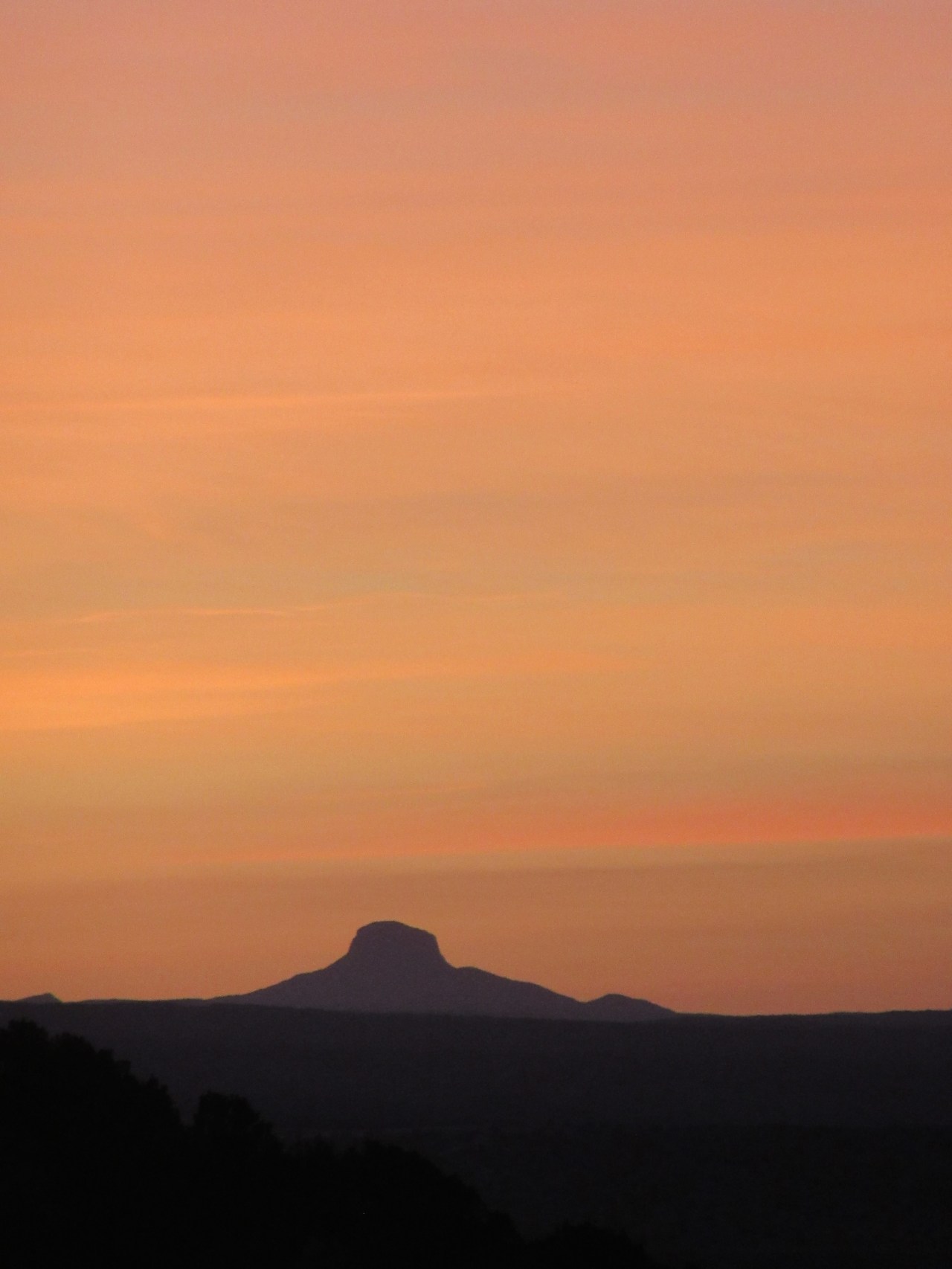
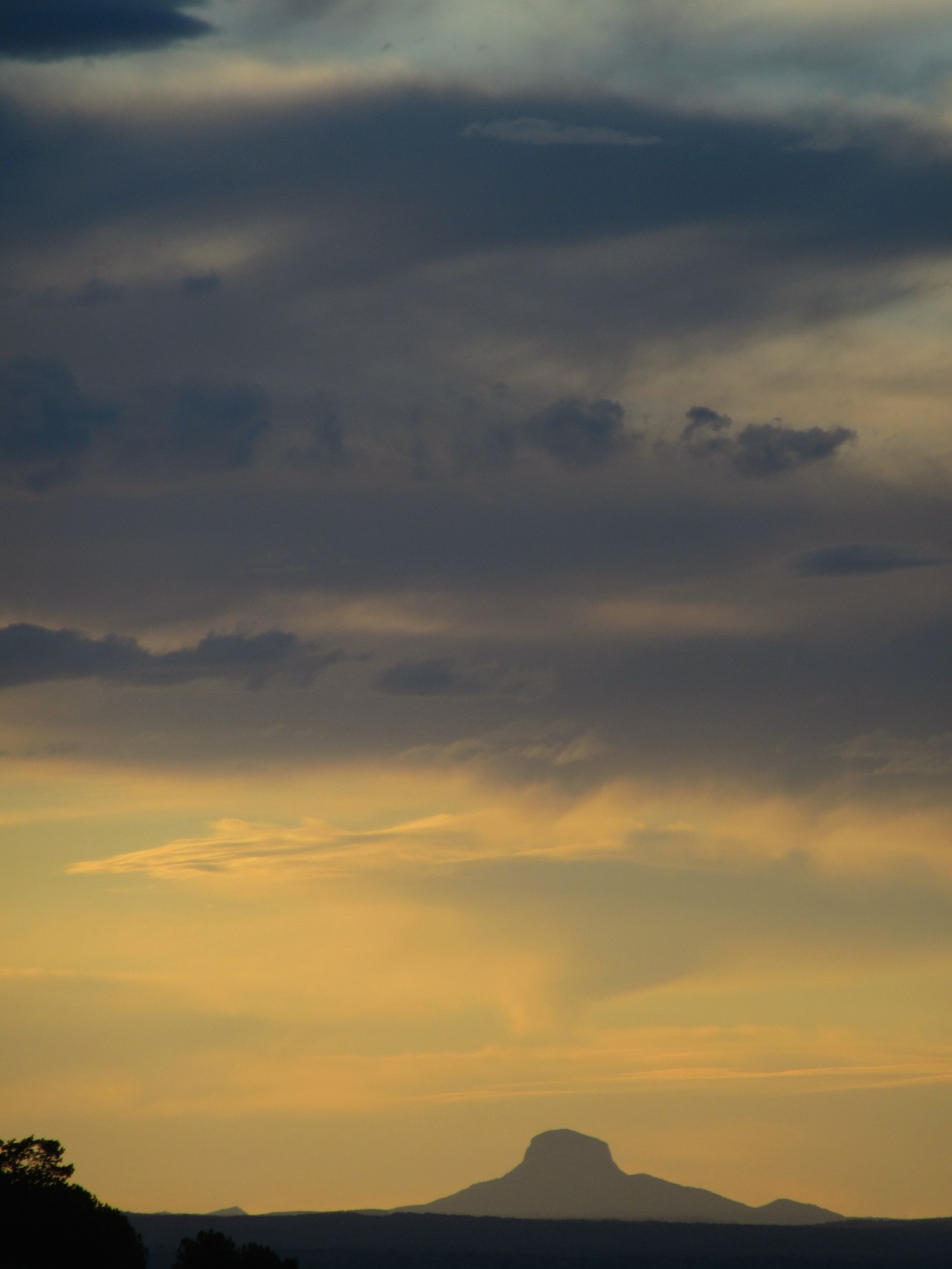
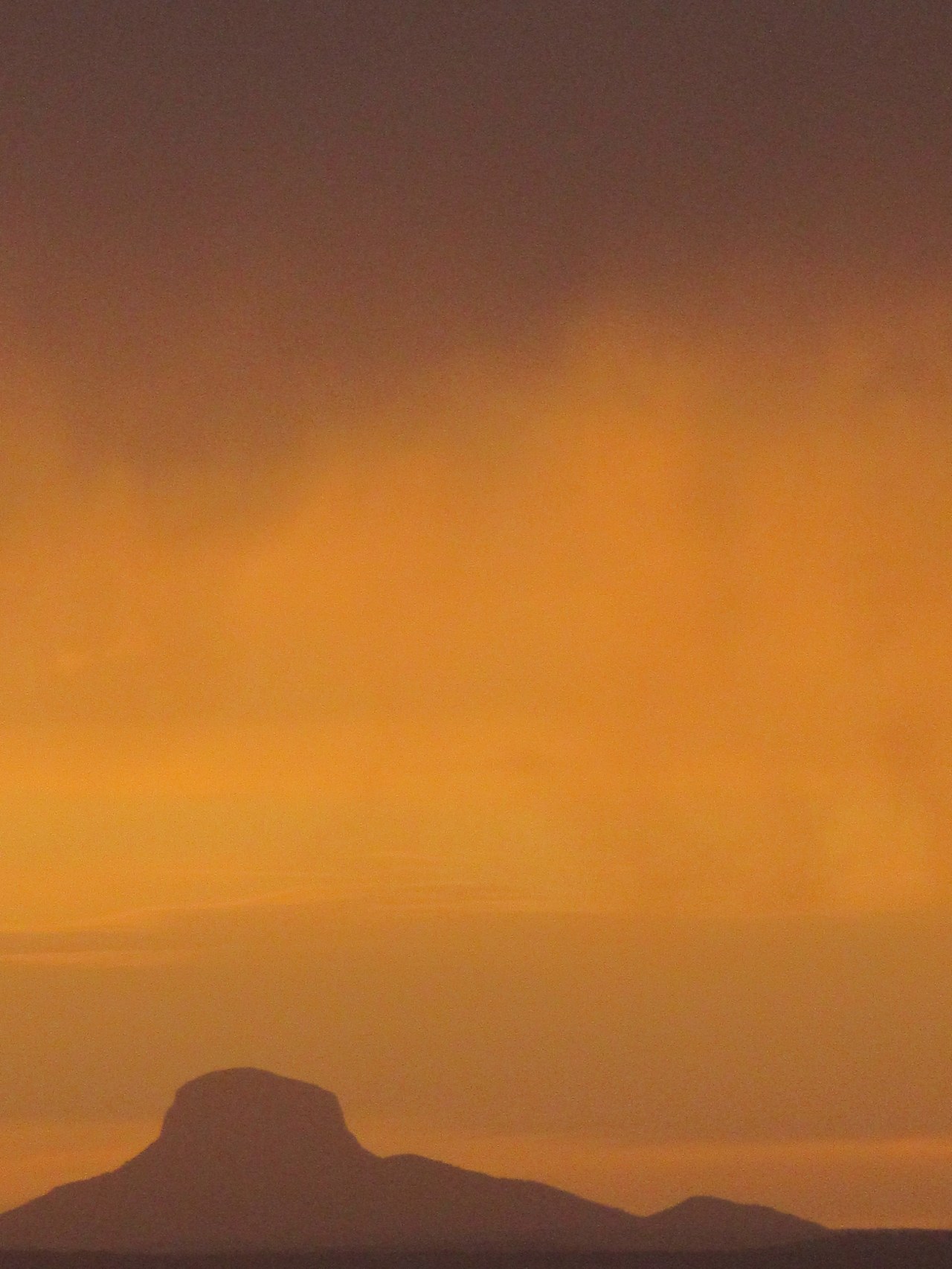
For a moment, I wondered if the neighbor’s barn was on fire.

IMG_2937

Then — though thick-headed with early-season allergies — I realized maybe something can be said for wind-driven dust, at least in the evening, after a couple of belts of Flonase.

IMG_2927

And, if you don’t believe me about allergies, here’s a pollen-loaded juniper at dreamranch on Feb. 18.

IMG_2918

Frankly, it seems to me we have redder sunsets more often these days and  pollen-bombing that I used to associate with March now comes in February. I’m thinking this is what climate change does to sunsets and poetry.


celeb  How to be recognized as a celebrity:

  1. Wear giant sunglasses while walking through LAX in an abundance of outerwear, partially concealing a small dog.
  2. Carry a lidded Starbucks cup as you stroll through the Village with your spouse or partner in giant sunglasses, sloppy jeans and an abundance of outerwear.

How to prove your commander-in-chief and foreign policy chops when running for the Republican presidential nomination with no prior foreign policy or government experience:

  1. Go nuclear on a prominent television news anchor.
  2. Go nuclear on a newspaper editor in a small New England state.
  3. Refuse to debate when you suspect your opponents will go nuclear on you.

IMG_2470

I can report, after a year of apparently successful cancer treatment, that going to the dentist feels like a reaffirmation of life.

Never has an hour of hanging upside down with my jaw propped open cheered me as much as it did yesterday.

I shared this with the western bluebirds enjoying fresh water at my place this morning while I drank coffee.

I now return to Trumpmania on CNN, not entirely convinced it is the end of the world.

IMG_2402

Sometimes my nobility is as thin as the stucco on my fake adobe house.

I made it through our annual homeowners’ meeting without a scratch — probably because everyone studiously avoided discussing free-roaming horses and Donald Trump — and ducked assignments to any of our civic boards.

I soon was back in my life as a public lands miser, walking on the 240-acre inholding just beyond my back door, hoping a public-minded government agency doesn’t trade it off to a subdivision developer and turn me into a backyard Bundy. Shouldn’t my subdivision be the last?

We talked about recycling and water consumption and I made as stab at cleaning up my own place when I got back from the walk. I plugged my fancy Dyson into what I’m afraid might be coal-fired electricity and admitted to myself that if I bought the vehicle of my dreams, it would be a Chevy Suburban.

As the full moon rises, I photograph a speck of semi-rural suburban life on a hazy horizon.

This morning’s visitors included these guys, and it was especially good to see the larger of the two — the Northern Flicker — in a circumstance other than a startling nighttime encounter on the front porch.

The smaller Downy (I think) Woodpecker usually keeps his distance and even seems to prefer bugs on trees to the seed I put out for others.

The flicker, or flickers before him, has for 24 years shacked up during the winter months under the beams of my front portal. But I forget he is there and there often is commotion — homeowner ducking, bird flapping away — when I wake him coming and going in the dark.

The little woodpecker has been around for a couple of months. The flicker seems to have arrived more recently arrived, but he seems settled in his winter digs now. He or fellow flickers keep coming.

I suspect there is some bird sign on my place that in effect says, “Good place for flickers, despite resident rube roaming around in the dark.”

I dreamed a famous billionaire real estate developer appeared before the Santa Fe historical styles committee to seek approval of his proposed Torreón de Billy the Kid Hotel and Casino in an old neighborhood near the Roundhouse.

The New York developer, who touted Hispanic influences on his Florida resort, wore a Billy the Kid-like hat. Tufts of orange hair stuck out beneath the narrow brim. Stenciled on the crown were the words, “Make the Barrio de Analco Great Again.”

In my dream, he was leasing the property along the south side of the Santa River from the state of New Mexico, which recently had acquired it a complicated swap involving an Indian tribe, former apple growers, one of Santa Fe’s most famous families and a beloved hamburger joint.

The Legislature was meeting in Santa Fe and the state budget was in trouble. The developer and supporters argued that a cut of the money paid to the state by the hotel-casino would help replace declining oil and gas revenues.

Also, a small oilfield might be developed on the river bank property, the developer mentioned briefly, near the end of his presentation.

“This would be huge,” he said, citing the potential financial reward to Santa Fe and the state.

The round, 10-story hotel-casino tower would be in keeping with other architecture in the neighborhood, including the state Capitol, the developer told the committee. It would feature cracked plaster, leaky, flat roofs and small, barred windows.

It would be modeled on a famous 19th century torreón in New Mexico’s Lincoln County, possibly once visited by Billy the Kid, although compliant with “Recent Santa Fe Style.”

When it was disclosed that the stucco on a large wall around the torreón —  to conceal the parking lot and the possible oilfield — would be synthetic, a committee member suggested this could be seen as a slap in the face of the original Tlaxcalan people of the barrio, who had plastered their buildings with mud.

“I have discussed this with my many Tlaxcalan friends,” the developer responded.

“I have a great relationship with the Tlaxcalan people,” he said.