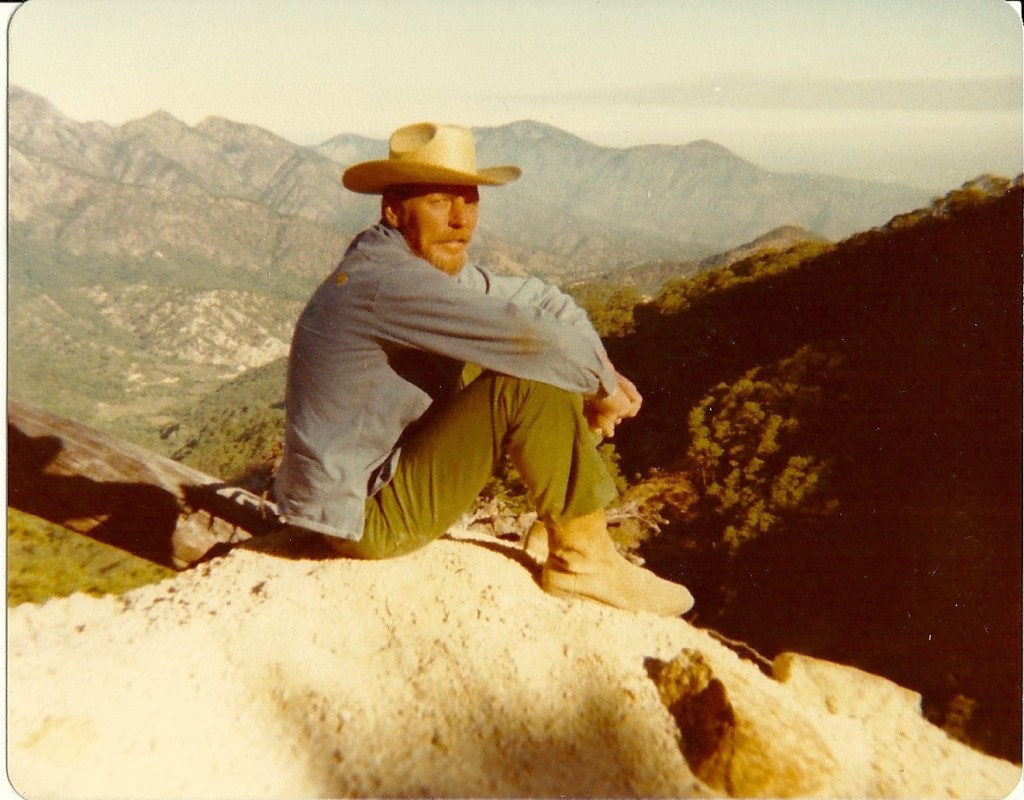
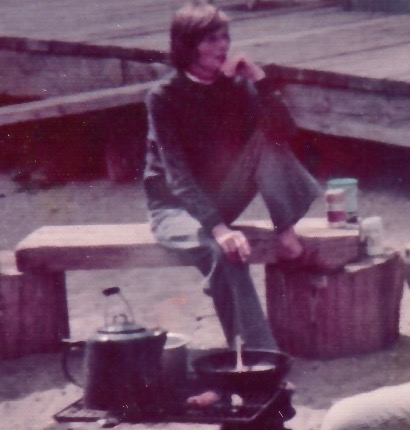
It was in a lantern-lit tent at 11,000 feet in the eastern Sierra Nevada while constructing a five-mile section of the Pacific Crest Trail in 1972. We started in July and got snowed out of our 15-man camp at Chicken Spring Lake in October. Our section of the trail ran from Cottonwood Pass to Siberian Outpost.
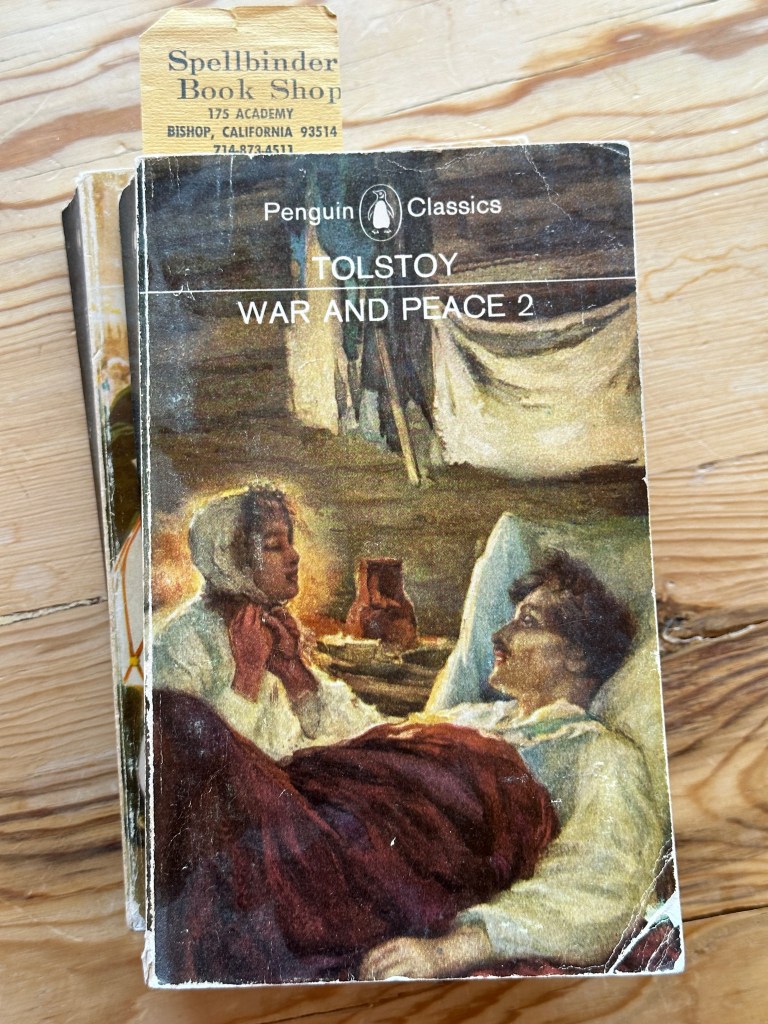
I usually was too tired and cold to read much at night and sometimes I had headaches from being around dynamite and C4 plastic explosive. Maybe rock bars and Cobra drills too. But I figured it was a good time to tackle War and Peace, even though the mere pronunciation of names gave me trouble.
I honestly can’t remember if I finished both volumes and all 1444 pages of this paperbound edition purchased in Bishop. I’m sure I made it all the way through Volume 1 but the other day I found the bookmark from the Spellbinder Book Shop between Pages 998 and 999 in Volume 2.
Chicken Spring Lake, our campsite from July into October, 1972, 40 years later.
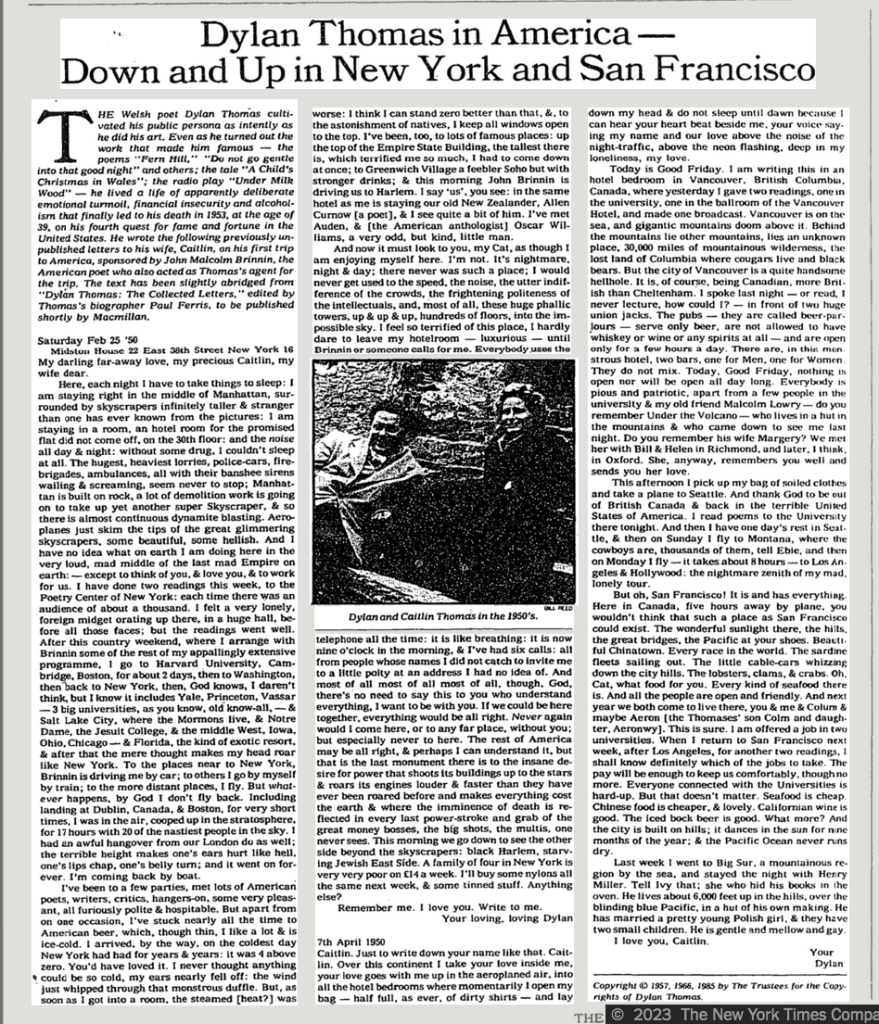
I stumbled across this during my morning rabbit hole hopping and am reprinting it here because I like his descriptions of San Francisco and New York. Enlarge the type to read.
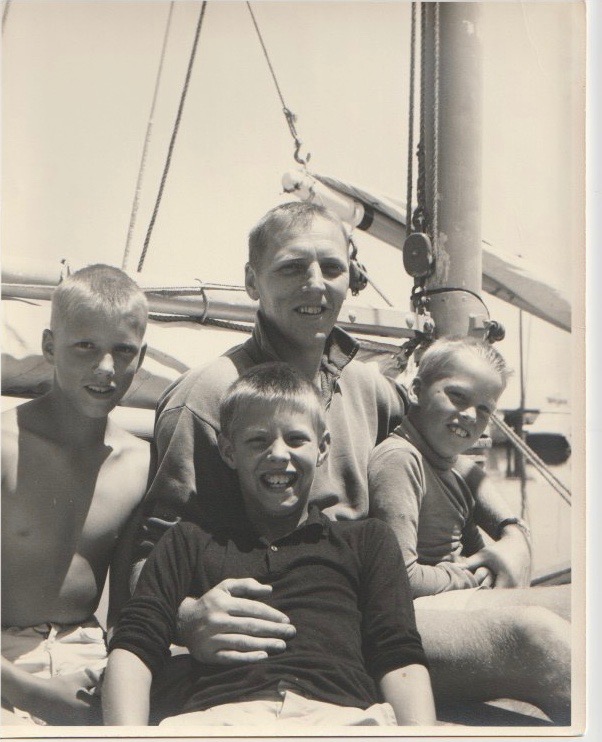
We’re not all still around but I like to think of us as still together.
Brothers John, Pat and Rob and father, Bob Robertson. Aboard Bob Hardin’s Adventurous, Sausalito, California, early 1960s.
This was a good day, reunited after chaotic separations, rough seas, relocated suddenly to Sausalito from Santa Fe. I like these guys despite all the strains, each of us needful in big ways, father included. In my mid-70s, Dad and Rob gone, I still feel close. I’m ashamed of my bullying, self-centered ways but hope that one day, ignoring any uneven scores, there will be forgiveness all around.
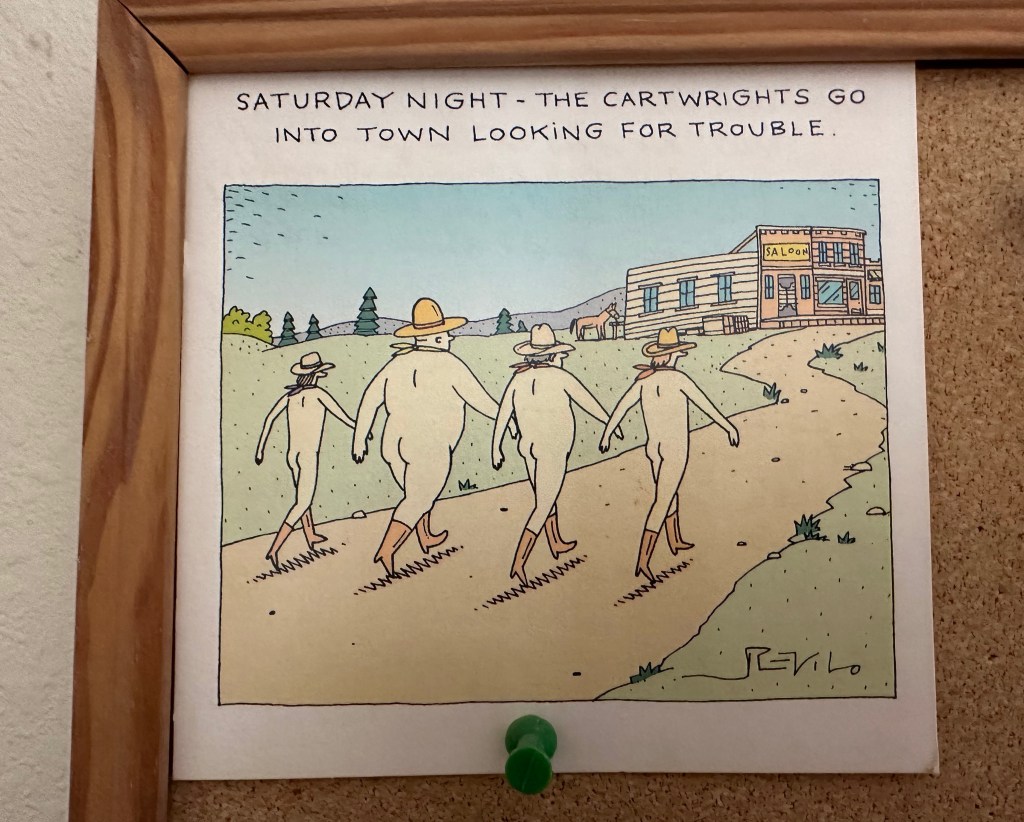
Here’s the sillier side of it, maybe. It’s a birthday card from a partner 21 years ago. She included a great message for the moment but it also makes me think of the Robertson boys. We laughed a lot and made our own way.
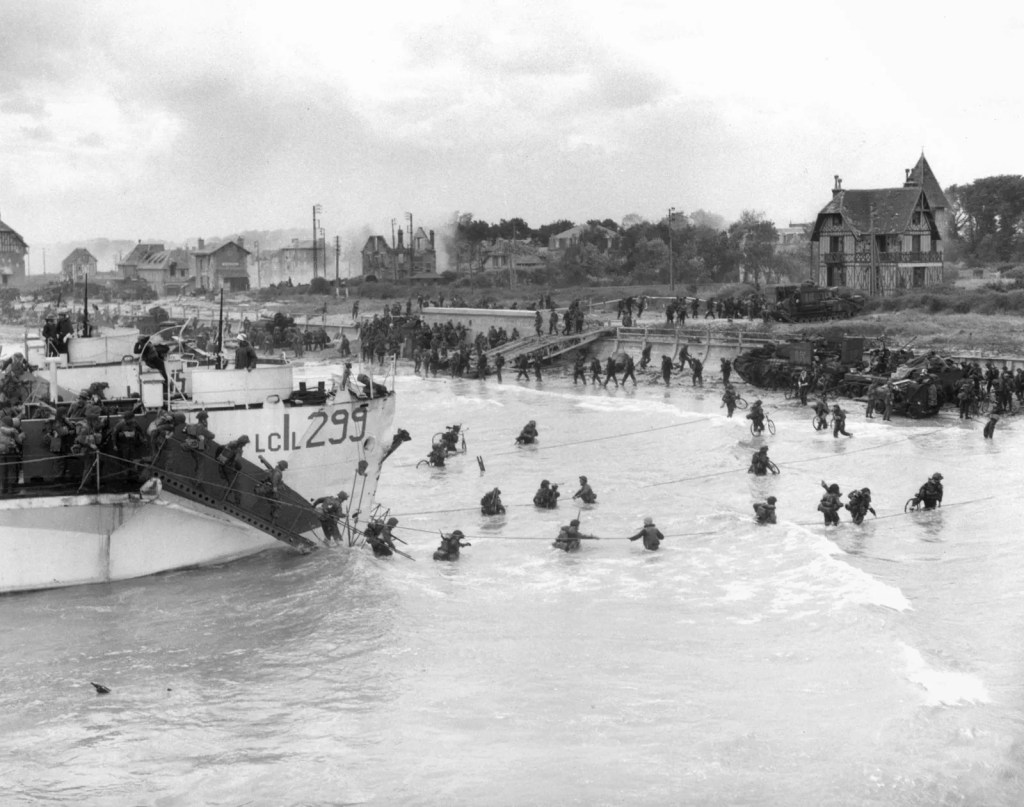
This is from Part 1 of A.J. Liebling’s World War II report for The New Yorker on the allied invasion of Normandy, published June 23, 1944, a few weeks after the June 6 invasion began. Liebling was aboard a large infantry landing craft (LCIL) for the invasion.
“After the services, printed copies of Eisenhower’s message were distributed to all hands on board. Members of our ship’s crew went about getting autographs of their shipmates on their “Eisenhowers,” which they apparently intended to keep as souvenirs of the invasion. Among the fellows who came to me for my signature was the ship’s coxswain, a long-legged, serious-looking young man, from a little town in Mississippi, who had talked to me several times before because he wanted to be a newspaperman after the war. He had had one year at Tulane, in New Orleans, before joining up with the Coast Guard, and he hoped he could finish up later. The coxswain, I knew, would be the first man out of the ship when she grounded, even though he was a member of the crew. It was his task to run a guideline ashore in front of the disembarking soldiers. Then, when he had arrived in water only a foot or two deep, he would pull on the line and bring an anchor floating in after him, the anchor being a light one tied in a life jacket so that it would float. He would then fix the anchor—without the life jacket, of course—and return to the ship. This procedure had been worked out after a number of soldiers had been drowned on landing exercises by stepping into unexpected depressions in the beach after they had left the landing craft. Soldiers, loaded down with gear, had simply disappeared. With a guideline to hold on to, they could have struggled past bad spots. I asked the boy what he was going to wear when he went into the water with the line and he said just swimming trunks and a tin hat. He said he was a fair swimmer.”
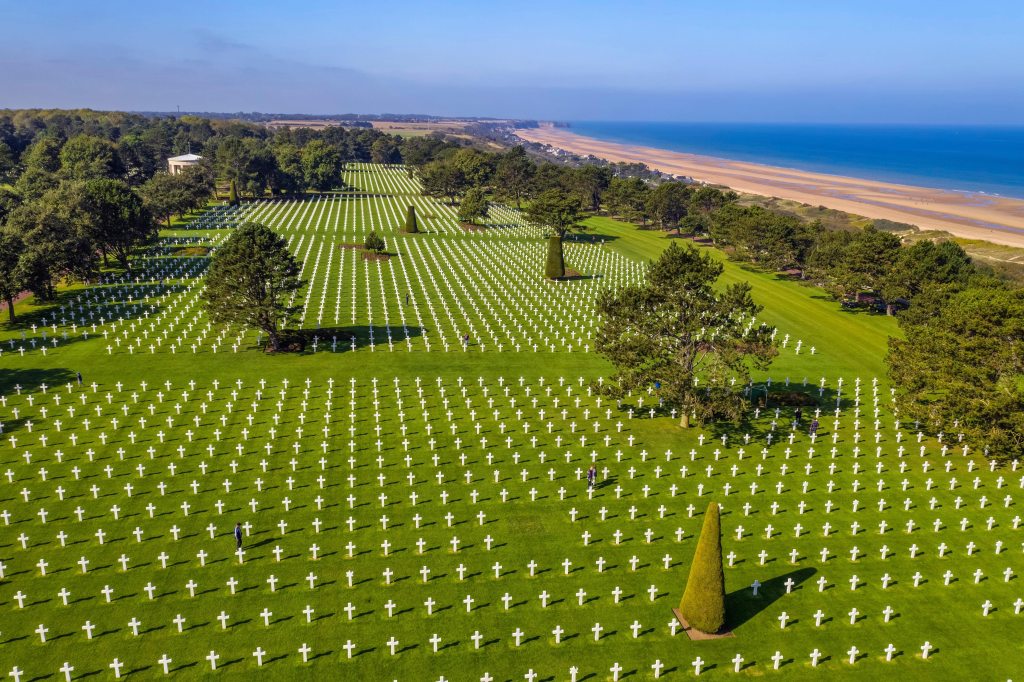
Normandy American Cemetery. Hemis/Alamy
The following is from Part 2 of Liebling’s reporting, after he had spoken to the captain of the LCIL (Landing Craft Infantry Large) about losses. The ship had been assigned to land at “H Hour plus sixty-five,” one hour and five minutes after the first assault soldier got ashore.
The captain said the young coxswain who wanted to be a newspaperman was among the men killed in that first day of the invasion.
“Couldn’t he get back?” Liebling asked, remembering the young man’s assignment to be the first out of the ship, running a guideline into the water for the disembarking soldiers.
“He couldn’t get anywhere,” the captain said. “He had just stepped off the ramp when he disintegrated,” apparently struck by a German high explosive shell.
Here is a photograph from The New Yorker of an LCIL landing, showing the troop ramps from shop to water.
This was General Dwight D. Eisenhower’s message to the Allied forces:
SUPREME HEADQUARTERS ALLIED EXPEDITIONARY FORCE
Soldiers, Sailors, and Airmen of the Allied Expeditionary Force!
You are about to embark upon the Great Crusade, toward which we have striven these many months. The eyes of the world are upon you. The hope and prayers of liberty-loving people everywhere march with you. In company with our brave Allies and brothers-in-arms on other Fronts, you will bring about the destruction of the German war machine, the elimination of Nazi tyranny over the oppressed peoples of Europe, and security for ourselves in a free world.
Your task will not be an easy one. Your enemy is well trained, well equipped and battle-hardened. He will fight savagely.
But this is the year 1944! Much has happened since the Nazi triumphs of 1940-41. The United Nations have inflicted upon the Germans great defeats, in open battle, man-to-man. Our air offensive has seriously reduced their strength in the air and their capacity to wage war on the ground. Our Home Fronts have given us an overwhelming superiority in weapons and munitions of war, and placed at our disposal great reserves of trained fighting men. The tide has turned! The free men of the world are marching together to Victory!
I have full confidence in your courage, devotion to duty and skill in battle. We will accept nothing less than full Victory!
Good luck! And let us beseech the blessing of Almighty God upon this great and noble undertaking.
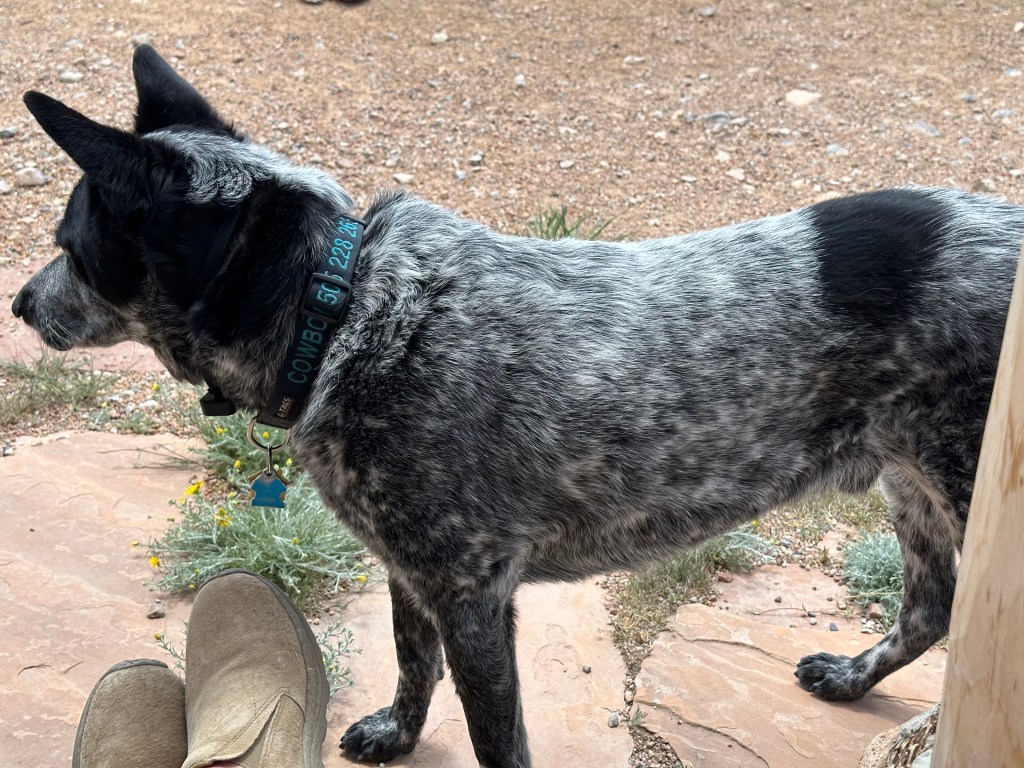
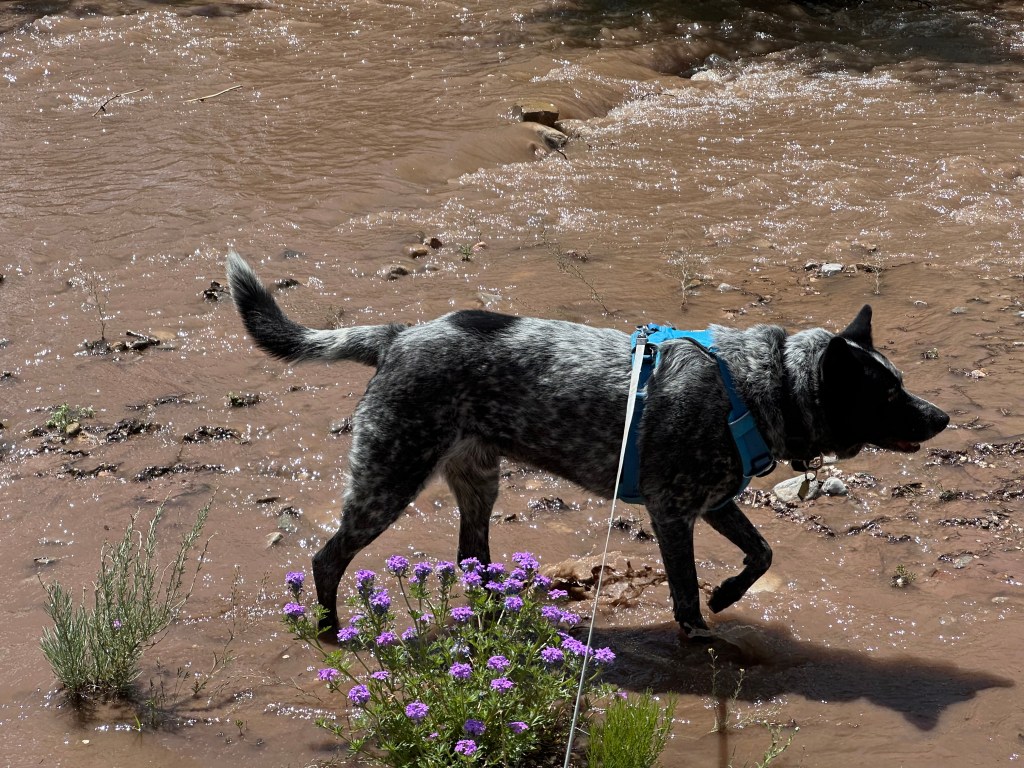
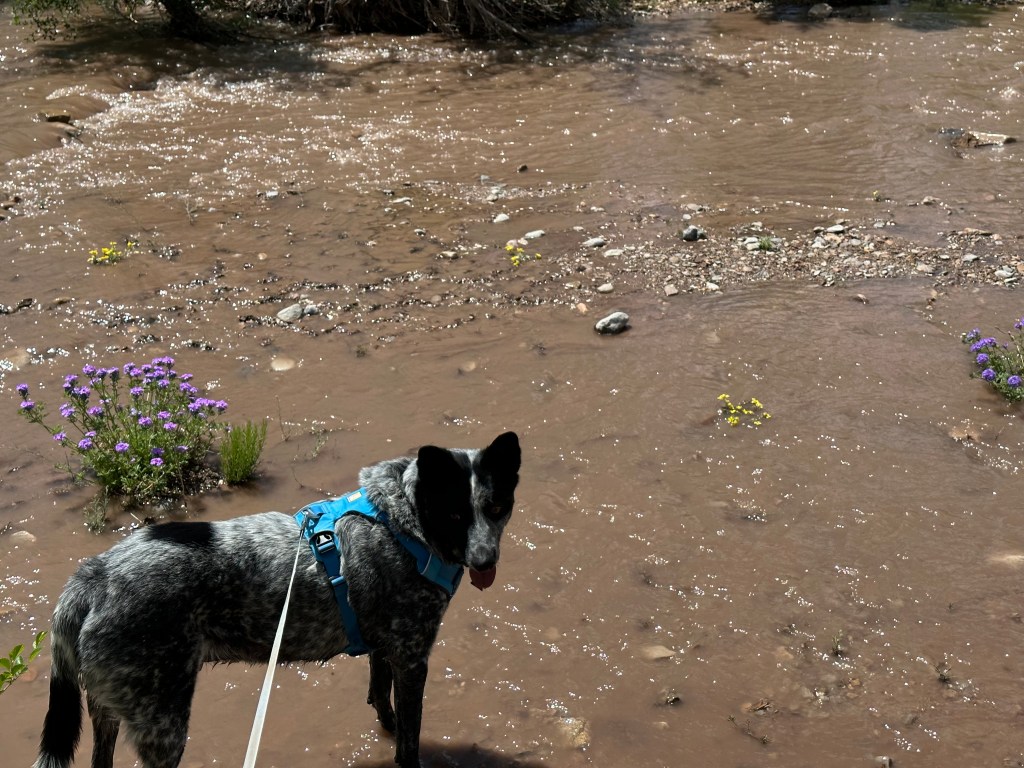
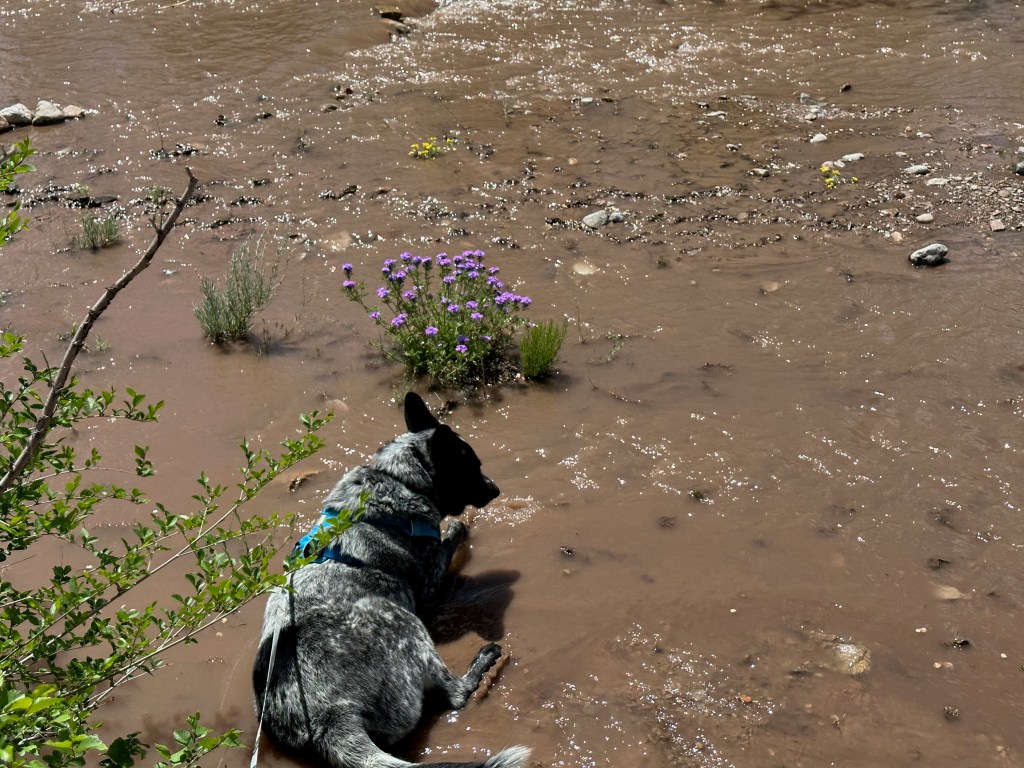
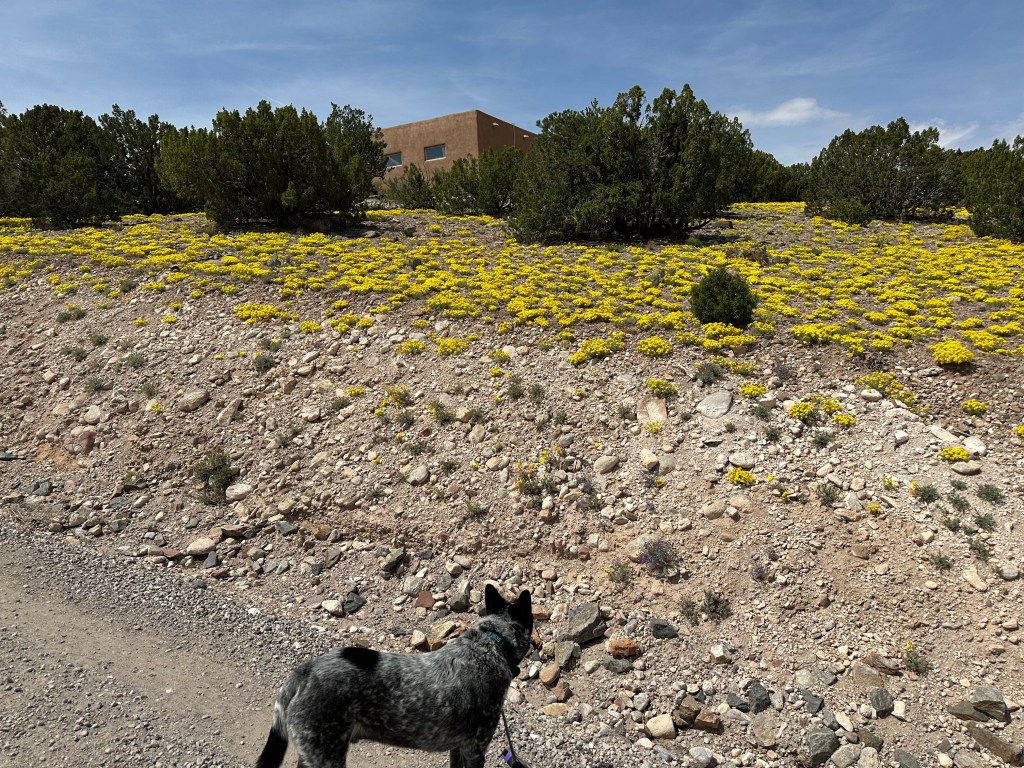
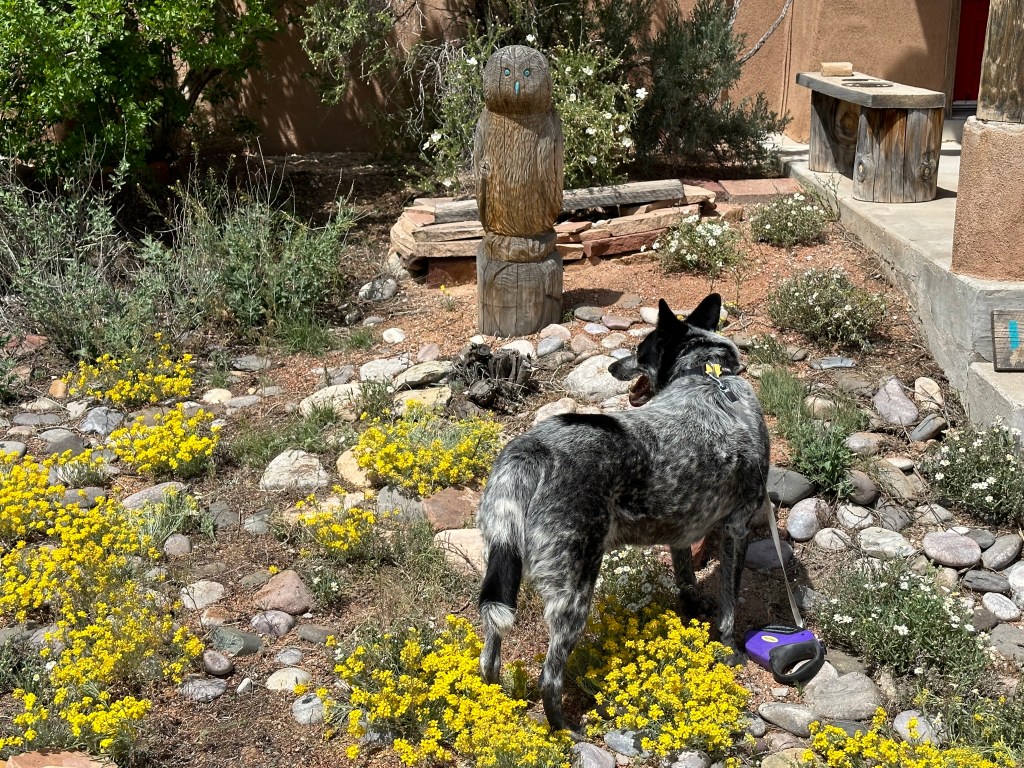
Cowboy wasn’t feeling great this morning but he perked up as any New Mexican would at the sight of spring runoff in lower Las Huertas Creek. The creek ran more often during the lifetimes of my three previous dream ranch dogs, Sadie, Molly and Cooper. Even Orno Creek just below us used to run most springs. Orno retained a pool and Sadie and Molly cooled off in it after hikes. Kind neighbors keep a pool for Cowboy on the bank of Las Huertas but after seven dry years here I think this was the first time he’d seen the creek flowing below the canyon, not counting flash floods.






 dreamranch