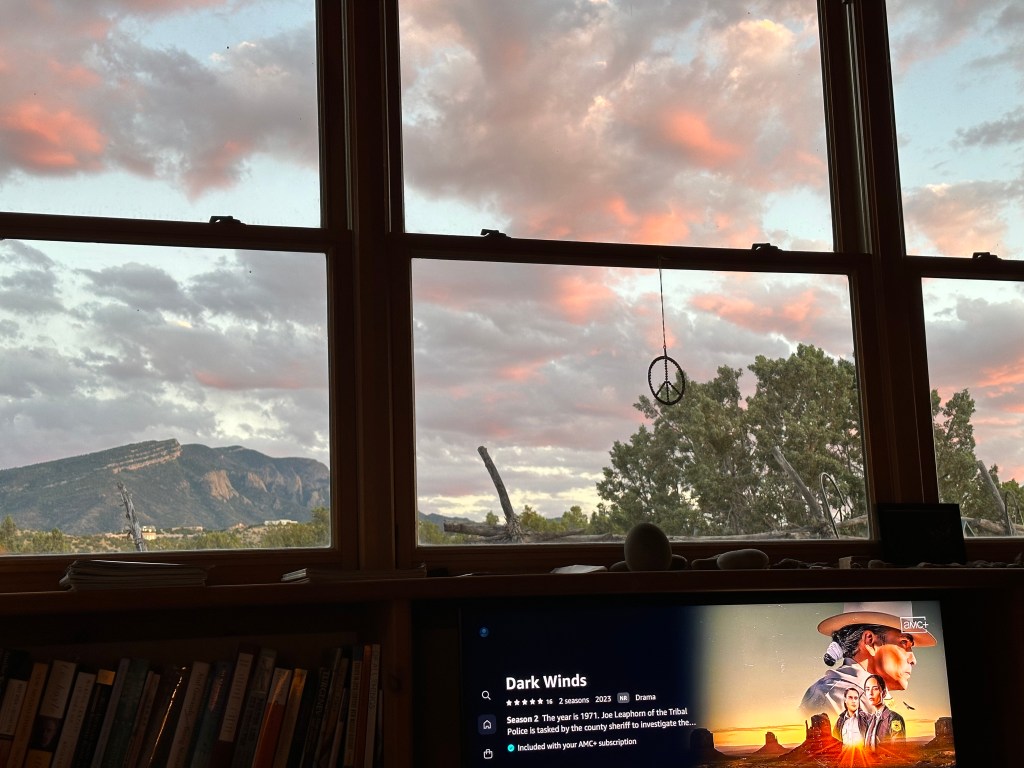
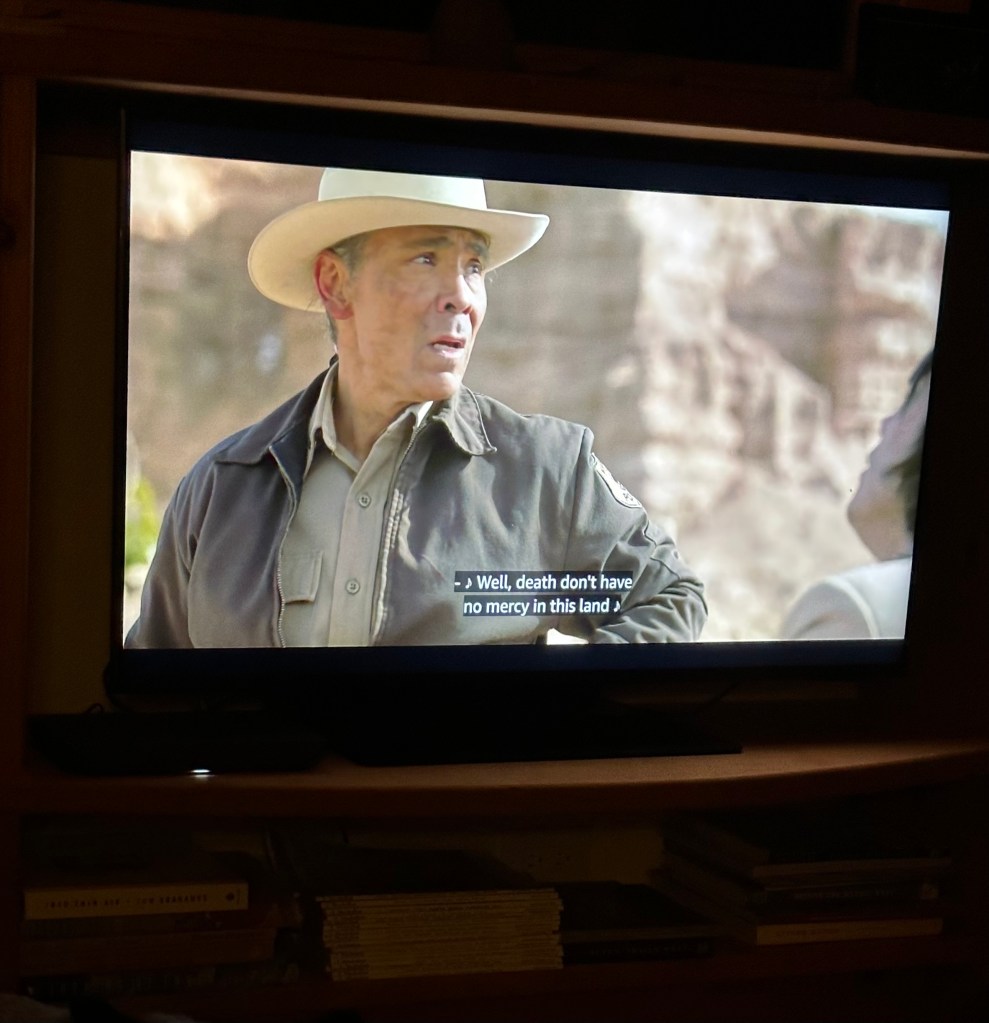
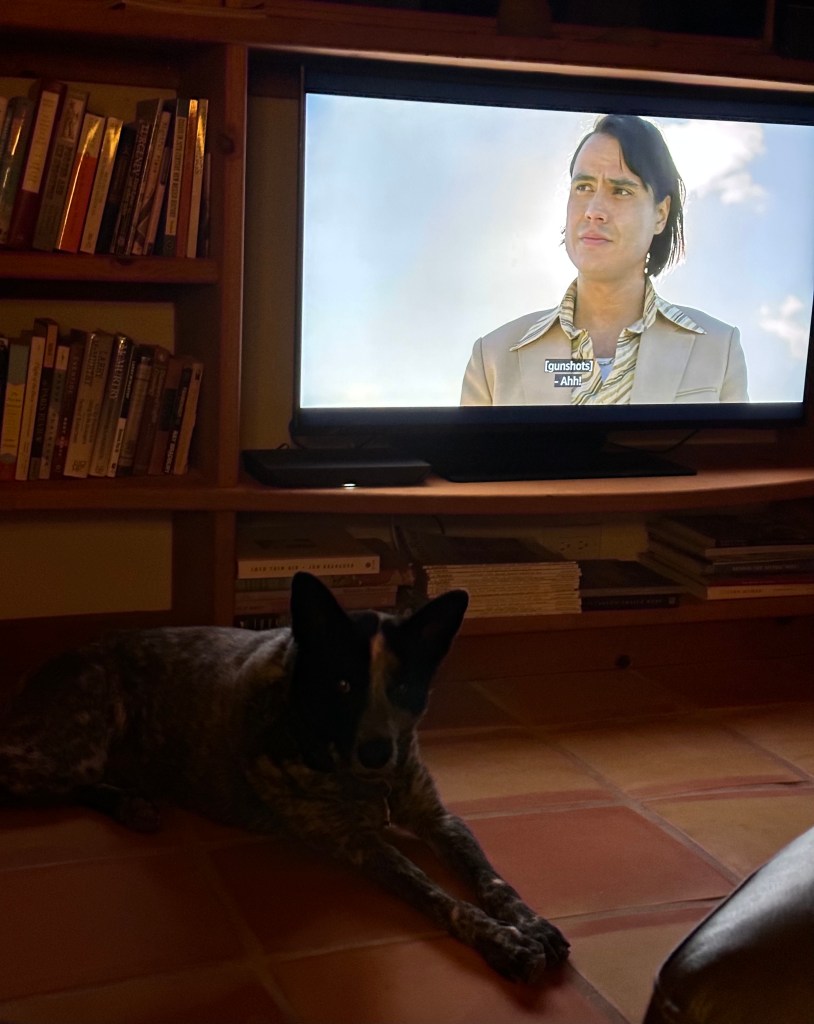
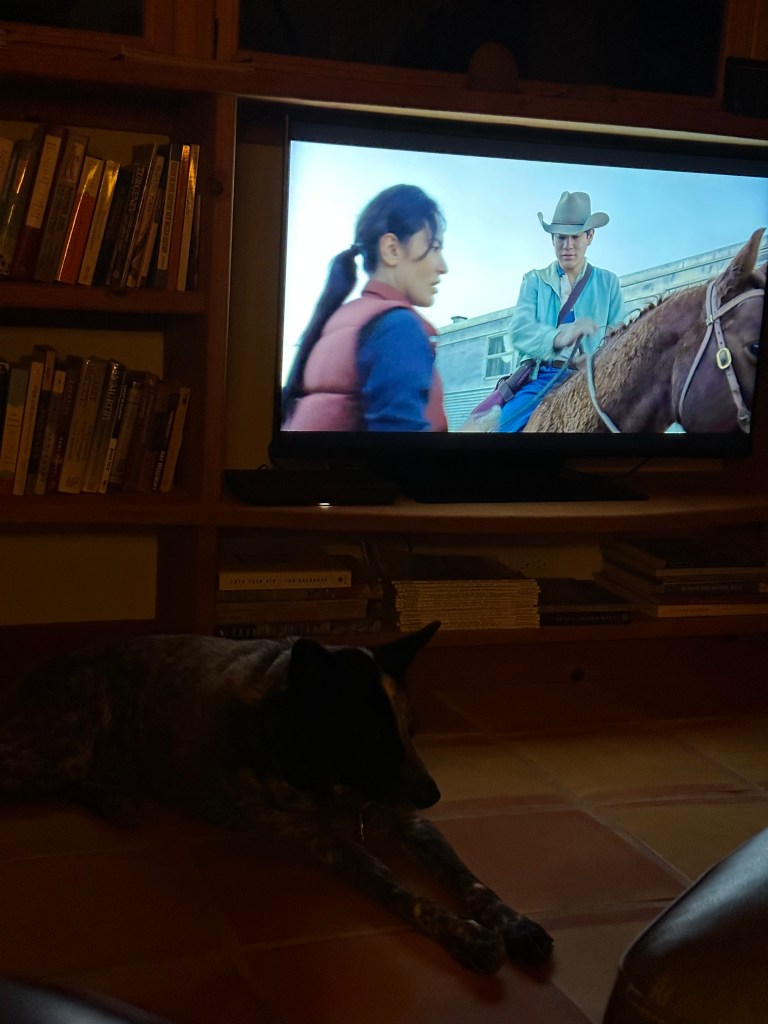

I’ve always loved Westerns but it took filming in New Mexico and West Texas, particularly Longmire and Dark Winds and No Country for Old Men, to really hook me. .
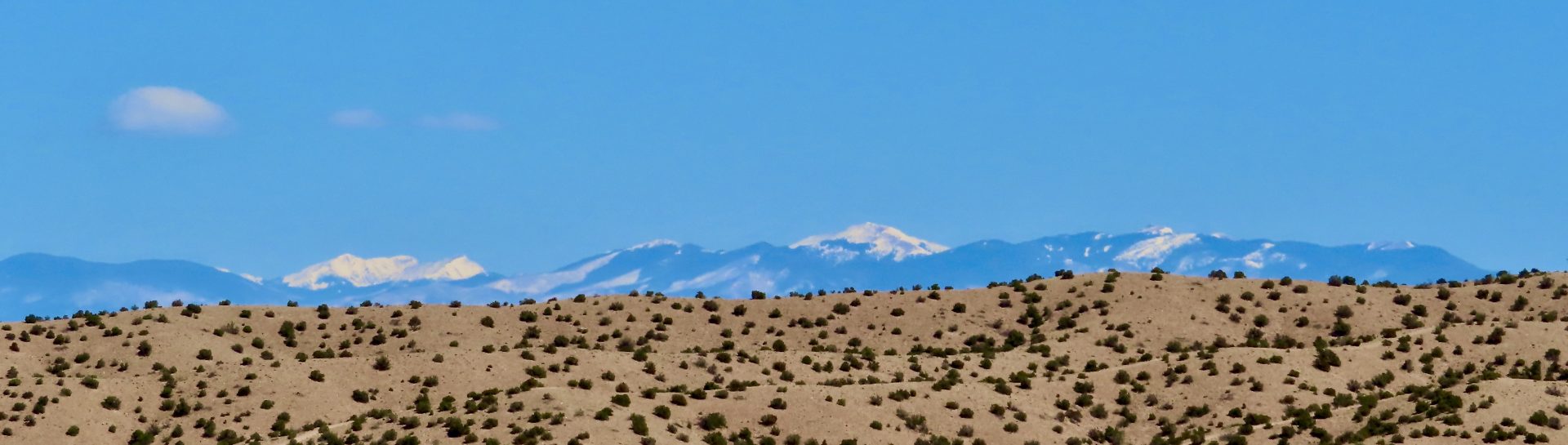
I’ve always loved Westerns but it took filming in New Mexico and West Texas, particularly Longmire and Dark Winds and No Country for Old Men, to really hook me. .

In this country, junipers have to do.
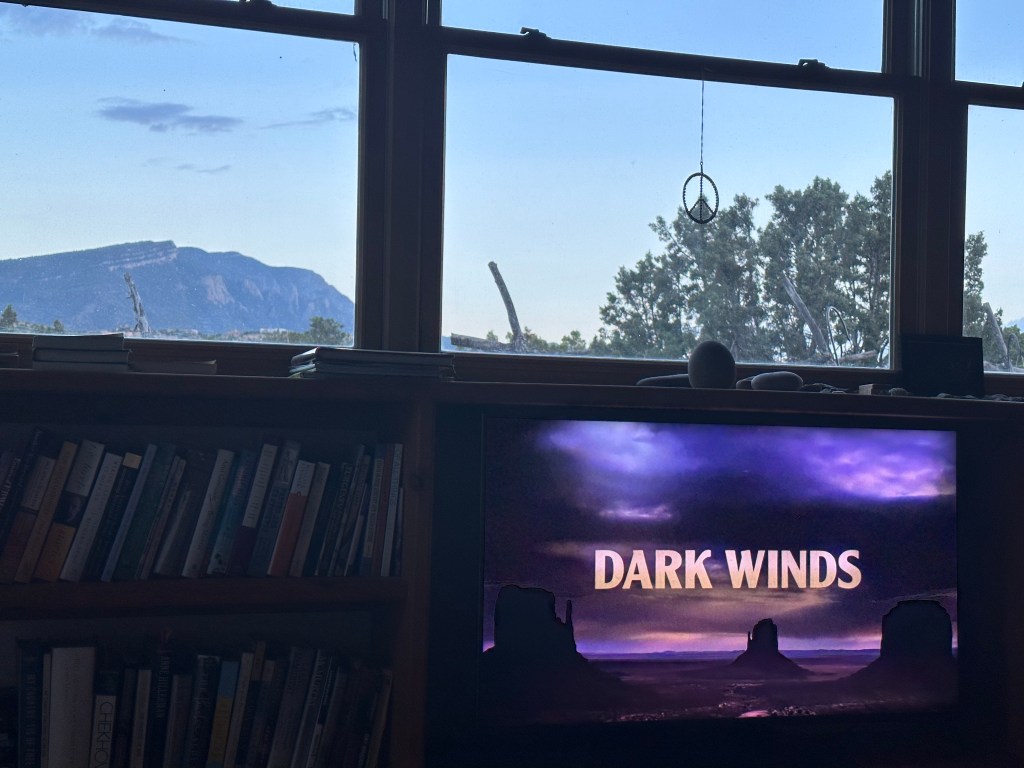
I love stuff filmed in New Mexico. Dark Winds and Longmire are my favorites. They do well with the light. Blasts from the past include Man from Laramie and Lonely Are the Brave.
Cowboy’s hips are too sore to use the dog door. I go outside with him through the kitchen. He lets me know when. The moon is still up at 3 am. He stands by my side and I lean down to stroke his soft coat. It’s cool and we take in the night.

American Legion Baseball
By Daniel Shepard at daniel.shepard@406mtsports.com

HELENA — State-bound for a while now, the Helena Senators solidified their status as the No. 1 seed in next week’s eight-team Class AA state tournament with 4-3 and 13-3 conference victories over the Great Falls Chargers on Saturday night…….
Pitching – stout pitching – has been the foundation of the now 46-14 Senators.
In 385 combined innings pitched, the Senators have amassed a 2.51 team ERA. All six hurlers with multiple starts this season have ERAs south of 3.75.
Will Lyng has been the cornerstone of that foundation.
The right-hander’s seven innings of four-hit, three-run (one earned) baseball in Game 1 capped a regular-season destined for the record books.
It was Lyng’s 10th straight outing allowing two earned runs or fewer, lowering his season ERA to 1.36 (16 ER over a team-high 82.2 innings pitched; seven-inning calculation).
As regular-season ERAs go, Lyng’s is the second-lowest in Senators program history, behind only Rande Muffick’s 1.15 ERA in 1976 (nine-inning calculation).
In conference games, Lyng’s ERA dives to 0.50 (three earned runs in 41.2 innings pitched).
The announcement of Lyng’s accomplishment over the public address system during Game 2 of Saturday’s doubleheader garnered a cheer from the hometown crowd………
“I really didn’t know [my ERA] was that good until recently – we took a trip up to Minnesota and somebody told me my ERA and I was pretty shocked…I was really surprised, honestly, that it was No. 2, but it felt great to hear that,” Lyng said.
Lyng said he worked with coach Al Goebel before this season on a slider to pair with his curveball and changeup. That, he said, allows him to work two different angles to hitters and change the eye-level during an at-bat.

All season, Lyng has walked the fine line of pitching to contact but missing barrels.
He leads the team in fewest pitches per batter faced (3.22), pitches per inning (13.6), the amount of innings with 13 or fewer pitches (47), and 1-2-3 innings (22).
Forty times this season Lyng has retired the first two batters of an inning in order.
Despite having thrown 22.2 innings more than any other Senators pitcher, Lyng is fourth on the team in strikeouts with 48. He simply doesn’t need to strike batters out to be successful.
Lyng needed just 83 pitches to navigate 29 batters on Saturday and used just 11 combined pitches in the third and fifth innings.
“A lot of it is that curveball and his changeup,” Burnett said. “When he gets down 2-0, he can come with that and they can’t just sit on that fastball. The ability to throw any pitch in any count has been huge for him.”
During one at-bat on Saturday, Lyng used his breaking ball to get back into a 3-0 count. He also threw it numerous times in other traditional fastball counts like 2-1 and 3-1. At one point, Lyng threw at least six consecutive off-speed pitches.
“It’s really important for me to stay low in the zone and mix up my locations and pitches,” Lyng said. “When I have a game where one of my off-speed pitches isn’t working, it’s a lot tougher for me to be successful because I’ll have to throw my fastball quite a bit more.”
Great Falls’ Mason Davis capitalized on one of those fastballs on Saturday, blasting a solo home run in the sixth inning of Game 1. While that shot cut Helena’s advantage to 4-3, Lyng responded by retiring four of the final five batters he faced to lock down the victory.
More than mechanics or the addition of a new pitch, Lyng pointed to the adjustment he’s made between the ears that helped him achieve history.

A guy who likes to dance to the opposing team’s walk-up music during away games, Lyng said he likes to keep things as lighthearted as possible when he’s pitching to keep himself balanced.
“This year I’ve worked a lot with my mentality,” Lyng said. “The first couple starts I had, I was a little worked up and kinda nervous before games. I’ve started to try to be as relaxed as possible before my starts and I think that’s really helped me.”
“I have to be lighthearted around the mound and crack jokes, even when I’m not doing as well, because it kinda helps me stay level.”
Lyng said he pitches better when he’s having fun. After all he and the Senators have accomplished so far this season, he’s definitely having fun.
Helena wraps up its home schedule on Monday night at 6 against Butte. It’ll be senior night for five Senators.
Email Daniel Shepard at daniel.shepard@406mtsports.com or find him on Twitter @IR_DanielS.
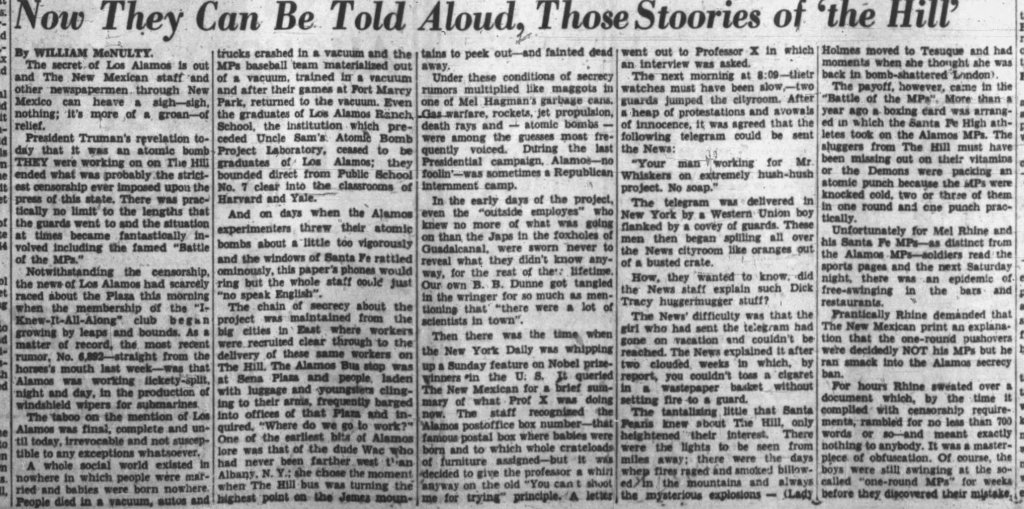
Because of wartime secrecy, the Santa Fe New Mexican could not report on the Manhattan Project at Los Alamos until atomic bombs were dropped on Japan in August 1945. The atomic bomb developed at Los Alamos was tested at White Sands on July 16, 1945.
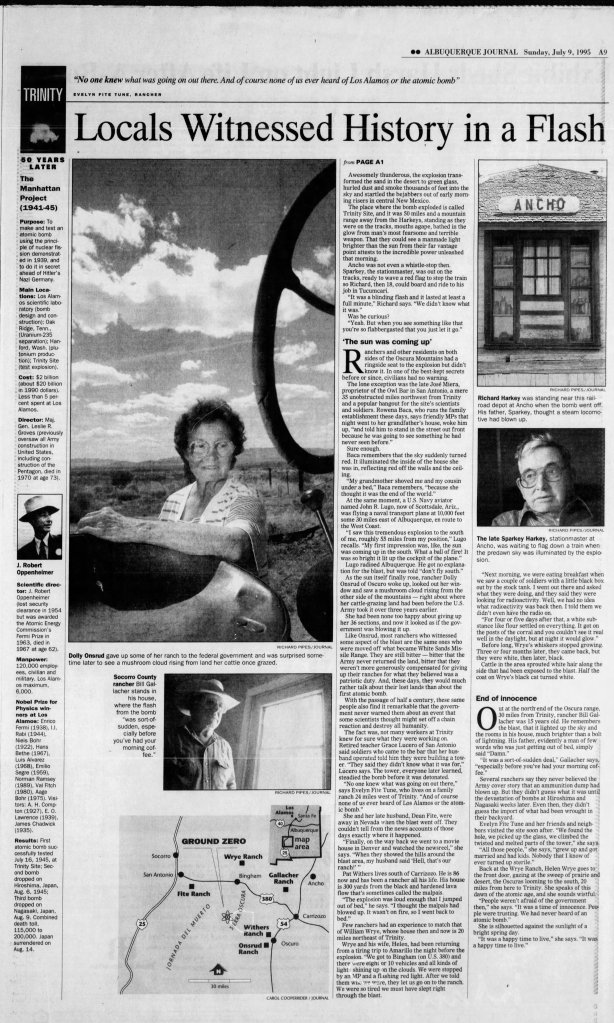
You can read an excellent account of the Manhattan Project and the Trinity site test on the Crestone Conglomerate web site of longtime New Mexico/Colorado journalist Larry Calloway at https://larrycalloway.com/2023/07/12/530-a-m-july-16-1945/ . It’s a condensed version of stories he wrote for the Albuquerque Journal in 1995 on the 50th anniversary of the Trinity site test.
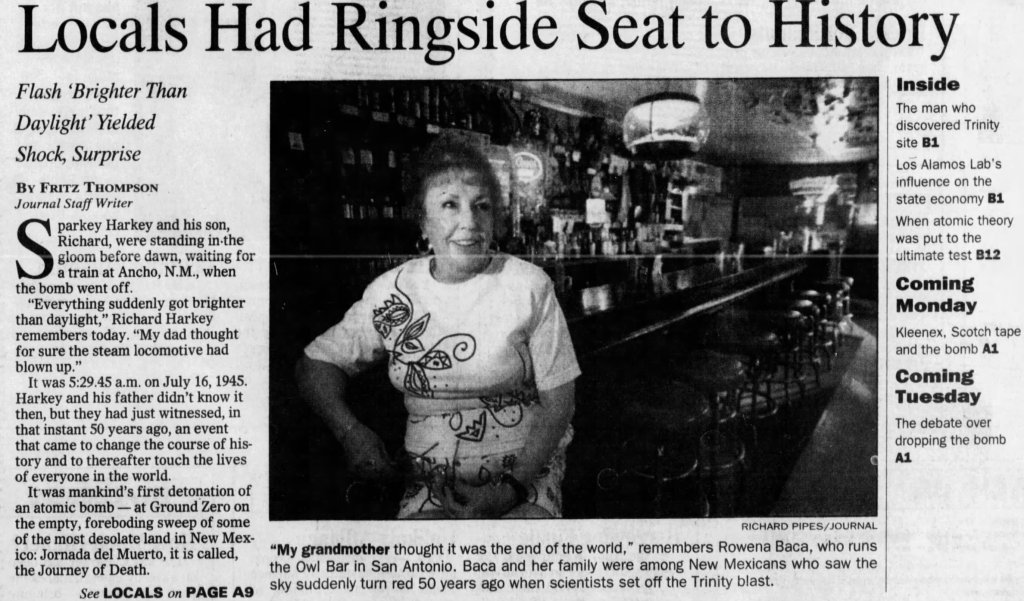
Fritz Thompson, another longtime New Mexico journalist, also wrote about Trinity site history for the Albuquerque Journal’s 50th anniversary series. See his engaging “Locals Had Ringside Seat to History” below, with photos by Richard Pipes. I’ve reproduced an entire story since I had to retrieve it from the cloud with my paid subscription to newspapers.com, even though I worked for the Journal for 33 years and Fritz for many moons, too.