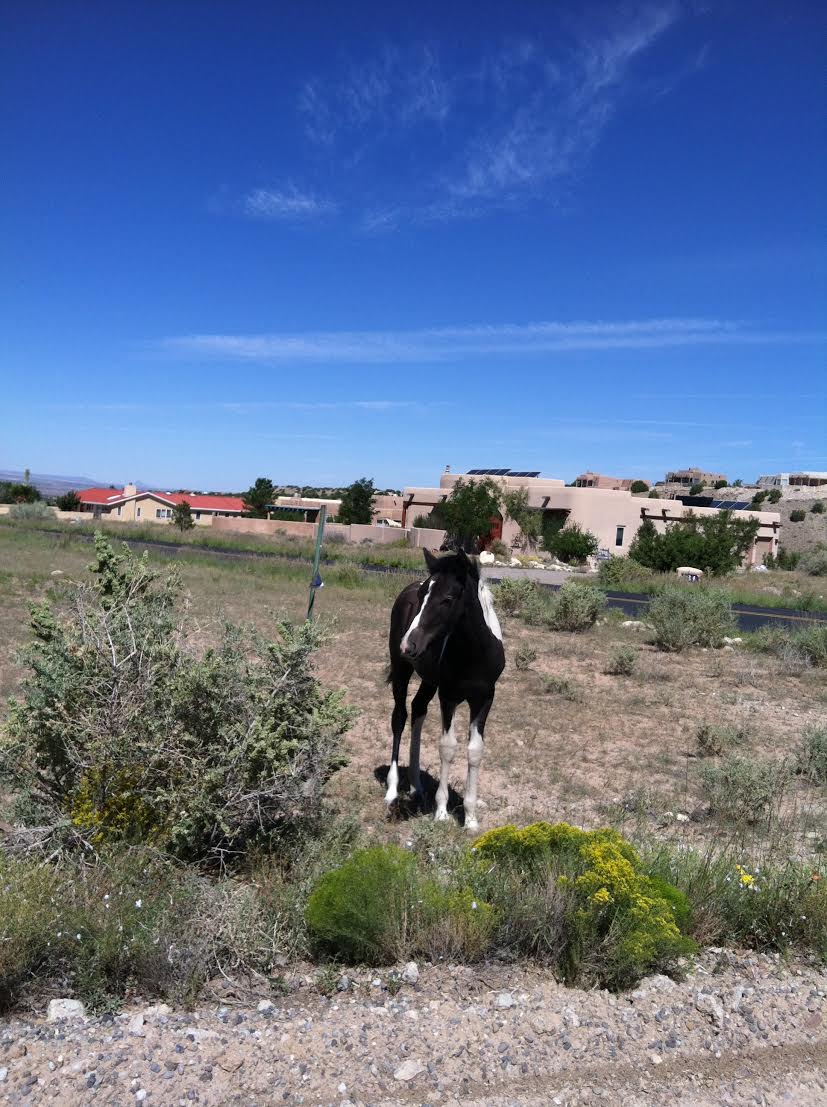
 Whatever one might think about the free-roaming horses in Placitas, this new paint foal is pretty hard to resist.
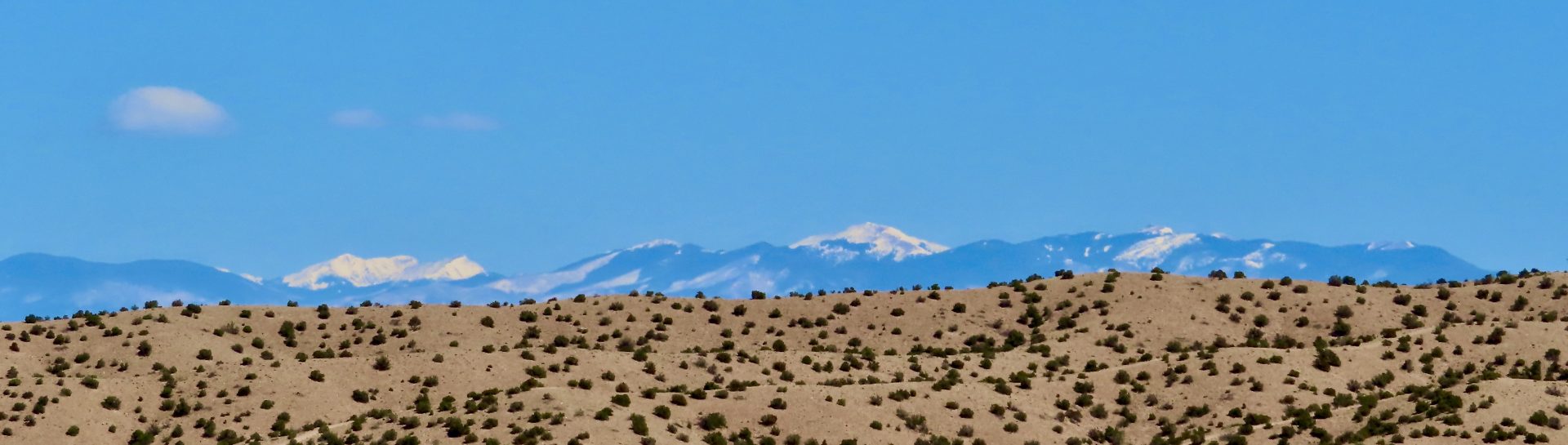
Whatever one might think about the free-roaming horses in Placitas, this new paint foal is pretty hard to resist.
My favorite rodeo grounds tweet of the week, from @JoeBeaver8x:
“Calling all goat tiers… 10am we will be tieing all goats at the goat trailer at the end of the arena.”
Probably have to wait for the National Finals Rodeo to hear the B&W ad again.
No, not BMW. This is rodeo. Not some fussy German car. B&W trailer hitches, out of Kansas. For trucks. It can be confusing, though, if you’re not used to the lilting country voices of Joe Beaver and Donny Gay.
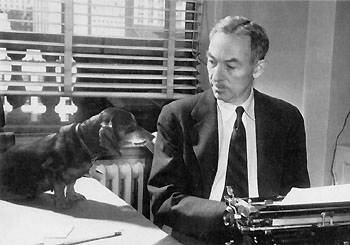
Interviewed by George Plimpton and Frank H. Crowther for the Paris Review, Fall 1969, No. 48.
“I am restless and would rather sail a boat than crack a book.”
– “Feuds did not threaten The New Yorker. The only feud I recall was the running battle between the editorial department and the advertising department. This was largely a one-sided affair, with the editorial department lobbing an occasional grenade into the enemy’s lines just on general principles, to help them remember to stay out of sight. Ross was determined not to allow his magazine to be swayed, in the slightest degree, by the boys in advertising. As far as I know, he succeeded.”
– “I can’t stand the word “humorist” anyway.”
– INTERVIEWER: You did write the famous caption for the Carl Rose drawing of a mother saying to her youngster: “It’s broccoli, dear”—with his reply: “I say it’s spinach, and I say the hell with it.”
– “The journals are callow, sententious, moralistic, and full of rubbish … I have already dipped into them on a couple of occasions, to help out on a couple of pieces … In most respects they are disappointing. Where I would like to discover facts, I find fancy. Where I would like to learn what I did, I learn only what I was thinking. They are loaded with opinion, moral thoughts, quick evaluations, youthful hopes and cares and sorrows. Occasionally, they manage to report something in exquisite honesty and accuracy.”
 Breaking a long anti-social streak, had some nice folks over for breakfast this morning, including stepsister Susan. Cooper’s best friend, young short-haired pointer Sara, came along, too. I am fine, despite the house-cleaning and cooking challenges, but Cooper is flat-out pooped. He was well-behaved and entertaining at the same time, but I am trying to figure out why that is so exhausting.

Eddie Moore/Journal photo
As a somewhat straight-laced fan of Santa Fe traditions and a former hurler for the city’s Coronado Kiwanis Little League team, I ask what is going on with Zozobra’s right hand.
(The Kiwanis club still puts the thing together, right?)
Ninetieth annual burning of Old Man Gloom, aka Zozobra, in Santa Fe on Friday night. Eddie Moore/Journal photo
I’m feeling better already.
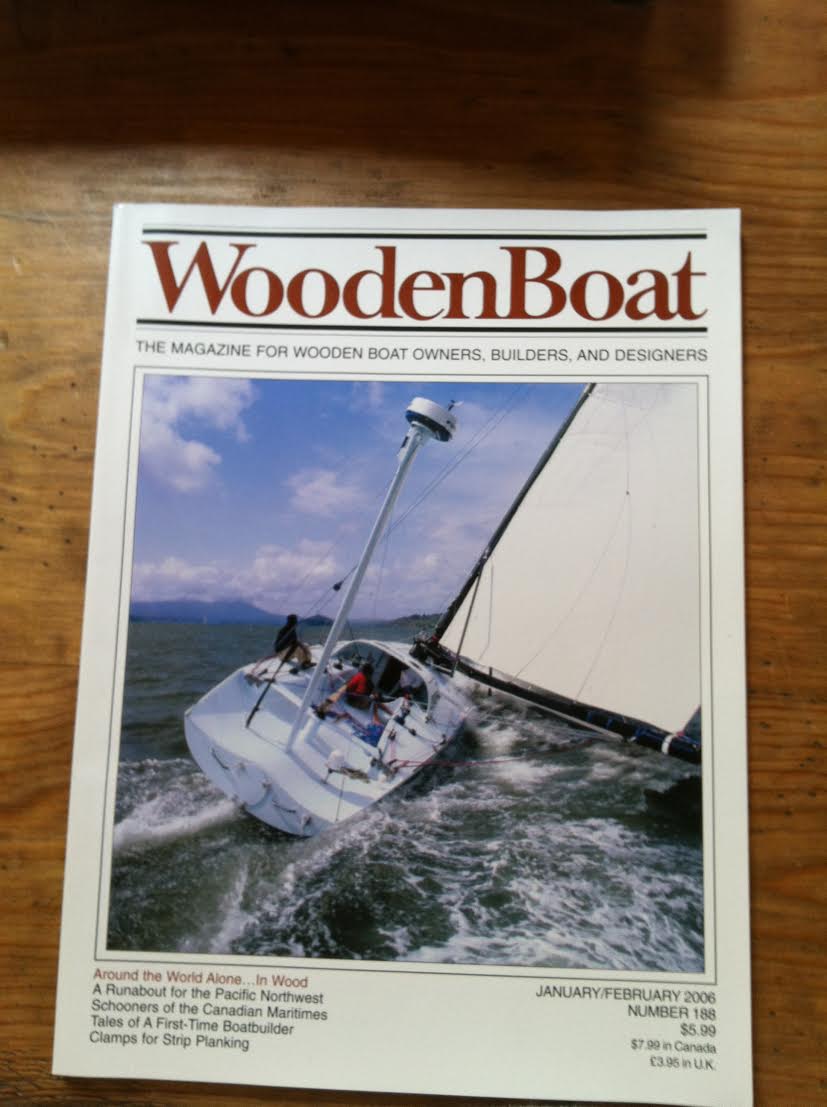
Sure-fire daydreaming material at dreamranch.
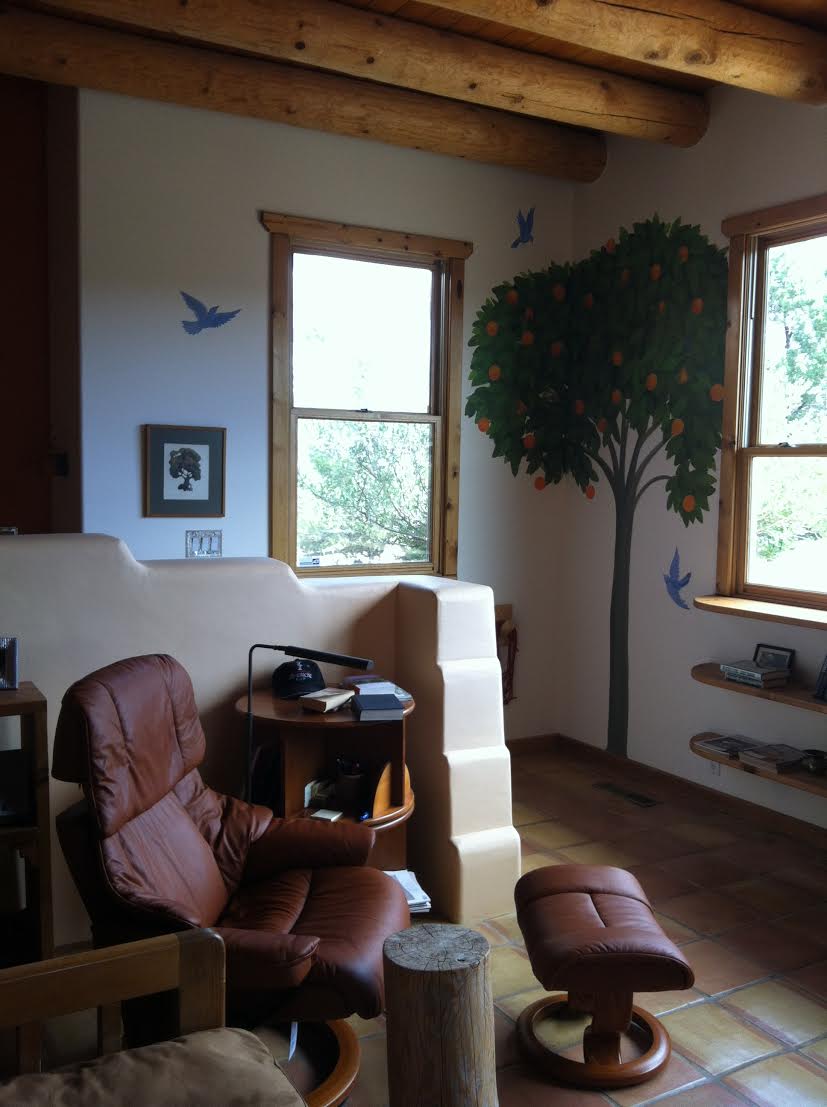 Discovered it helps to read the instructions. Lost consciousness Saturday night almost immediately after proper adjustment of birthday chair.
Have not once dozed off in new, birthday easy chair. Somehow wary of its comforts. Meanwhile, aching joints convincing me that if you don’t use it, you do in fact lose it. Slow learner probably should have put off chair investment a while longer.


And combination of chair and sweets perhaps not the best way to celebrate a 65th birthday, but the cookies — what’s left of them — are great. (And, as insiders know: oatmeal raisin — my favorite). Thanks, Winifred.
The cookie-accompanying card from Nancy, the nice call from Jane and the poem from Hope cheered me greatly and made me yearn to be closer to each of them.
But as for writing about anything other than chairs and cookies after a week at work, I recall the quote of Sheriff Morey Johnson in Lonely Are the Brave, staring up into the Sandias as Jack Burns and Whiskey escaped — sort of:
“I haven’t got enough spit left to wet a stick of gum.”
For the record, broke down after two years of deliberation and bought a reclining chair for my 65th birthday.
Only now about to try it out. Almost looks too easy-going. It’s been sitting in the back of my truck for the past two days.
Well, here goes. Might not report back real soon.

