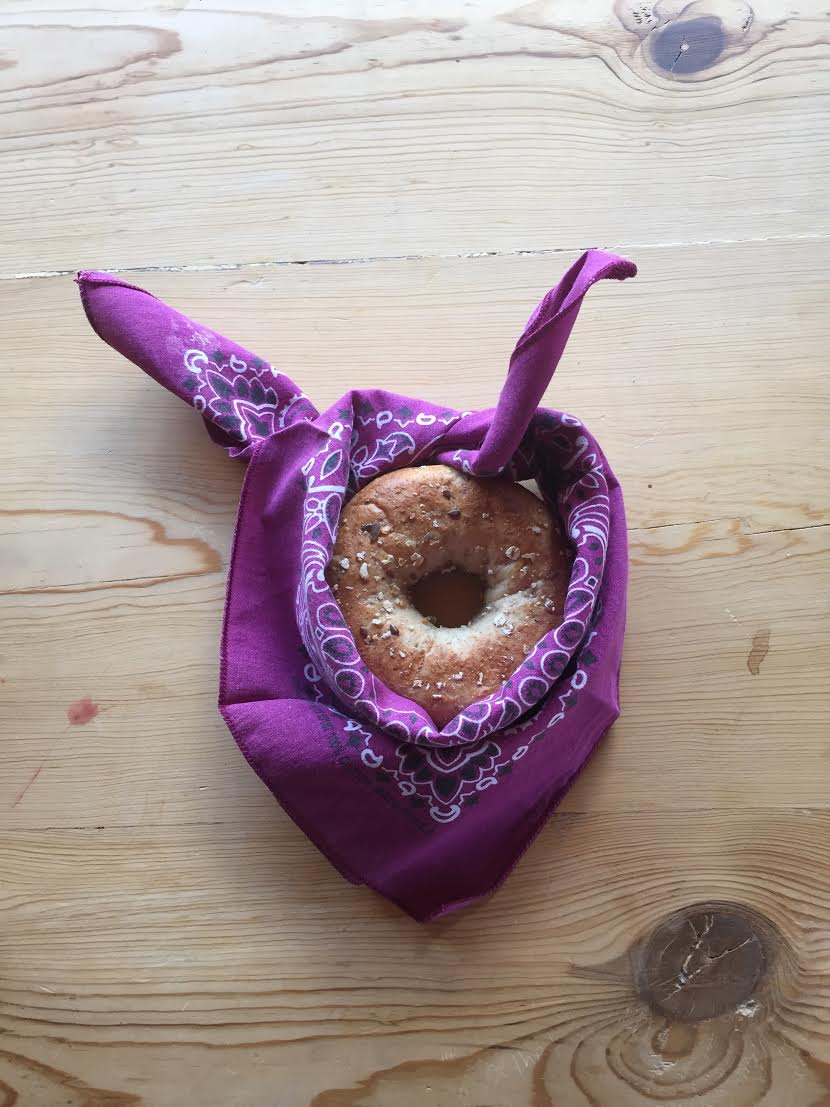
 After reading this morning that there is such a thing in Santa Fe as a blue corn lavender doughnut, this is as close as I could come to having a Santa Fe bagel down here in Placitas.
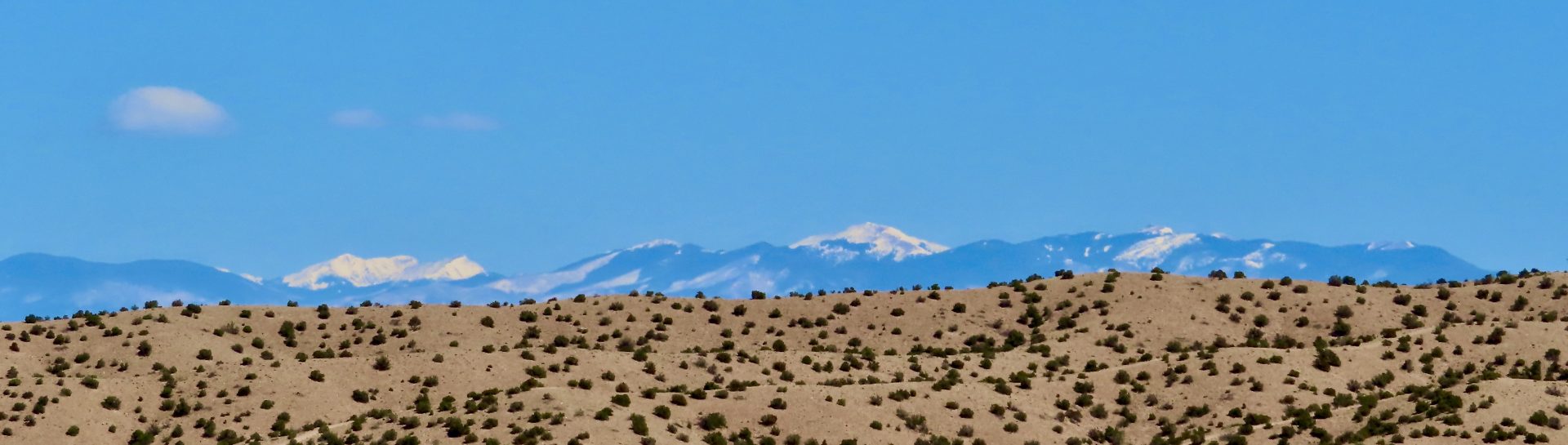
After reading this morning that there is such a thing in Santa Fe as a blue corn lavender doughnut, this is as close as I could come to having a Santa Fe bagel down here in Placitas.
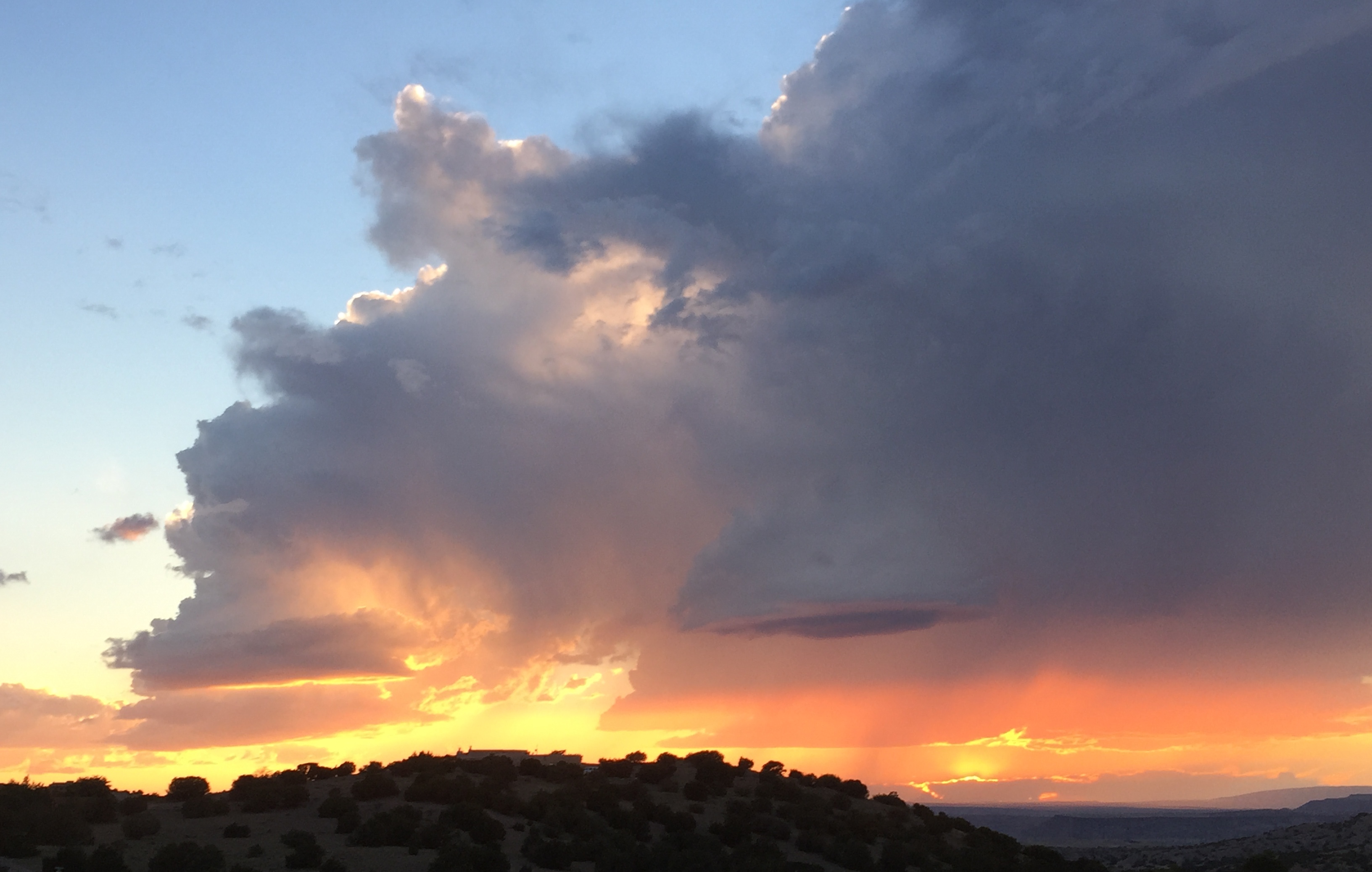
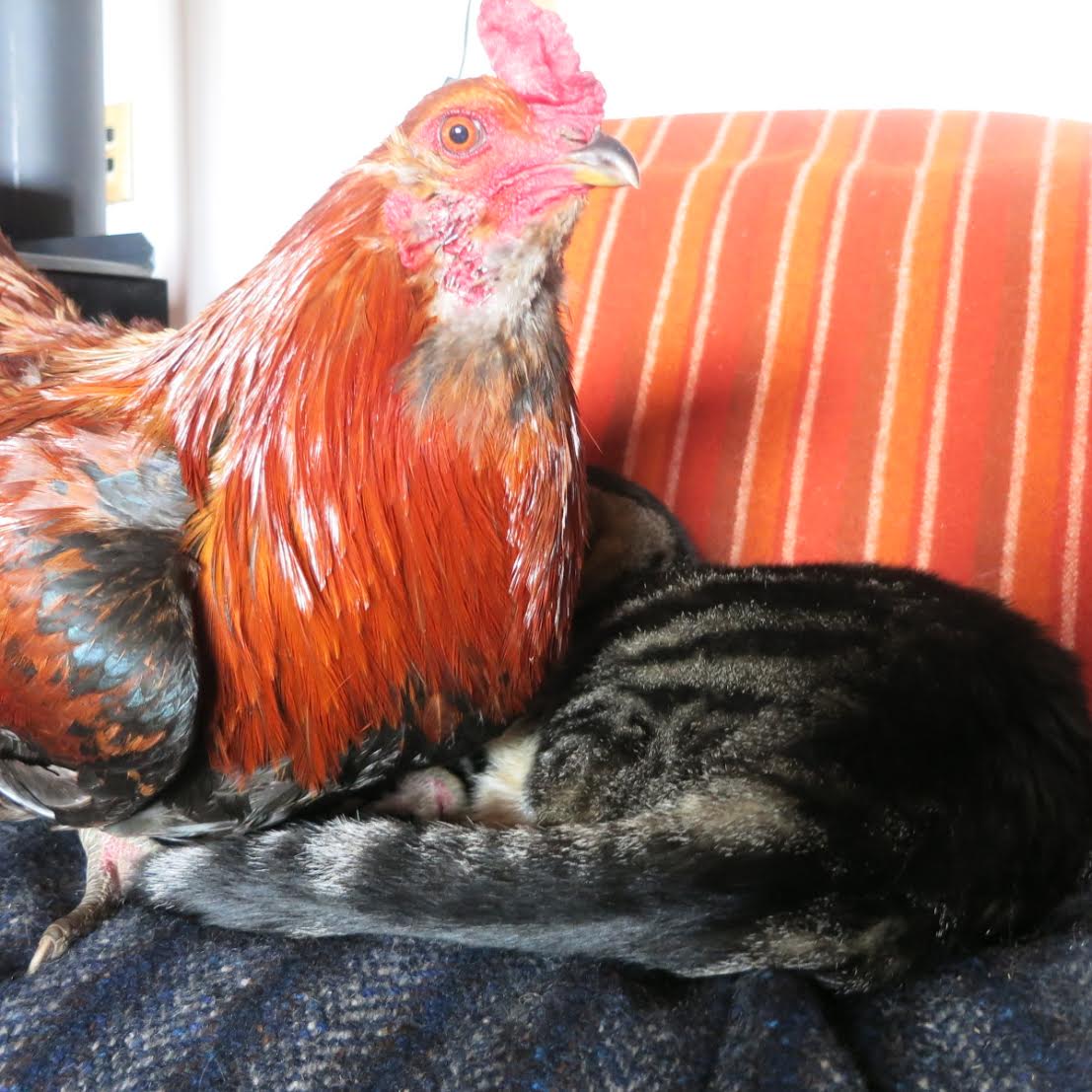 I didn’t ask my sister Hope what her rooster was doing in the house — except that roosters have always had the run of the place wherever she lived — and suffice it to say this sound-sleeping cat was surprised when she woke from her nap. No injuries were reported, only confusion. For more rooster tales, click here or on “Rooster” in the drop-down tag cloud to the right.
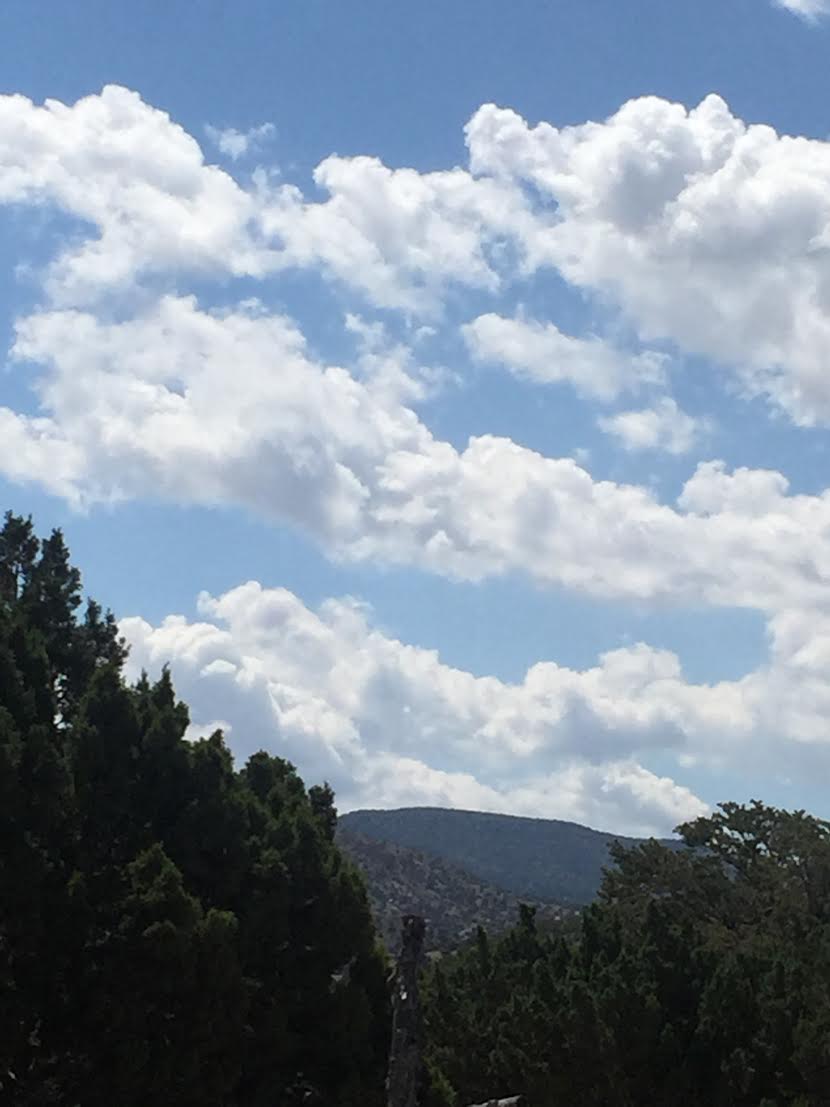 The only thing that might make the morning better is a little rain this afternoon.
Fine breeze through office windows early, undermining the usual high pressure and heat of June.
Clouds gathering now and we hear thunder over the Jemez. Exciting to me but, I have to remember, not welcomed by everyone here. Cooper has taken cover beside my desk. 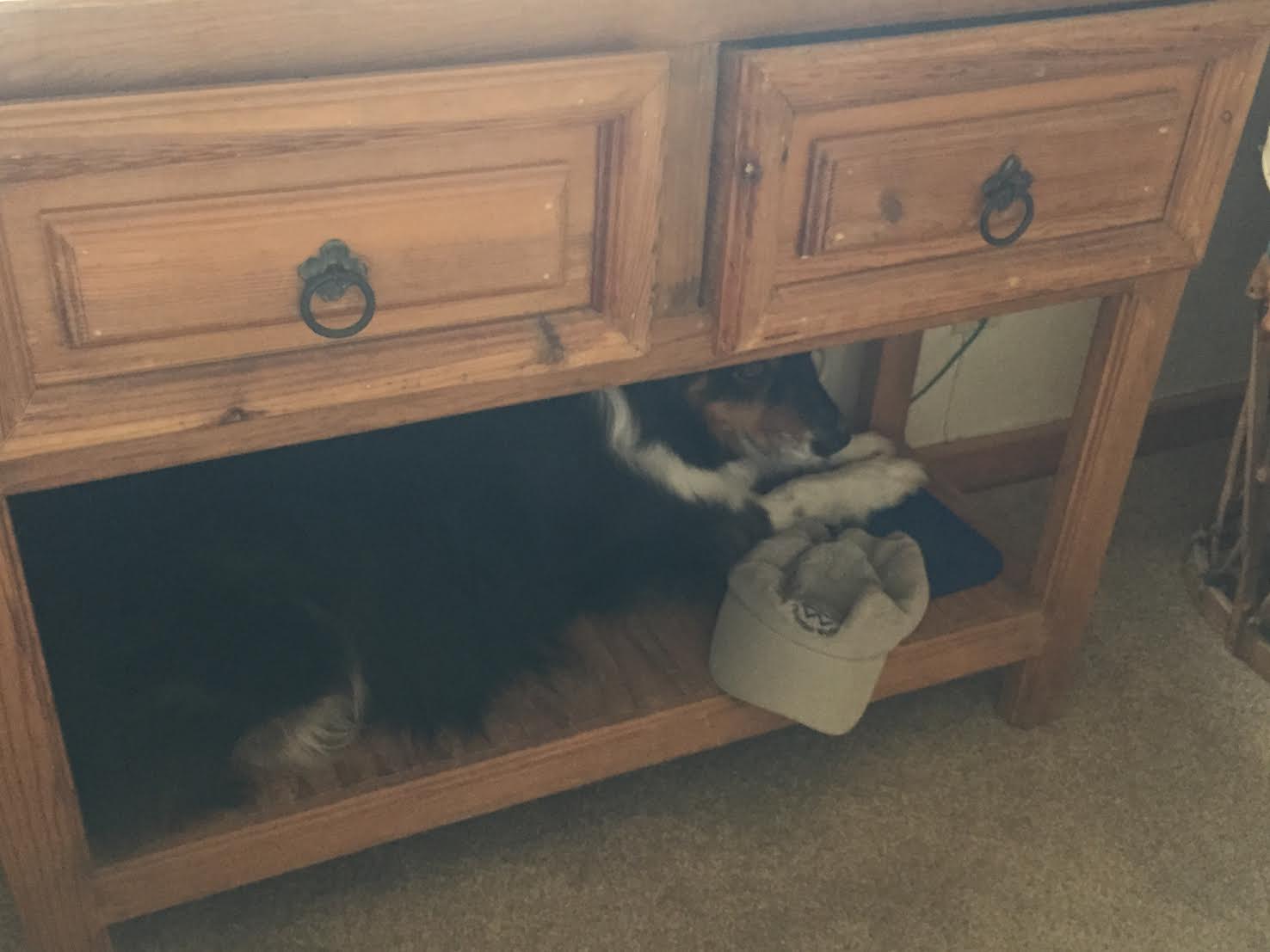
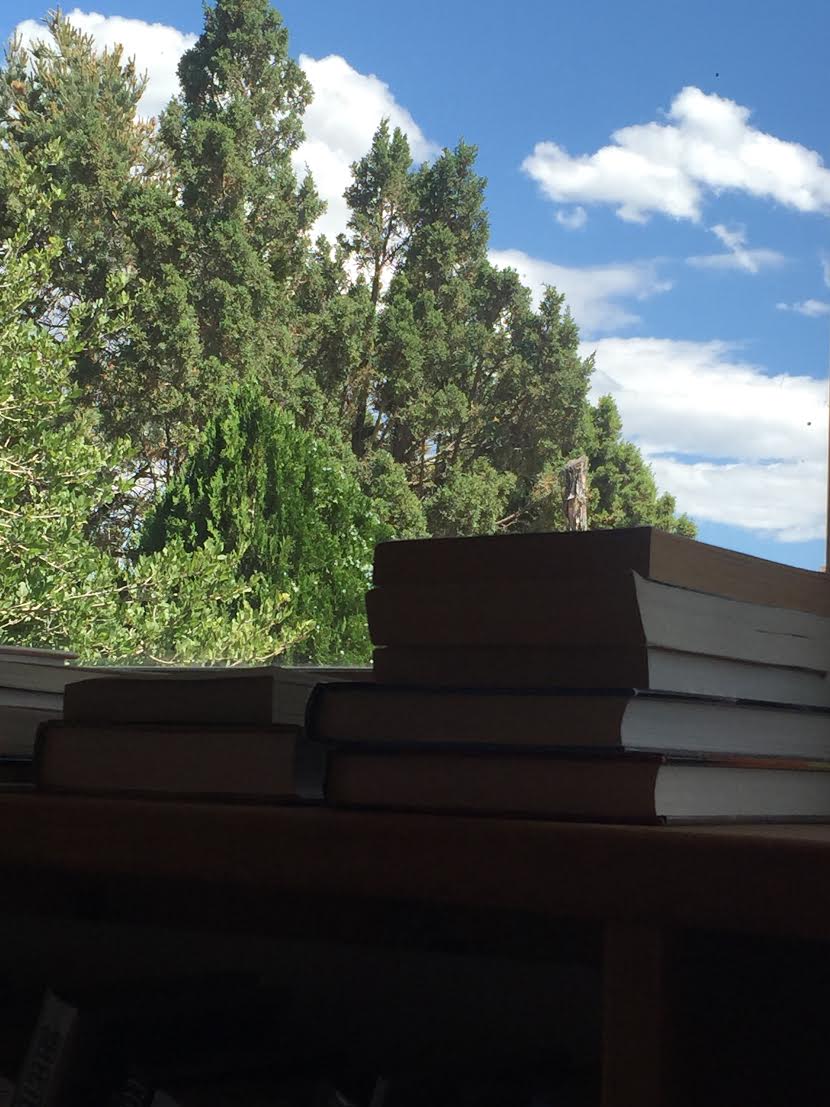
One of the luxuries of retirement is having real time to read — more than the minutes before falling asleep on a work day. I have stacks of books and I reach wherever my mind roams. No discipline as usual — except maybe in deeply recessed index files of my brain — but rules are out the window these days. Plus, I recently came across a great observation from a fellow mature person — a female author, but I can’t find the quote — that one of the privileges of adulthood is that you don’t have to finish every book you start.
 Before I head to my books, I can’t resist sharing a photograph I stumbled to in a Maureen Dowd column this morning in the New York Times. It’s an Annie Leibovitz photo for Vogue of Samantha Power, the U.S. ambassador to the United Nations. It’s two years old but it struck me as a testament for our times. It reminds me of a Renaissance painting, but the title that lept into my head was 21st Century Madonna. You can see it here.
Meanwhile, I can’t get out of my mind American Pharoah’s amazing, long stride. Victor Espinoza, his rider for the Triple Crown, described riding him as cloudlike. “You don’t even feel him,” he said. “It feels like you are going in slow motion.” I think I saw some use of the crop in the Belmont stretch, but apparently it wasn’t as much as in the Kentucky Derby.
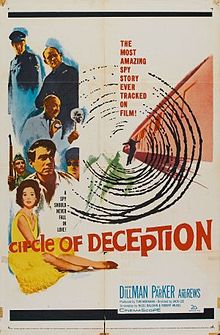 Watched a good little World War II drama at 2 in the morning. Circle of Deception, 1960. Worth adding to anyone’s collection of wartime morality stories. An officer is assigned to carry false information to the Germans about the Normandy invasion.
I liked this tweet and photo yesterday from the U.S. Embassy in France and retweeted them:
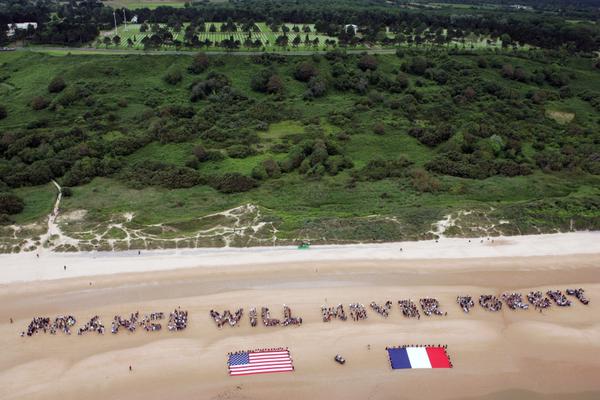 #
##DDay. 6,603 died.
I’m off to the books and watching for the rain. I see a couple of anvils up by La Bajada and Santa Fe. I’m hoping but know from experience that down here we’ll probably get no more than the virga of last night. 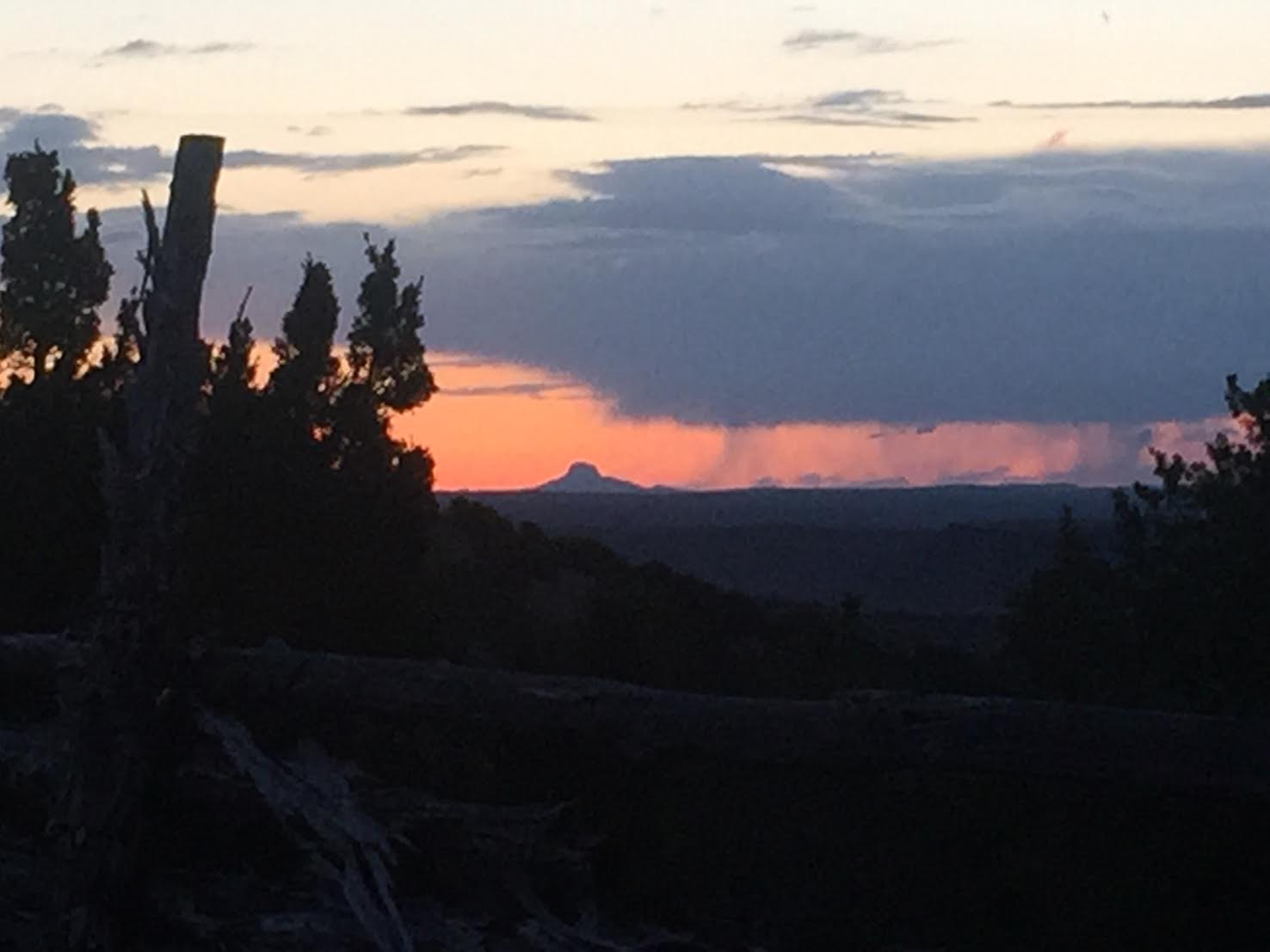
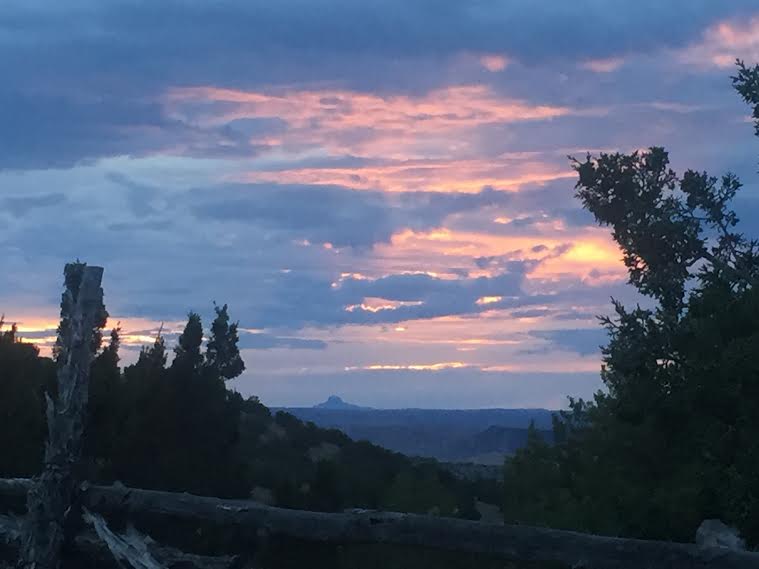

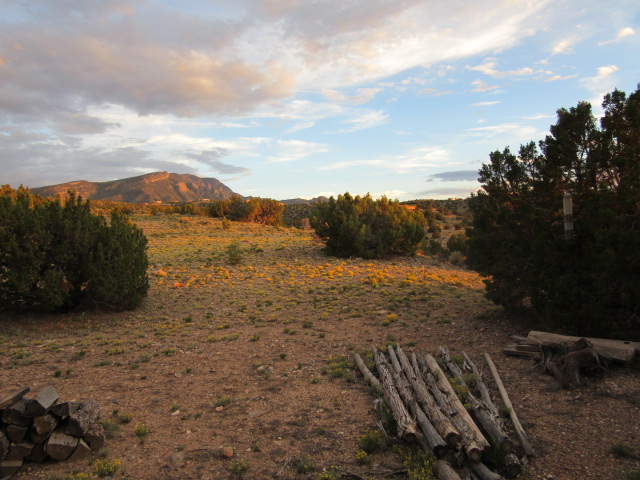
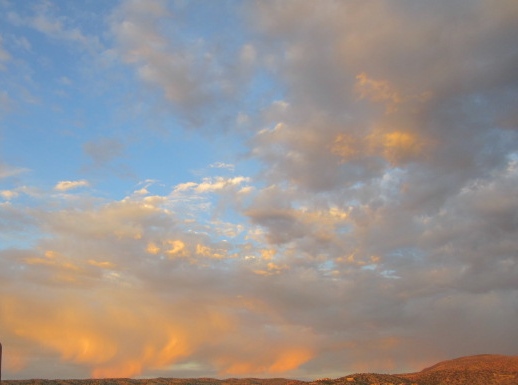
I usually snap the light in the evening to the west and north. South and east drew my attention tonight.
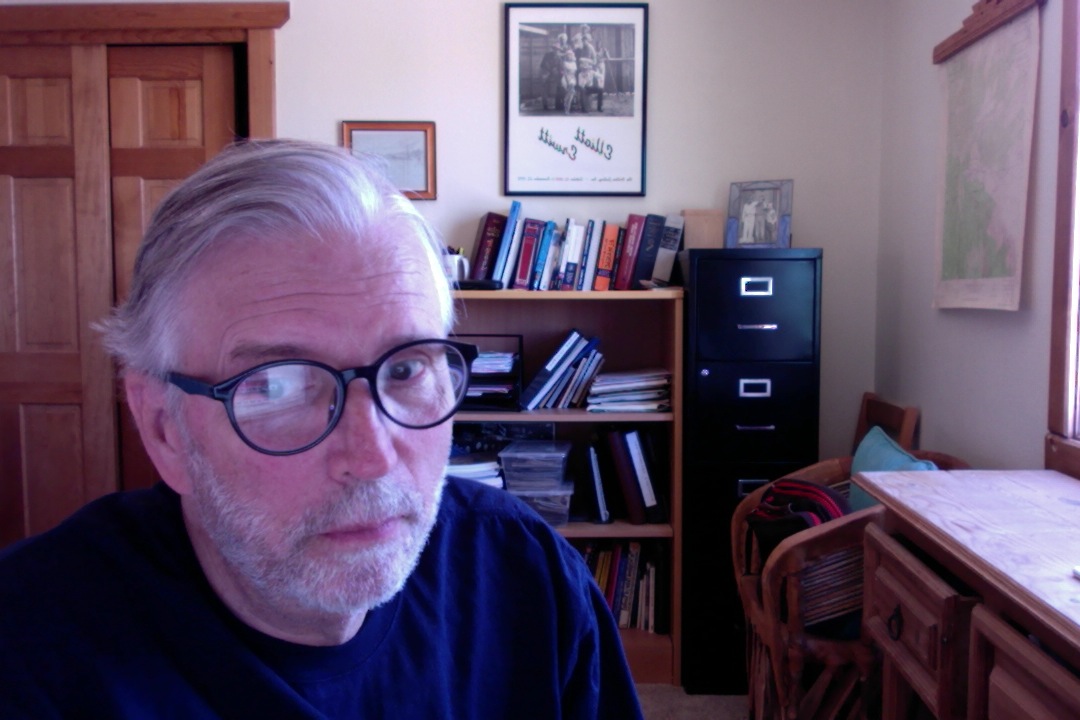 Here I am at home on Sunday, last day on a newspaper payroll, gate swinging open to retirement.
Sunny day. Good coffee. Office window open to the breeze. Coop at my side. Sunday media, in which I am no longer complicit after 40-years of toil, a mouse click — or not — away.
I have been on leave since December, but tomorrow is the first real day of my new status
. I cheated on my wooden sailing boat calendar, turning it ahead on the last day of May to June. The new photograph is of a beautiful English-built ketch, gaff-rigged with fore and top sails, close hauled, rail under, but sliding smoothly through blue chop in a stiff breeze off the south coast of France.
I got a little wistful remembering my modest retirement plan. This boat will remain out of reach. But I can still dream. The plan for now is to stay home and sail away at my keyboard.
I scan the New York Times, New Mexican and Albuquerque Journal, my stable for 33 years. Beau Biden, son of the vice president and reportedly an all-around good guy, died yesterday of brain cancer at 46. Islamic State is making gains in Libya — Syria and Iraq, too. Poverty, education and mental health issues weave through New Mexico stories. A 28-year-old hard case in Albuquerque, accused of killing a police officer last week, complains on a Facebook page that life has not treated him fairly.
I still my jerking knee, tell myself not to wade back in. I am still too close to my career to see it entirely. I was learning right up to the end and many answers are still at sea. And, this morning, the only thing I want to rush into is a lazy day.
I am encouraged by the reading of a PET scan last week of my now-heavily radiated and chemically attacked lung cancer. Surgery is still up in the air, but doctors say the scan looked good and there is a 40 to 60 percent chance that I am “cured” now. I’ll get a little more chemo, but this is good news a few months after diagnosis and treatment.
I am tired of being bogged down by health concerns. My energy has slowly returned, and I feel close to my former self even as my clock ticks to 66. I am ready for the day in shorts and t-shirt and a snootful of French roast. Joints and wind might argue otherwise, but I don’t feel like 65.
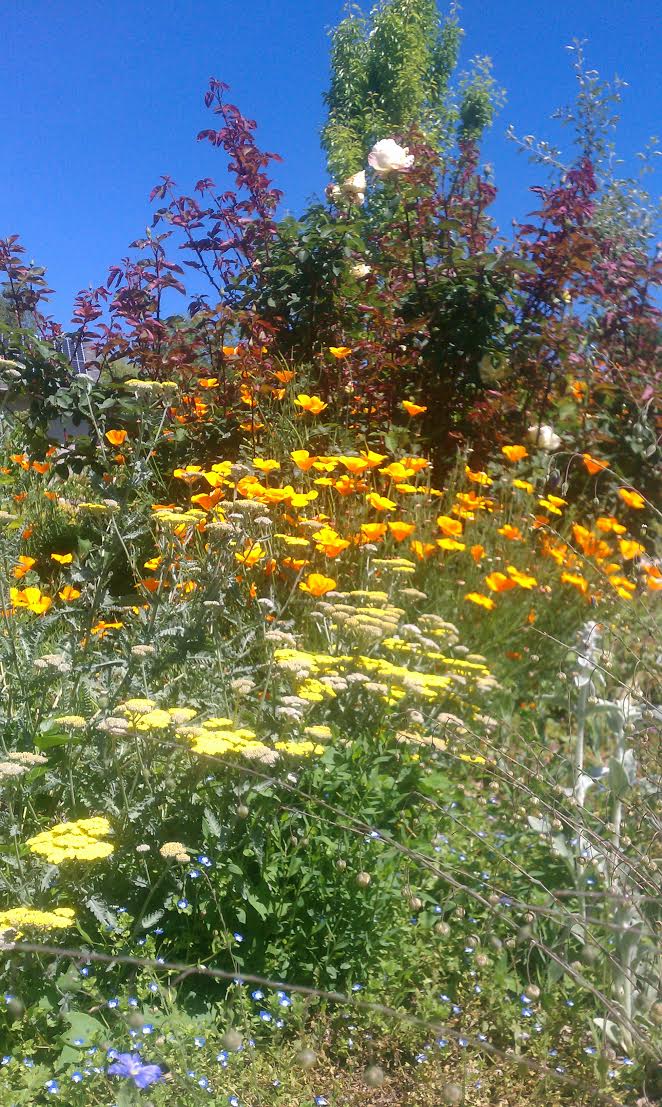
Yesterday, I sent my sister who lives north of Salt Lake City a hand-wringing report about Utah drought. She sent me back pictures of flowers in her front yard. 
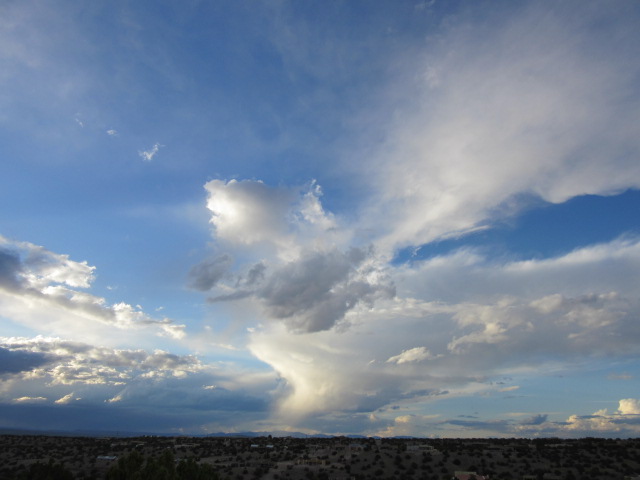 Over the Jemez this evening.
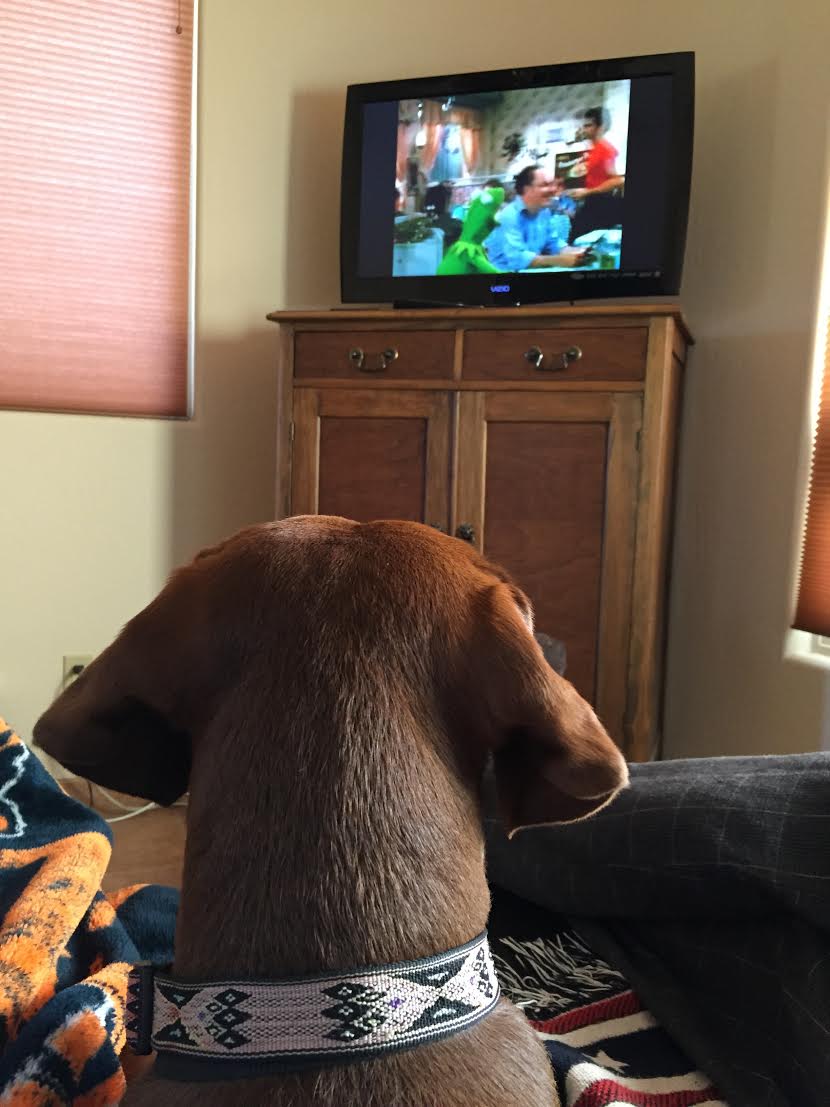
Lori and Mike’s rescue girl Sara, watching the Muppets earlier this week. She’s come a long way from being a lost or dumped pup on the West Mesa and clearly likes the comforts of her Placitas home. She reportedly also likes watching Animal Planet and the Westminster dog show. My guy Cooper isn’t a TV fan, but Sara is still his best pal. 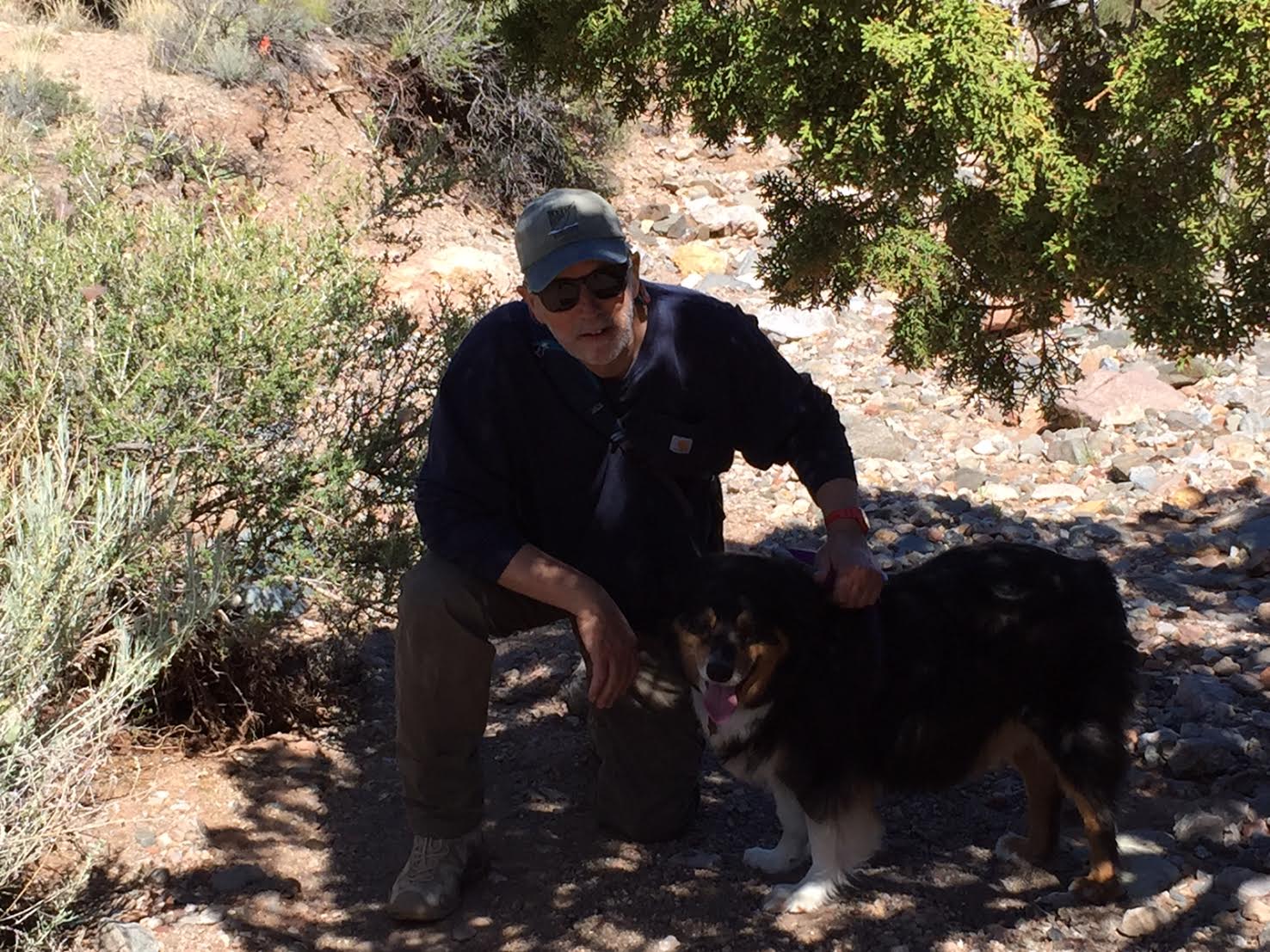 Cooper, meanwhile, is the shade-up champ on morning walks. And I don’t mind at all.
I’m having my morning coffee at my desk in New Mexico and talking on the phone to my sister Hope, who’s on horseback in Montana.
When the phone rang, I was thinking about a funeral for a young woman, daughter of a friend, in a small village church, just south of Santa Fe.
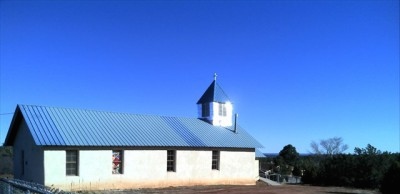 Sometimes during the Sunday service, my eyes went to the window and the green slopes beyond the blue-roofed church. Remembering someone suddenly gone at 42 can make you wonder how you happen to be there at 65. Whatever ails you fades away when you look at the aching family in the front row.
My focus returned when the priest and the father and friends talk about beauty and art and joy in life, the spirit of the departed daughter. We sat on worn, wooden pews that look like they might have been carpentered by parishioners. It was a lovely service, short but heartfelt, in the rocky, cedar and pine-covered foothills, close to home, where she grew up.
Her father told a story of taking her to a big museum as a child, years before she went to Chicago for an advanced degree in art. The young girl broke into tears as she turned in a room, he said, overwhelmed by so much beautiful work.
I eagerly visited before and after the service with new acquaintances and friends of 40 years, but I am talked out by the time I reach home. I photograph the evening sky but can write only three words with certainty: “The light tonight.”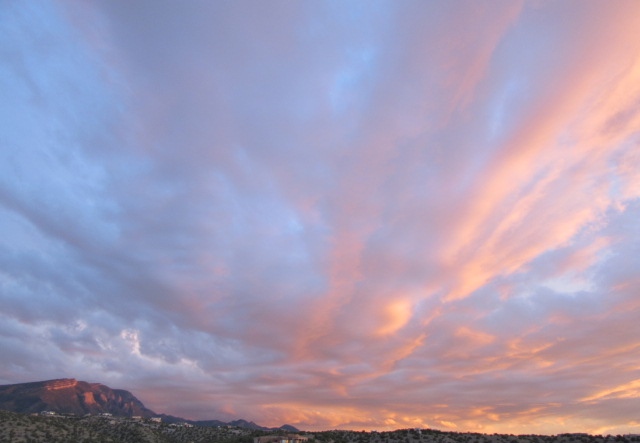
My friend Isabel spots the photograph among my posts about the funeral and other somber things on the Internet and emails me the Navajo prayer that begins, “In beauty may I walk…”
I wake this morning fearing that beauty is only a consolation less painful than love. But I also tell myself to believe in both.
I talk happily with my sister about weather and family, my young nephew’s baseball life, his dad’s summer guiding, her birthday two days away and the prospects of a brooding hen. It’s been wet this spring in Montana, too.
She reminds me of the view over the valley from where she sits her horse. And she recalls what her cowboy father used to say as he surveyed Montana landscapes in May or June.
“It’s as green as it’ll ever get,” he said.
*Note on photos: The photo of the church at Cañada de Los Alamos was not copyrighted or otherwise credited and pulled from the Internet. The Sandia sunset photo, like all of my photos, is from my iPhone or point-and-shoot.

