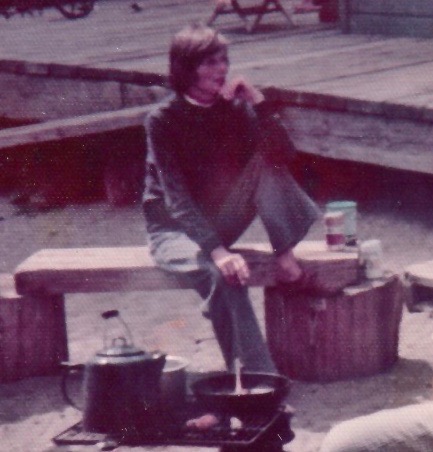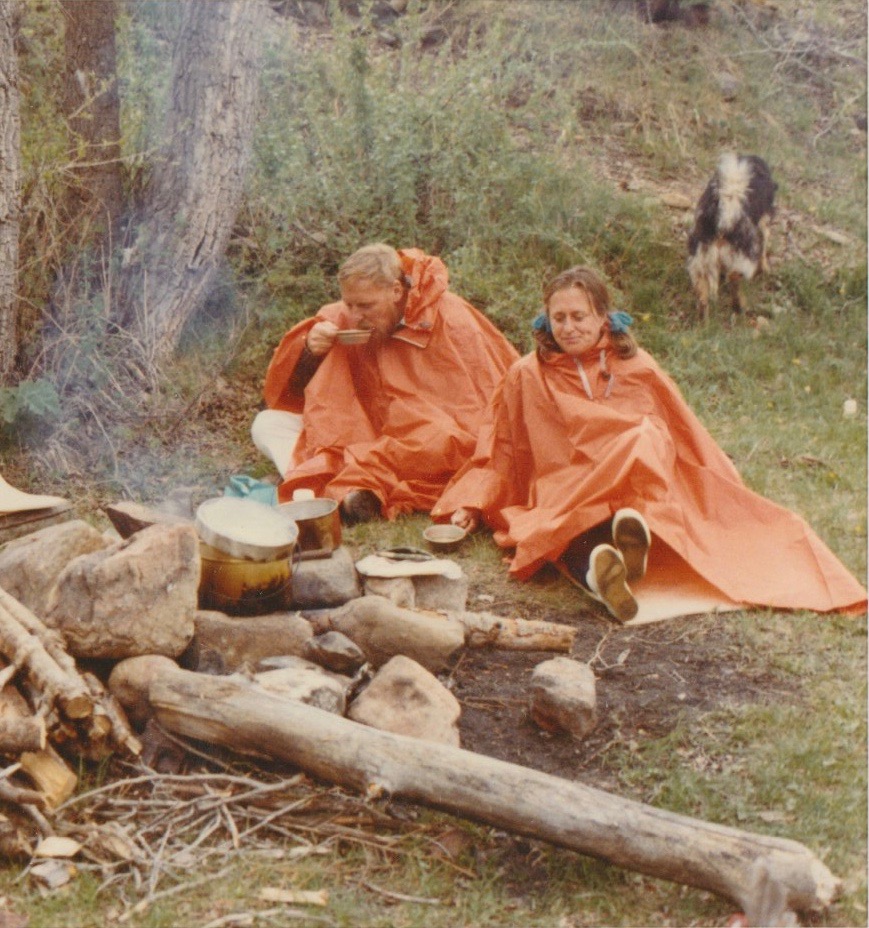
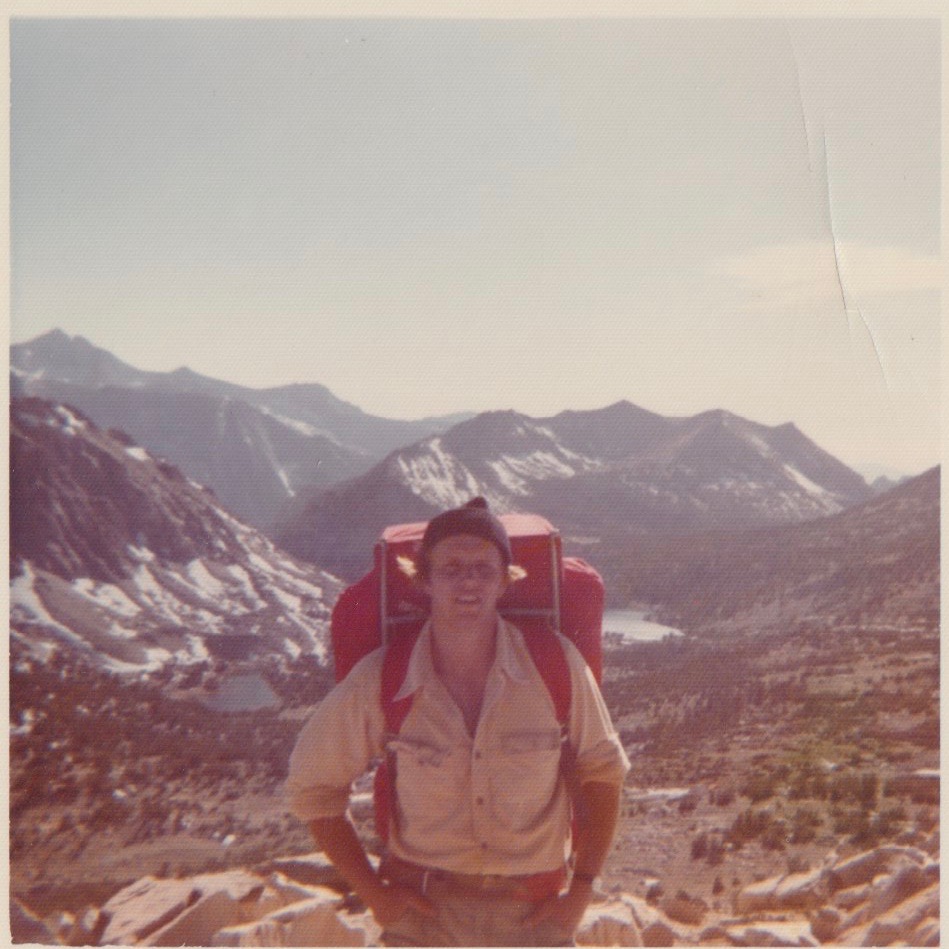
I am posting this 50-year-old photo because it reminds of the days when my lungs and knees worked like rubber, all elastic and no pain. I was no John Muir but I’m trying to remember if I had to stop for a breather going up Kearsarge Pass in the Sierra Nevada in the early 1970s. Now I wince at the thought of even going down. In July 1972, I was hired out from the California Division of Forestry to the Inyo National Forest to work on a crew building a five-mile stretch of the Pacific Crest Trail, near Cottonwood Pass to Siberian Outpost. From camp at Chicken Spring Lake, elevation 11,242, we walked to and from the end of each day’s work from July into October, with two burros, Pancho and Waldo, to carry — if they felt like it — the chainsaws, Cobra drills, gasoline, dynamite and C-4 plastic explosive but lugging the Pulaskis, McLeods, shovels and 20-pound rock bars ourselves. We worked 10 days on and 4 days off from when the snow cleared in early July until heavy snow returned in October. Putting in a foot and horse and mule packing trail takes time through timberline granite at 11,000 feet while avoiding the old foxtail pines and maintaining a constant elevation, more or less. At least once, we were sent to work a forest fire on our off days. Piece of cake.
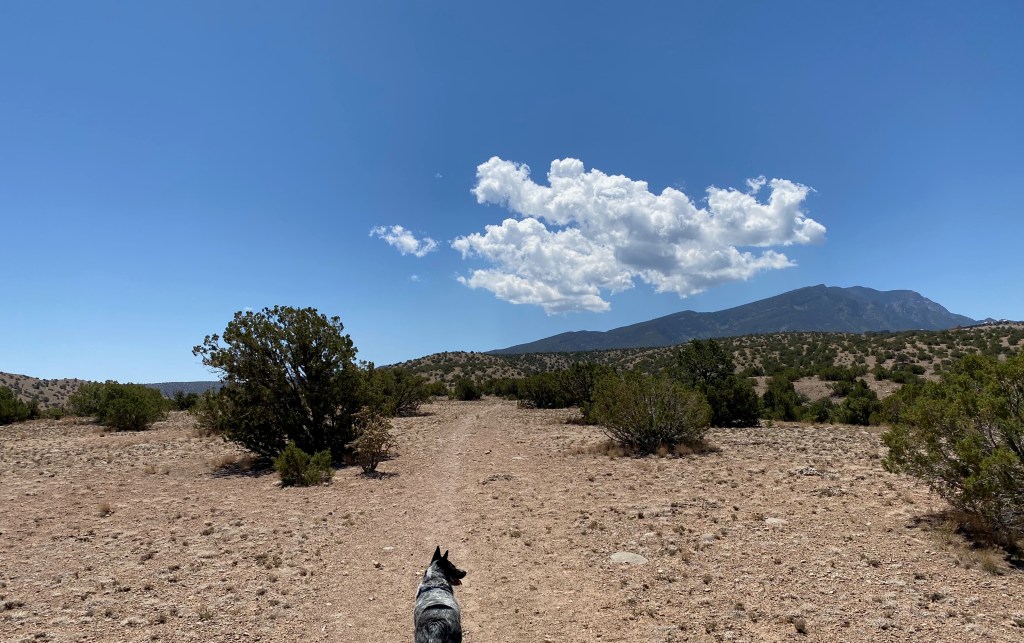
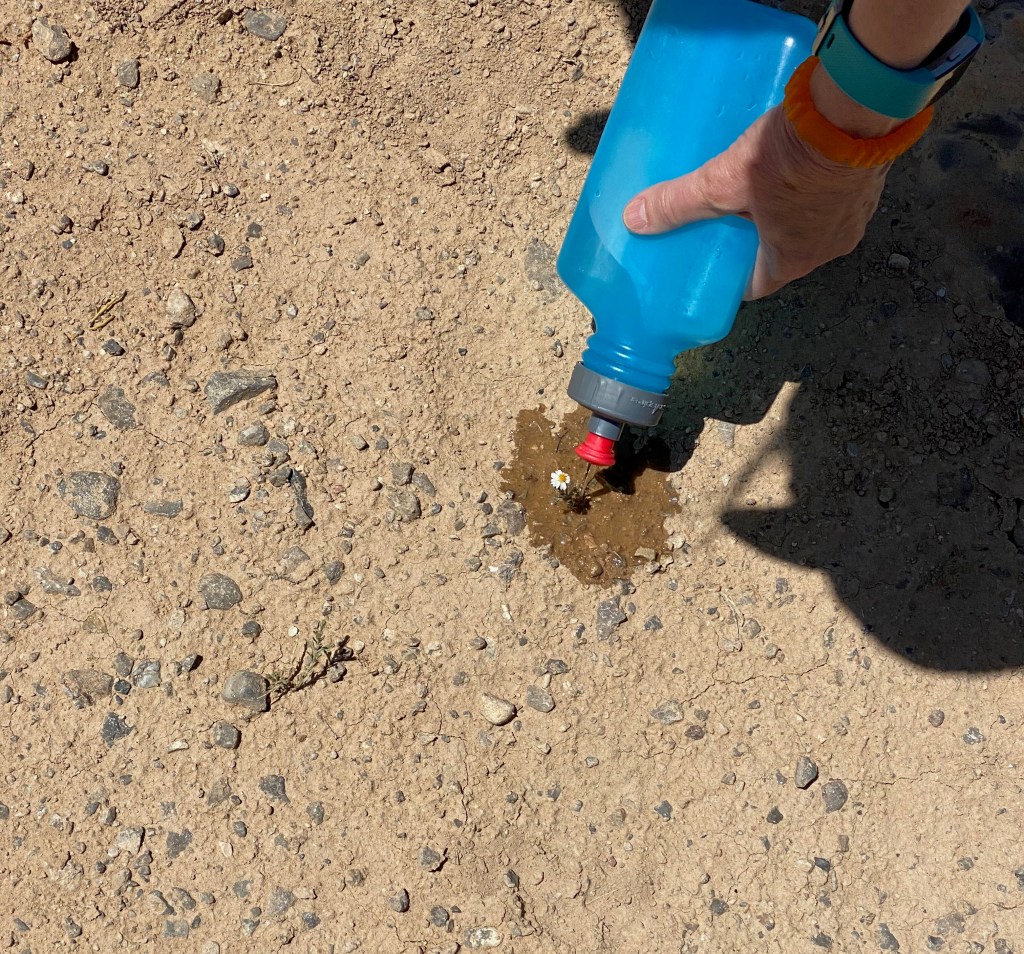
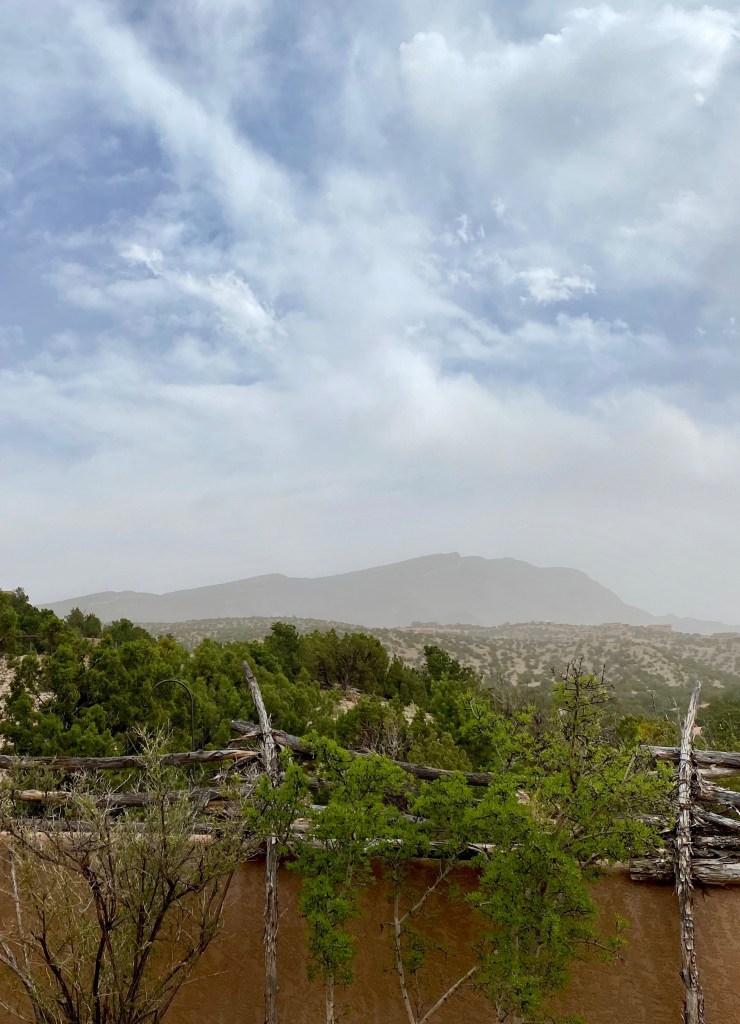
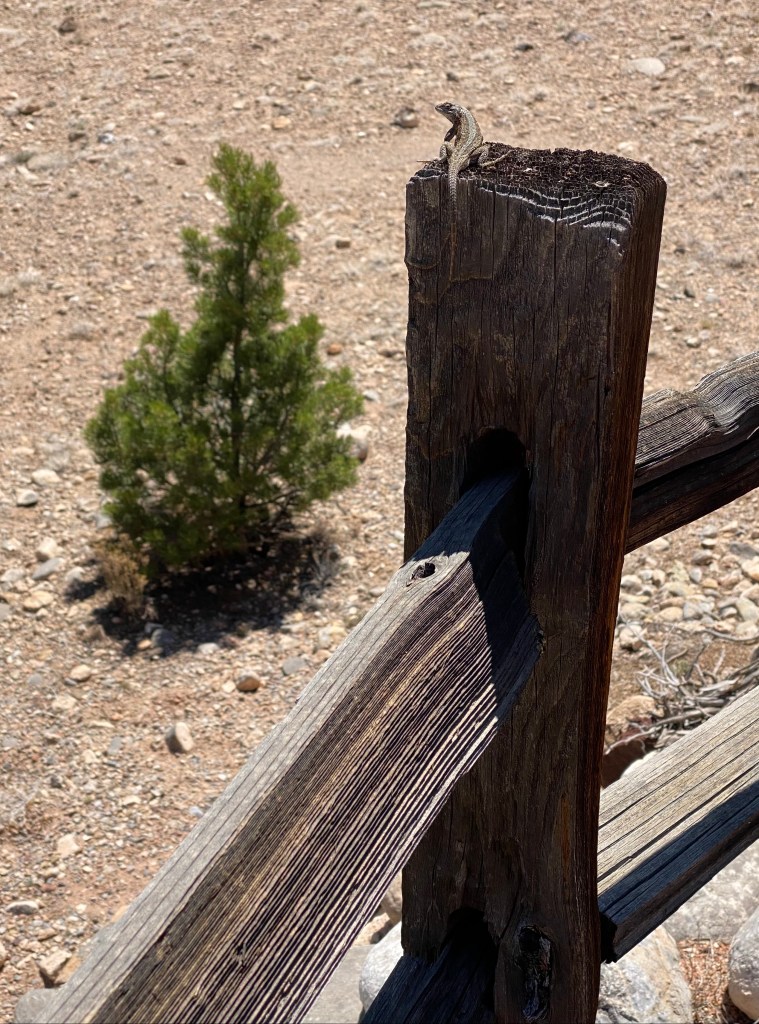
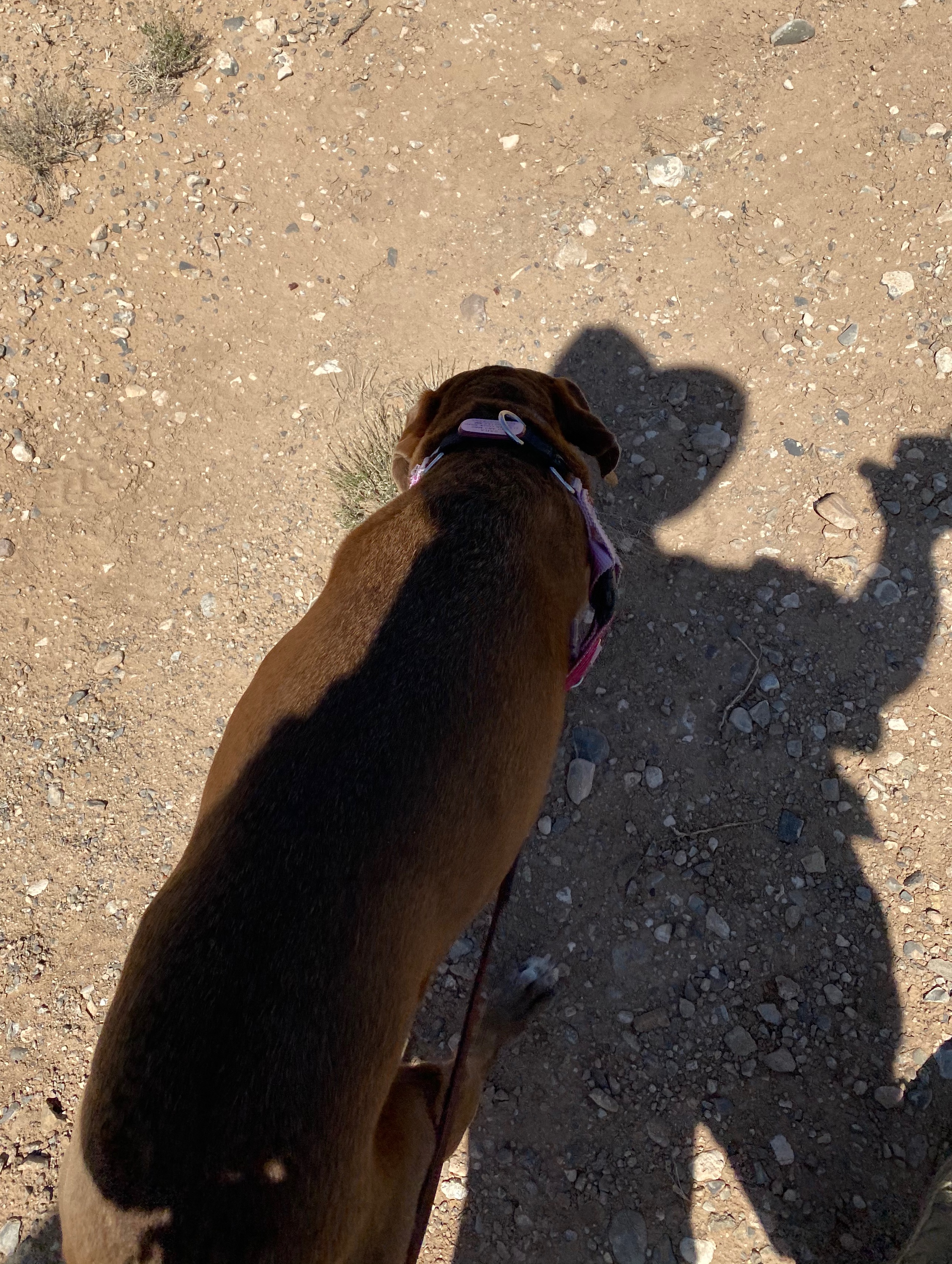
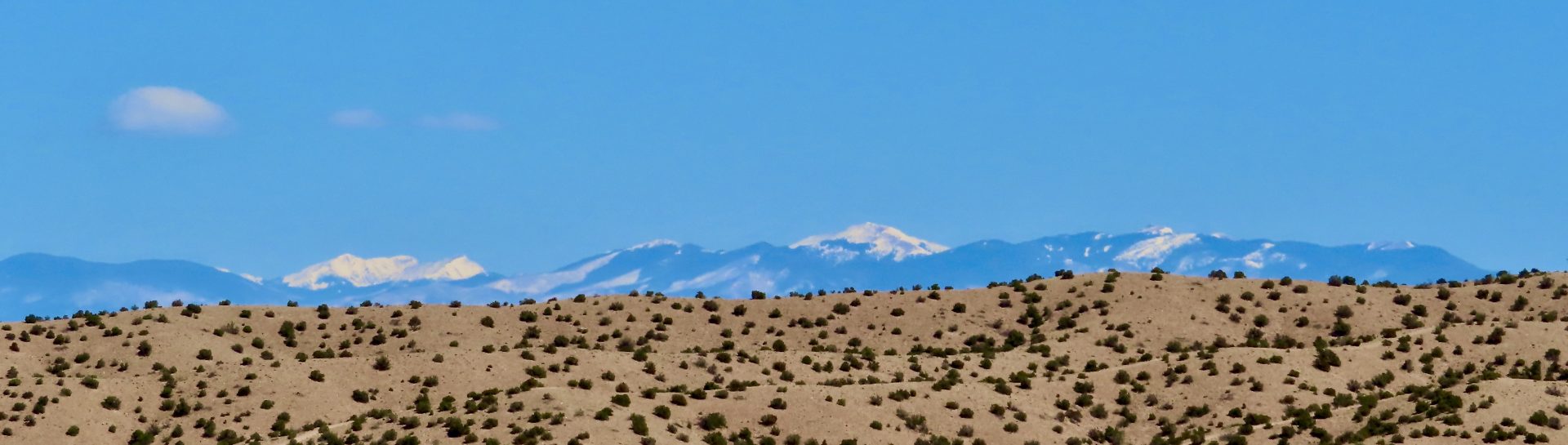
Cowboy surveys a mesa that after a wetter spring would be blanketed with yellow Fendler bladderpods. Our walking friend Lori gives a drink to a Blackfoot Daisy. Perky Sues are few and far between. The latest haboob clouds the watermelon mountain and a ridgetop subdivision. Survivors include a whiptail lizard and a piñon seedling passed on to me almost 30 years ago by Manny Aragon.

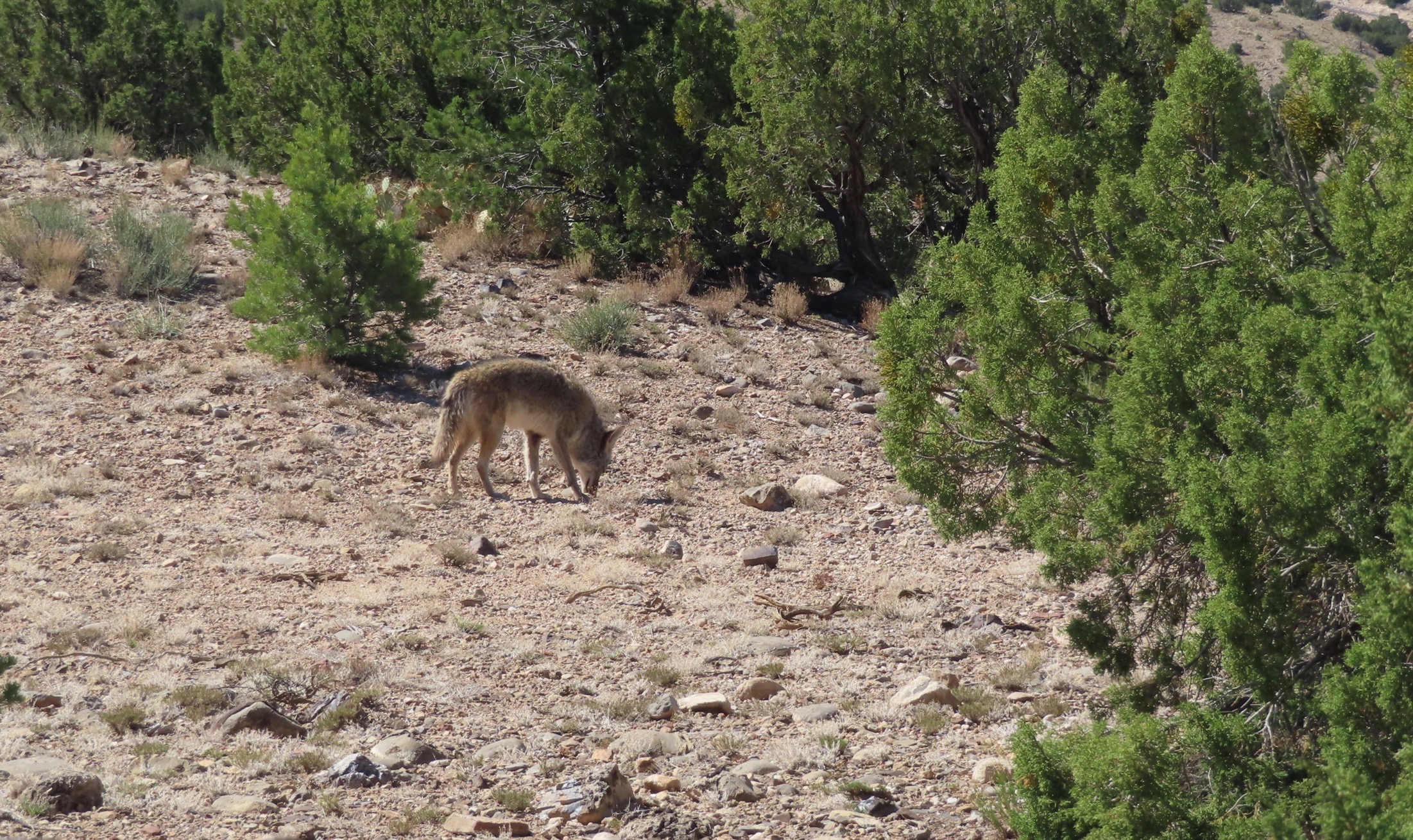
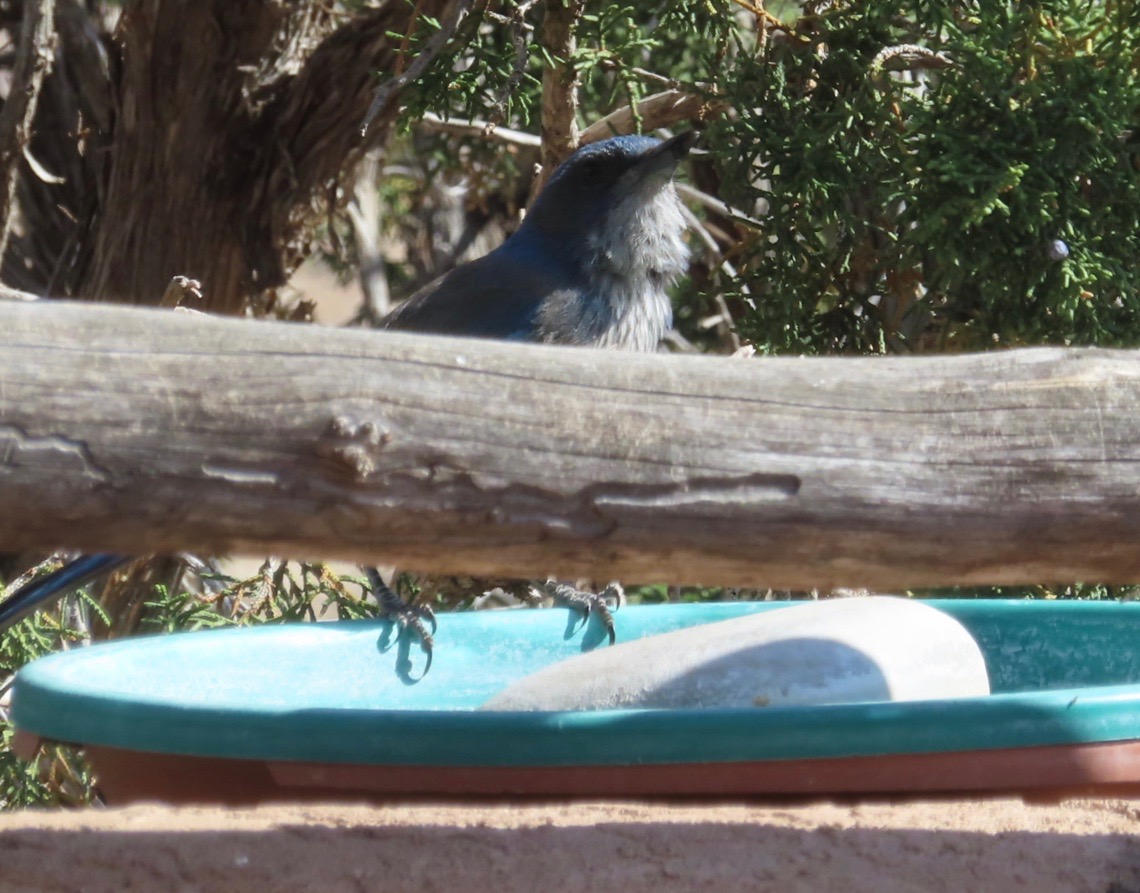
Seems like slim pickings for coyotes. I keep water out for scrub jays and others. Smart dogs like Sara shade up wherever they can. Two creeks used to run here. Now neighbors keep a plastic pool for Cowboy.

Categories: 2020

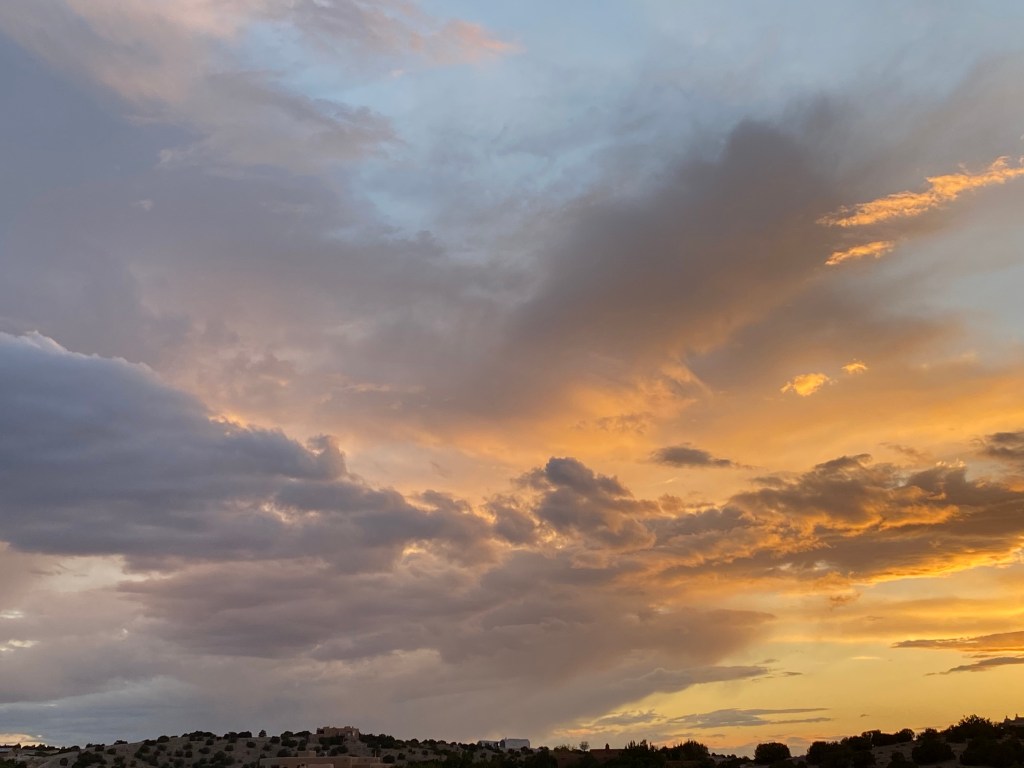
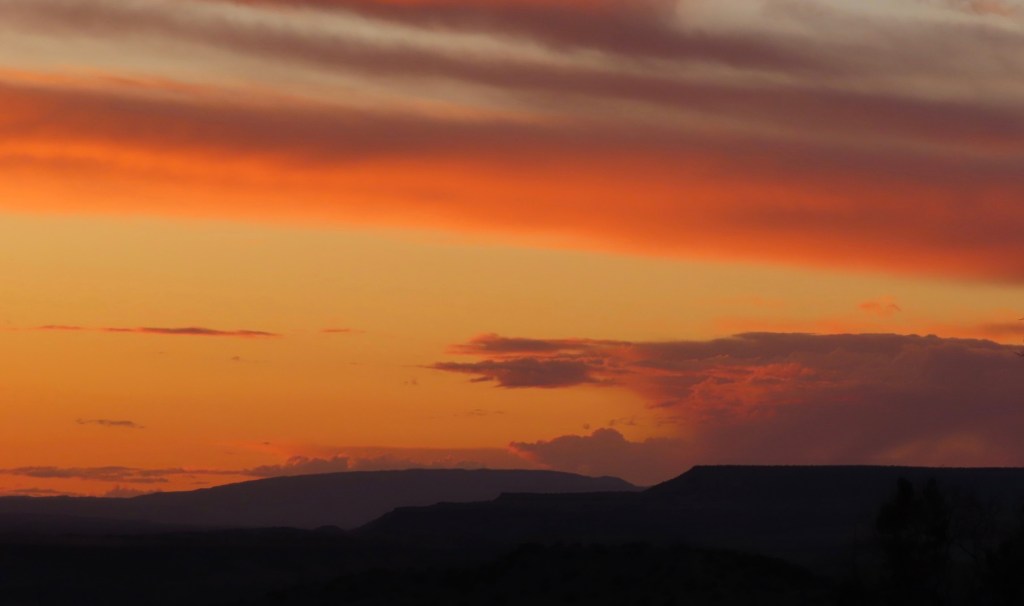
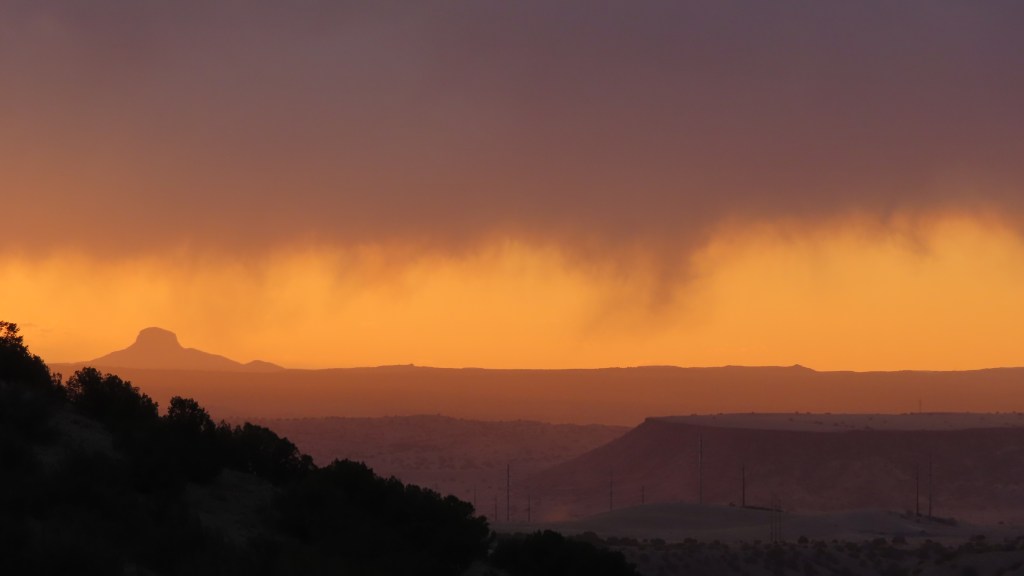
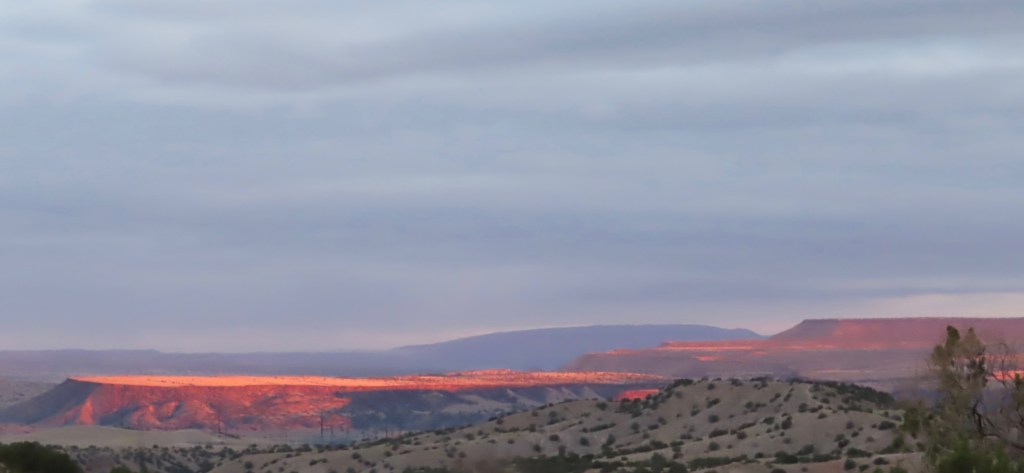
Sometimes you have to drop everything when the Rio Puerco lights up. In this case, a pot of green chile stew for Sunday was bubbling on the stove and I was about to put a batch of Martha Stewart’s Kitchen Sink Cookies in the oven. But this just lasted for minutes.

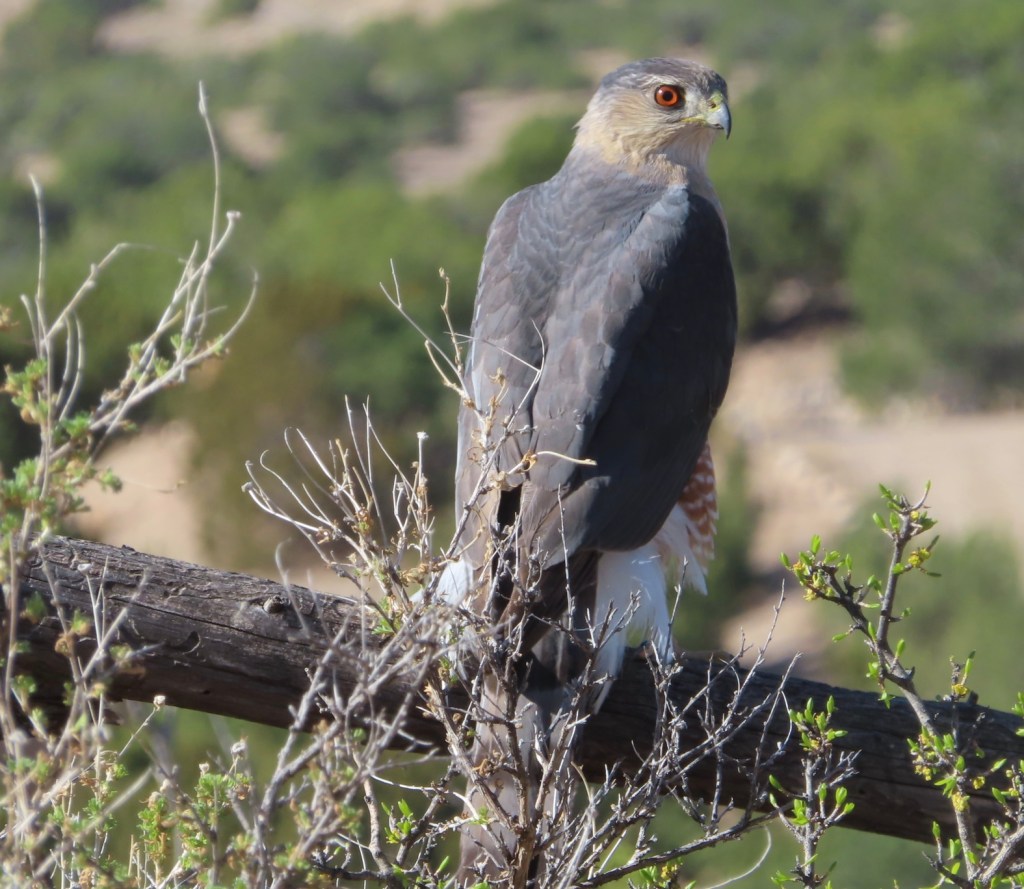
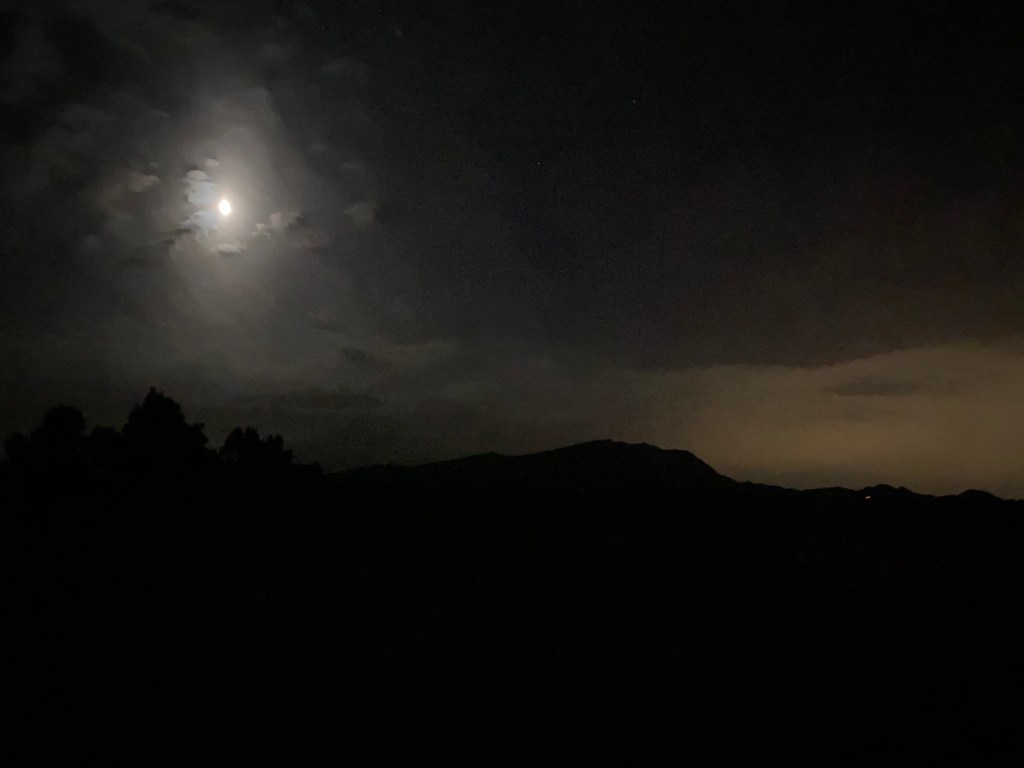
I don’t know whether it was the coyote ruckus and Cowboy barking or the smell of rain that got me out of bed at 4:30 in the morning but we were out observing. Not a drop fell here north of the Sandias that I could tell but the smell of rain to the south and east was unmistakable. I felt foolish outside in my longjohns but then knew that prying myself out of bed was worth it for that smell alone. While I drank coffee and watched birds later in the morning, my sister in Montana sent me maps of Western drought. Santa Fe National Forest tweeted that because of weather conditions it was putting off a prescribed burn in Pacheco Canyon, below the Santa Fe ski basin, where smoke always sets off alarms.

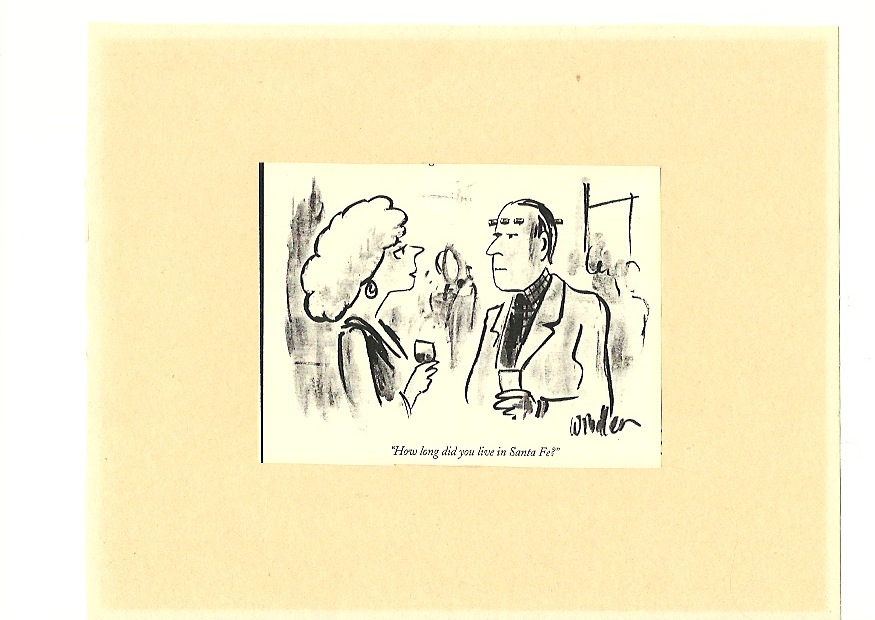
After reading about the latest Santa Fe style controversy — “Santa Fe takes battle over green house to court” — I wanted to revisit an old New Yorker cartoon. It helps me keep my head on straight.

  I have to note, though, that hysterical style debates don’t just  happen in Santa Fe. I moved to the Placitas middle ground while still newspapering in 1989 — 30 minutes from the Journal plant in Albuquerque and 45 minutes to the Capitol in Santa Fe — and the first local controversy I encountered was whether beige is an earth tone. My initial coyote fence proposal was rejected by the neighborhood architectural control dude, who said it was not an indigenous style.


I love both places — Santa Fe and Placitas — but I almost feel like I’m chickening out now by sending my pink flamingos with Santa Fe friends to the friends’ second home in TorC. I can only hope they still have the old Volvo wagon with flames painted on the sides so the flamingos can migrate south in style.

Meanwhile, you’d think they might have more pressing things to wonder about in the foothills southeast of Santa Fe: Like fire danger and groundwater.