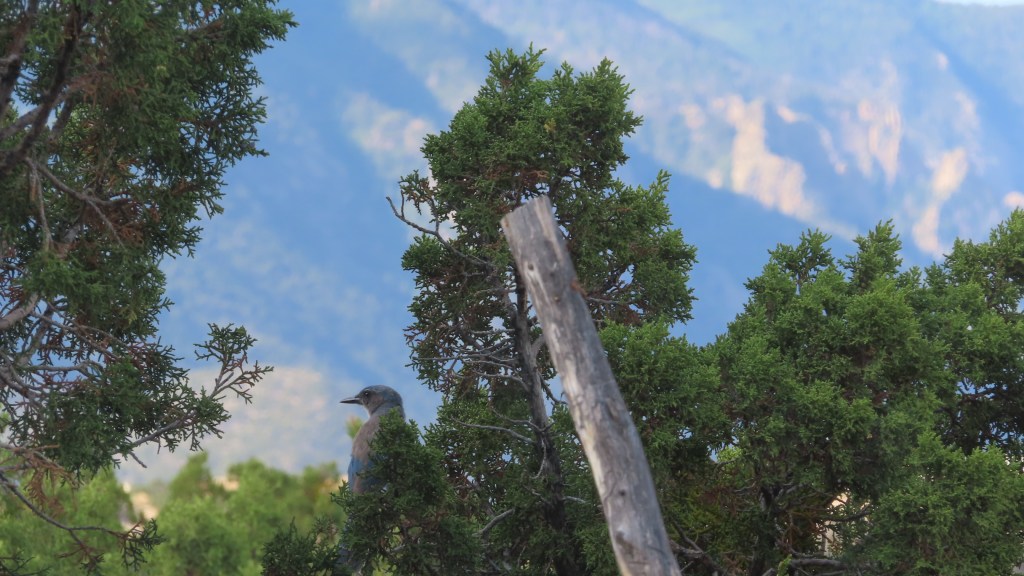
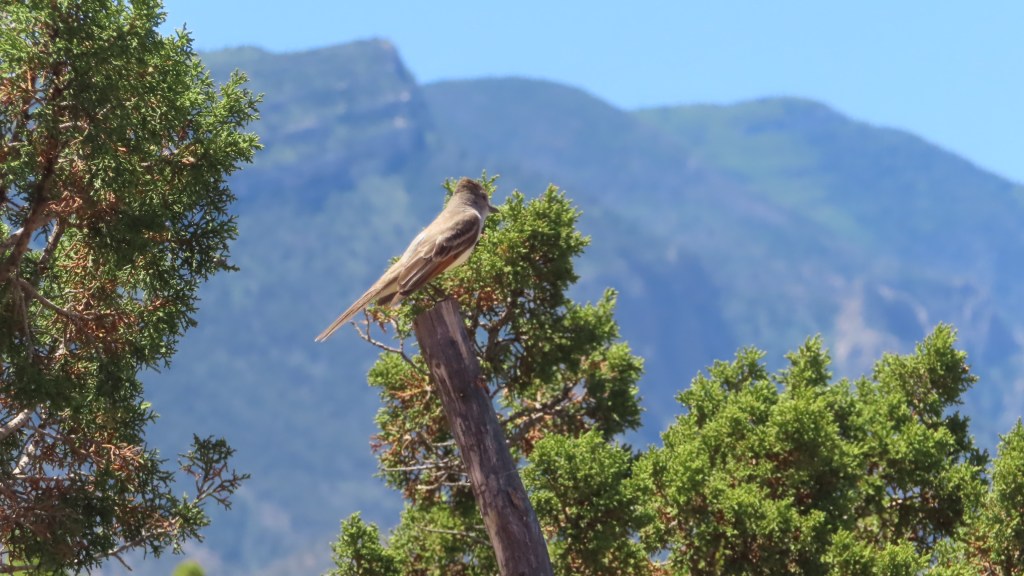
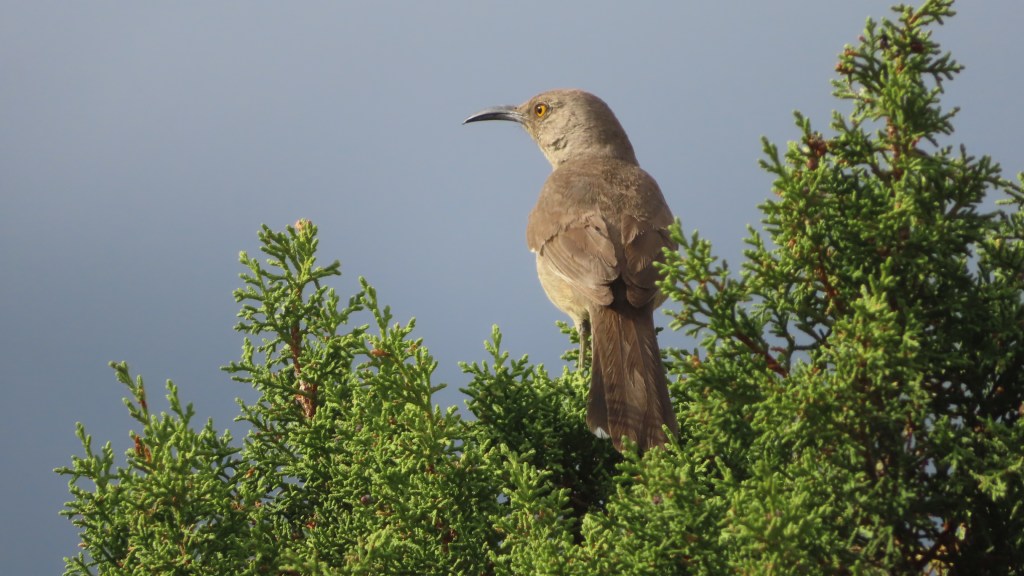
While the curved-bill thrasher sat at the top of the juniper this morning, I thought of the Thoreau line “monarch of all I survey.”

At first I was smug. Yeah, but I’ve got coffee, I told myself. Then I rethought my shallow human insights.

The thrasher doesn’t need coffee to help him take in the morning. We have different MOs — maybe he is thinking of bugs, mates and Cooper’s hawks — but he can fly and sing and I can’t. He doesn’t need sunscreen or a hat.

The author David Roybal posted a wonderful picture on Facebook this morning, a photo about what he called the joy of finding and just watching trout swim in the stream below his ancestral Northern New Mexico home.

I tapped the like button on the photo immediately because this has become my favorite kind of fishing, too. Sometime in the early 90s, between the first reservoir and the headwaters way up on the Rio Grande in Colorado, I discovered that I could keep a low profile on the open banks above the river in Brewster Park and watch for cutthroat trout. Trout are my favorite fish to eat but I found that I was having as much fun watching them as casting a line. I got grouchy a long time ago about the greedy aspects of catch-and-release.

And I now I remember that my favorite job ever was helping on a U.S. Fish and Wildlife Service brown trout survey in Hot Creek in the Sierra Nevada. It was kind of rough on the fish — electroshocking to clip fins, weigh and measure before returning them to the stream live as part of testing its health — but god was it gorgeous work.

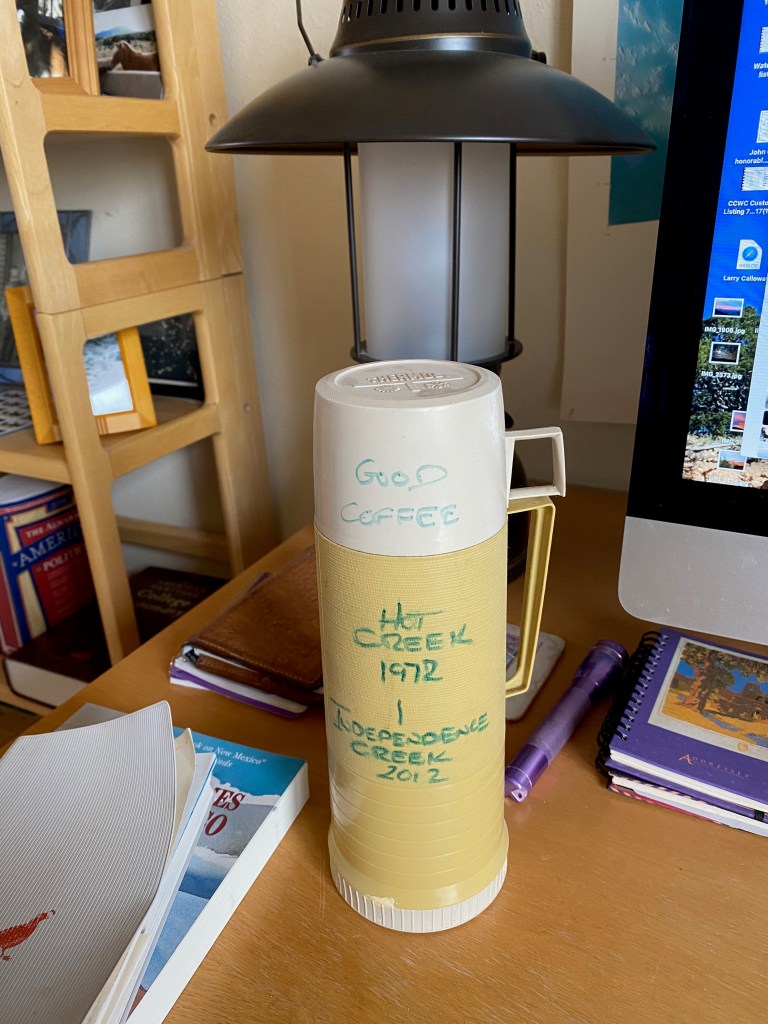
I liked the experience so much, I saved the Thermos I used on the job in 1972, reminding me of sunny mornings and the gleaming fish from the clear stream. I no longer used it but took it along for old times’ sake to a trail crew reunion in the Sierra in 2012, where I dropped it, shattering the glass inside.

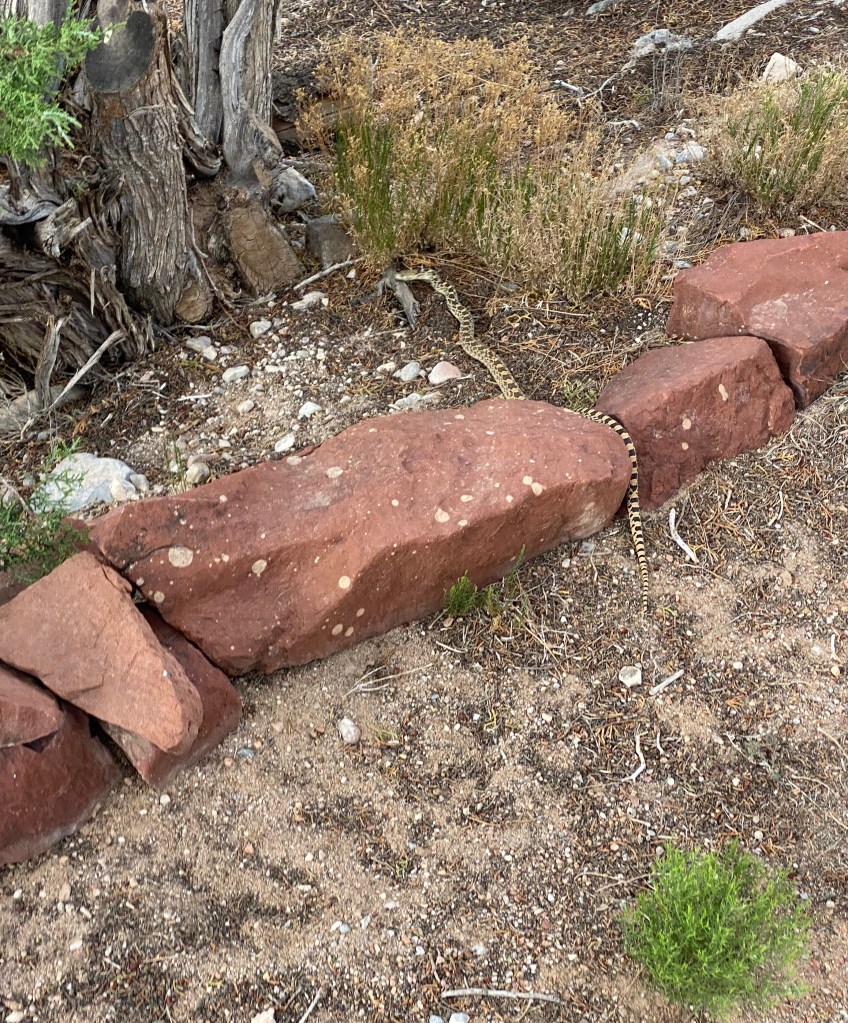
Before the thrasher this morning, I had three visits in several days from what I’m guessing is the same young bull snake. Each time we check each other out, he’s looked like he’s grinning. A friend over the ridge has been asking me to bring her a snake because she has a mouse problem. But I’m not giving this guy up. He looks like he knows what he’s doing here and he’s been making me smile.

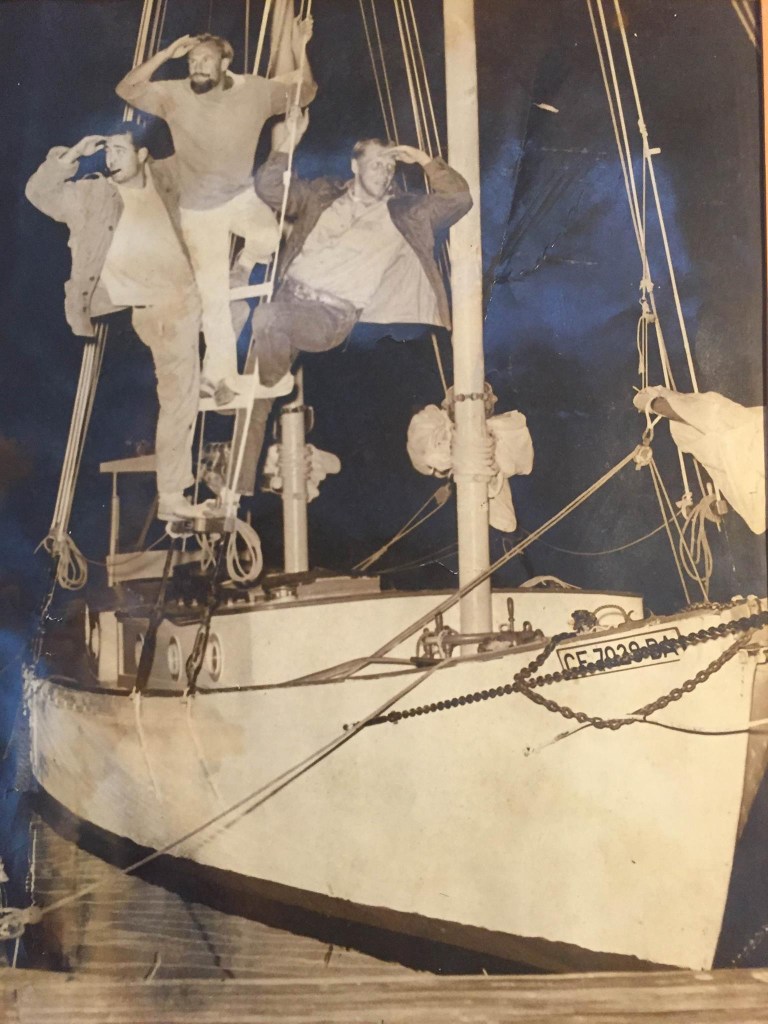
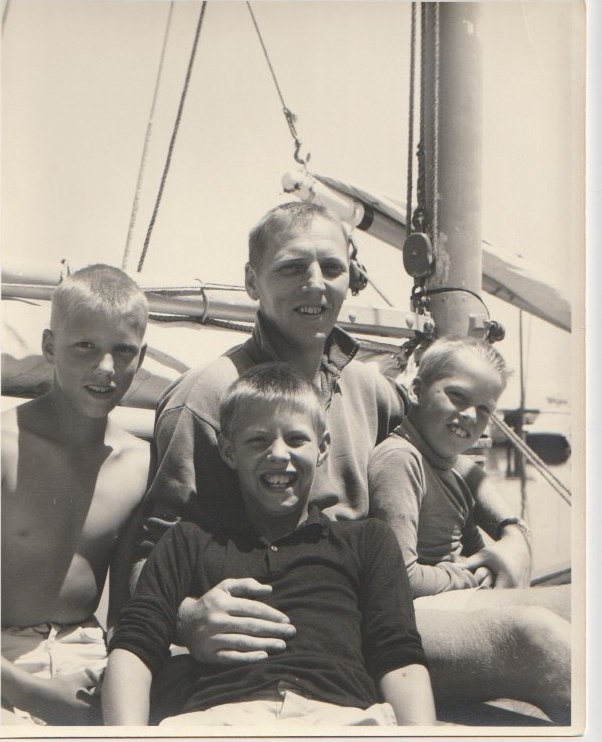
Looking through photos for Father’s Day, I found this: Dear not-so-old Dad, Bob Robertson, right, aboard the Adventurous in Sausalito, California, maybe around 1962.

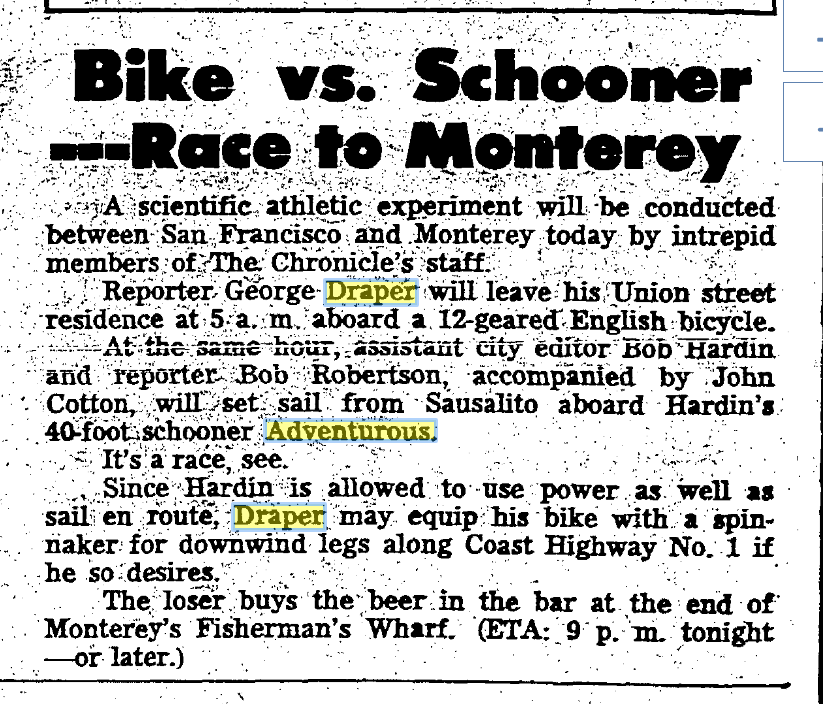
I don’t know whether the photo was taken after a late night at the No Name Bar or as the crew prepared the scruffy little schooner to race George Draper, an elegant San Francisco Chronicle reporter who would be riding his 12-speed bicycle and possibly wearing a beret, from Sausalito to Monterey, down Highway 1.

That is Adventurous owner and skipper Bob Hardin on the left, a Chronicle editor and a kind man who was generous with his boat. My father, too, was a Chronicle reporter. I’m not sure of the identity of the sailor in the middle of the ratlines pose but, if this is the 1962 bicycle-boat race to Monterey, a short Chronicle story identifies the third crew member for the race as John Cotton. (Apologies: I guessed in an early version of this post that the third man in the photo might be Bay Area sports announcer Bill King, who had a dandy goatee and mustache and berthed his much-better maintained ketch in the same Sausalito yacht harbor).

I don’t remember much about the race itself, including who won, although something tells me it was George Draper, who drove an ambulance for the Loyalists during the Spanish Civil War and was awarded a Silver Star as a pilot in World War II.

The only tale of the merry adventure I remember is someone aboard saying just before a horrendous jibe, “This boat will sail itself. “

My father, who died in 1995, was still in his 30s in the photo and I do not feel old, even near 72, as I write here. I have to remind myself that he was only 20 and, after serving in the Marines, just a college sophomore when I was born.

But what the photo reminds me of most is that these guys knew how to have fun.

————————————————————————————————————–

This just in: I found a brief about the race in the Chronicle sports pages, Aug. 21, 1962.

Meanwhile, some stuffy editor must have gotten wind of this story. I cannot find that the Chronicle published a follow up.

And rummaging around in those old photos I find one of another crew, roughly about 1963, with the three brothers recently changing scenery from 1,600 acres of Simms-owned land at the far end of Tano Road outside of Santa Fe to one of the gingerbread apartments across from the Glad Hand restaurant and San Francisco Bay on Bridgeway Boulevard in Sausalito. After a year of teaching at New Mexico Highlands University in Las Vegas, our father moved from the Columbus (Ohio) Citizen to the New York Times to the Grand Junction (Colorado) Sentinel to the Santa Fe New Mexican and the San Francisco Chronicle. Then he joined the Peace Corps. It was the 60s.

.

Bob Robertson and sons, left to right, John, Pat and Rob, aboard the Adventurous, Sausalito, California, around 1963.

NOTE TO READERS: THIS POST IS FROM FIRE SEASON 2021.

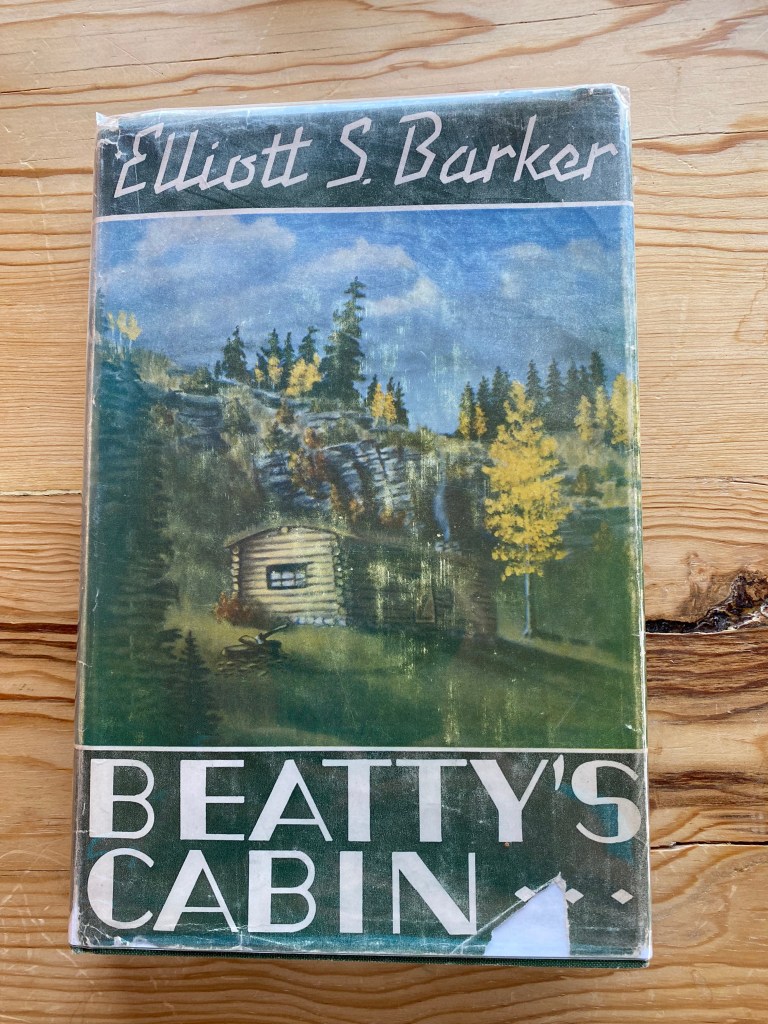
With Beatty’s Cabin unfortunately in the news — threatened this June 2021 by the Rincon Fire on the east side of the Pecos Wilderness — I went to the bookshelf for my prized first edition of this Pecos classic.

University of New Mexico Press, 1953.

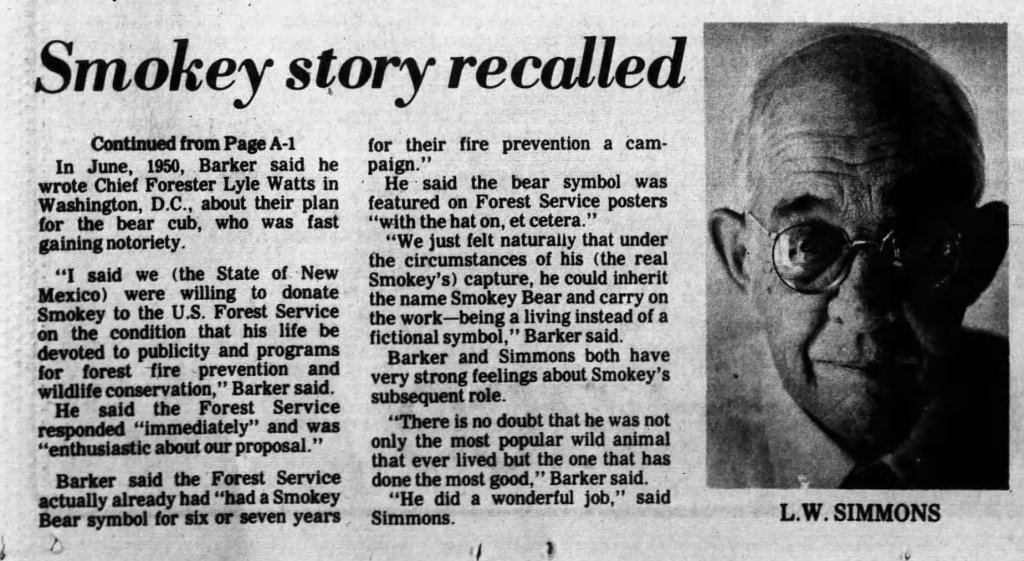
Here is a fine (linked) profile of the author, famed New Mexico game warden and lifelong Pecos hunter, fisherman and trail rider Elliott S. Barker, by historian Marc Simmons. I was fortunate to interview Barker for the Santa Fe New Mexican in 1976, then having to walk only from the New Mexican newsroom on East Marcy Street to Barker’s home on East Palace Avenue to track him down. I’m afraid the occasion was the death of Smokey Bear. Barker was 89 at the time. Smokey was 26. (In case links to New Mexican story aren’t working, see screenshots below).

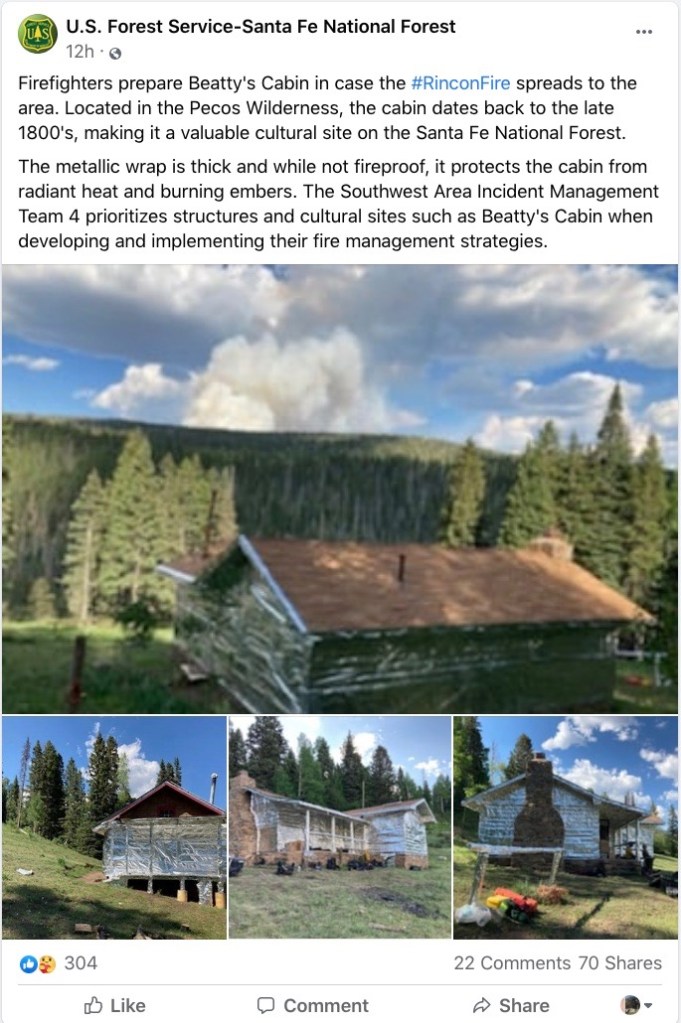
Santa Fe National Forest post on Facebook, June 15, 2021.

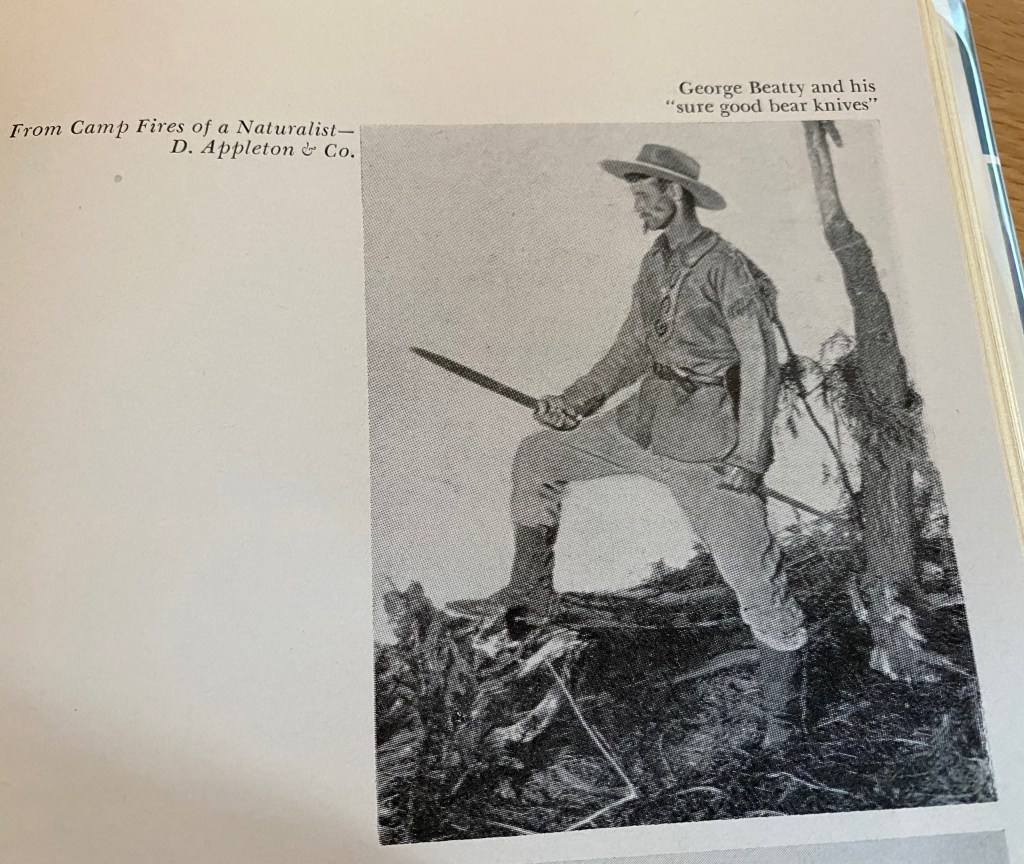
Here’s the cabin’s namesake, George Beatty, from the page’s of Barker’s book. I never felt the need to carry bear knives on my trips through the Pecos, but this photograph has been in my head most my of my life.

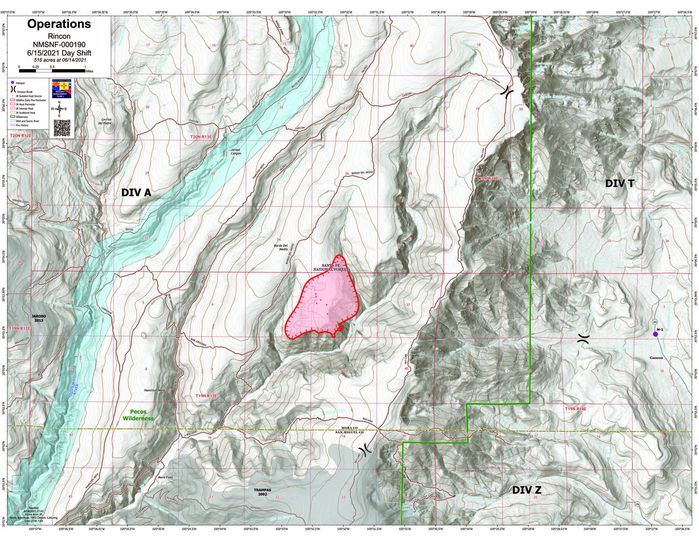
Here is a map of the June 2021 Rincon Fire area in the Pecos. “The lightning-caused Rincon Fire was reported on June 11 roughly 2 miles east of Hamilton Mesa and 6 miles northwest of the village of Upper Rociada in the Pecos Wilderness on the Pecos/Las Vegas Ranger District,” the Forest Service said. The fire was about 500 acres in size on June 15.

The Rincon Fire is not far from the Barker family ranch in Sapello Canyon, where Barker grew up.

Story from Santa Fe New Mexican, Nov. 14, 1976, below. (Don’t know how Barker’s first name was incorrectly spelled with one “t.” Sorry).

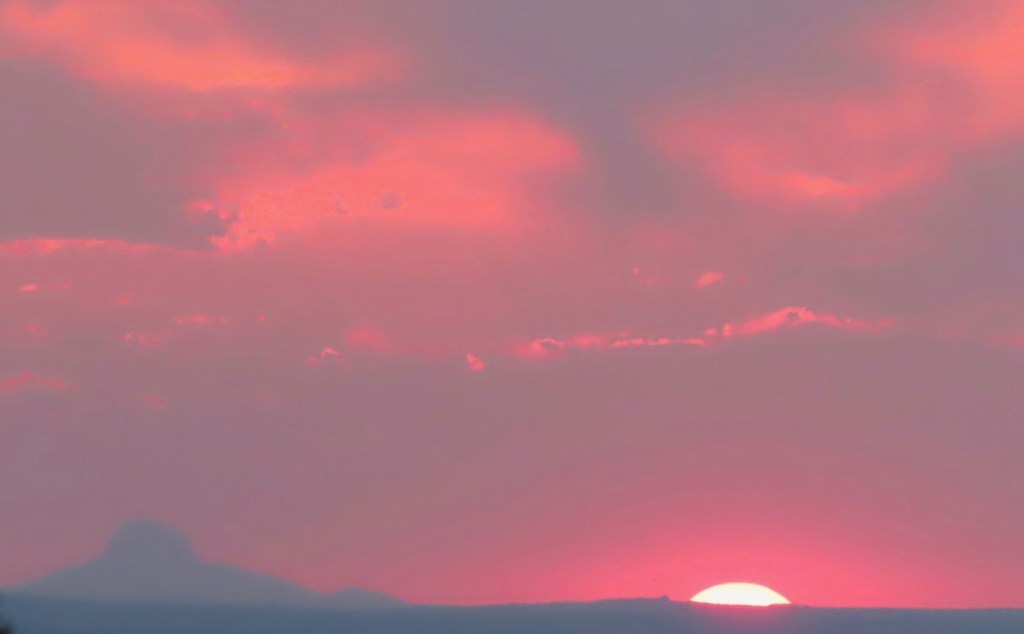
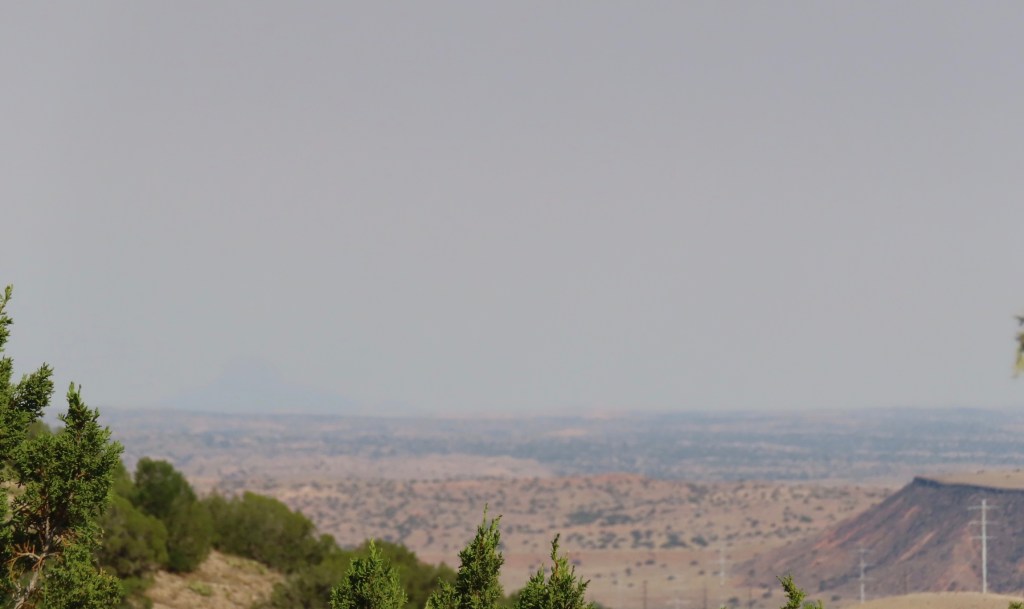
The volcanic plug Cabezon is obscured by wildfire smoke as the sun goes down June 16 beyond the Rio Puerco.

June is the cruelest month in New Mexico.

It’s supposed to hit 100 degrees today at 6,500 feet in the Sandia foothills. Humidity is soaring at 7 percent. Wildfires are burning in the Gila, the Pecos and father north, near El Rito, obscuring my visions of cool, clear streams running fast in the mountains. Arizona is sending up smoke, too. Cowboy is giving me dirty looks.

The water pundits are mournful choruses on the banks of the low-flowing Colorado and Rio Grande. They know that aridification, diminishing snowpacks and the oversize demands of irrigation are the elephants in the room. I am smaller-minded, worrying more about groundwater in my neck of the woods, community wells, ephemeral streams, springs and recharge. Gray water isn’t making a dent in my barely landscaped courtyard. Leaves are curling on the Mongolian tree, the desert olive, the Apache plume and the cherry sage whose flowers used to draw the hummingbirds.

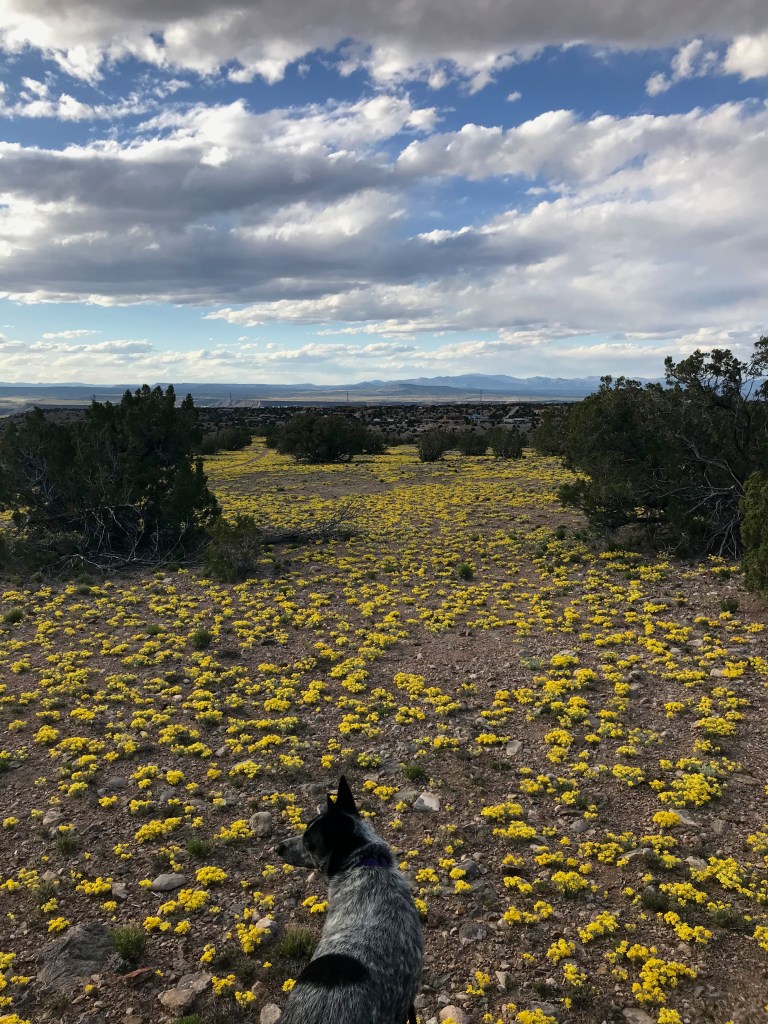
It seems worse this year, too. There was no carpet of yellow Fendler bladderpods in April. If you kick at a clump of old grass, it turns to dust. I haven’t seen bugs on the piñons yet but I fear they are coming.

I tell myself to be patient about water use in my semi-rural corner of Sandoval County. After all, Albuquerque residential use has trended downward over the years, although it jumped back last year, maybe because of COVID and people working from home. But I have been wrestling for months whether to buy an electric car. I have thought of, but not tried out, the excuse that I need to support New Mexico public schools by driving my old carbon-fueled truck.

Rincon Fire start in the Pecos Wilderness, June 11, 2021, seen from Placitas.

I would tell T.S. Eliot that New Mexico is not a waste land. I’m still here, for one, convinced it is magical. Many have stayed for thousands of years longer than I, through dry times and disease and out-of-state invaders. But I am worried. I read that it is all gradual slide of global warming, climate change. Awkward as it is, the big word aridification is the one that hits home most with me. I am telling myself to get used to it.

I tell newcomers about June. I tell them it is the hottest month, even though the data-keepers say July. Increasingly I tell the newcomers about wildfires and smoke. I tell them the Las Conchas fire in the Jemez in 2011 burned an acre a second. I have seen two nearby streams dry in the 30 years I have been in this northeast Placitas area home. Four dogs and drought have turned my walled-in yard into a dust bowl. I tell Cowboy I can’t flip the switch, although I converted from swamp cooler to air conditioning for his predecessor, Cooper.

I tell the newcomers that the weather service says our rainy season begins June 15, even though no one promises how much rain actually will come. The average Placitas rainfall is supposed to be 13 inches a year, compared to 38 nationally. I neglect to tell people how fast it races past my house to the Rio Grande.

The snowpack in the Sandias just to the south of me has been gone at least a month. I vaguely recall hearing of a study that said it takes 50 years for snow moisture at the top of the mountain to recharge the great river.

I am not even a drop in the bucket when it comes to climate change. I feel I’ve got to do my part but I remember the panic set off in 1968 by Paul Erlich’s book The Population Bomb and then reading last month this in the New York Times: ‘Long Slide Looms for World Population, With Sweeping Ramifications.” Erlich has defended his book, despite population swings, saying it warned of many problems the world would come to face because of more humans on the planet.

I believe what I read about human-caused climate change. I know the advocates say that radical and global repairs should be undertaken now. I’m all for it but admit that I reserve a little space for the complexity of the universe, the immensity of time and the possible limits of human comprehension. I know it’s getting drier. The fact is I haven’t put on my big winter coat in years. But I’m still hoping for a rainy season and what next winter might bring.

Soon after I got carried away tweeting about water this morning, a fellow tweeter in Santa Fe spotted smoke rising from the Pecos Wilderness in the Sangre de Cristo mountains.


I was still savoring coffee in Placitas, watching birds and enjoying the first morning in nearly a week free of wildfire smoke from southern Arizona and southwest New Mexico. I felt guilty about delaying my morning walk with Cowboy but I had gone back to sleep after my usual dawn awakening, at least with sunrise’s alignment this time of year. The June 11 temperature was already over 80 degrees and headed for the mid-90s.

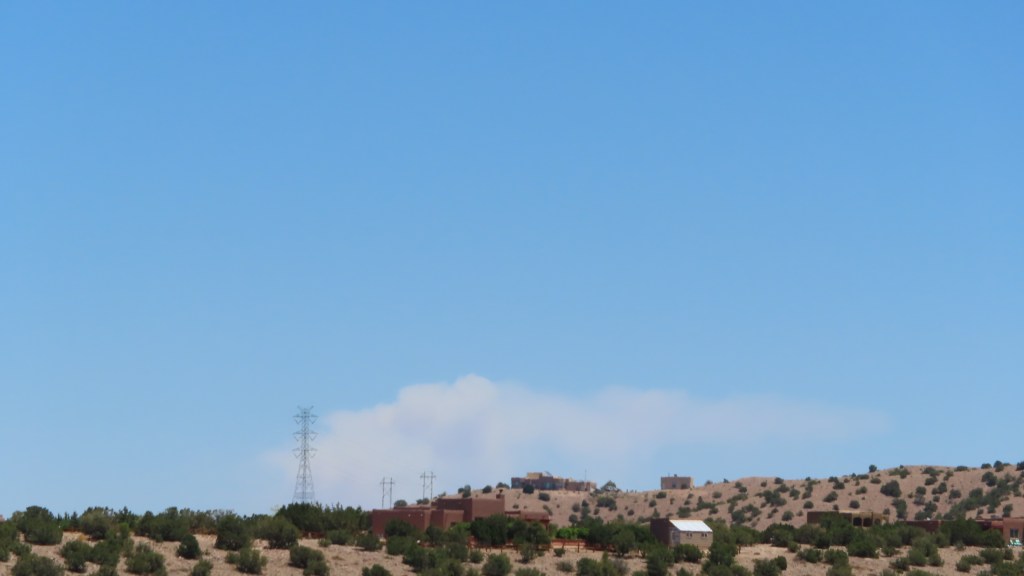
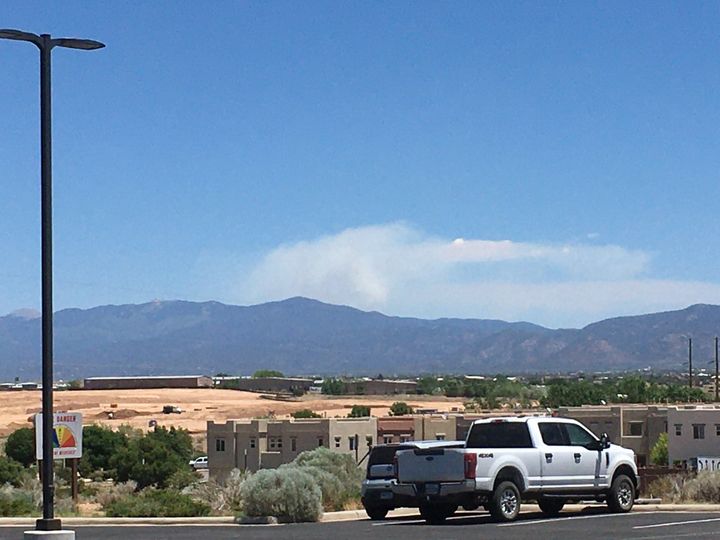
Then @the_maddawg tweeted a photo of what appeared to be smoke from a new fire start in the mountains east of Santa Fe. I grabbed my binoculars and iPhone and went outside to look northeast. I saw this in the direction of Santa Fe:

About an hour later the Santa Fe National Forest posted the photo below with this caption: “New fire start on the Santa Fe NF – in the Sangres. View from SFNF HQ on Highway 14. Name: Rincon Fire. Resources headed there now to assess. More info to come.”

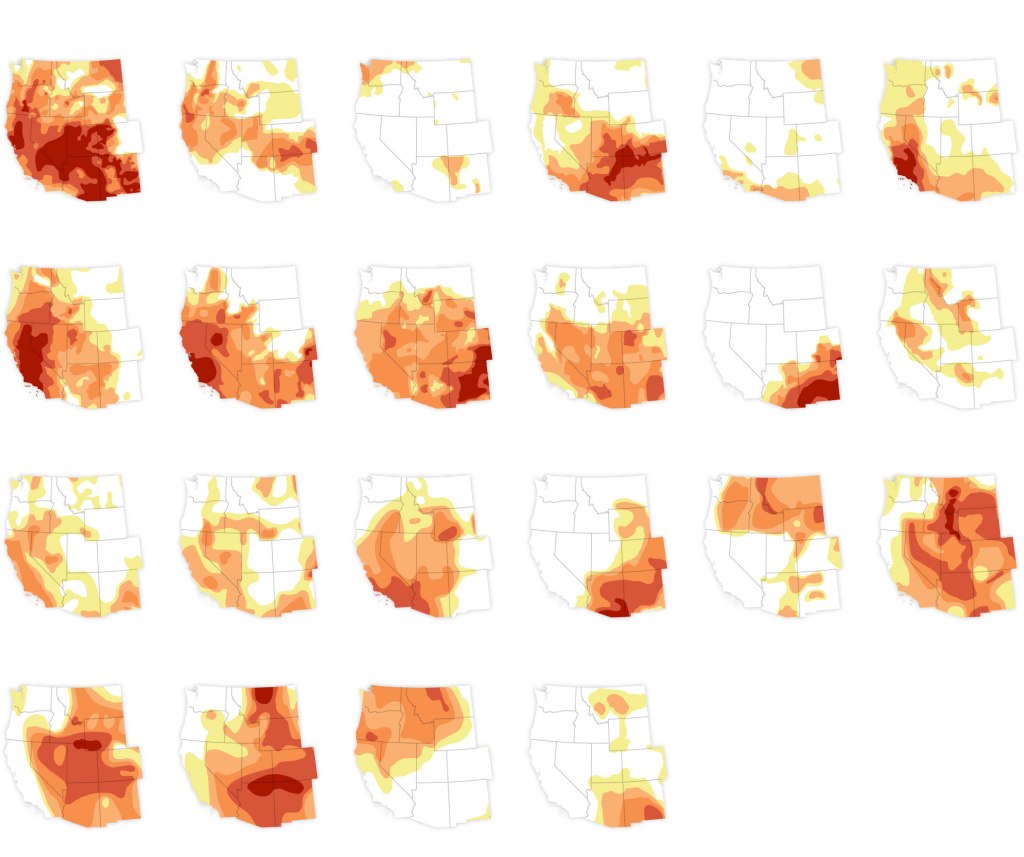
Other tweeters I follow were retweeting this drought in the West chart today from the New York Times. That’s early June 2021 in the upper left and early June 2000 in the lower right:

While remembering its somewhat tumultuous water rights background, I had been marveling at the excellence of the Eldorado Area Water and Sanitation District’s website, including its history section: https://www.eawsd.org/eawsd-history.

Eldorado, south of the city of Santa Fe, and Placitas, in Sandoval County not far south of Eldorado, both have populations of around 5,000 people (Placitas area population 2019: 4,686. Eldorado area population 2019: 5,823). Both areas are dependent on wells for water, though Placitas (with some springs and an acequia system still involved) is a more complicated area historically, politically and topographically, while Eldorado has unified itself for water purposes under a single water and sanitation district.

Comparisons and ambitions might be impossible beyond that. Sandoval County had this to say about Placitas in its 2009 Placitas Area Plan:

“Over time, numerous solutions to the water issues in Placitas have been developed. In the territorial and colonial periods, surface water from springs and streams was largely the solution of choice. Over time, additional demands were met through the development of wells. Today, the increasing populations have caused a move toward systems using shared wells to meet the water needs of the area. While there are still individual domestic wells, the needs of water resource management are driving away from that option as the preferred method.

“There are about 14 area water systems plus Las Acequias de Placitas. Further, there are numerous old, single lot domestic wells, shared wells, springs and streams in the area used as water sources in the community. As such, there is not a simple definition of the water situation from a demand point of view any more than there is an easy way to characterize the supply side of the equation. Given continuing growth of the area and a desire to maximize the utility of the available water and encourage conservation practices, the County will encourage shared wells and community water systems.”

So, about 14 community water systems in the Placitas area … apparently not counting the mini or shared well systems that have supported much new development. Eldorado as a whole reportedly has 12 wells and six storage tanks.

To avoid panic about Placitas area water supply in general, I will repeat this old saw about our area.:

“The conclusions of the study are that water availability in the Placitas area varies. There are sections where water is relatively abundant, areas where water availability is challenged, and areas between these extremes. In Placitas, like most areas, water is greatly influenced by geology. Local structure is complex; it is characterized by faulting associated with the Rio Grande Rift zone.” From Placitas Area Plan, Sandoval County, 2009.

The Eldorado website reports this about the Eldorado water supply:

“A second hydrology study and groundwater model conducted by Glorieta Geoscience, Inc. in 2007 reassessed the situation and determined that EAWSD has a 100-year supply of groundwater, assuming no increase in water production (and it has actually decreased by over 18% since 2007). However, the water supply issue must be monitored closely. Drought conditions over the past 5 years appear to have reduced water production in a number of wells. The rate of recharge of the aquifers is critical to the sustainability of water production.”

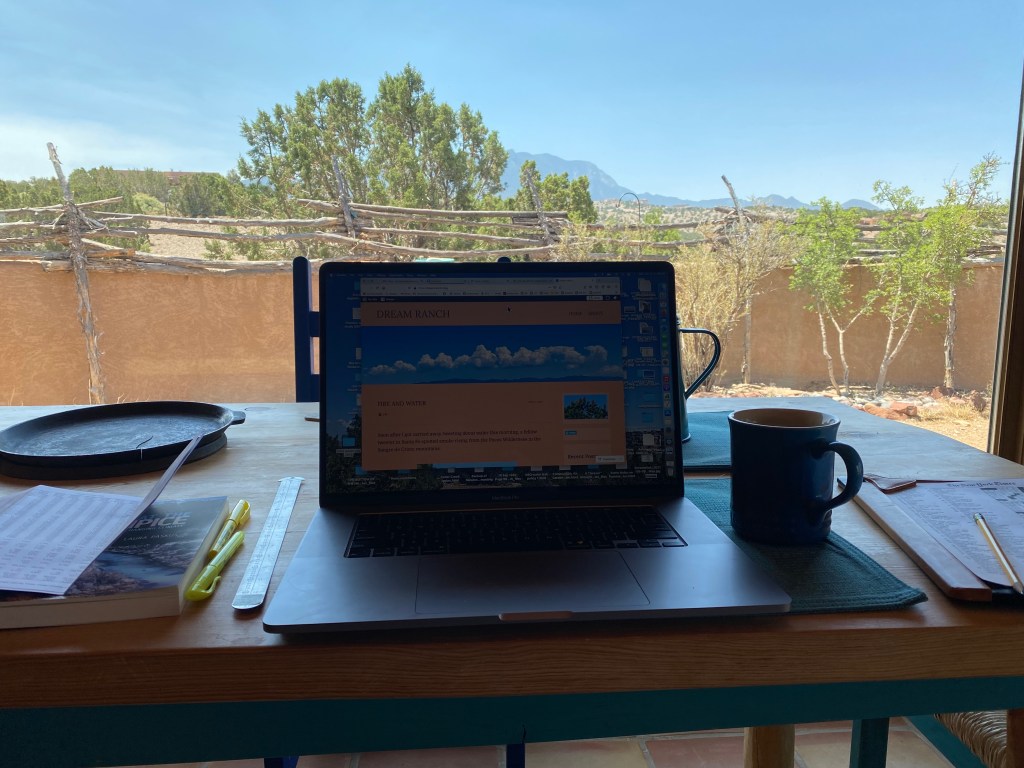
As I asked questions this morning — mostly of myself but reaching out on Twitter to experts as well — I remembered to look in the index of Laura Paskus’s book about climate change in New Mexico, At the Precipice, UNM Press 2020.

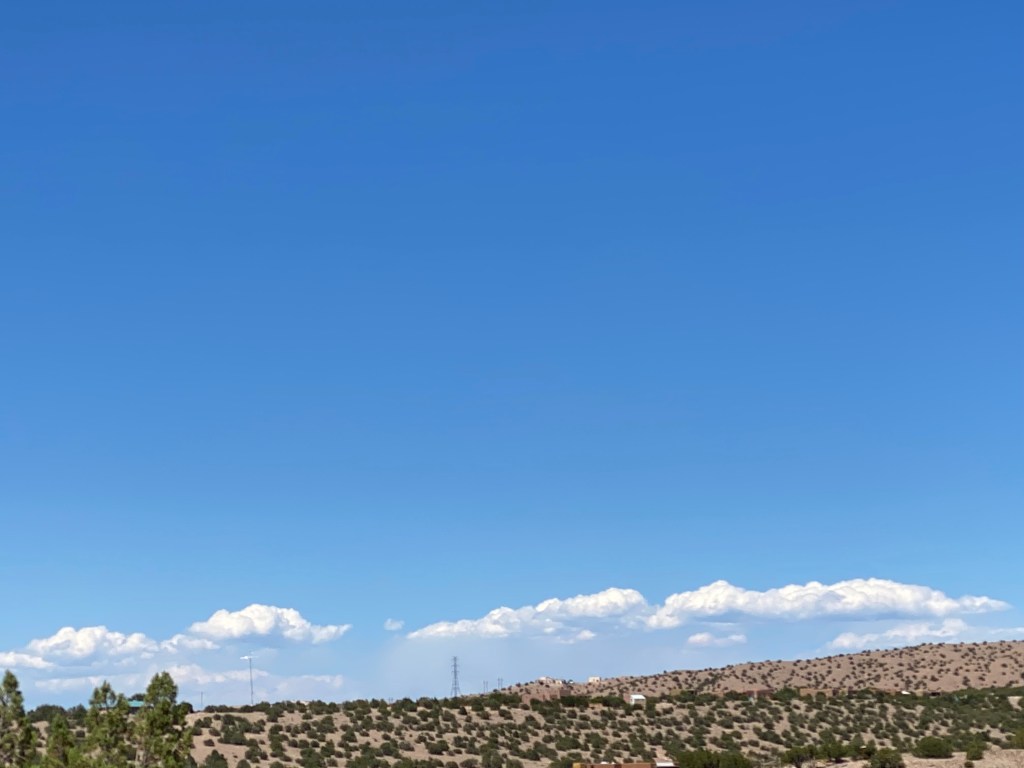
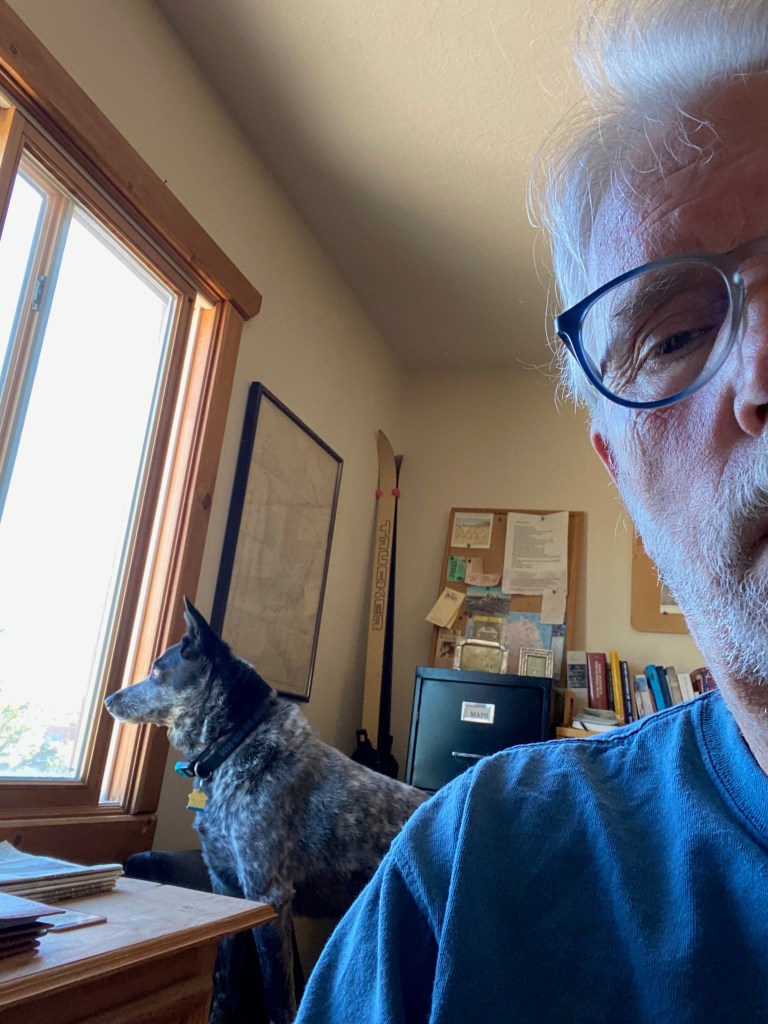
And I just craned my neck from home office desk chair in Placitas to look northeast at the smoke farther northeast of Santa Fe. I see a few cumulus clouds building over the fire area. I hope there is hope.
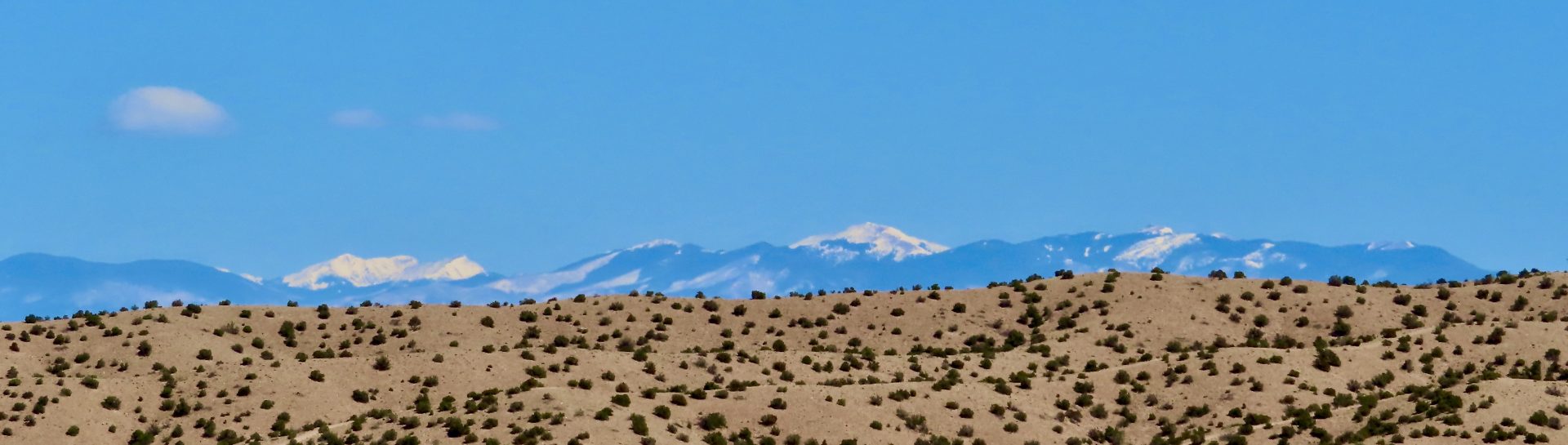
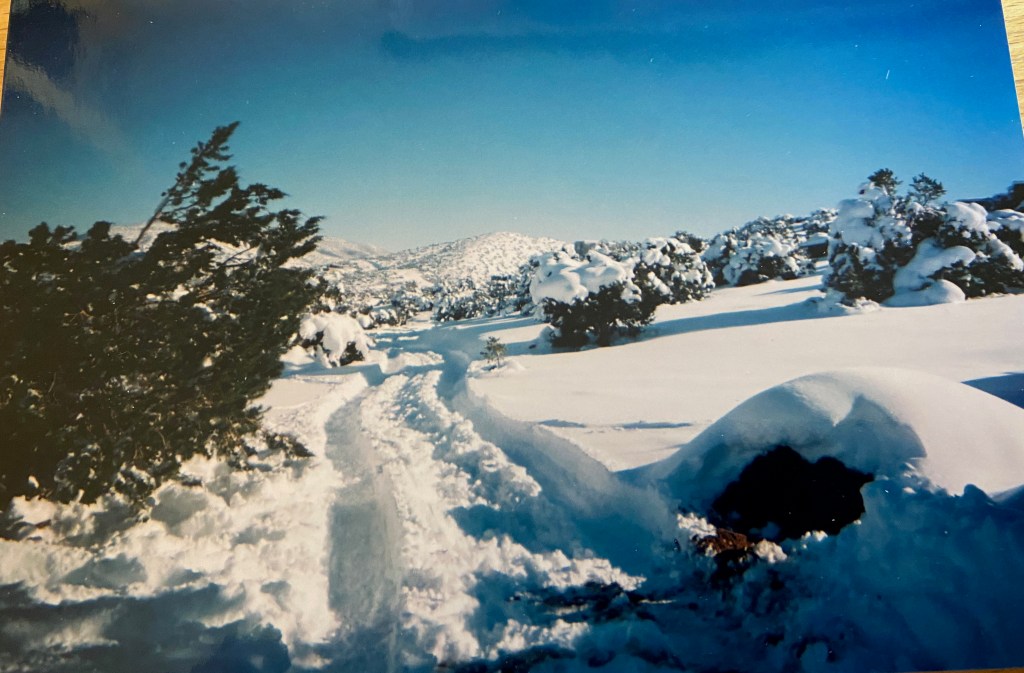
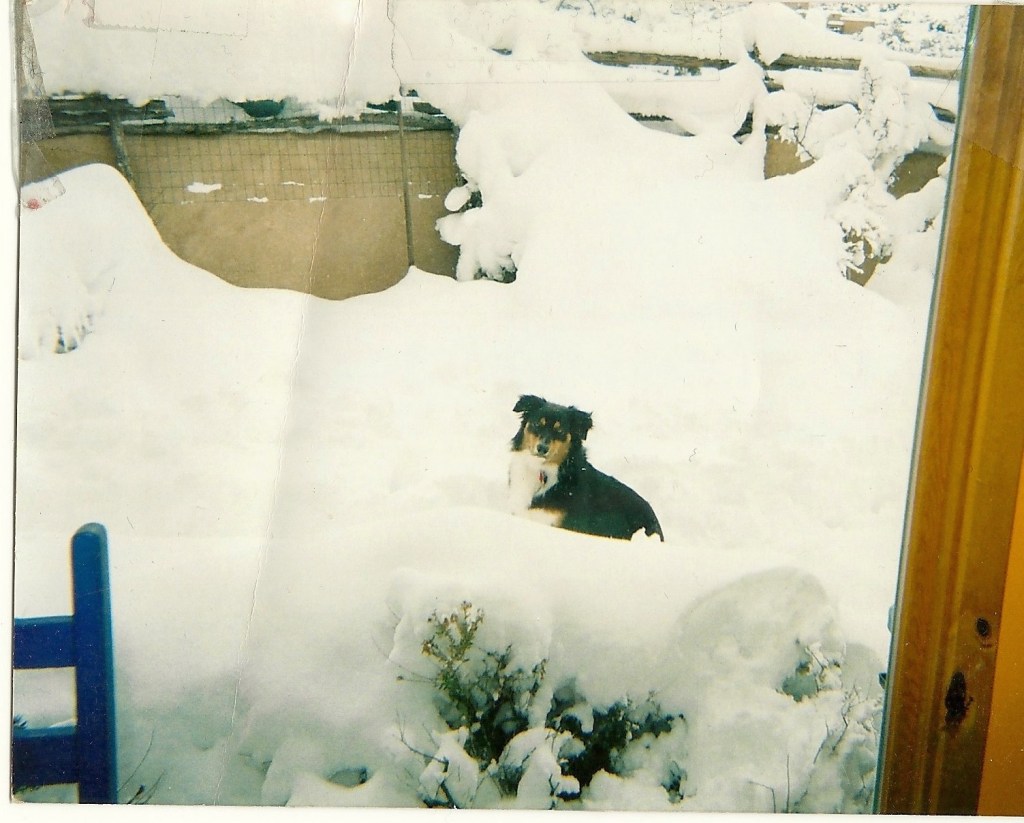
This morning’s wildfire smoke started me thinking about our last big snow. It was December 2006 and it was a big one for the upper Middle Rio Grande valley. A record-setting 11.3 inches landed on the airport in Albuquerque. We got close to a couple of feet up here in Placitas. That is my late dog Cooper looking a little baffled by developments.
But my brain is such a hollow vehicle when it comes to data-keeping, anecdotes drift like hot air balloons. Kept inside by the smoke this morning, I wondered if we now have more smoky days than we used to. The real question probably is whether we have more wildfires. I suspect that is the case but I also remembered another day in 2006, my 57th birthday in August. Cooper and I walked up the fire road to the radio towers above the Santa Fe ski area. All we could see to the west, from nearly 12,000 feet up, was smoke.

It does seem that we got more consistent snows in the 1970s. I think this impression stems mostly from another dog and I, Mus — short for Mustafa — being overtaken by a big, slow storm in the Bandelier backcountry on Christmas day around 1973. I got a hint of what was to come the night before when Mus aligned himself with my sleeping bag inside the tent on Upper Frijoles Creek. (I think the backcountry rules were different in those days). We hurried out after a Christmas Eve on frozen ground in Capulin Canyon. It started snowing as we passed the Stone Lions and was dumping a couple of feet by the time we got back to Santa Fe.

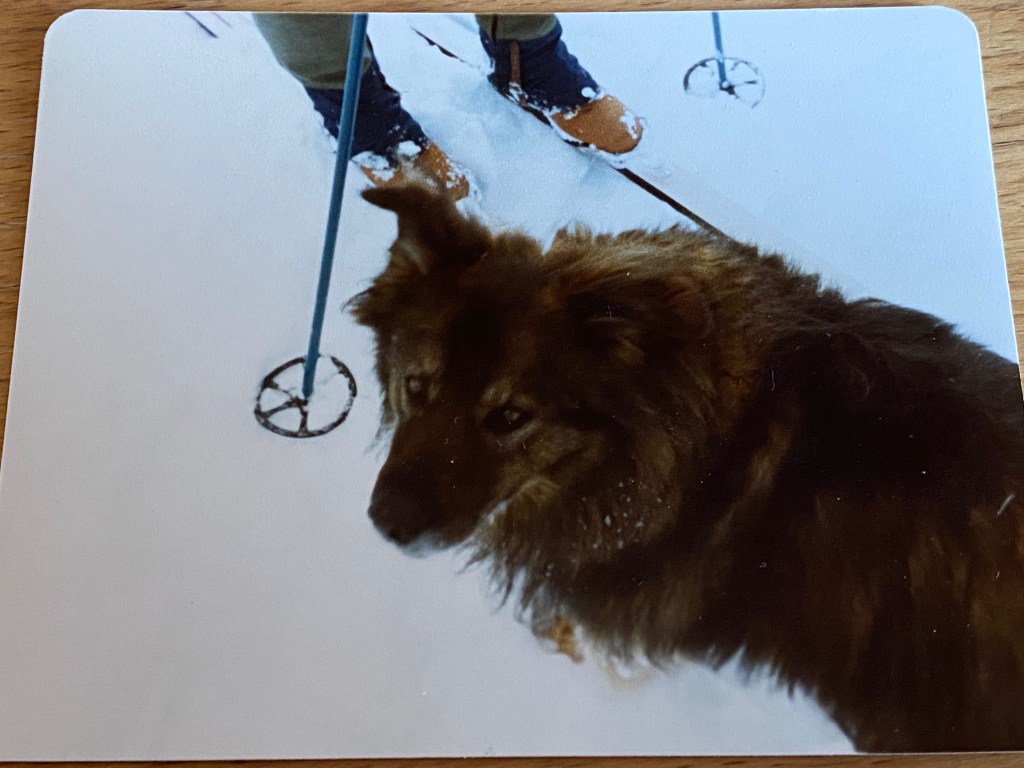
I skied with Mus, too. In the 1970s around Santa Fe, it seemed there was sometimes enough snow to ski on Atalaya mountain, before Wilderness Gate, and gloriously down the long, smooth arroyos running southwest from my rented guest house on Nine Mile Road. I think this photo of Mus from the 70s is probably from somewhere around St. John’s.

Then there were days when the snow at the Valles Caldera hid the “No Tresspassing” signs on the barbed wire fence and you just happened to have skis in the back of the truck.

Although I am easily fooled by the latest rain or snowfall, I have read in environment writer Laura Paskus reports that it is warmer in New Mexico these days and not so far in the future my stomping grounds will look like El Paso. It already looks drier. Much drier.

Paskus quotes climate change scholar Jonathan Overpeck in her 2020 book At the Precipice: “What we’re seeing now in the drought that’s going on is that it’s more due to temperature increase and less due to precipitation deficit.” Paskus notes: “Even during wet years, which will still occur as the climate changes, warmer conditions dry out landscapes.”

John Fleck of the University of New Mexico Water Resources Program tweeted earlier this spring, “The last 12 months in New Mexico have been the driest April-March period in the history of weather record-keeping here.”

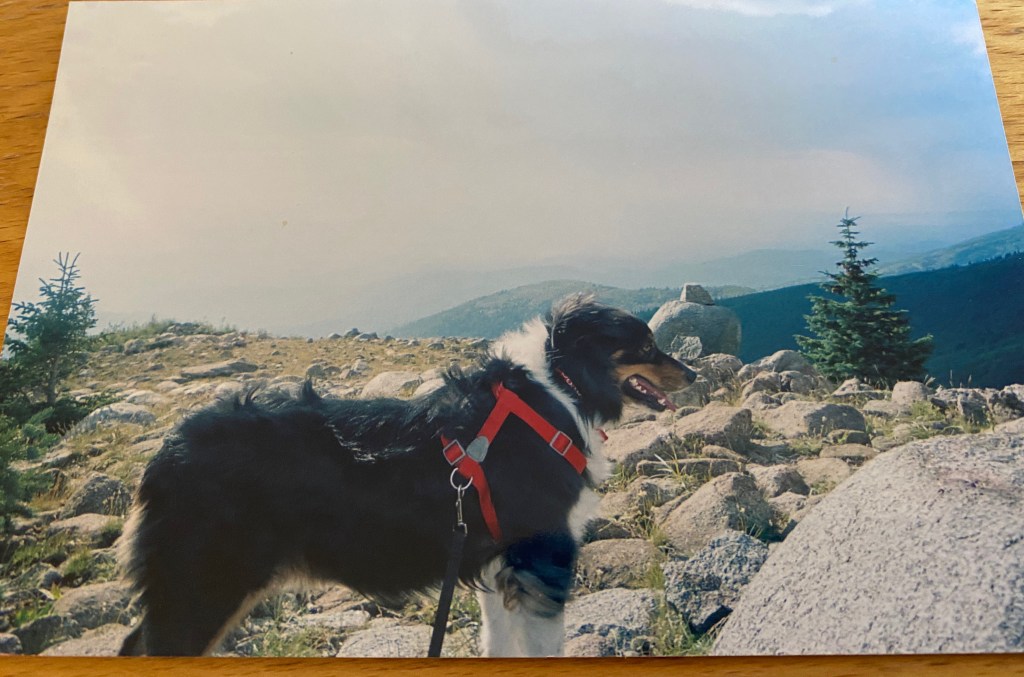
I suppose mostly because of the dryness, climate change is on my mind every day. Clumps of old grass turn to dust under my boots. Below are Sadie and Molly bounding home in Placitas in 1992, snow not smoke in the background, when spring moisture primed the hills for wildflowers and a little grass still lived to green.

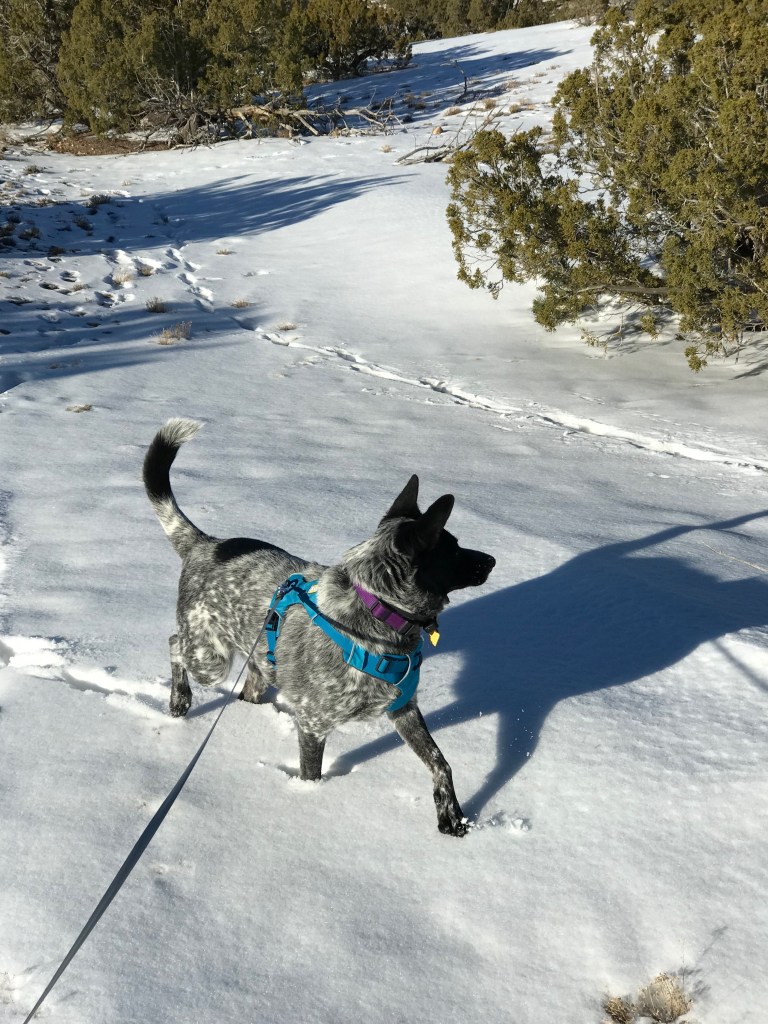
Poor Cowboy has seen snow in the past, here in January 2019, and wildflowers three months later in April.

But this morning we’re just looking for a little clear sky.

Fire season is obviously here when you can’t see Cabezon in the morning.

It is 60 miles west of me, across the Rio Grande. Usually it is a clear landmark, the most visible among the Rio Puerco volcanic necks.

I am staying inside instead of taking my usual early walk with Cowboy. There’s even a health alert. I am one county north of Albuquerque and Bernalillo County but here is the advice from the big city 15 miles down the river. “Those with respiratory conditions in the City of Albuquerque and Bernalillo County should limit outdoor activity.” I think I am seeing the same stuff they are seeing down south.

I escaped from the Bay Area in 1971 after climbing to the top of a tennis stadium in Berkeley to catch a glimpse of the sunset but seeing everything obscured by smog.

Health experts might not care, but I feel a little better that the gray horizon in my view this morning is wood smoke and not crud from cars. Then again, I guess it all goes full circle.

Fire and smoke map, June 7, 2021, from https://www.airnow.gov/fires/

Sunlight pierces the window precisely at 6:30 a.m. I feign sleep but sense brown eyes penetrating my deceit.

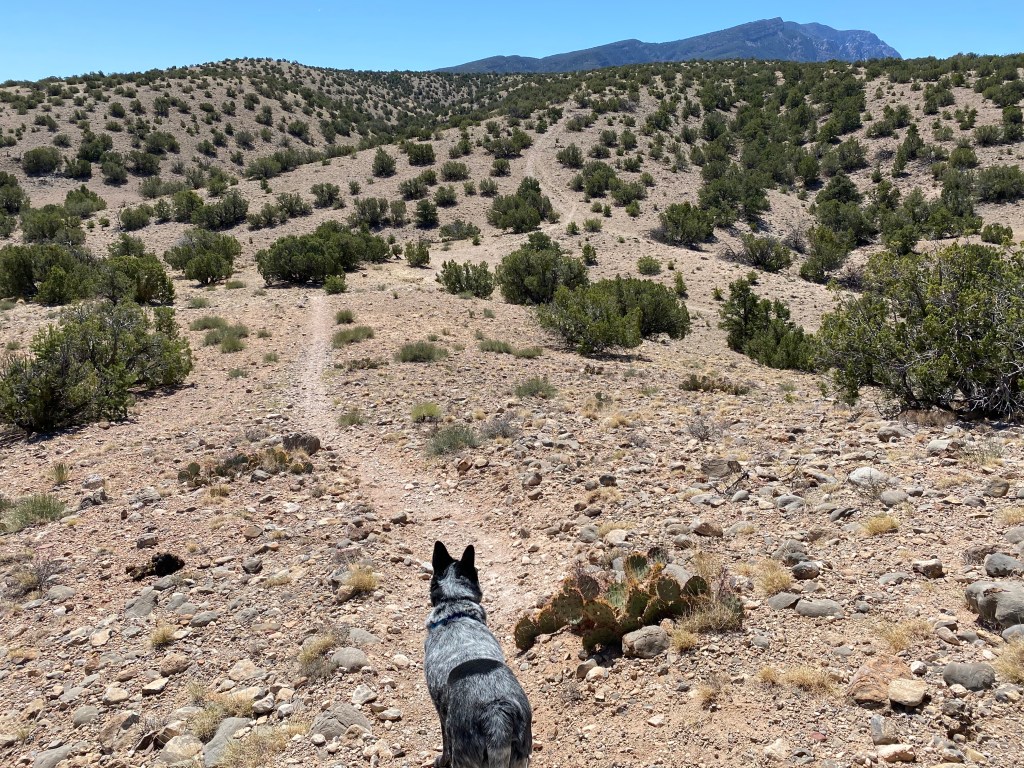
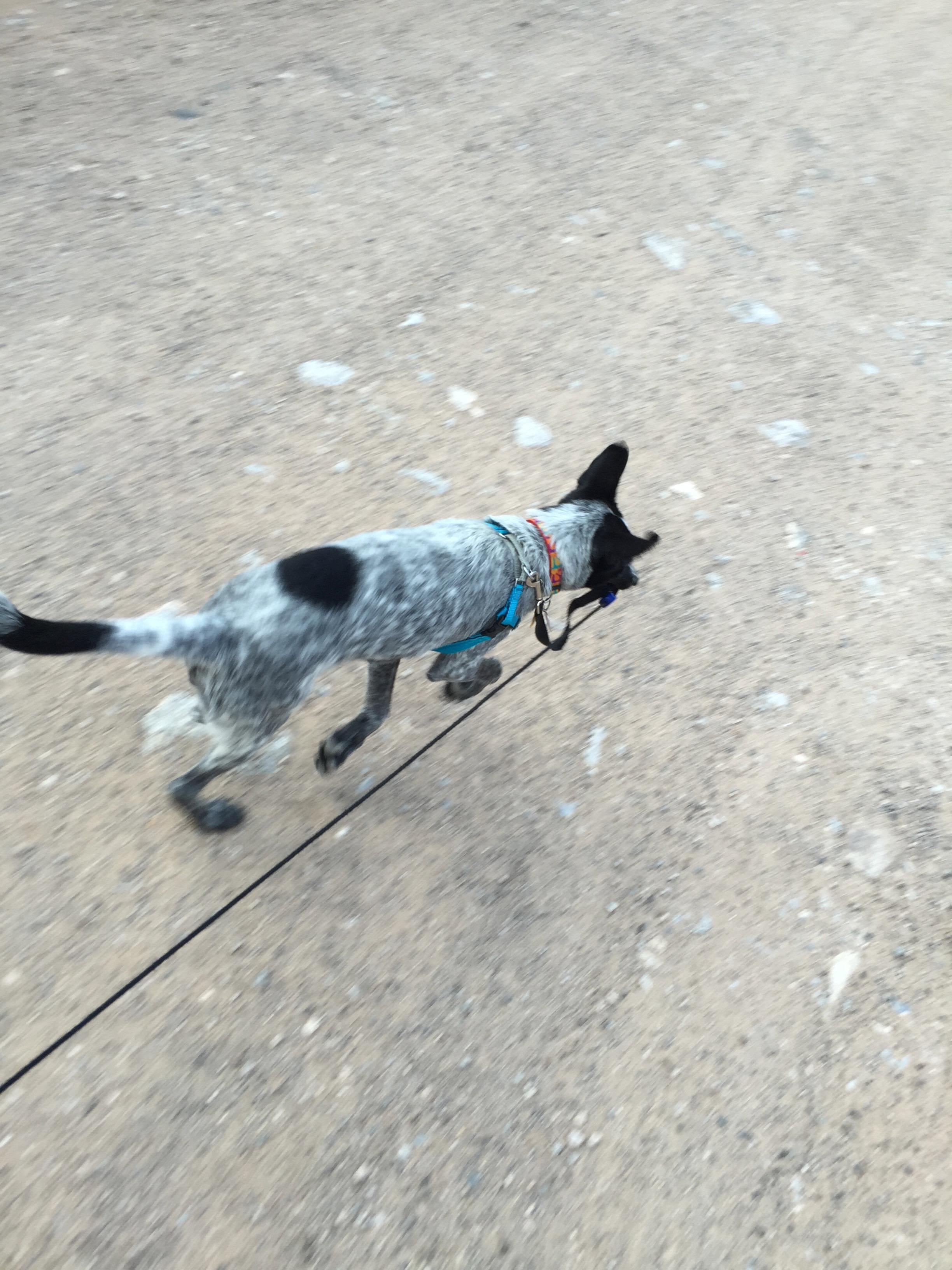
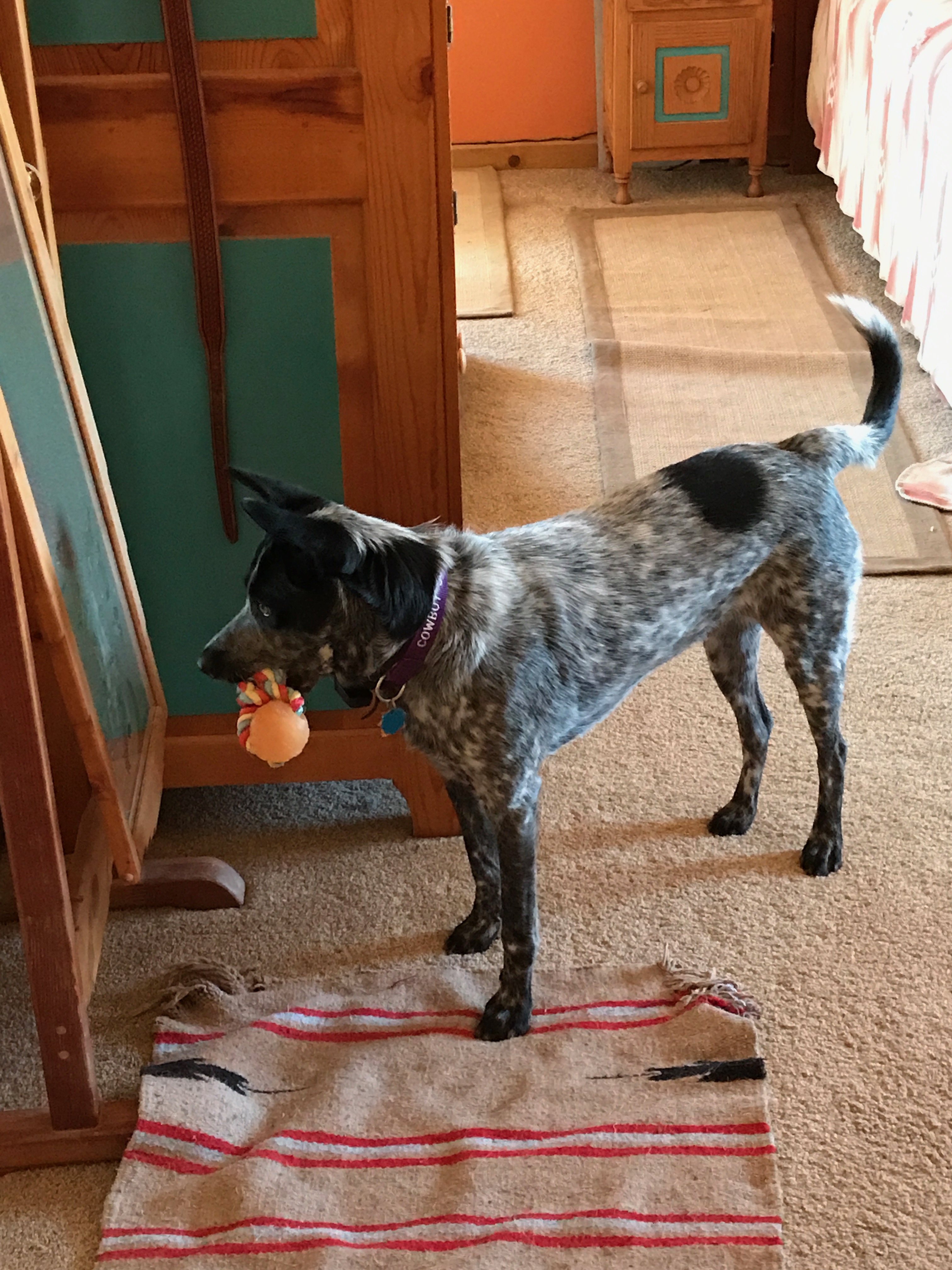
I know the flutter of an eyelid, a shift of sore hips, one lateral move of a blanketed foot will mean my 50-pound blue heeler leaping onto the bed and draping his torso across mine. For Cowboy, this serves two purposes. He can see out the window better and we both know that I can’t take his weight for long.

But this is OK. A good sidekick can keep you out of trouble.

Not only does the morning rousting mean that the trail will soon be rising up to meet us but it spares me too much morning contemplation. No lying about bed, head awash with reruns. Better to get up than be just another quack.

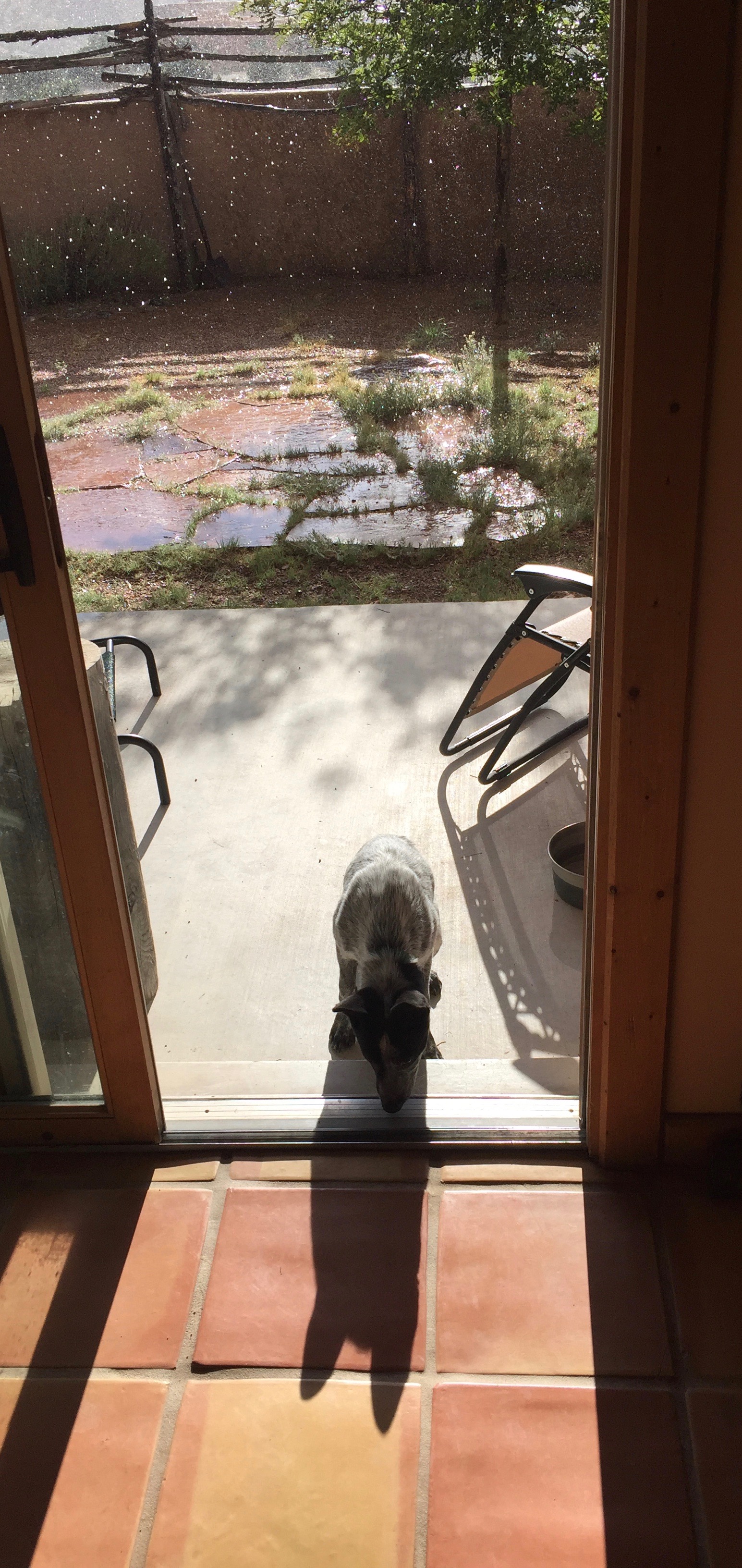
Cowboy apparently was born with a bossy side, though he was a very sick guy when he arrived here five years ago. But he had a full bag of tricks even as a pup. This is the move he pulled three days into foster care, watching what was maybe his first rain storm after spending many weeks at an animal hospital with a tick-inflicted disease called erlichiosis. I decided he could stay.

He quickly took charge of the mornings. I have tried to enforce a two-cups-of-coffee rule, but he knew from the get-go how to pull my chain.

I have caught him in moments of self-contemplation but these days he is more likely to prevent me from wallowing in mine.

Now, if I could just find my socks.