I had high hopes when I went to vote 50 years ago in a beautiful place at the foot of the Sierra Nevada.
I was 23 but Nov. 7, 1972, was my first time to cast a ballot because the 26th amendment and 18-year-old-vote wasn’t ratified until 1971.
I went with a couple of buddies — Craig and WJK — from the Inyo conservation camp 10 miles north of Bishop, California. Politically, the country was pretty torn up. We voted in a lonely hall in Round Valley. I sat up that night watching election results on on the lone camp TV, sitting on a plastic couch in the rec room with the camp dog, an ancient black mutt called Bummer.
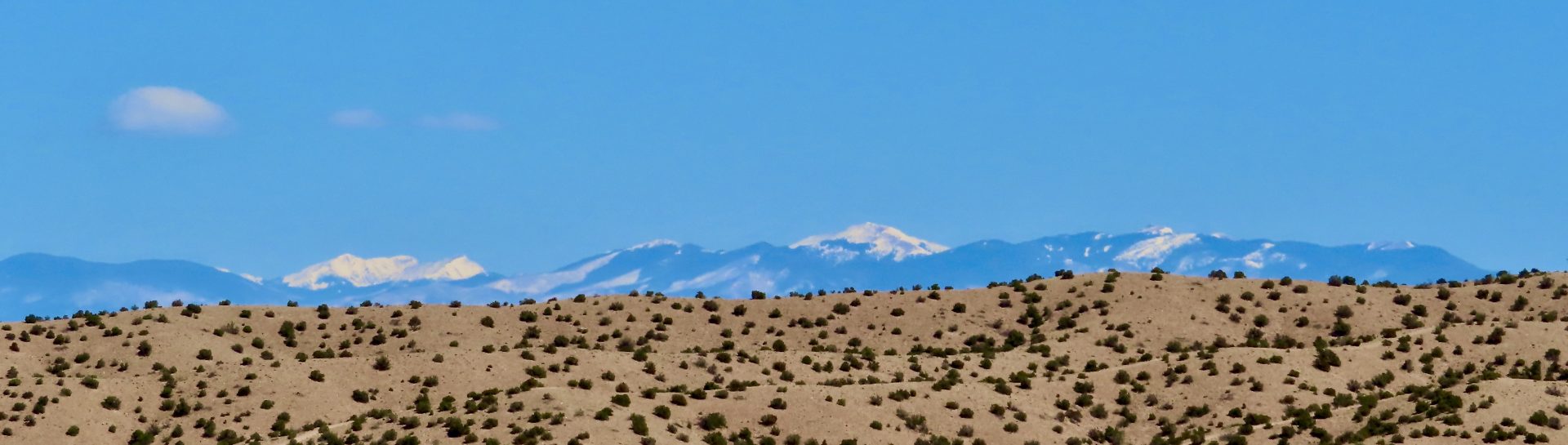
Round Valley and Mt. Tom
Voting for the first time felt good but I got thumped. I voted for George McGovern.
Bummer was just there that night, not an omen. After leaving my California Division of Forestry assignment, I spent the next 40 years covering government and politics as a newspaper reporter and editor in New Mexico, voting in every election open to independents.
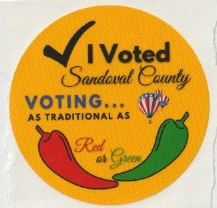
I voted early this election at the library in Placitas. I will be watching election-night results with a fun-loving blue heeler named Cowboy. I am glad to vote and I am as hopeful as ever.
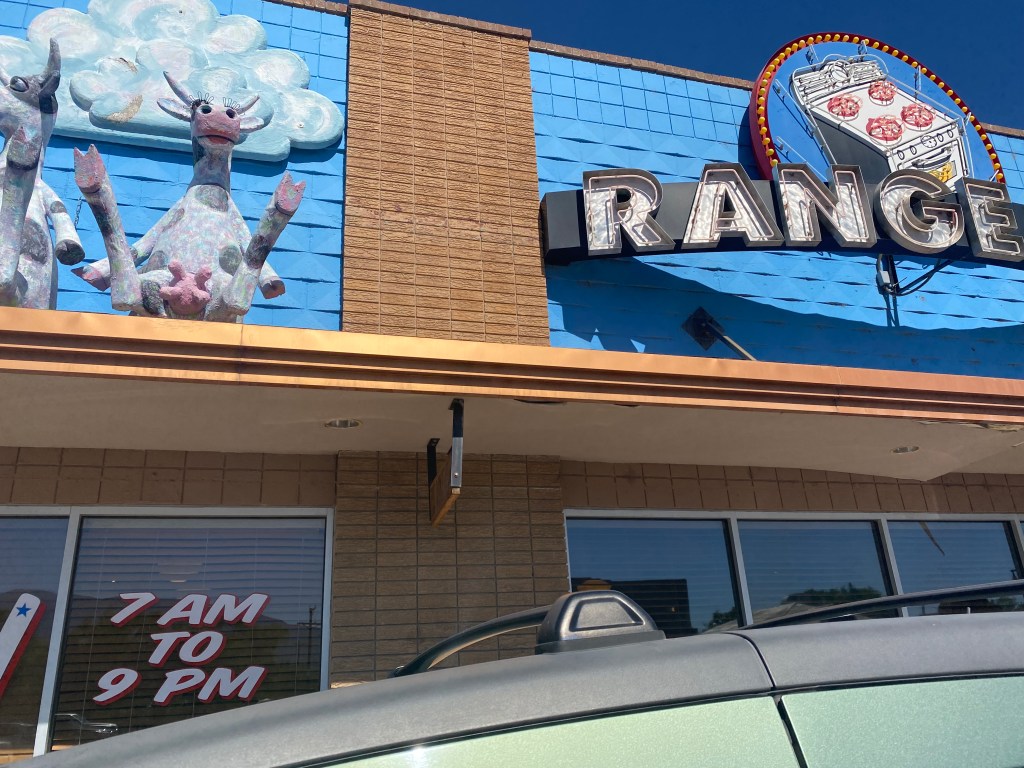
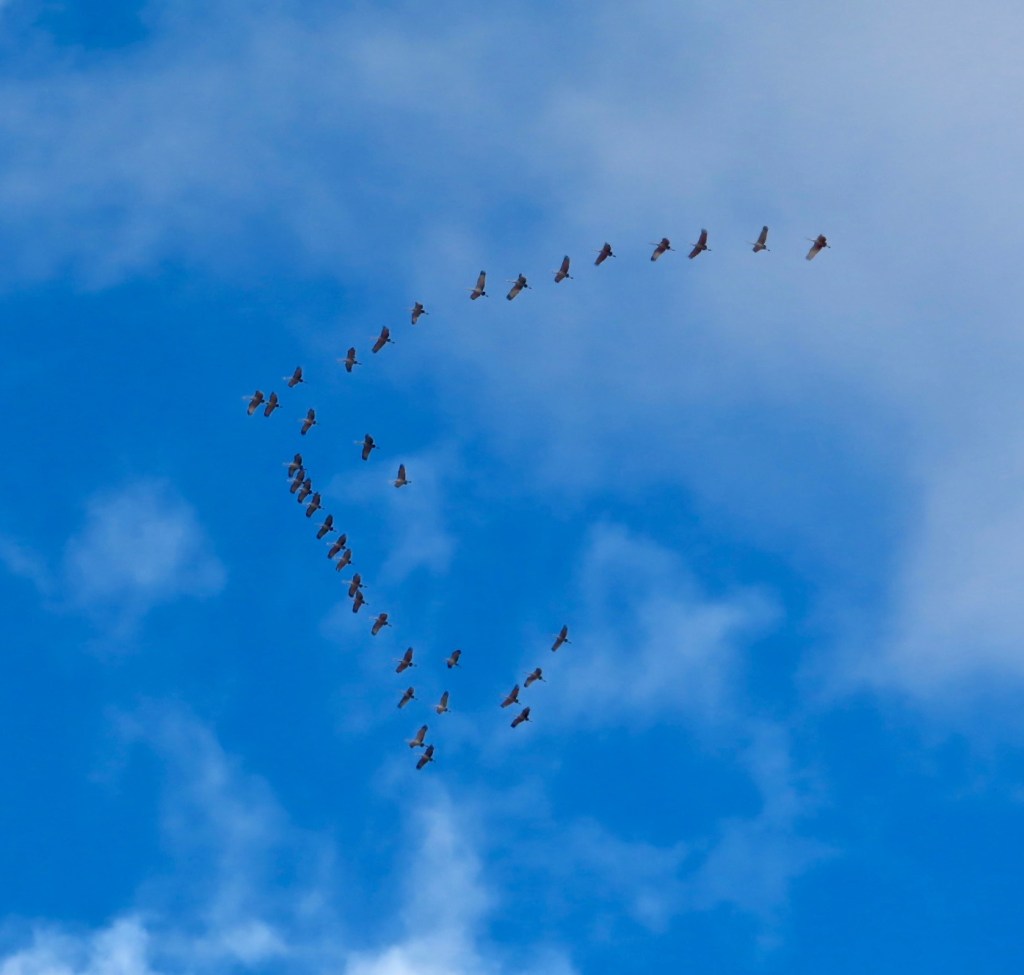
When the counter is full at the Range in Bernalillo, I’m glad I live in a place where I can point the truck north on old 66 to Abuelita’s or Twisters, near the route of Coronado and homes of Puebloans who were already there, then east toward Placitas where Las Huertas Creek runs from a Sandia mountain canyon to the Rio Grande and close to that confluence at home consume my carry-out combination plate with green and sleep it off in a living room chair facing piñon-juniper foothills so quiet the croaking of sandhill cranes overhead wakes from me from an endorphin-ensured nap, satisfied by the chile-covered food, as the birds flying down from Utah, Colorado, Wyoming, Montana and Idaho circle upward, seeking a thermal for the flight south to Bosque del Apache for feasts on fields of winter grain.
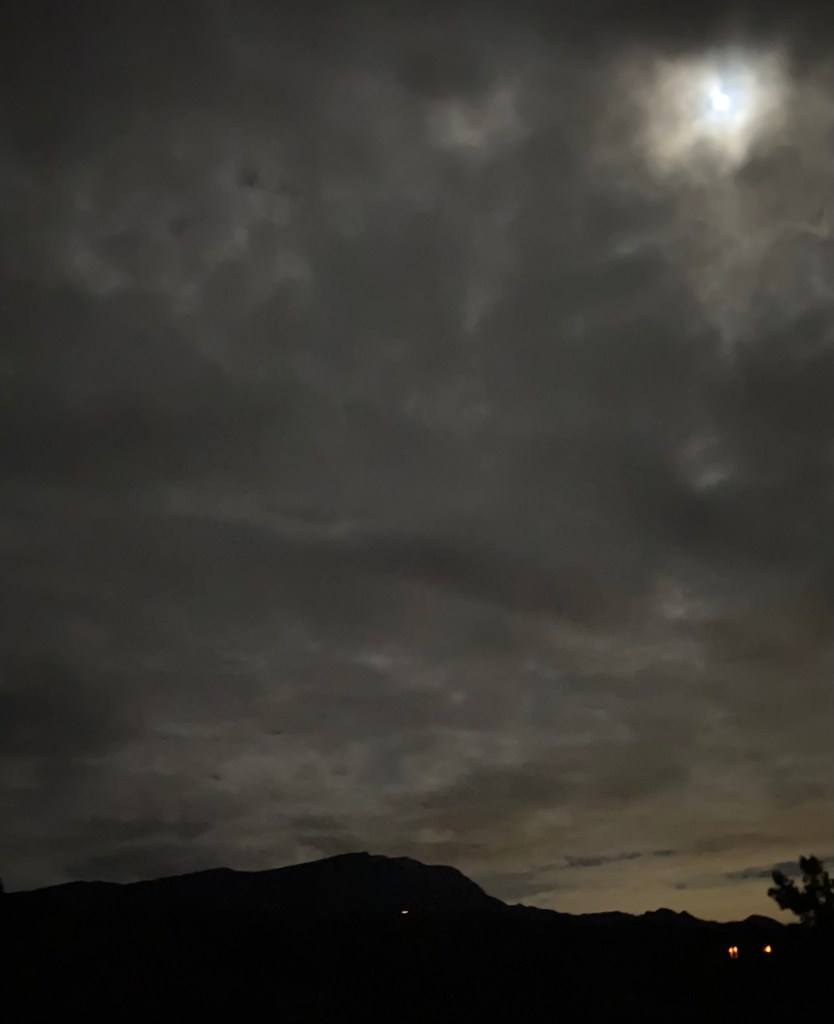
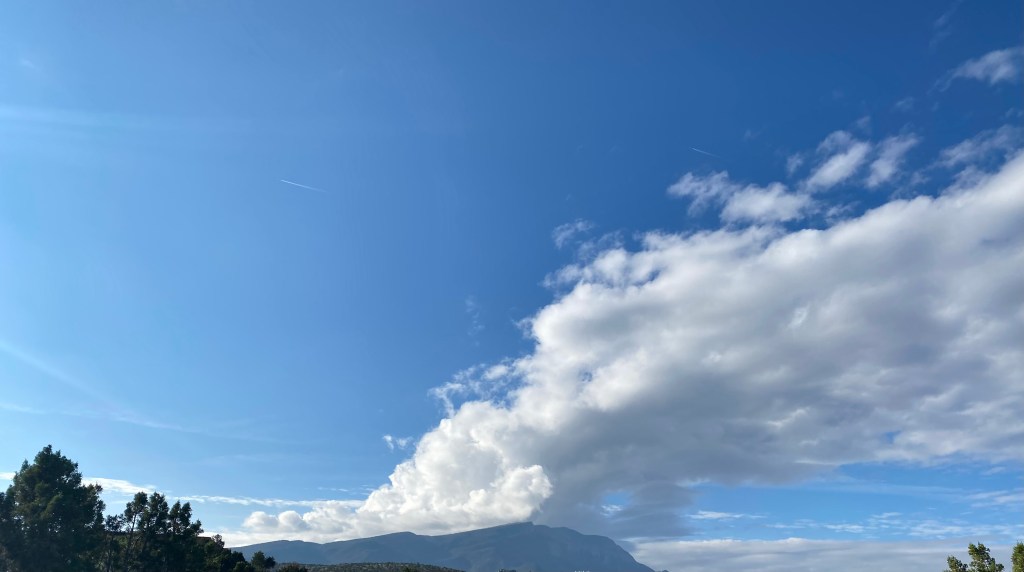
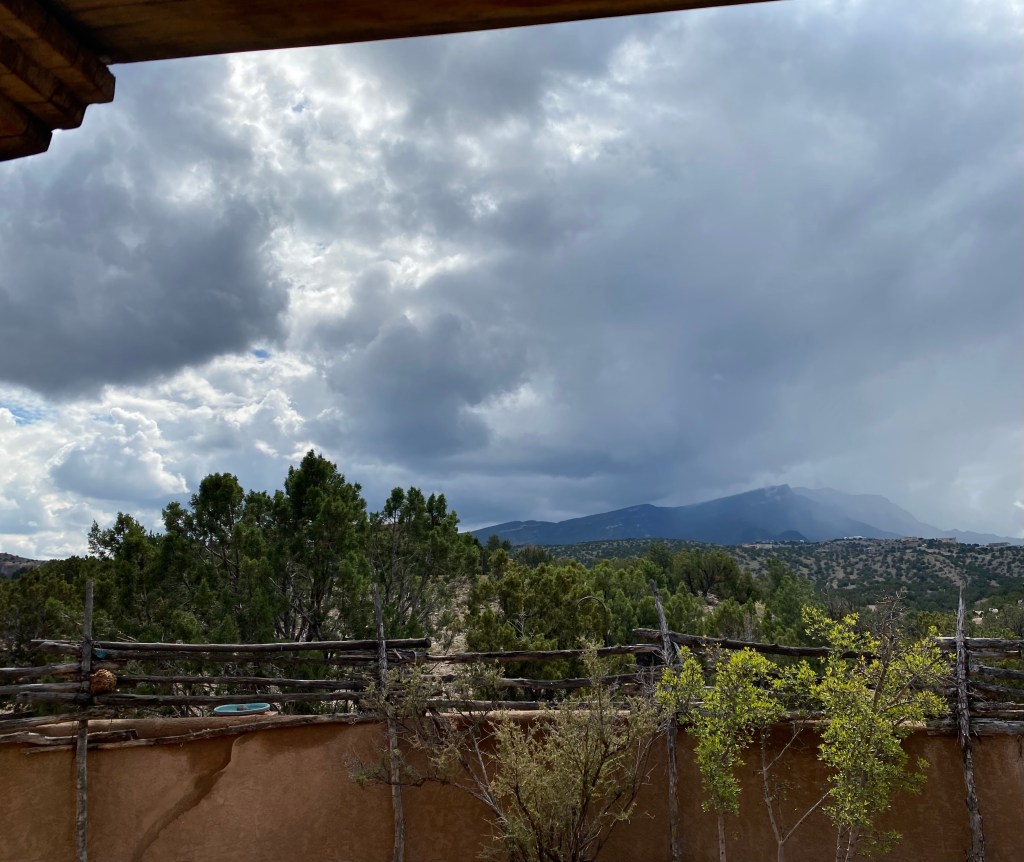
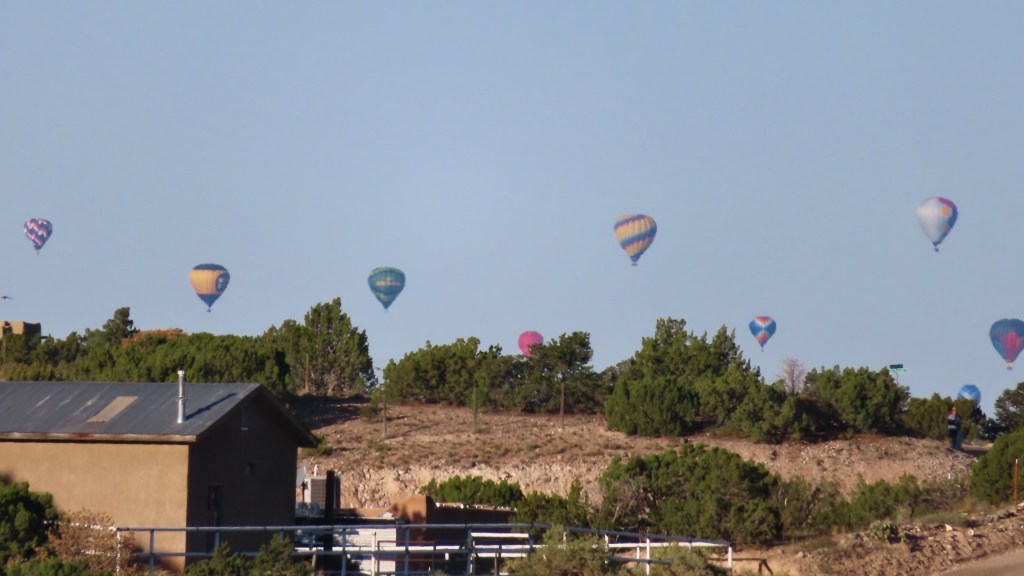
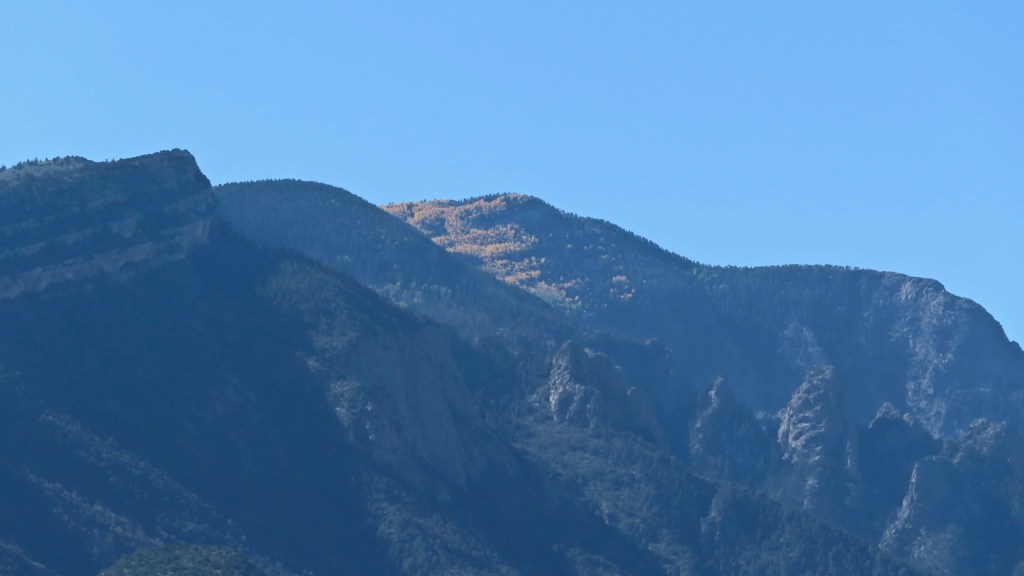
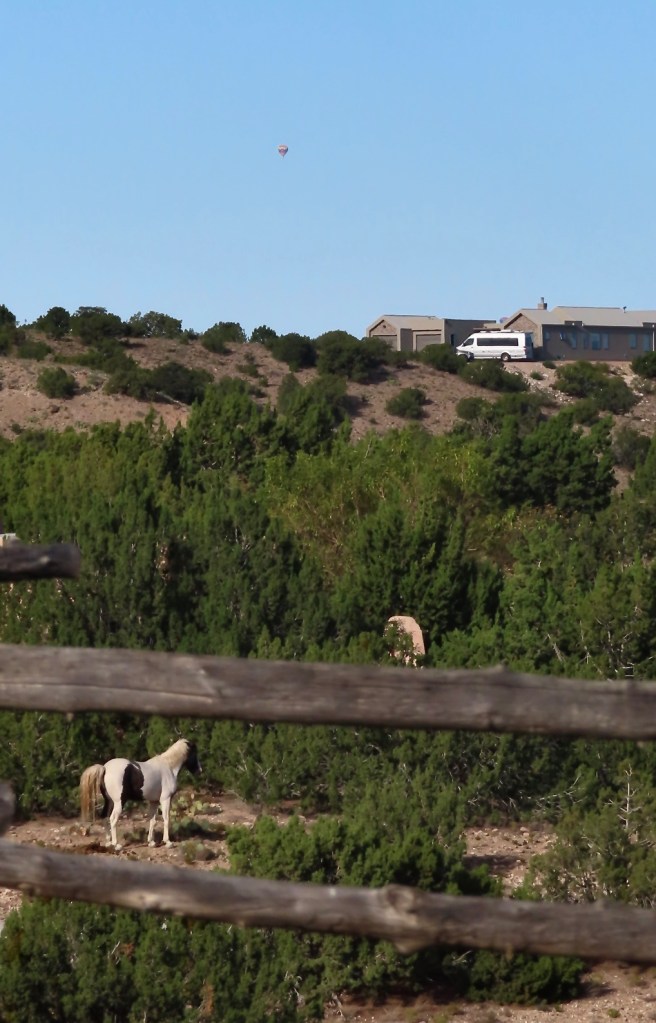
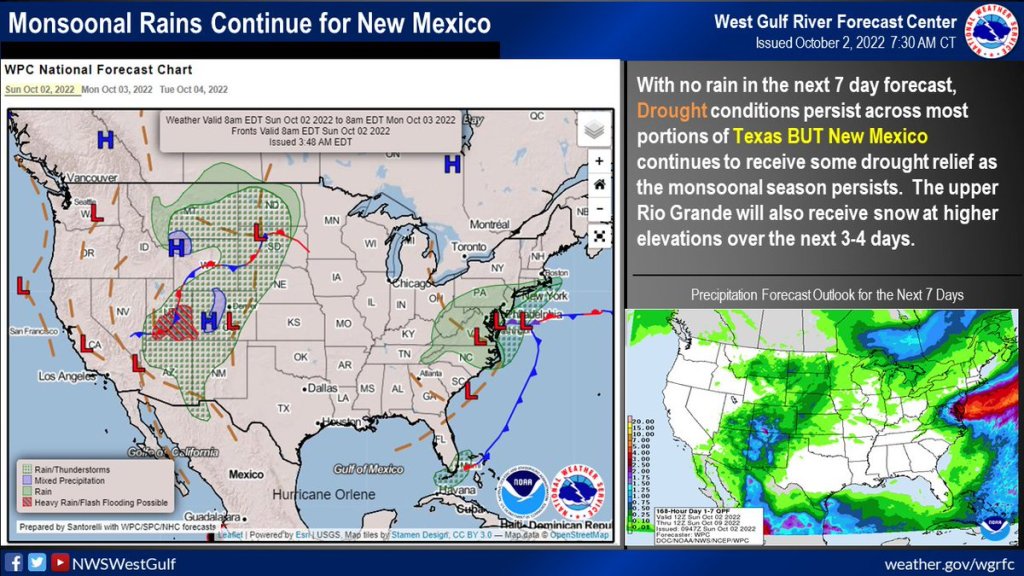
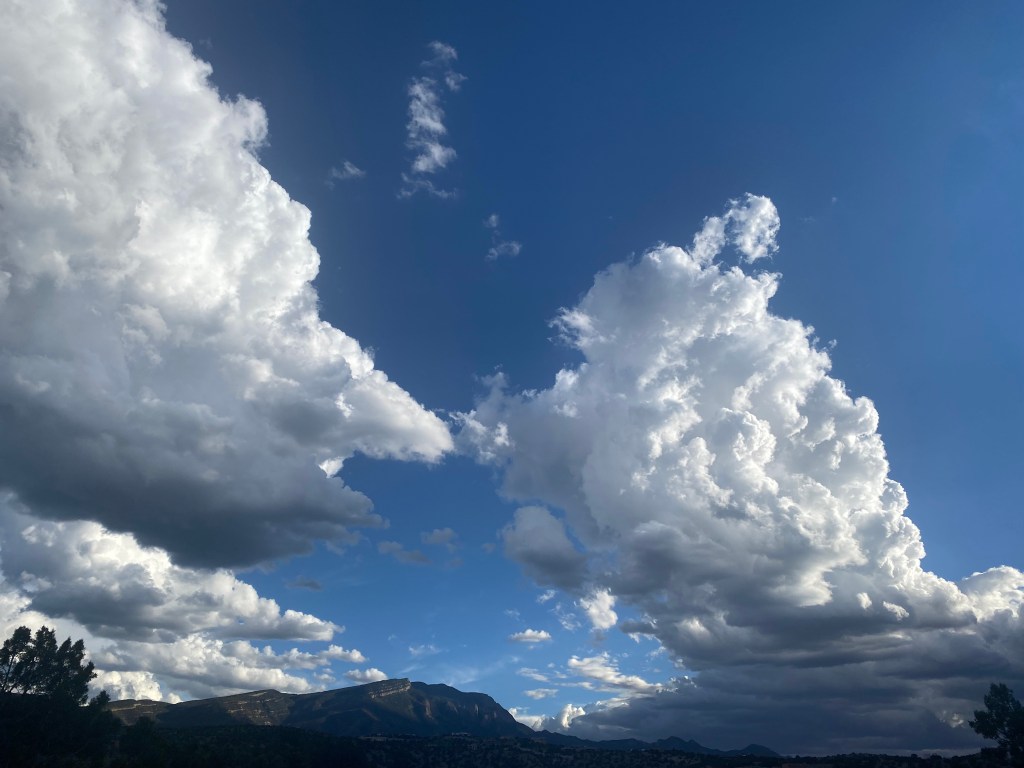
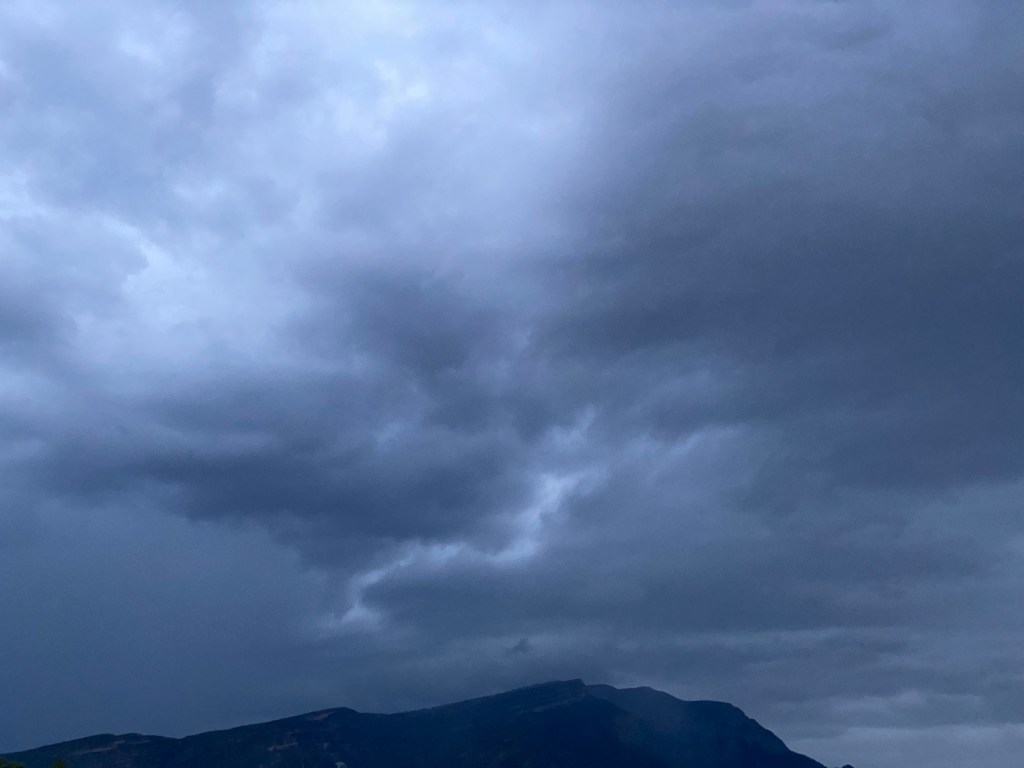
Without radar, mountain reading is a challenging pastime. Here is October 9. But upon inspection of photos, maybe all I’m looking at is continuation of monsoonal flow from the south that first showed up in my neck of the woods on June 17.
I resort to taking pictures with my iPhone when I don’t have much to say. It happens more often these days. Here I am again.
Don’t get me wrong. I’m reading plenty and I watch many hours of news and punditry on TV. I have rewarding conversations via email with several friends. Cowboy is always here to listen, although his reactions are quick looks, usually sideways.
I began the late summer as I often do reading about the Battle of the Little Bighorn. The battle was in June but the reading impulse taking me back to 1876 always happens around my birthdate in August 1949. Lately though, except for escapes with E.B. White, I have switched almost entirely to the Battle of Mar-a-Lago.
I’m following this latest story of an endangered nation filing by filing, as well as the five or six other investigations encircling you know who. But I don’t waste my wind anymore. I saw this storm coming years ago. The important action now is in court. The court action sometimes stems from important journalism but I have no expertise in the law and am now seven years retired from newspapers.
I have little confidence in Congress’s ability to right the boat. The rule of law has to be shored up first. My hopes that the right side wins are all with the judiciary and the press. God bless Merrick Garland and Maggie Haberman, among many others. I’m not in it just for the show but I keep considering whether there has ever ever been a better time to be a lawyer or a journalist.
In my spare time, I also do a lot of tangential reading on the internet, one thing leading to another. It’s my wandering attention span that takes me there, a legacy of my daily newspaper experience. I’m also staying up later. It always took me several hours after deadline for my brain to be ready to sleep, even after I quit drinking in 1985.
At any rate, I recently have taken some of my favorite iPhone photos and have stumbled over memorable things about E.B. White, a son and a sailboat. Here you go:
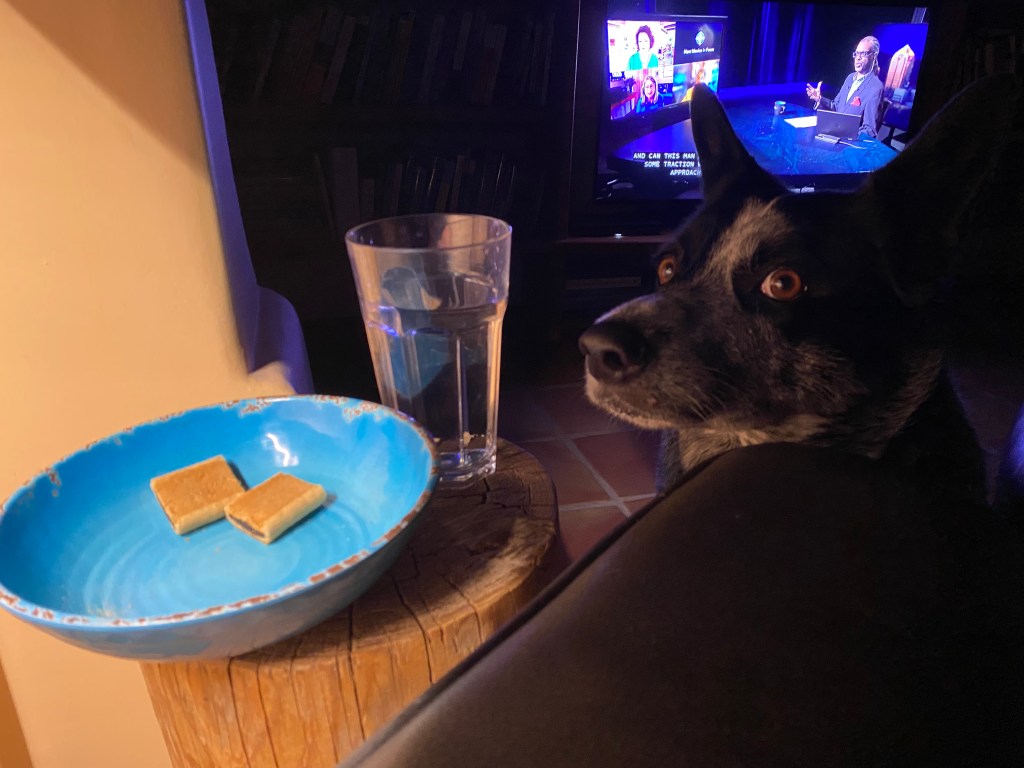
I was trying to watch New Mexico In Focus but was distracted by a debate over Fig Newtons.
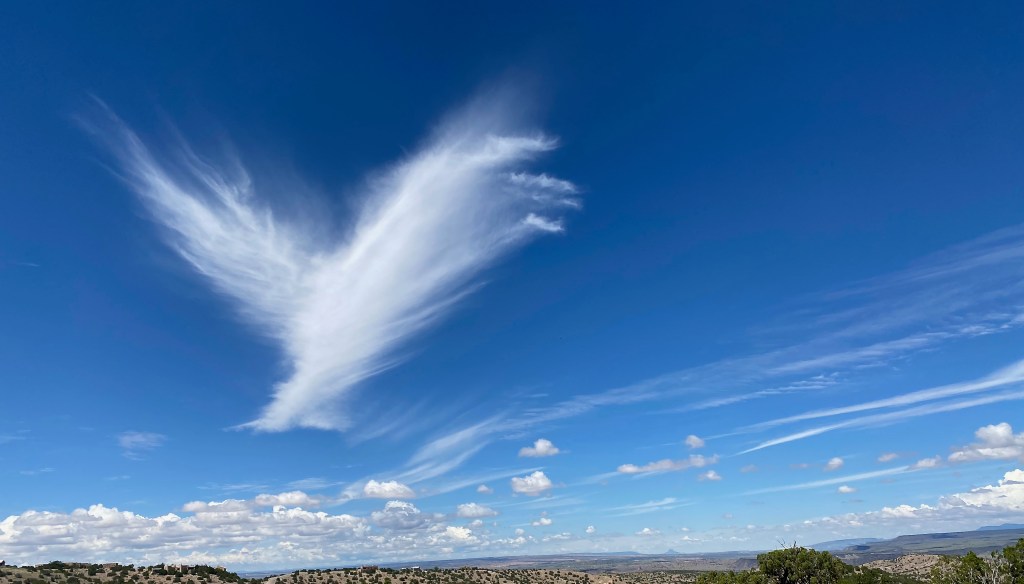
Big puffy clouds tend to be my summertime focus but this unusual one on August 21 ended up being my favorite.
This was my favorite sunrise picture though it was mistaken by some for sunset. I should have said I was looking south.
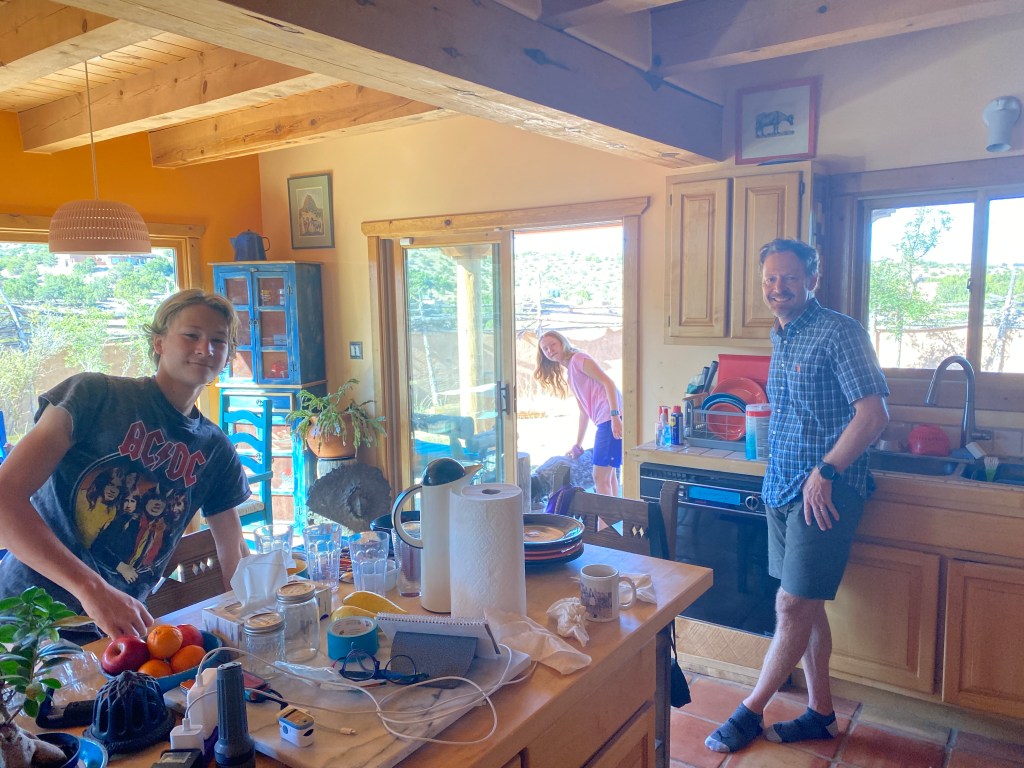
I got to make pancakes for some of my favorite people.
I kept taking off on our walks too late and ending up on fast marches home.
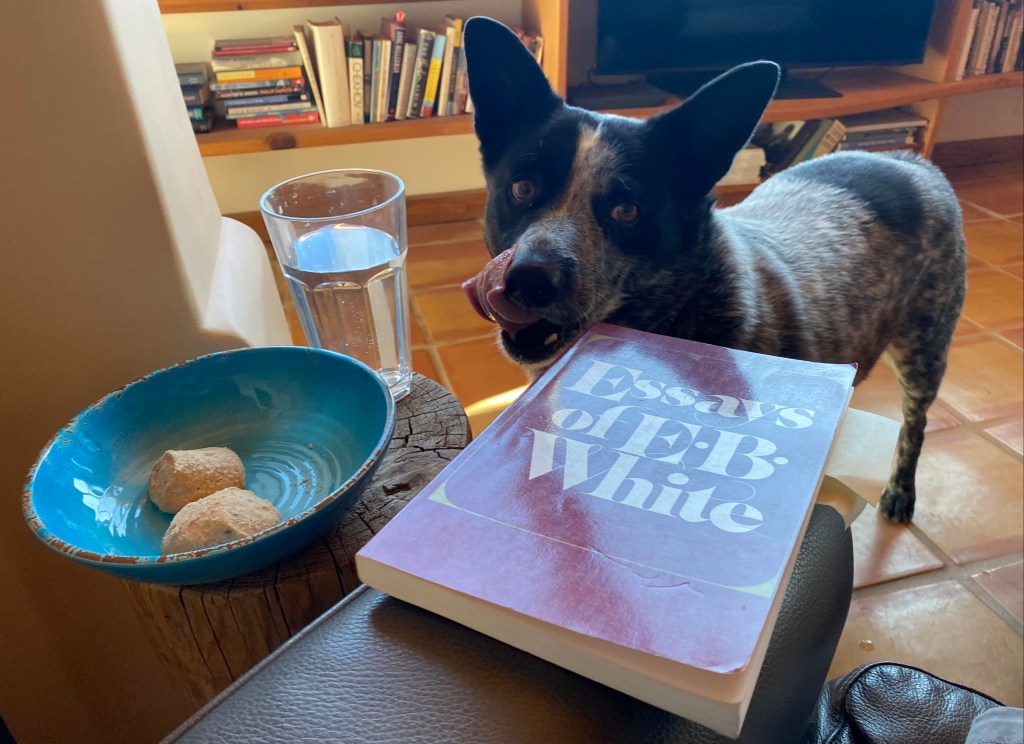
After lunch reading ended up in another debate with Cowboy, this time over bizcochitos.
As with the iPhone, when I’m restless and can’t decide what to do, I often pick up E.B. White. This weekend it paid off in a surprising way. Somehow I was led to the internet and a New Yorker piece from 2005 called “Andy” by White’s stepson, Roger Angell. Reading this led me to the discovery that White had a boat-building and designing son, Joel White of Brooklin, Maine, and that Joel White designed a boat I have always like the looks of — as well as admiring its name — Wild Horses. The boat was built after Joel White’s death at 66.
Wild Horses
Sad as Joel White’s early death seems, I was happy to find out that the Brooklin Boatyard he founded in 1960 is now run by his son, Steve.
I’ll quit now. I’m going off on tangents again. But one more digression, a sentence and admission by Roger Angell in his “Andy” essay, remembering E.B. White. It’s an impressively honest thought from a profiler and stepbrother and one that may say a lot about writing in general.
“What’s been left out of my account, of course, is most of a life: his son, Joel, and Joel’s wife, Allene, three grandchildren—all grown now, with kids and life stories of their own—and the Brooklin Boat Yard, where Joe built a career and earned a reputation as a master boat designer and builder that matched or continued his father’s as a writer.”
Wait, one more thing. I was reminded in Angell’s essay about one of the greatest opening lines ever, the beginning of E.B. White’s story “Charlotte’s Web.”
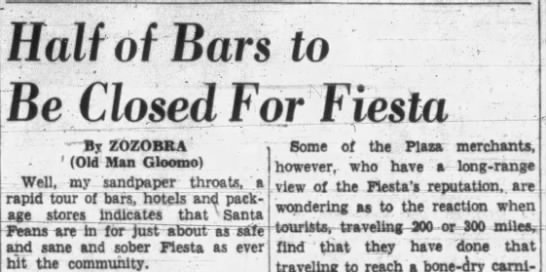
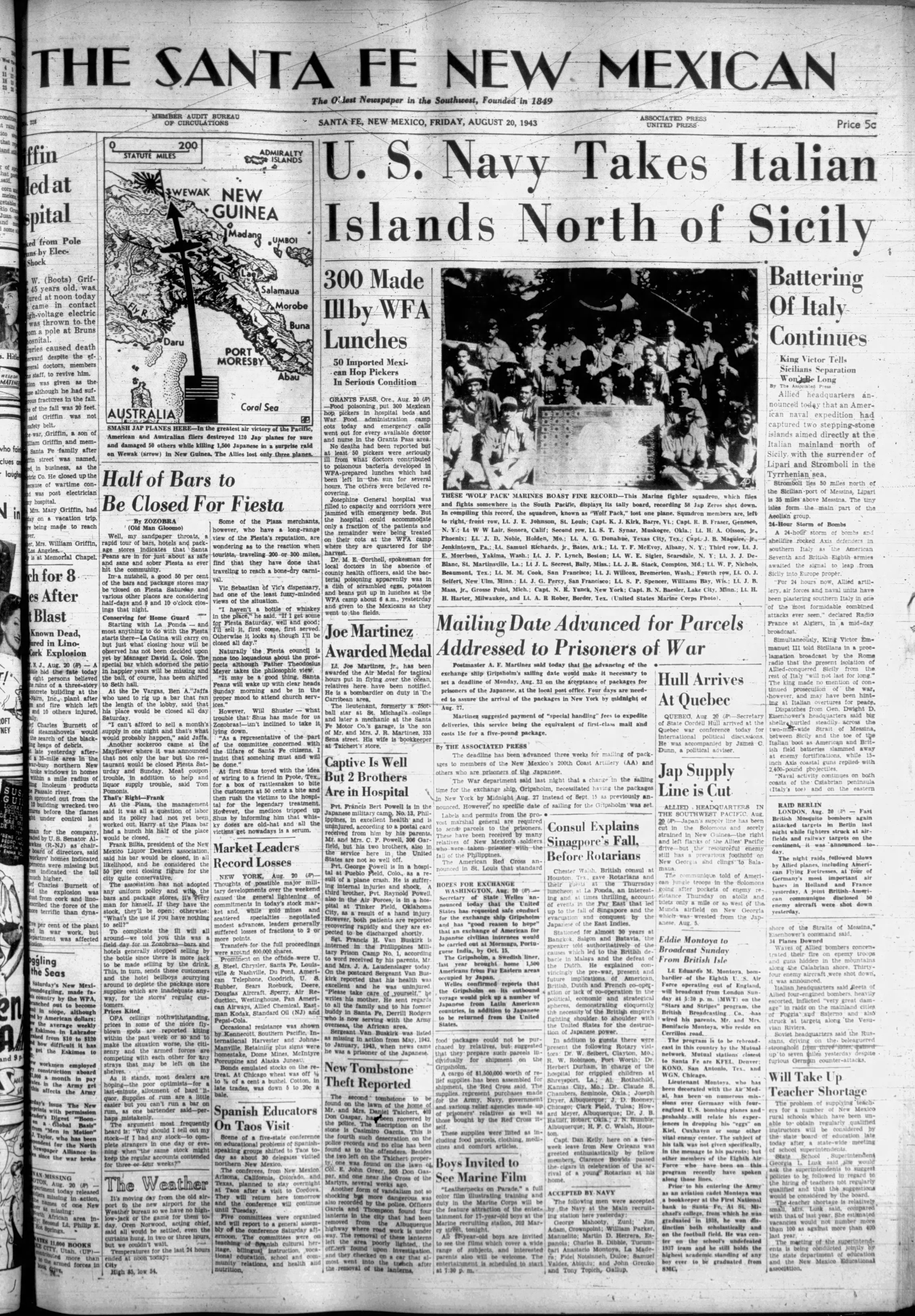
I was doing some casual research on the history of Zozobra and Santa Fe Fiesta when I came across a front-page news story by Old Gloomy himself.
In fairness to the newspaper’s current publisher and editor, I note right off the bat that the Zozobra byline appeared in the Aug. 20, 1943, edition of the Santa Fe New Mexican. But maybe no one would mind if the paper’s 1943 staff was only trying to lighten the page amid the weight of World War II news. In fact, the peg for Zozobra’s appears to be wartime rationing and short supplies, in this case whiskey.
Old Man Gloomo, as he is variously identified in the story, reportedly interviewed a bunch of Santa Fe barkeeps who said that if they had any decent Fiesta-time hooch, they would rather save it for their local customers rather than having it swilled all at once by a bunch of out-of-town gawkers. Texans are not mentioned but they have long been among Santa Fe’s usual suspects.
Distillers were busy making alcohol for the war effort. This is when Caribbean rum gained favor. Whiskey was especially scarce two years into the war and everything else was in short supply. Zozobra summed up his Santa Fe survey with this: “The argument most frequently heard is: “Why should I sell out my stock — if I had any stock — to complete strangers in one day or evening when ‘the same stock might keep the regular accounts contended for three-or-four weeks.”’
Yes, the story said “contended.” I’m not sure if it was a vocabulary problem, another typo or old Zozo had done too much first-hand reporting before deadline.
It seems clear, however, that the barkeeps of 1943 were just as leery of problems caused by huge Fiesta crowds as city leaders were in the mid-1970s when they started talking about breaking things up, separating the crowd-stirring burning of Zozobra from more reverent Fiesta events.
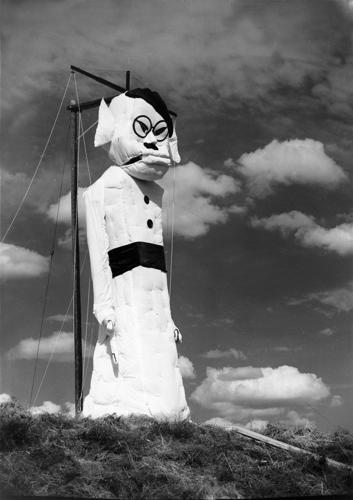
John Candelario: Zozobra, Santa Fe Fiesta, Santa Fe, New Mexico, circa 1943 depiction of Zozobra as “Hirohitlmus”; courtesy Palace of the Governors Photo Archives (NMHM/DCA), Negative No. 165802
To his credit, Zozobra undertook his public service reporting on the Santa Fe bar and liquor crisis just days before he was thanklessly torched in 1943 at Fort Marcy Park. And his mentor, Will Shuster, was still looking for ways around the whiskey problem if not the immolation of his iconic offspring.
According to Zozobra’s reporting in the New Mexican, Shuster suggested the importation of a bunch of rattlesnakes from Texas so that thirsty Santa Feans could be offered rattlesnake bites at 50 cents a pop. The snakebitten customer would then be rushed to St. Vincent where the sisters hopefully would be charitable and administer the “legendary treatment” — aka a shot of whiskey. Liquor problem solved. The hell with Zozobra.








 dreamranch