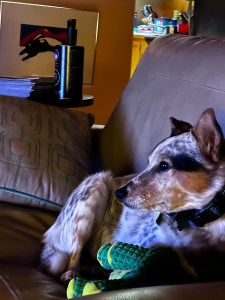
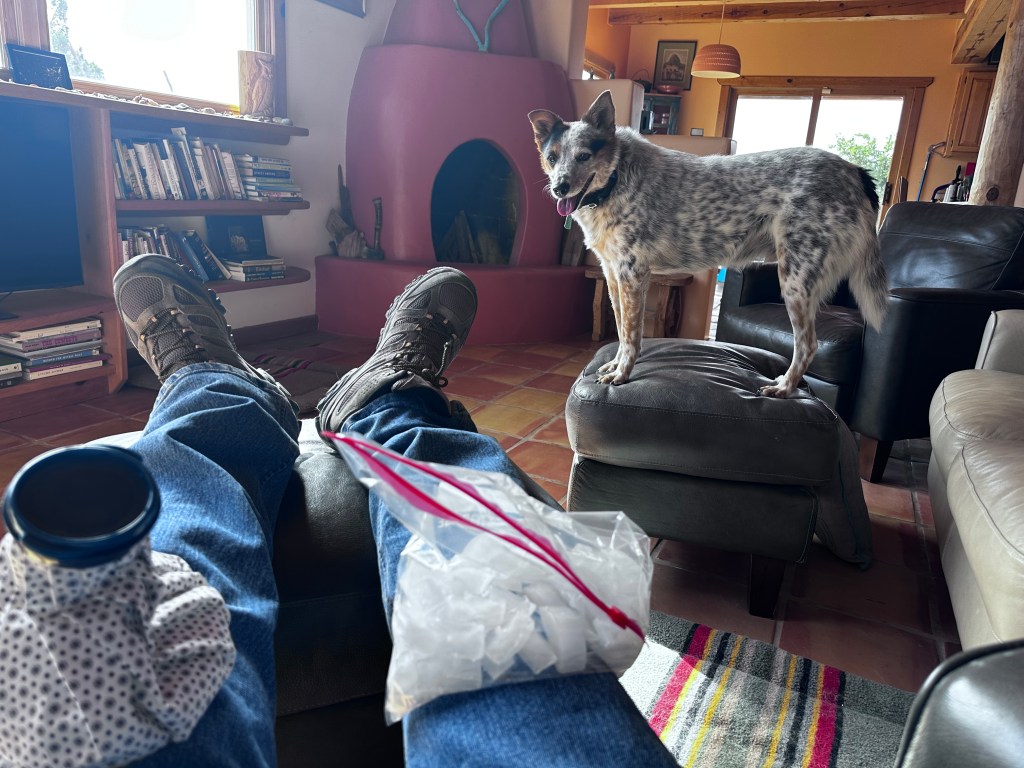
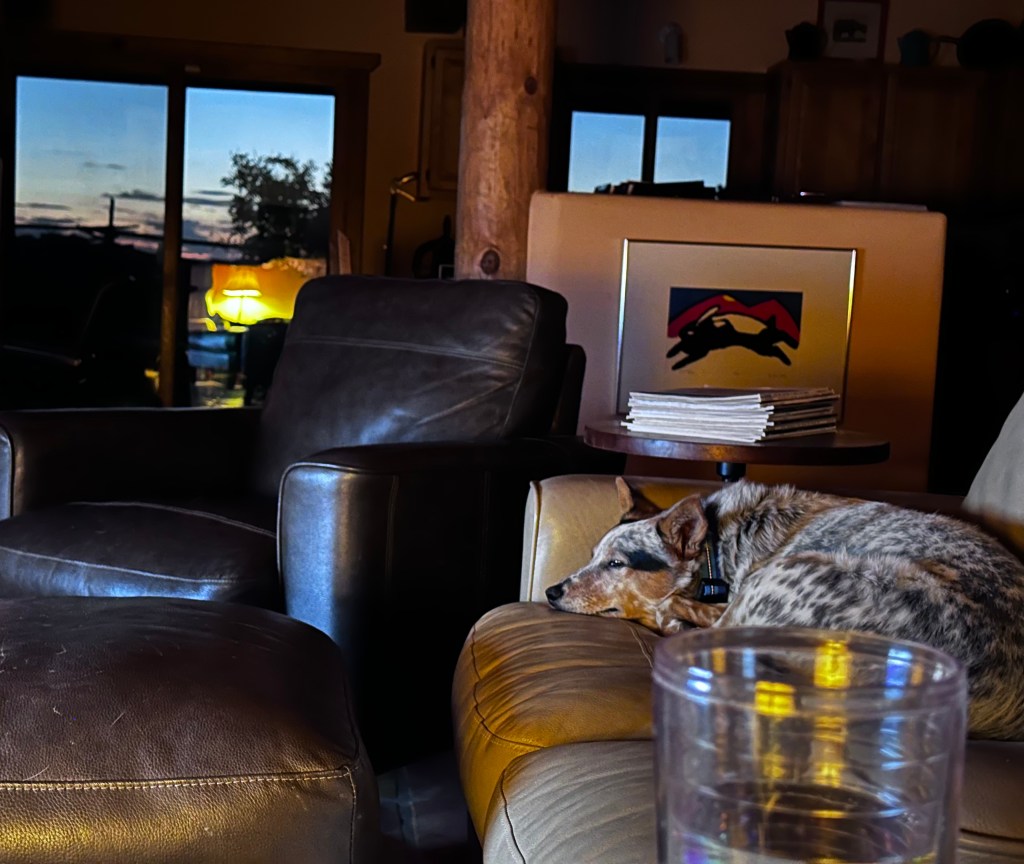
Green chile chicken stew for dinner. Using the Range Cafe recipe for the first time, although I’ve often enjoyed it in nearby Bernalillo. Cowboy 2.0 has gone to bed before the polls close but probably will join me on the couch later when he realizes I’m still up. Among other things, I’m wishing my brother Pat a happy and healthy 74th birthday tomorrow. Being home tonight is again a treat because for 40 years, from 1974 to retirement from the newspaper biz in 2015, election nights were work.
And Cowboy is now on the scene, seeming to watch John King and the “big map” on CNN.
/
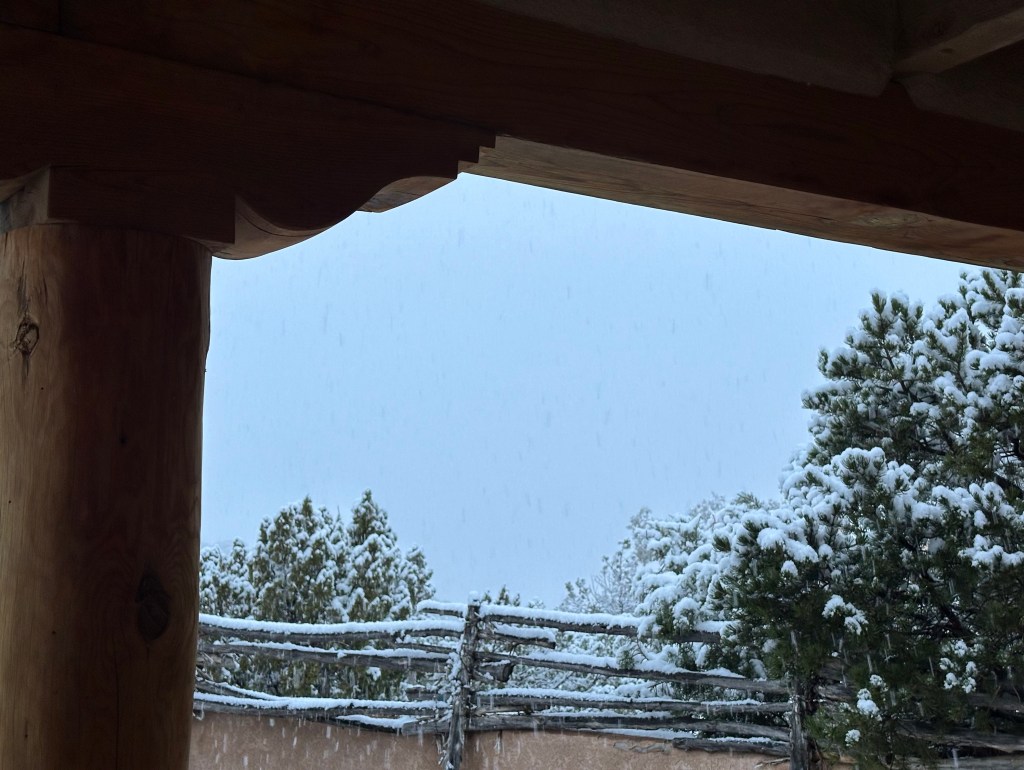
Weather coming in Wednesday, the day after …
…WINTER STORM WARNING REMAINS IN EFFECT FROM 8 PM THIS EVENING TO 11 AM MST FRIDAY…
* WHAT…Heavy snow expected. Total snow accumulations between 1 and 3 inches. Up to 6 inches possible on the Albuquerque west mesa and foothills. Additional snowfall may occur Friday. Winds gusting as high as 50 mph.
* WHERE…Middle Rio Grande Valley including the Albuquerque Metro Area.
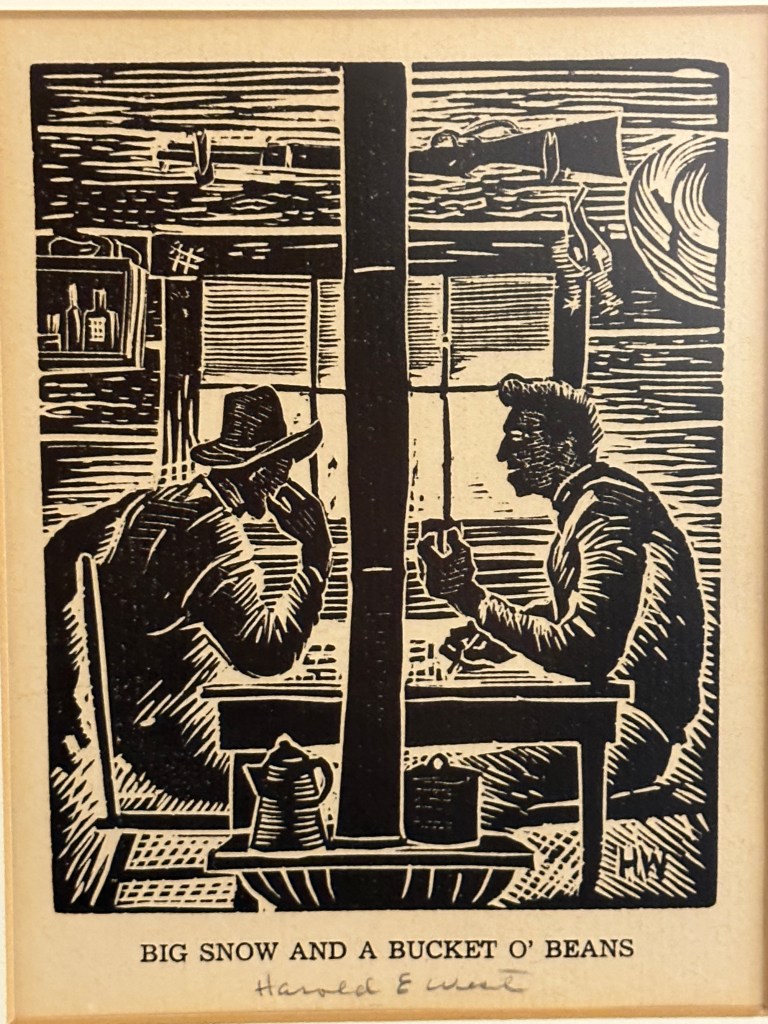
Days like this make me think of my favorite Hal West print, this one photographed on a wall of the Legislative Council Service at the Capitol in Santa Fe/
Elections did not go the way I had hoped but I’ve got my green chile stew and I got through to my brother on his birthday. And the new snow has started.
From the Los Angeles Times … As Shohei Ohtani takes center stage, remembering baseball at Manzanar prison camp … By Jack Dolan Staff Writer Photography by Brian van der Brug Oct. 28, 2024
Dan Kwong stands on the pitcher’s mound at the restored baseball field at Manzanar National Historic Site, where Japanese Americans were imprisoned during World War II.
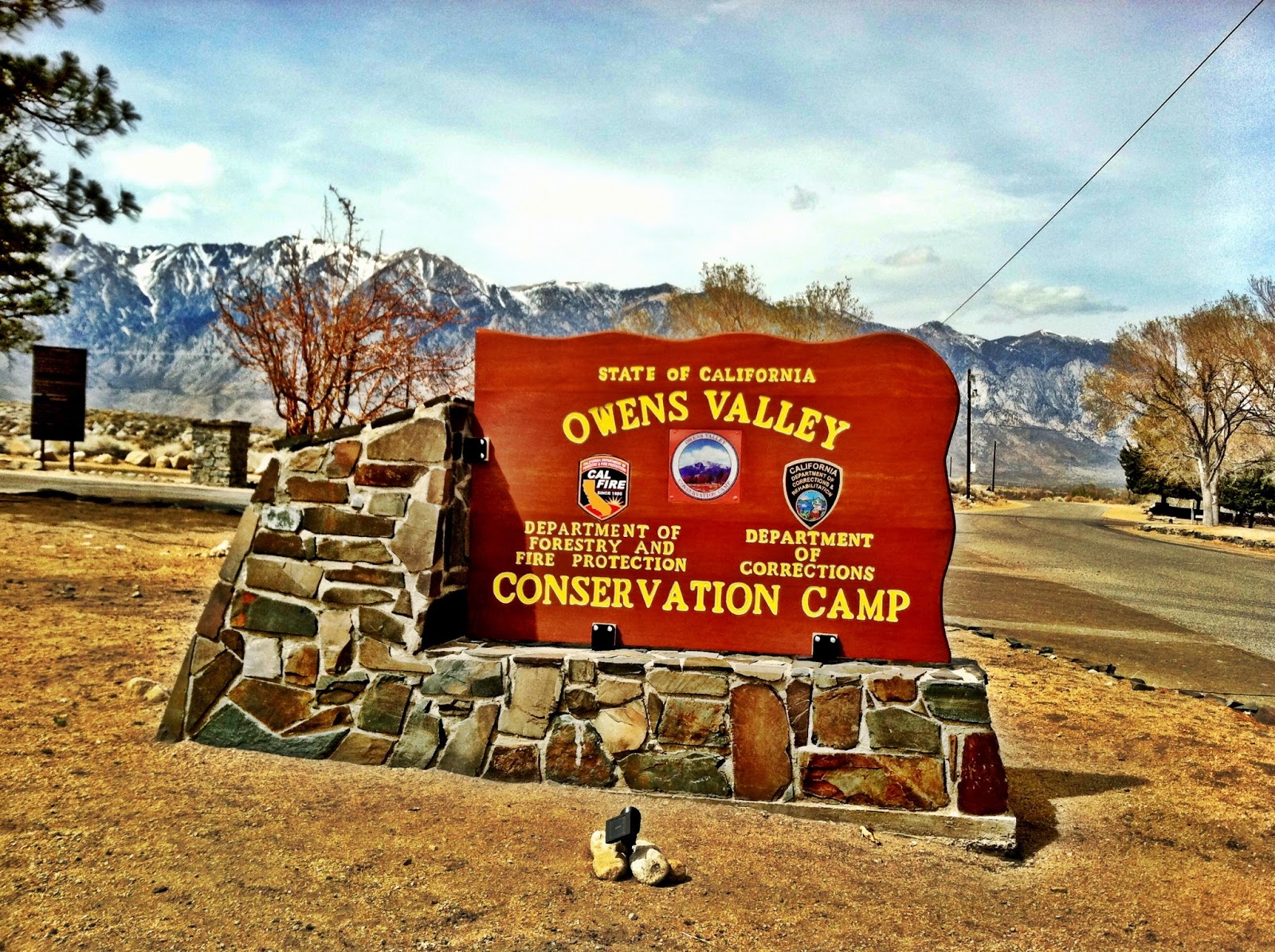
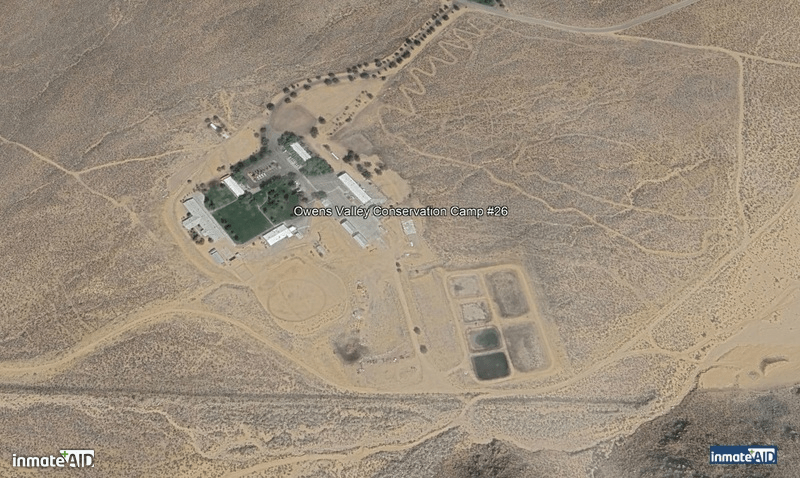
Owens Valley Conservation Camp #26, at one time Inyo Ecology Center. The view west out the backdoor of the 80-man barracks was much better, with Mt. Tom and the High Sierra looming close over the dry north end of the Buttermilk country and Round Valley.
Online chatter among remaining friends from the Inyo Ecology Center in the early 1970s sent me to an official version of the conservation camp’s history and purpose. I was a Vietnam-era conscientious objector assigned there in 1971 and 1972, although I escaped the drudgery of firefighting and conservation work for four months to work for the U.S. Forest Service on construction of the Pacific Crest Trail.
The camp, 10 miles north of Bishop, California, currently is called Owens Valley Conservation Camp #26 and is jointly operated by the California Department of Corrections and Rehabilitation and the California Department of Forestry and Fire Protection (CAL FIRE).
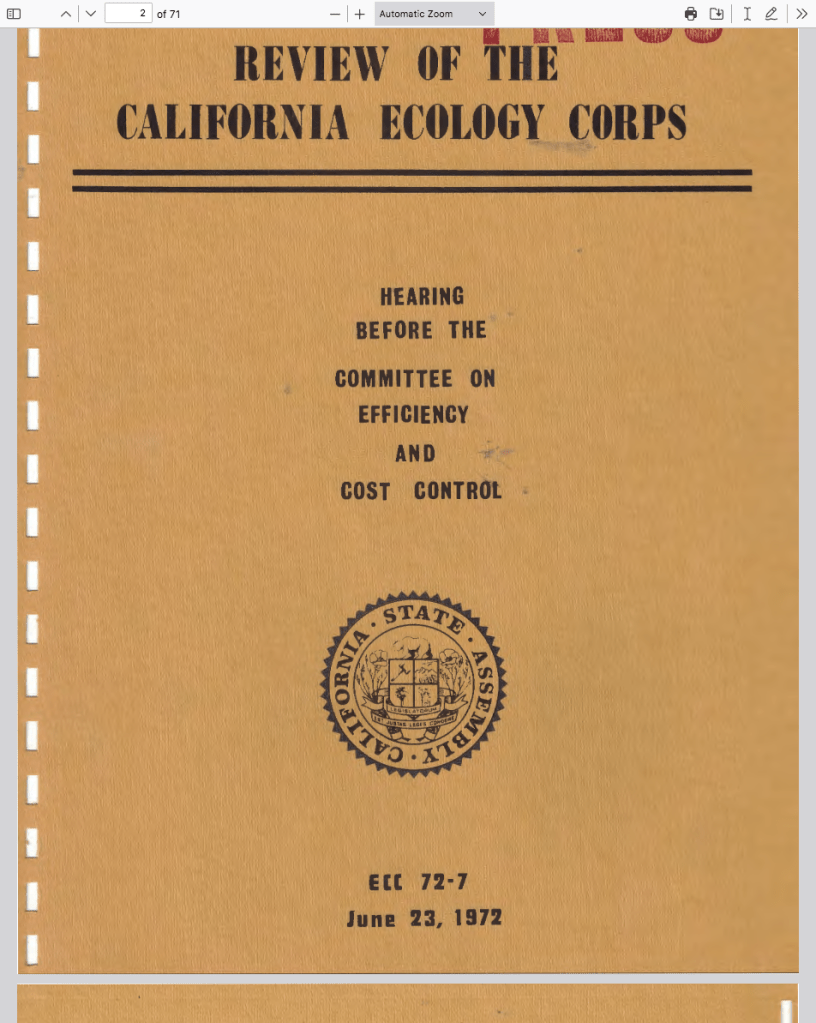
Remember, all of this testimony is from 1972 and these paragraphs, although chronological, were selected by yours truly. jr
Testimony of JAMES STEARNS, DIRECTOR, DEPARTMENT OF CONSERVATION:
The California Ecology Corps is the solution Governor Reagan has adopted to meet California’s continuing need for a reserve of trained manpower to confront the ravages of wildland fire and to meet this state’s commitment for preserving the environment.
Over the years, the Division of Forestry, the state’s wild land fire fighting force, has, of necessity, increased in efficiency and in manpower. Today, some 3,000 men, whose job it is to meet the challenges of the wildland fires, are on the state’s payroll. This force is augmented each summer by 1800 young men who are employed as seasonal fire fighters. Together, they man the fire stations, bulldozer crews, and air bases that are three of the basic compon- ents available to us tor · wildland fire fighting.
In the late 1940’s the need for trained hand crews became evident to the state’s professional wildland fire fighters as the fourth component. In cooperation with the State Department of Corrections and the California Youth Authority, the conservation camp program became a reality and was formally organized. This program enabled foresters to utilize minimum security inmates as fire fighting hand crews and to assist in the construc- tion of our fire defense system, working out of a new camp environment in the state’s forest lands.
Working with the leadership of forestry personnel, the inmates have proven to be a tremendous asset. And then came social changes — and new concepts in penology and dealing with prison inmates. A new probation subsidy program was initiated in 1966, providing for payment to the counties on a per case basis so that county probation staffs could be beefed up and the less serious felons who formally ended up in conservation camps could be dealt with at home.
Since the probation subsidy program started in 1966, the prison population, of course, the camp population, began to decrease rather rapidly. In recent years, the prison population had dropped from 28,800 to under 20,000, as of this week.
A study was conducted in 1970-71 to find the alternative man- power sources necessary to replace the dwindling camp population. A partial solution was to contract with counties to use local prisoners to provide the manpower.
California Ecology Corps is one of the solutions. But it is more than that. It is a unique experiment in bringing concerned young men into the field of conservation in this state to provide the work experience and job training that can open career doors in many conservation fields.
Although we in the Department of Conservation had long been aware that some day the conservation camp program would no longer provide the total answer to the manpower reserve problem, and although we had been searching for alternatives for a long time, the need became acute just over a year ago when, simply stated, there were not enough inmates to adequately man the camps then in existence.
We asked ourselves, “Where can we find young men who are readily accessible, who are unemployed, and who could be put to work quickly within the limits of funds available to us?” It was at this point that we turned to the Selective Service System and specifically to those with conscientious objector classifications.
In the spring of 1971 there were approximately 5,000 conscientious objectors in California, and many of them were looking for alternate service. Alternate service, incidentally, is easily defined as a twenty-four month period when conscientious objectors must work for a non-profit or public service agency, thus serving a time comparable to the time a draftee into the armed services must serve.
And so to meet the immediate problem, namely the prospect of closing five conservation camps, we had a program and we had an immediate source from which to recruit.
The agreements were negotiated, and we decided to convert inmate-manned conservation camps in Humboldt, Tehema, and Calaveras counties into centers to house the new Ecology Corps. … A fourth center was later added in Inyo County.
As of today, there are slightly over 100 corpsmen who are conscientious objectors. These are men whose average age is twenty- two, who average two years of college. These are the “seniors” in the program; and the majority are, and have been, highly-productive and dedicated workers whose extra effort made the whole idea work. Many of the new members of the Corps are in the program as a result of other forms of recruitment. Some are, for example, young men out of high school — and out of work. There are some Viet Nam veterans in the program now, and more are expected.
Corpsmen are not regular state employees, they are exempt contractees. They do receive some benefits comparable to our regular employees, such as vacations, holidays, and workmen’s compensation insurance. A comprehensive health benefit program will be implemented August 1, 1972.
Since the beginning of the program, we have provided corpsmen with food, lodging, clothing, and personal care items and have paid them $40 each month. Beginning July 1, 1972, corpsmen will receive at least $100 per month plus the other items I have listed.
During the summer fire season, corpsmen must remain at their duty post for a continuous five-day period. At other times, they are required to perform their normal eight-hour work shift, Monday through Friday.
Aurora Borealis from home, Oct. 10, 2023. iPhone on night mode, which I think is longer exposure. This is not what I could see with my own eyes. I could detect some color with my eyes but it was much fainter, almost indiscernible.
Cowboy 2 stretching in the light of the TV, suggesting that it’s time to go to bed.
Sandia mountain in the light of the moon, from home.
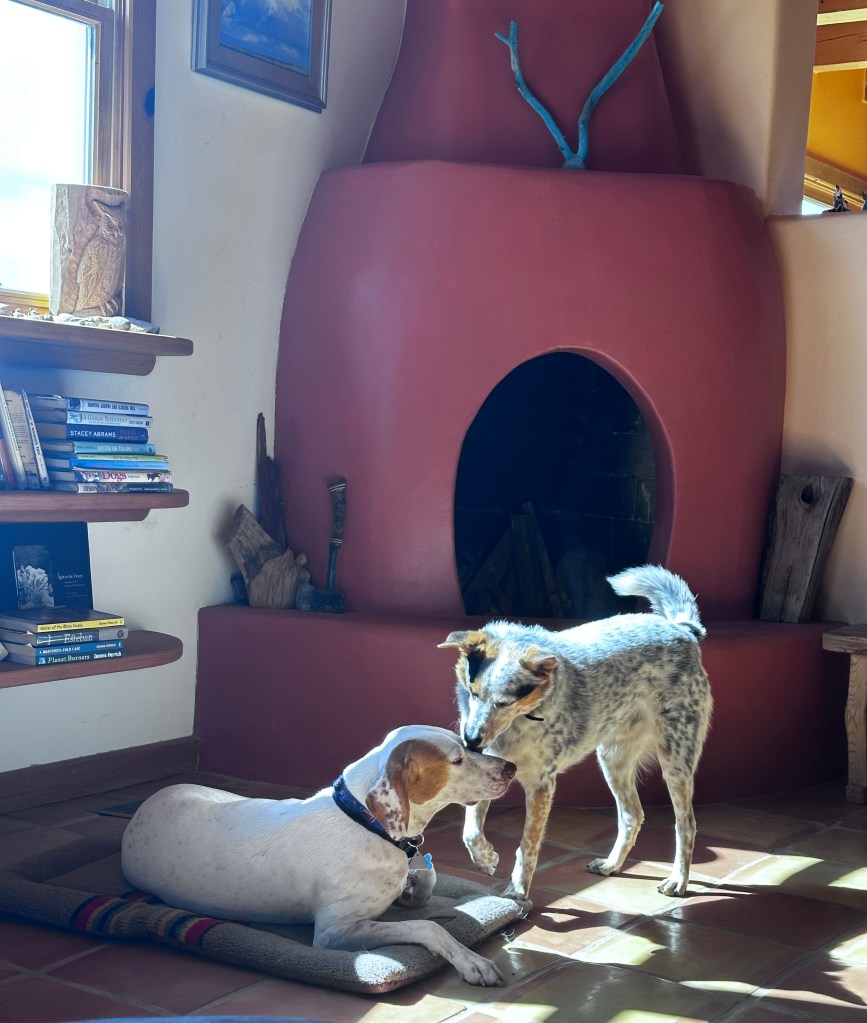
Cowboy2 and Izzy in a rare, quiet moment.
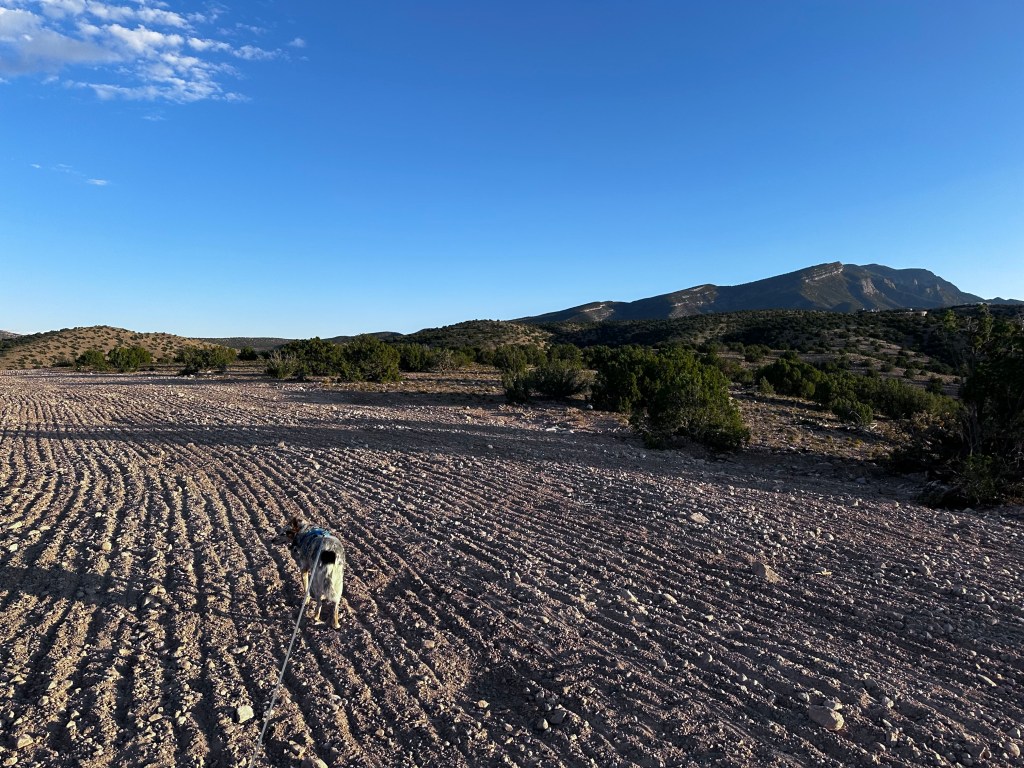
Cowboy2 inspecting pipeline replacement project after seeding.
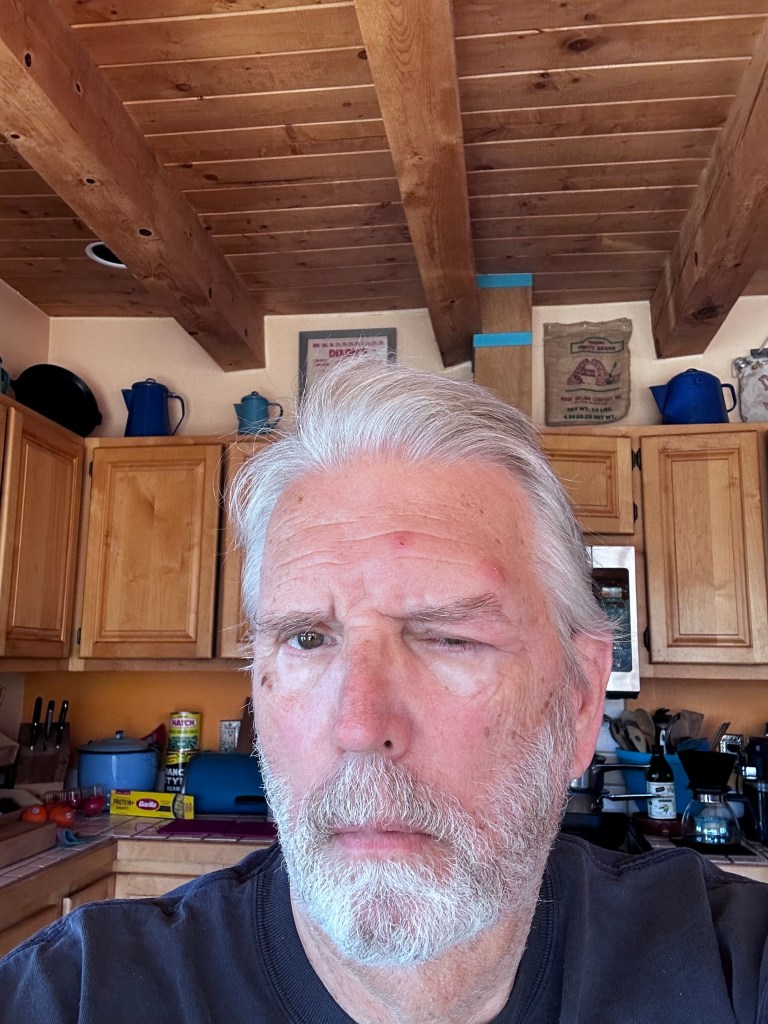
Meanwhile, almost down to one eye due to late-season gnat bites.
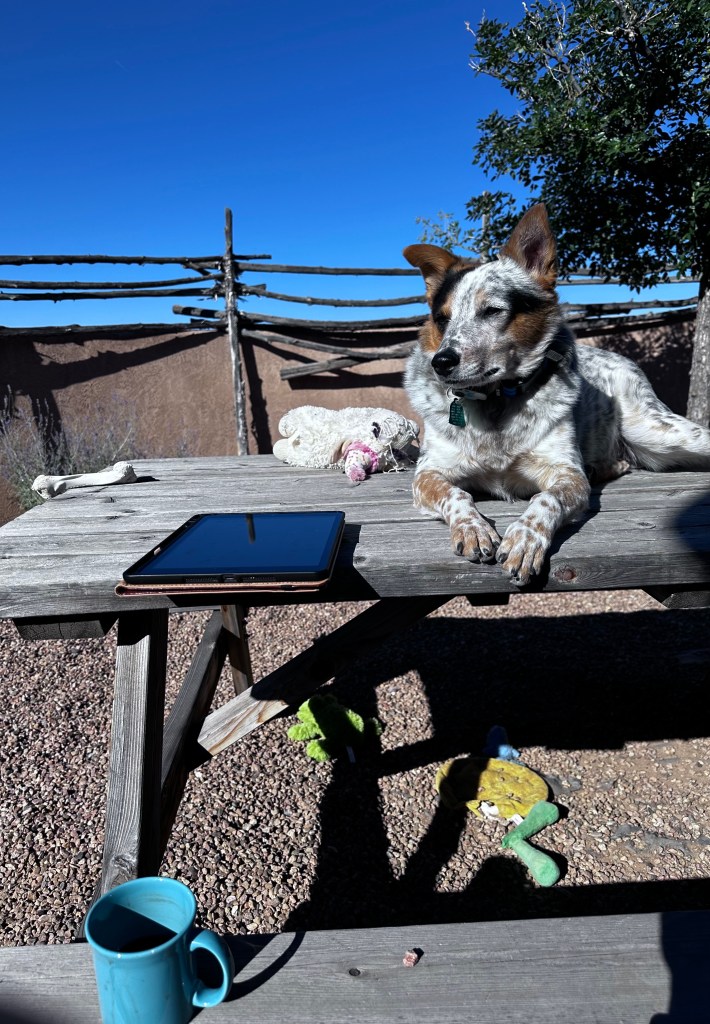
We’re watching Milton. I keep remembering climate change in our neck of the woods: aridification. I wouldn’t be surprised if the other guy is thinking about rabbits.
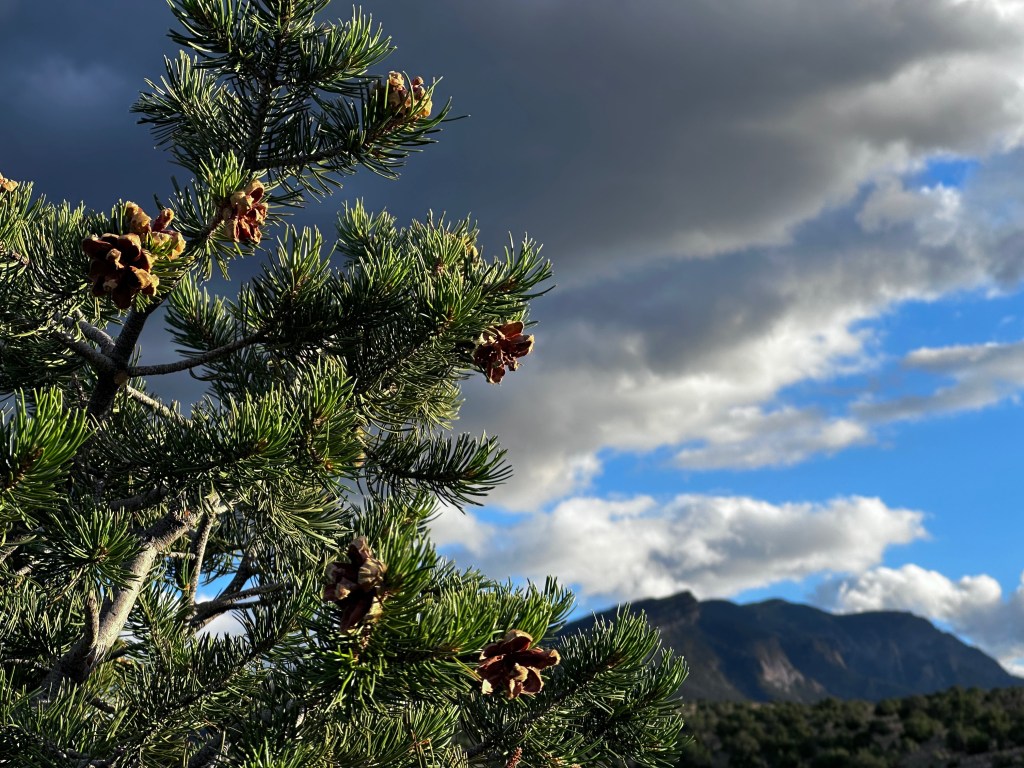
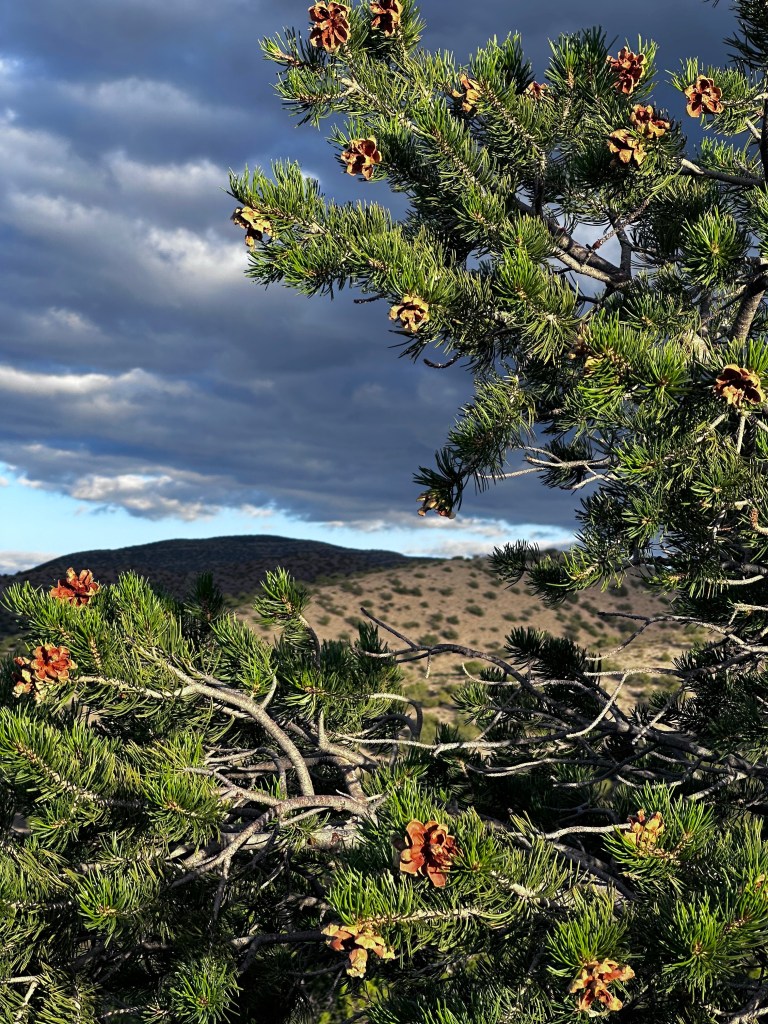
Quick grab with iPhone on first evening of fall. Walk on the mesa in a good piñon year. Cowboy2 with me, of course, concentrating mostly on other critter scents.