

Online chatter among remaining friends from the Inyo Ecology Center in the early 1970s sent me to an official version of the conservation camp’s history and purpose. I was a Vietnam-era conscientious objector assigned there in 1971 and 1972, although I escaped the drudgery of firefighting and conservation work for four months to work for the U.S. Forest Service on construction of the Pacific Crest Trail.
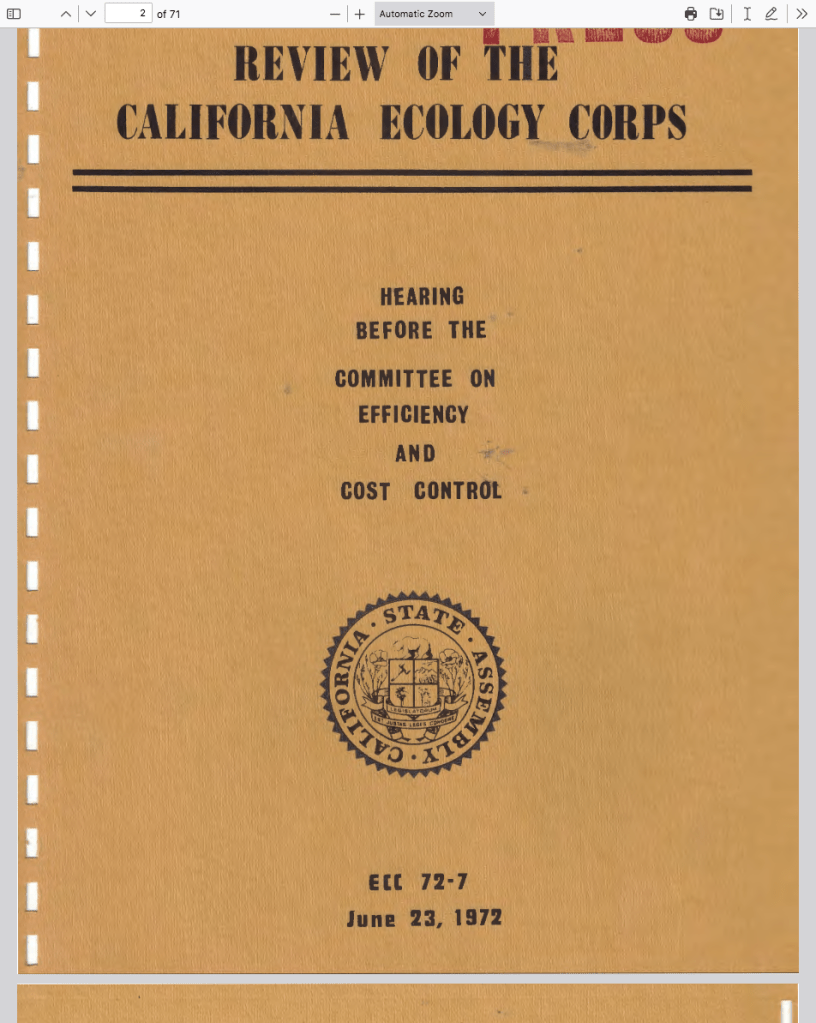
Below are verbatim but disjointed paragraphs I selected from a PDF of testimony in the California State Assembly in 1972. For the complete transcript, including complaints about compensation, insurance, hours and food, go here: https://www.reaganlibrary.gov/public/digitallibrary/gubernatorial/pressunit/p34/40-840-7408629-P34-011-2017.pdf.
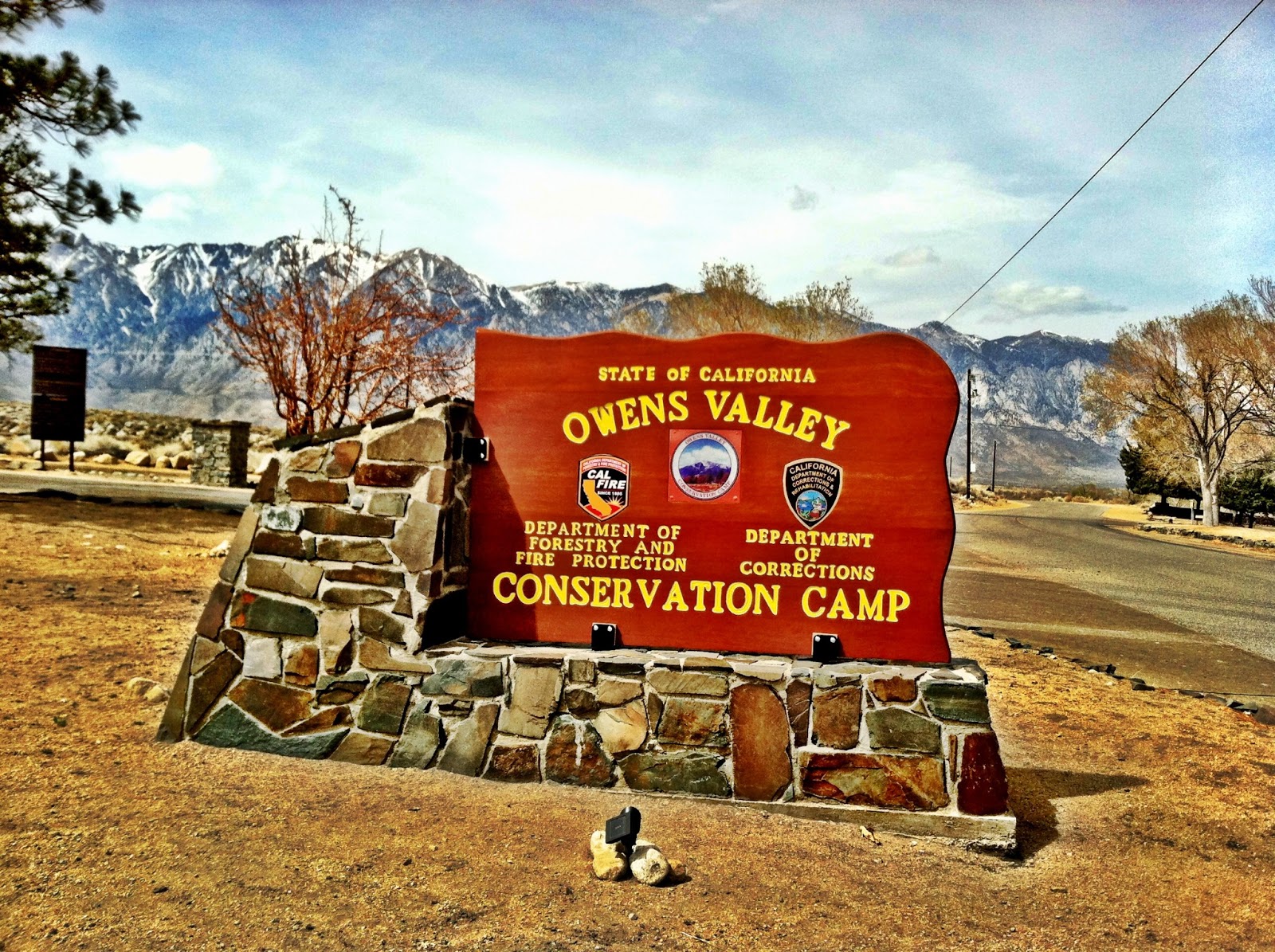
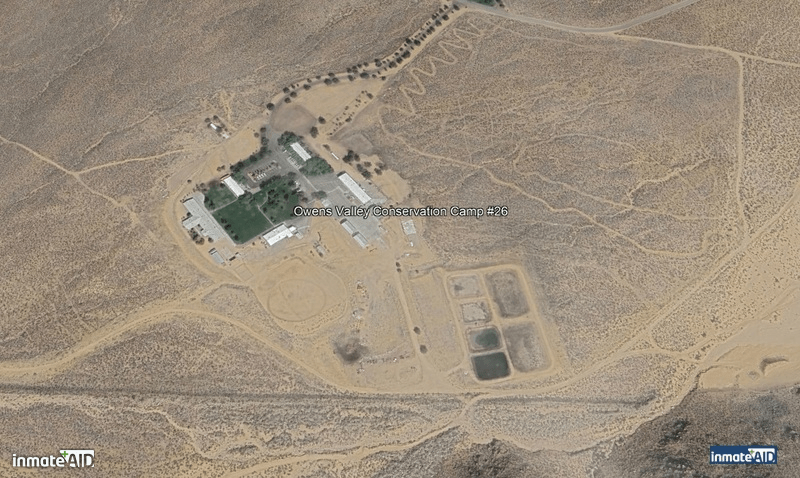
The camp, 10 miles north of Bishop, California, currently is called Owens Valley Conservation Camp #26 and is jointly operated by the California Department of Corrections and Rehabilitation and the California Department of Forestry and Fire Protection (CAL FIRE).
Remember, all of this testimony is from 1972 and these paragraphs, although chronological, were selected by yours truly. jr
Testimony of JAMES STEARNS, DIRECTOR, DEPARTMENT OF
CONSERVATION:
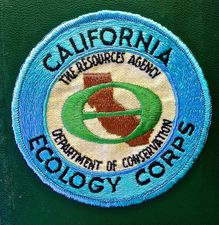
The California Ecology Corps is the solution Governor Reagan
has adopted to meet California’s continuing need for a reserve of
trained manpower to confront the ravages of wildland fire and to
meet this state’s commitment for preserving the environment.
Over the years, the Division of Forestry, the state’s wild
land fire fighting force, has, of necessity, increased in efficiency
and in manpower. Today, some 3,000 men, whose job it is to meet
the challenges of the wildland fires, are on the state’s payroll.
This force is augmented each summer by 1800 young men who are employed
as seasonal fire fighters. Together, they man the fire stations, bulldozer crews, and air bases that are three of the basic compon-
ents available to us tor · wildland fire fighting.
In the late 1940’s the need for trained hand crews became
evident to the state’s professional wildland fire fighters as the
fourth component. In cooperation with the State Department of
Corrections and the California Youth Authority, the conservation
camp program became a reality and was formally organized.
This program enabled foresters to utilize minimum security
inmates as fire fighting hand crews and to assist in the construc-
tion of our fire defense system, working out of a new camp environment
in the state’s forest lands.
Working with the leadership of forestry
personnel, the inmates have proven to be a tremendous asset.
And then came social changes — and new concepts in penology
and dealing with prison inmates. A new probation subsidy program
was initiated in 1966, providing for payment to the counties on a
per case basis so that county probation staffs could be beefed up
and the less serious felons who formally ended up in conservation
camps could be dealt with at home.
Since the probation subsidy program started in 1966, the prison
population, of course, the camp population, began to decrease
rather rapidly. In recent years, the prison population had dropped
from 28,800 to under 20,000, as of this week.
A study was conducted in 1970-71 to find the alternative man-
power sources necessary to replace the dwindling camp population. A
partial solution was to contract with counties to use local prisoners
to provide the manpower.
California Ecology Corps is one of the solutions. But it is
more than that. It is a unique experiment in bringing concerned
young men into the field of conservation in this state to provide
the work experience and job training that can open career doors in
many conservation fields.
Although we in the Department of Conservation had long been
aware that some day the conservation camp program would no longer
provide the total answer to the manpower reserve problem, and
although we had been searching for alternatives for a long time,
the need became acute just over a year ago when, simply stated,
there were not enough inmates to adequately man the camps then in
existence.
We asked ourselves, “Where can we find young men who
are readily accessible, who are unemployed, and who could be put to
work quickly within the limits of funds available to us?”
It was at this point that we turned to the Selective Service
System and specifically to those with conscientious objector
classifications.
In the spring of 1971 there were approximately 5,000
conscientious objectors in California, and many of them were looking
for alternate service. Alternate service, incidentally, is easily
defined as a twenty-four month period when conscientious objectors
must work for a non-profit or public service agency, thus serving
a time comparable to the time a draftee into the armed services
must serve.
And so to meet the immediate problem, namely the prospect of
closing five conservation camps, we had a program and we had an
immediate source from which to recruit.
The agreements were negotiated, and we decided to convert
inmate-manned conservation camps in Humboldt, Tehema, and Calaveras
counties into centers to house the new Ecology Corps. … A fourth center was later added in Inyo County.
As of today, there are slightly over 100 corpsmen who are
conscientious objectors. These are men whose average age is twenty-
two, who average two years of college. These are the “seniors” in
the program; and the majority are, and have been, highly-productive
and dedicated workers whose extra effort made the whole idea work.
Many of the new members of the Corps are in the program
as a result of other forms of recruitment. Some are, for example,
young men out of high school — and out of work. There are some
Viet Nam veterans in the program now, and more are expected.
Corpsmen are not regular state employees, they are exempt
contractees. They do receive some benefits comparable to our regular
employees, such as vacations, holidays, and workmen’s compensation
insurance. A comprehensive health benefit program will be implemented
August 1, 1972.
Since the beginning of the program, we have provided corpsmen
with food, lodging, clothing, and personal care items and have paid
them $40 each month. Beginning July 1, 1972, corpsmen will receive
at least $100 per month plus the other items I have listed.
During the summer fire season, corpsmen must remain at their
duty post for a continuous five-day period. At other times, they
are required to perform their normal eight-hour work shift, Monday
through Friday.
 dream ranch